Vicars' Close, Wells
Europe's oldest intact medieval street, where 675 years of history and sacred music still resonate.
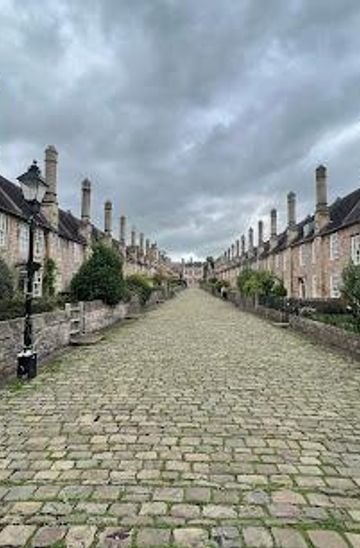
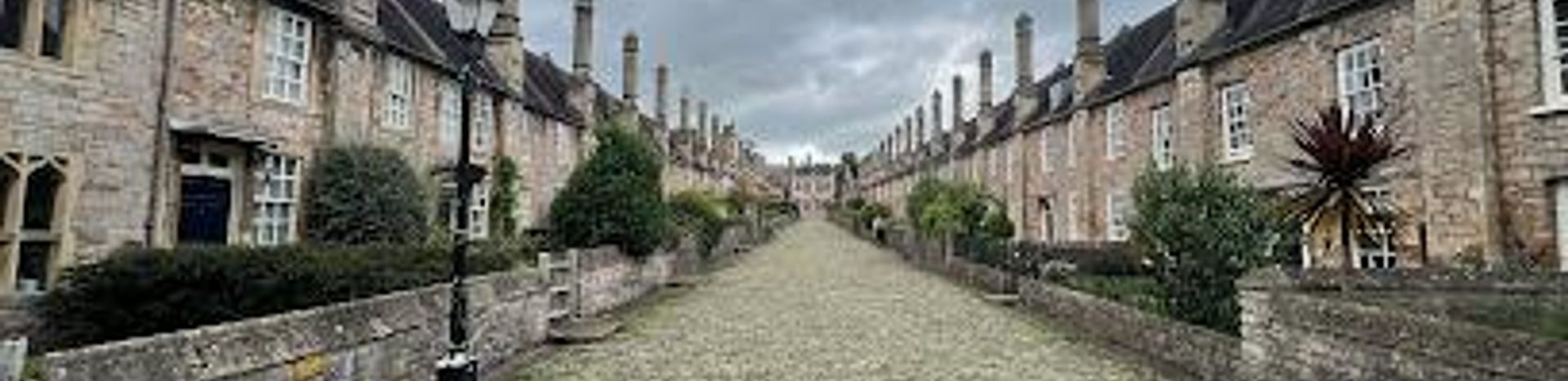
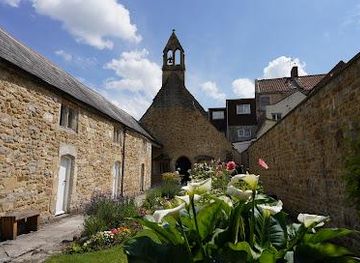
Vicars' Close is a medieval street in the heart of Wells, Somerset, built in 1348 and widely regarded as Europe's oldest intact residential street still serving its original purpose. This picturesque cul-de-sac features 27 Grade I listed limestone houses arranged in two neat rows, a chapel, and a communal hall, all connected to Wells Cathedral by the historic Chain Gate. Originally constructed to house the Vicars Choral—clergy who sang divine services eight times daily—the street remains inhabited by cathedral staff and continues its musical heritage today.
A brief summary to Vicar's Cl
- Wells, GB
- Duration: 0.5 to 2 hours
- Free
-
 Outdoor
- Mobile reception: 4 out of 5

Know before you go
Hi, I'm Eve. Here are a few practical things to know before exploring Vicar's Cl.
- Visit during quieter morning hours to experience the street's peaceful medieval atmosphere before afternoon crowds arrive. The narrow cul-de-sac can feel intimate when fewer visitors are present.
- Stand near the main entrance and observe the optical illusion created by the street's deliberate narrowing toward the chapel—the perspective makes the 140-meter street appear considerably longer than it actually is.
- Time your visit to coincide with cathedral services to hear the Vicars Choral singing their eight daily services, a tradition unbroken since the 12th century and the original purpose of this community.
- Examine the aligned chimney shafts on the rooflines—these distinctive architectural details were added a century after the houses were built and remain one of the street's most charming quirks.
- Explore the Chain Gate Bridge connecting Vicars' Close to Wells Cathedral, commissioned in 1459 and still serving as the physical link between the residential community and the cathedral it served.
Do you manage this location?
Take control to get all the benefits, like improved information, better appearance, and stronger visibility across AI-powered discovery. Learn more
Activate your presenceOther nearby places you may find interesting

Getting There
-
On foot from Wells city center
Vicars' Close is located in the heart of Wells, approximately 5–10 minutes' walk from the Market Place and Wells Cathedral. From the cathedral's main entrance, follow the signposted route through the cathedral grounds or via St Andrew Street. The street is pedestrian-only and easily accessible on foot from all central locations. No parking is available on the close itself; use public car parks in Wells town center.
-
Public transport to Wells
Wells is served by regular bus services from Bath, Glastonbury, and surrounding Somerset towns. Journey times from Bath are approximately 30–45 minutes; from Glastonbury approximately 20–30 minutes. Buses arrive at the Wells Bus Station, located near the Market Place, from which Vicars' Close is a 5–10 minute walk. Service frequency varies by route; check local transport schedules for current timetables. No entrance fee is required to visit Vicars' Close.
-
Driving and parking
Wells is accessible via the A39 and A371 roads. Several public car parks operate in Wells town center, including the Market Place car park and Princes Road car park, both within 5–10 minutes' walk of Vicars' Close. Parking charges typically range from £1.50–£3.00 for short stays. Vicars' Close itself is not accessible by vehicle; it is a pedestrian cul-de-sac. Allow 1–2 hours for parking and visiting the street.
-
Cycling
Wells is accessible by bicycle via regional cycle routes. Bike racks are available near Wells Cathedral and in the town center. The final approach to Vicars' Close involves narrow medieval streets; dismounting and walking bikes is recommended. No specific cycle parking is available on the close itself, but secure facilities exist nearby in the cathedral precinct.
For the on-the-go comforts that matter to you
-
 Information Boards
-
 Seating Areas
Discover more about Vicar's Cl
A Street Frozen in Medieval Time
Vicars' Close stands as one of Europe's most remarkable architectural survivors, a medieval street that has remained essentially unchanged for over 675 years. Built beginning in 1348 by Bishop Ralph of Shrewsbury, this intimate cul-de-sac was conceived with a singular purpose: to provide a dedicated residential community for the Vicars Choral of Wells Cathedral. The street stretches 140 meters and features 27 Grade I listed limestone houses arranged in two parallel rows, creating a harmonious streetscape that reflects the careful urban planning of the 14th century. The architectural design itself tells a story—the deliberate narrowing of the street toward the chapel at its northern end creates an optical illusion that makes the street appear longer when viewed from the entrance, a sophisticated medieval trick that enhances the sense of spiritual progression toward the sacred space.The Vicars Choral and Their Sacred Mission
The foundation of Vicars' Close emerged from a practical need within the cathedral community. During the 12th century, the clergy responsible for chanting the divine service eight times daily—known as the Vicars Choral—lived scattered throughout the town, susceptible to worldly distractions that conflicted with their spiritual calling. To remedy this situation and create a dedicated community of singers, Bishop Ralph of Shrewsbury commissioned the construction of Vicars' Close. The original land grant came from Walter de Hulle, a canon of Wells Cathedral, who donated the property with the express intention of housing these chantry priests in a communal setting. This ancient tradition of the Vicars Choral singing eight daily services has persisted unbroken for nearly nine centuries and remains a unique and valued part of the cathedral's living heritage today.Architectural Features and Communal Design
The physical layout of Vicars' Close reveals the sophisticated thinking behind its creation. Originally comprising 42 houses, the street now contains 27 residences, each built with two floors and equipped with fireplaces. The houses feature aligned chimneys—a quirky architectural detail added a century after initial construction—and were originally served by two communal wells at either end of the close. Later improvements brought lead pipes to deliver water directly into the homes, representing a significant advancement in medieval domestic comfort. At the southern end stands the Vicars' Hall, an imposing structure built above an arched gateway that provided convenient passage to the street. This hall contained the Chequer room, where one of the Vicars collected rents from tenants throughout the city; the Muniment Room, used to store important documents and land leases; and The Treasury, where the Vicars' vestments were kept. The northern end features a chapel and library, completing the spiritual and administrative infrastructure of the close.Connections to the Cathedral and Beyond
Physical connection between Vicars' Close and Wells Cathedral was formalized with the construction of the Chain Gate Bridge in 1459, commissioned by Thomas Beckington. This elegant structure linked the Vicars' Hall directly to the cathedral, allowing the Vicars Choral convenient access to their daily services without venturing into the secular streets of Wells. The Chain Gate remains one of the most distinctive features of the close, symbolizing the inseparable bond between the residential community and the cathedral it served. The street itself, paved with stone down its center, functions as a dead-end cul-de-sac that creates a sense of separation from the bustling town beyond, allowing residents and visitors alike to step into a preserved medieval world.Centuries of Preservation and Adaptation
Vicars' Close has undergone multiple restoration campaigns, each respectful of its medieval character while incorporating the needs and technologies of successive eras. In the 1840s, Benjamin Ferrey led restoration efforts that preserved the medieval aesthetic while implementing Victorian-era enhancements. The 1960s brought another phase of restoration emphasizing historical accuracy, and modifications in 1612 improved living conditions while reflecting evolving architectural styles. Throughout these interventions, the essential character of the street has remained intact, with all 27 surviving houses protected as Grade I listed buildings. Recent conservation efforts, supported by National Lottery Heritage funding, have focused on addressing damp issues, ensuring structural integrity for future centuries, and developing new visitor experiences that allow the public to glimpse life within these historic homes while respecting the privacy of current residents and the ongoing musical rehearsals of the cathedral school.Cultural Significance and Modern Legacy
Vicars' Close has transcended its role as a residential street to become a significant cultural and historical landmark. The street has served as a filming location for major productions, most famously the 1972 film adaptation of The Canterbury Tales by Pier Paolo Pasolini, which captured the authentic medieval atmosphere of the close. Scholars, historians, and medieval enthusiasts regard Vicars' Close as an invaluable resource for understanding 14th-century urban planning, domestic architecture, and communal living arrangements. The ongoing presence of the Vicars Choral and cathedral staff ensures that the street continues to fulfill its original purpose, making it not merely a museum piece but a living, breathing community that maintains an unbroken connection to its medieval foundations. Plans for enhanced public access include opening selected houses for behind-the-scenes experiences and guided tours that explore the musical heritage and daily life of those who have inhabited this extraordinary street across seven centuries.Explore the best of what Vicar's Cl has to offer















More about Somerset

Discover the timeless beauty and heritage of Somerset, where rolling hills, historic sites, and charming villages create an idyllic escape in the heart of England.
Tell me more about Somerset