

The Corpus Clock, Cambridge Travel Guide
Free Guide: Cambridge street-level sculpture where a mechanical grasshopper consumes time on an unconventional gold clock face without hands or numerals.


A brief summary of The Corpus Clock
Cambridge street-level sculpture where a mechanical grasshopper consumes time on an unconventional gold clock face without hands or numerals.
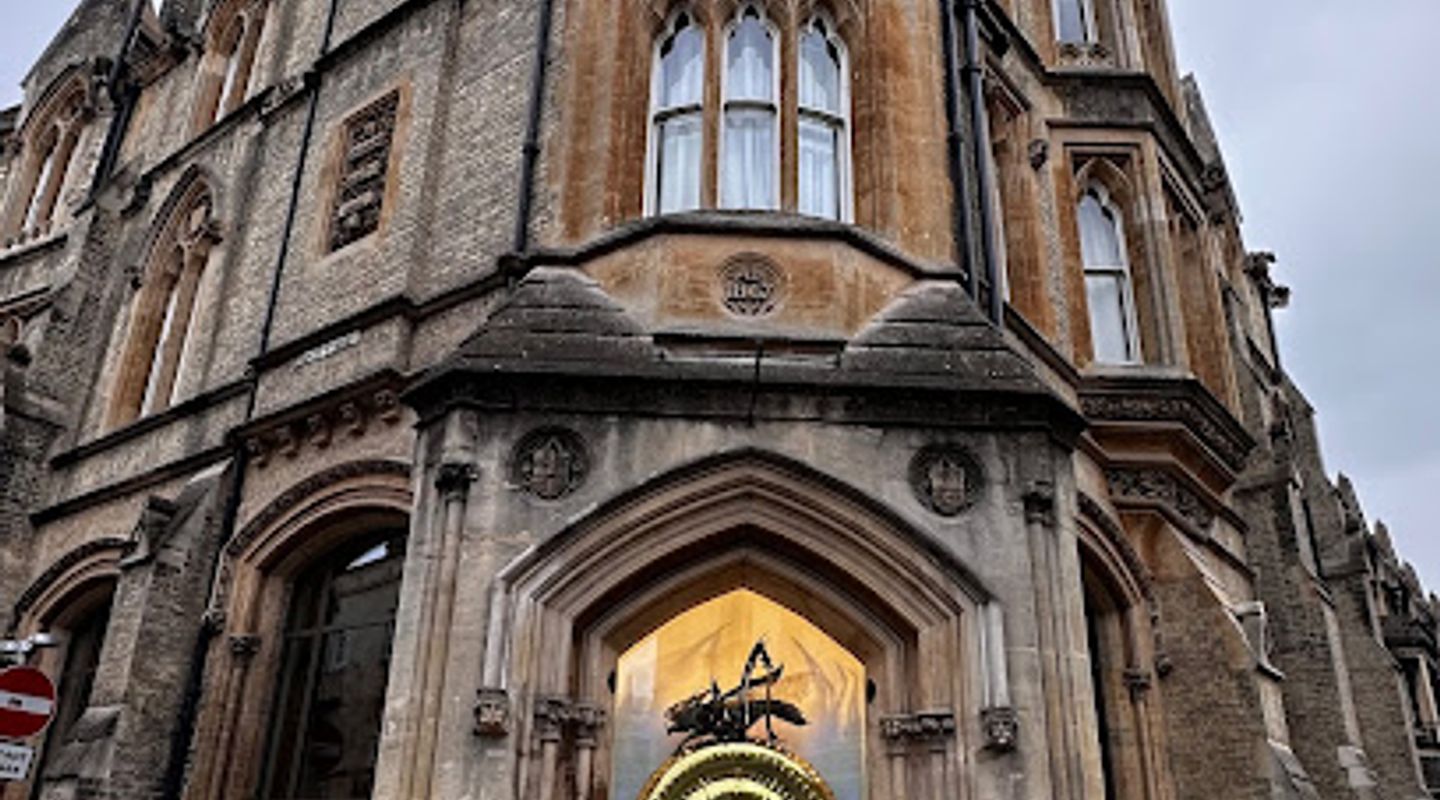
The Corpus Clock stands at the junction of Bene't Street and Trumpington Street in central Cambridge. This 1.5-metre gold-plated disc lacks hands and numerals, instead using backlit slits and a rippling surface to mark time. A large mechanical grasshopper sculpture known as the Chronophage moves across the face, appearing to consume seconds. The installation incorporates the world's largest grasshopper escapement and was unveiled by Stephen Hawking in 2008. Visitors pause on the pavement to watch the moving parts and listen to the mechanical sounds.
Opening hours
- Every dayOpen 24 hours
Opening hours as listed on the venue’s Google Business Profile. Hours can change for services and special events, so check with the venue before you go.
- Address
- 58 Trumpington St Cambridge
- Phone
Getting there
Walking
Cycling
Public Transport
Car
Discover more about The Corpus Clock
Design and Mechanism
The Corpus Clock displays time through a gold-plated disc with backlit slits rather than conventional hands. A large grasshopper-like sculpture called the Chronophage crawls across the face and appears to eat time. The mechanism includes the world's largest grasshopper escapement and runs irregularly to reflect the unpredictable nature of time. Six patented inventions are incorporated into the design.
History and Commission
Corpus Christi College alumnus John C. Taylor conceived, designed, and funded the clock as a gift to the college. It was built by Huxley Bertram with contributions from sculptors and engineers. The piece pays homage to 18th-century clockmaker John Harrison. It was unveiled on 19 September 2008 on the facade of the Taylor Library, a former 1866 bank building that the college redeveloped after the lease ended in 2005.
Physical Setting
The clock is mounted at street level on the Taylor Library at the corner of Bene't Street and Trumpington Street, facing King's Parade. The compact sculpture sits against Victorian Gothic architecture in the dense historic core of Cambridge, surrounded by college buildings, shops, and pedestrian streets. The gold disc and LEDs remain visible day and night.
Visitor Experience
Most visits last between two and fifteen minutes. People stop on the pavement to observe the Chronophage movement, watch the LED time display, and listen to mechanical chain and coffin sounds that occur hourly. Photography is common. The atmosphere combines the busy street life of tourists, students, and locals with the clock's distinctive mechanical presence.
Access and Surroundings
The site lies within a short walk of King's College, Market Square, and Great St Mary's Church. Walking is the primary approach, with cycling also practical. Nearby bus stops serve the area. Driving and parking are difficult in the congested centre, so park-and-ride facilities are commonly used by those arriving by car. The pavement location offers generally flat access.
Practical Details
No dedicated facilities exist at the clock itself. Nearby city-centre shops, cafes, and public restrooms provide basic services. The installation operates year-round with no closures. Weather does not affect visibility but influences how long visitors remain outdoors.
Evendo Review Centre
 Google
Guest reviews
Best time to go
Quietest: Jan, Feb & Mar · at 1am or at 2am or at 3am
Busy times are Evendo estimates for a typical year, to help you plan. Actual crowds vary with events, school holidays and the weather.
Explore The Corpus Clock on the map
A handpicked selection of must-see spots near The Corpus Clock, mapped for you.
Get your free copy of our complete guide to The Corpus Clock, delivered straight to you.
Everything on this page, from opening hours and how to get there to Eve’s tips and the best time to go, in one PDF you can read offline, print or share.
Already have an account? Sign in
Your The Corpus Clock guide is ready.
We'll send it to · Not you? Sign out

Getting your guide ready…
We are putting together a fresh copy of the The Corpus Clock guide. This can take up to a minute.
This can take a few moments. If your browser asks, choose Allow so the download can start. You'll find the guide in your Downloads folder.
Nothing happened? Download it again
Sorry, the guide is taking longer than usual. Please try again in a minute, or get it by email instead.
Unlock the best of The Corpus Clock
Skip-the-line tickets, guided tours with entry, and walking tours of the area, booked in a few clicks.
 Tour with entry
Self Guided Walking Tour of Cambridge with Audio Guide
from $5.33 Tour with entry
Bridges and Brilliance Cambridge UK Self Guided Tour with App
from $5.70 Tour with entry
Scholars & Secrets of Cambridge: Self-Guided Puzzle Adventure
from $7.24 Tour with entry
Cambridge's Ghosts GPS Self Guided Audio Walking Tour w/EMFReader
from $9.26


Other nearby places you may find interesting
The closest places of the same kind, if this one is not quite what you had in mind.
-
-
-
-
-


Swipe for more places
More to explore near The Corpus Clock

 Best experiences near The Corpus Clock
 Best hotels near The Corpus Clock
 Best landmarks near The Corpus Clock
 Best attractions near The Corpus Clock
 Best shops near The Corpus Clock
 Best restaurants near The Corpus Clock
 Best bars near The Corpus Clock
Do you manage this location?
Take control to get all the benefits, like improved information, better appearance, and stronger visibility across AI-powered discovery.
Explore more

Explore more of Cambridge
Cambridge travel guide: explore historic colleges, the River Cam, museums, medieval chapels, riverside punting, independent shops and local culture.
Explore Cambridge
Explore more of United Kingdom
Discover the United Kingdom: A blend of rich history, stunning landscapes, and vibrant cities, offering a unique travel experience for every visitor.
Explore United Kingdom
