

Romsey (Cambridge) Travel Guide - Free
Explore Romsey in Cambridge with Evendo's free guide. Find the best shops, historic streets, restaurants, and gems on web or mobile.


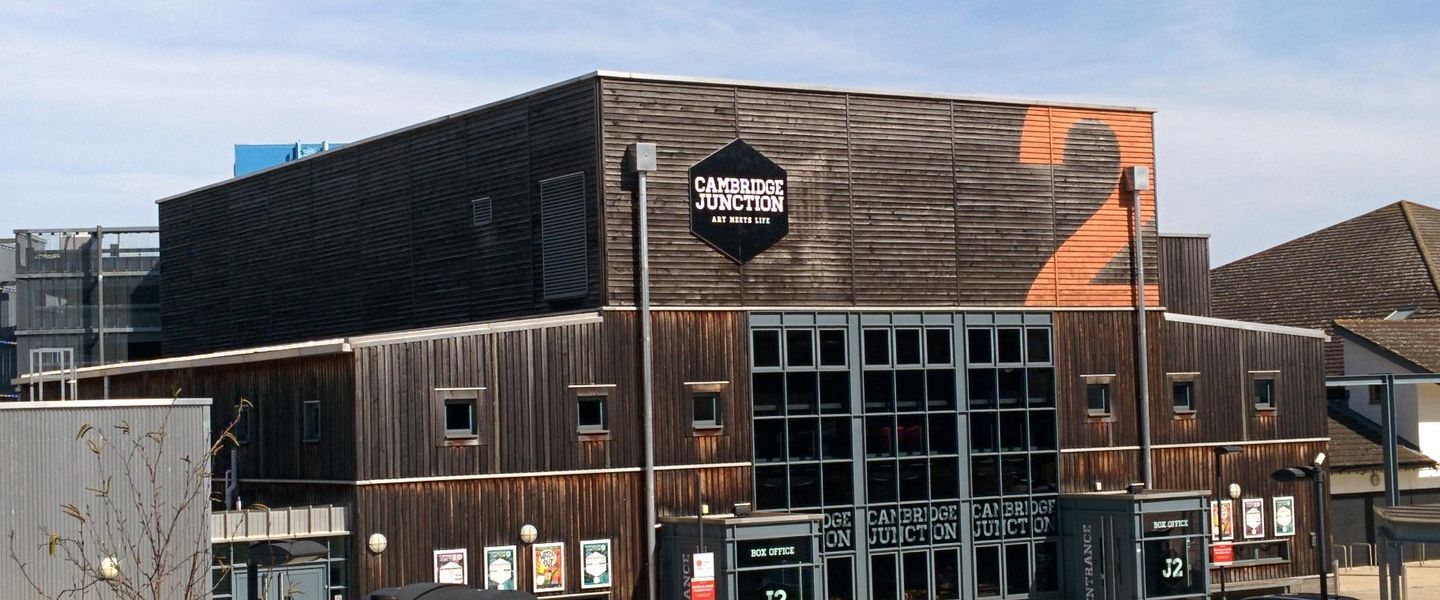


Romsey Cambridge combines Victorian terraces, independent cafés, global food, live music and Mill Road’s community spirit east of the historic centre.
Terraces, Gardens and Everyday Cambridge
\n\nRomsey is an informal, predominantly residential neighbourhood east of Cambridge city centre, shaped by the straight run of Mill Road and the smaller streets branching from it. Its late-Victorian and early twentieth-century terraces give the area a consistent architectural character, while front gardens, allotments and modest green spaces soften the dense urban grain. The railway line and its bridges form a strong western edge, separating Romsey from Petersfield and the city centre while remaining easy to cross on foot or by bicycle.\n\nMill Road Street Life
\n\nThe neighbourhood’s social life centres on Mill Road, where independent cafés, bakeries, restaurants, specialist food shops, pubs and small retailers occupy converted shopfronts. The street reflects Cambridge’s international population without losing its local scale: a short walk can take visitors from a traditional pub to South Asian, Middle Eastern, Mediterranean or East Asian food, with community organisations and long-established businesses woven into the same streetscape. The surrounding roads are quieter, and their terraces reveal the area’s domestic character more clearly than the commercial thoroughfare.\n\nMusic, Community and Local Character
\n\nRomsey is better understood as a neighbourhood for slow exploration than as a district of headline attractions. The railway bridges, Mill Road’s changing shopfronts, Romsey Recreation Ground and the neighbouring streets offer a close-up view of contemporary Cambridge beyond the colleges. Pubs and small music venues contribute to an evening culture that is informal rather than club-driven, while community events, including the annual Mill Road Winter Fair when it takes place, bring residents and visitors into the street. Its appeal lies in the combination of ordinary residential life, independent enterprise and cultural variety within walking or cycling distance of the historic centre.Explore Romsey on the map
A handpicked selection of must-see spots in Romsey, mapped for you.
Best hotels in Romsey
Romsey essentials
Getting There
Getting Around
Safety
Emergency Situations
Do's and Don'ts
Local Tips

From Eve
Local phrases worth knowing
You don't need to get them perfect. A few words go a long way, and locals appreciate the effort.
Basics
| English | Local | Say it |
|---|---|---|
| Hello | Alright | [al-rite] |
| Goodbye | Ta-ra | [ta-ra] |
| Yes | Aye | [ai] |
| No | Nah | [nah] |
| Please/You're welcome | If you would, cheers | [if yoo wood, cheers] |
| Thank you | Cheers | [cheers] |
| Excuse me/Sorry | Sorry | [sor-ree] |
| How are you? | How's it going? | [hows it go-in] |
| Fine. And you? | Alright. And yourself? | [al-rite. and yur-self] |
| Do you speak English? | Do you speak the Queen's? | [do yoo speak thee kwins] |
| I don't understand | I ain't getting ya | [i aint get-in ya] |
Eating & Drinking
| English | Local | Say it |
|---|---|---|
| I'd like to see the menu, please | Can I have a gander at the menu, if you would? | [can i hav a gan-der at thee menu, if yoo wood] |
| I don't eat meat | I'm veggie, mate | [im vedgie, mate] |
| Cheers! | Cheers! | [cheers] |
| I would like to pay, please | I'll settle up, if you would | [il set-ul up, if yoo wood] |
Emergencies
| English | Local | Say it |
|---|---|---|
| Help! | Help! | [help] |
| Go away! | Clear off! | [clear off] |
| Call the Police! | Ring the Rozzers! | [ring thee roz-zers] |
| Call a doctor! | Get a quack round! | [get a kwak rownd] |
| I'm lost | I'm all over the shop | [im all o-ver thee shop] |
| I'm ill | I'm poorly | [im poor-lee] |
Shopping
| English | Local | Say it |
|---|---|---|
| I'd like to buy... | I fancy a bit of... | [i fan-see a bit of] |
| I'm just looking | Just browsing, mate | [just bro-sing, mate] |
| How much is it? | How much is that? | [how much is that] |
| That's too expensive | That's dear, mate | [thats deer, mate] |
| Can you lower the price? | Can you do us a deal? | [can yoo do us a deal] |
Time & Numbers
| English | Local | Say it |
|---|---|---|
| What time is it? | What's the time? | [whats thee time] |
| It's one o'clock | It's one | [its one] |
| Half past (10) | Half ten | [half ten] |
| Morning | Mornin' | [morn-in] |
| Afternoon | Afternoon | [after-noon] |
| Evening | Evenin' | [even-in] |
| Yesterday | Yest'day | [yest-duh] |
| Today | Today | [to-day] |
| Tomorrow | Morn's morn | [morns morn] |
| 1 | One | [one] |
| 2 | Two | [two] |
| 3 | Three | [three] |
| 4 | Four | [four] |
| 5 | Five | [five] |
| 6 | Six | [six] |
| 7 | Seven | [seven] |
| 8 | Eight | [eight] |
| 9 | Nine | [nine] |
| 10 | Ten | [ten] |
Transport & Directions
| English | Local | Say it |
|---|---|---|
| Where's a/the...? | Where's the...? | [wheres thee] |
| What's the address? | What's the addy? | [whats thee add-ee] |
| Can you show me (on the map)? | Can you point me in the right direction? | [can yoo point me in thee rite di-rection] |
| When's the next (bus)? | When's the next bus? | [whens thee next bus] |
| A ticket (to ....) | A ticket (to ....) | [a ticket (to)] |
History of Romsey
Fields Beyond the Historic Town
Before Romsey became a built-up neighbourhood, the land east of Cambridge was largely composed of agricultural fields and market-garden ground beyond the older town. Mill Road provided an important eastward route, while the railway corridor later helped define the area’s edge and relationship with the expanding city. The name Romsey is generally understood as a local estate name rather than evidence that the neighbourhood was a settlement founded by the Hampshire town of the same name. Its modern identity emerged through urban expansion rather than from a medieval village core.
Late-Victorian Expansion
Romsey’s recognisable streetscape developed mainly during Cambridge’s late-nineteenth-century expansion, when terraces and small houses were built for a growing urban population. Roads running off Mill Road created a compact residential district with repeated brick façades, narrow plots and modest front gardens. The neighbourhood’s housing reflected the practical needs of working and lower-middle-income households, while nearby railway infrastructure connected the eastern suburbs with the wider city and helped establish the dense pattern that still distinguishes Romsey from Cambridge’s historic centre.
A Working Residential Quarter
During the early twentieth century, Romsey settled into the role of a close-knit residential quarter linked to Cambridge’s workshops, railway employment, shops and public institutions. Mill Road became both a transport corridor and a local high street, with premises serving everyday needs rather than a purely visitor market. The railway bridges and surrounding terraces remained powerful markers of the area’s geography. Over time, changing employment patterns, university growth and wider housing pressures brought new households and businesses, adding to the neighbourhood’s social variety without erasing its built form.
Independent Mill Road Culture
From the later twentieth century onwards, Mill Road’s commercial identity increasingly rested on independent businesses, cafés, restaurants, specialist food shops and community organisations. Its international food culture reflects the movement of people into Cambridge and the ability of small premises to support diverse enterprises. The annual Mill Road Winter Fair, established as a community event in the 2000s, has reinforced the street’s role as a place for local participation and public celebration. Contemporary Romsey continues to experience housing and retail change, but its terraces, railway edges and independent street life remain central to its identity.
Romsey in Photos
Browse through our photo collection highlighting the charm and character of the destination.
Neighbourhoods near Romsey
The closest neighbourhoods to Romsey, if you have time for more than one stop.
-
-
-

-


Swipe for more neighbourhoods
Explore more

Explore more of Cambridge
Cambridge combines medieval colleges, river punting, world-changing science, museums and independent food culture in one historic English city to explore.
Explore Cambridge