O’Doherty’s Keep: A Norman Tower House Steeped in Ulster History
Discover the storied Norman tower house where Gaelic lords once ruled and rebellion shaped the history of Inishowen, County Donegal.
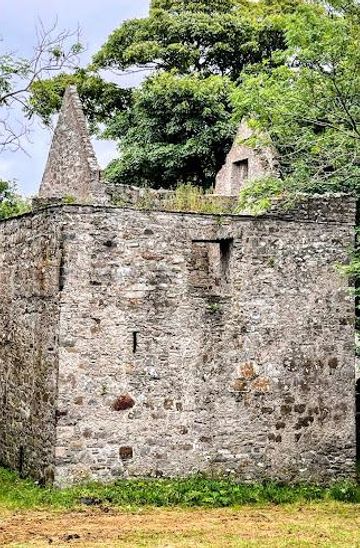
O’Doherty’s Keep is a late medieval Norman tower house located on Cahir O'Doherty Avenue in Buncrana, County Donegal. Built in the 14th or early 15th century and expanded in the early 1600s, it served as a strategic stronghold for the Gaelic O’Doherty clan. The keep played a pivotal role in Sir Cahir O’Doherty’s 1608 rebellion against English rule, after which it was burned and later leased to English settlers. Today, it stands as a historic landmark near the River Crana, symbolizing the turbulent history and cultural heritage of Inishowen.
A brief summary to O’Dohertys Keep
- Cahir O'Doherty Ave, Buncrana, Tullyarvan, Co. Donegal, F93 WP78, IE
- Duration: 0.5 to 2 hours
- Free
-
 Outdoor
- Mobile reception: 4 out of 5

Know before you go
Hi, I'm Eve. Here are a few practical things to know before exploring O’Dohertys Keep.
- Visit the memorials dedicated to Sir Cahir O’Doherty and Wolfe Tone near the keep to connect with the site’s rich historical narratives.
- Explore the adjacent Swan Park and the scenic River Crana for a tranquil riverside walk after touring the keep.
- Combine your visit with a tour of nearby Buncrana Castle and the Castle Bridge to understand the Vaughan family’s influence on the town’s development.
- Check local conservation group updates for any special events or guided tours that provide deeper insights into the keep’s history.
Do you manage this location?
Take control to get all the benefits, like improved information, better appearance, and stronger visibility across AI-powered discovery. Learn more
Activate your presenceGetting There
-
Bus
Local bus services run from Derry and Letterkenny to Buncrana, with a journey time of approximately 45 to 60 minutes. Buses stop near the town center, about a 10-minute walk from O’Doherty’s Keep. Services operate several times daily, with tickets costing around €5-€8 one way.
-
Car
Driving to O’Doherty’s Keep from Letterkenny or Derry takes roughly 30 to 40 minutes via the N13 and R238 roads. Limited parking is available near Swan Park and along Cahir O'Doherty Avenue. Note that the area can be busy during peak tourist season.
-
Walking
For visitors staying in Buncrana town center, the keep is accessible on foot within 15 to 20 minutes via gentle, paved paths along the River Crana. The terrain is easy and suitable for most fitness levels.
For the on-the-go comforts that matter to you
-
 Restrooms
-
 Seating Areas
-
 Information Boards
Discover more about O’Dohertys Keep
Origins and Strategic Importance of O’Doherty’s Keep
O’Doherty’s Keep is a Norman-built tower house dating from the 14th or early 15th century, positioned strategically on the banks of the River Crana near its confluence with Lough Swilly. This location controlled a vital ford and facilitated trade and defense in the Inishowen Peninsula. The keep was originally a two-storey structure, reflecting Anglo-Norman architectural influences, and was a secondary stronghold for the Gaelic O’Doherty clan, who ruled late medieval Inishowen. Its proximity to the river ensured access to rich salmon and herring fisheries, sustaining the local population.The O’Doherty Clan and the 1608 Rebellion
In the early 17th century, the keep was expanded with a third storey added around 1602 by Hugh Boy O’Doherty. It became a base for Sir Cahir O’Doherty, the last Gaelic Lord of Inishowen, who used it to plan his rebellion against English authority. In April 1608, O’Doherty launched a surprise attack from the keep, seizing Culmore Fort and subsequently sacking the city of Derry. This uprising was short-lived; Crown forces retaliated by burning the keep later that year. Sir Cahir died at the Battle of Kilmacrennan, marking the end of Gaelic lordship in the region.Transition to English Control and the Vaughan Legacy
Following the rebellion, the English Crown granted the keep and surrounding lands to Sir Arthur Chichester, who leased it to Captain Henry Vaughan, an English army veteran and former prisoner of O’Doherty’s attack. The Vaughan family undertook restoration efforts and occupied the keep until the early 18th century. In 1718, George Vaughan built the nearby Buncrana Castle, a large manor house constructed partly from stones taken from the keep’s walls. This development shifted the town’s center to its present location, with the construction of the Castle Bridge across the River Crana, which remains a notable historic structure.Historical Significance and Cultural Heritage
O’Doherty’s Keep is more than a ruined tower; it is a symbol of the complex history of Ulster, representing the Gaelic resistance to English colonization and the subsequent Plantation of Ulster. The keep’s site is closely tied to the founding of Buncrana town and has connections to significant historical figures, including Theobald Wolfe Tone, who was held captive nearby during the 1798 Rebellion. Memorials at the site honor Sir Cahir O’Doherty and Wolfe Tone, underscoring the keep’s role in Ireland’s struggle for identity and independence.Preservation and Modern-Day Relevance
In recent years, local groups have initiated conservation and restoration projects to preserve the keep’s remains, supported by government funding and international donations. The site attracts descendants of the O’Doherty clan and visitors interested in Irish heritage, serving as a poignant link to the past for the diaspora worldwide. The keep’s location adjacent to Swan Park and near the Crana River offers a scenic setting that combines natural beauty with historical depth.Architectural Features and Visitor Experience
Though partially ruined, the keep retains its medieval tower house form with visible stonework reflecting its Norman origins and later modifications. Visitors can observe the remains of the bawn walls and the nearby Castle Bridge, which together illustrate the defensive and residential evolution of the site. The surrounding area’s peaceful riverside ambiance enhances the experience, inviting reflection on the layered narratives embedded in the stones of O’Doherty’s Keep.Explore the best of what O’Dohertys Keep has to offer















More about Londonderry
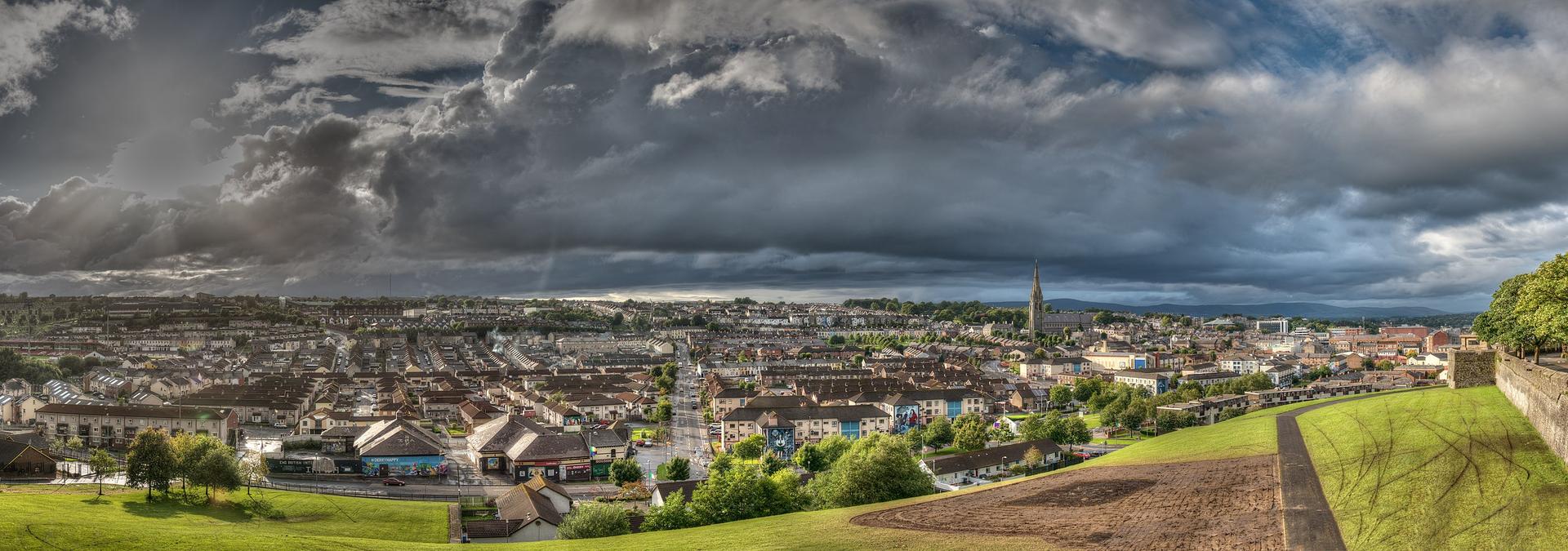
Discover Londonderry: A historic walled city with a rich cultural heritage, vibrant arts scene, and stunning natural landscapes in Northern Ireland.
Tell me more about Londonderry