Elvet Bridge, Durham Travel Guide
Free Guide: A medieval stone arch bridge over the River Wear, now a lively pedestrian walkway with cafes, restaurants and stunning views of Durham Cathedral and the city’s dramatic river gorge.


A brief summary of Elvet Bridge
A medieval stone arch bridge over the River Wear, now a lively pedestrian walkway with cafes, restaurants and stunning views of Durham Cathedral and the city’s dramatic river gorge.
Elvet Bridge is a medieval stone arch bridge spanning the River Wear in Durham, linking the historic peninsula with the Elvet area. Dating back to the 12th century, it’s a Grade I listed structure that once carried a gatehouse, chapels, and even a prison. Now pedestrianised, it’s a scenic riverside walkway lined with cafes and restaurants, offering stunning views of Durham Cathedral and the surrounding cliffs. The bridge’s layered history, from Prince Bishop ambitions to hidden arches and 18th-century floods, makes it a living piece of the city’s story.
On-site amenities
 Restrooms
 Drink options
 Drinking water
 Food options
 Seating areas
 Information boards
Opening hours
- Every dayOpen 24 hours
Opening hours as listed on the venue’s Google Business Profile. Hours can change for services and special events, so check with the venue before you go.
- Address
- Elvet Bridge, Durham DH1 3AG
- Phone
Getting there
On foot from Durham city centre
From Durham railway station
By bus
By car
Discover more about Elvet Bridge
A Bridge Forged by Prince Bishops
Elvet Bridge began life in the 1160s under Bishop Hugh de Puiset, a powerful Prince Bishop who shaped much of medieval Durham. His vision extended beyond the cathedral: he planned a new borough at Elvet to house merchants and boost the city’s economy. The bridge was the vital link, connecting this commercial district with the religious and administrative heart on the peninsula. Construction dragged on for decades, so long that the church was still granting indulgences to donors in the 1220s. When finally completed, it was known as the ‘New Bridge’ to distinguish it from the older Framwellgate Bridge downstream, a sign of its importance in the city’s growth.
Medieval Arches and Hidden Stories
What you see today is a bridge of two eras. Only one of the ten visible arches dates from the late 12th century; the rest are 13th-century rebuilds. In the Middle Ages, the bridge was more than a crossing: it was a street lined with buildings, guarded by a gate and towers. At each end stood chapels – St James’ and St Andrew’s – places of worship that later gave way to more secular uses. St James’ was converted into a House of Correction (prison) in 1632, and fragments of its iron bars can still be spotted in the stonework. Rumours of ‘hidden’ arches beneath the streets persist, though only ten are clearly visible today.
Floods, Widening and Survival
Elvet Bridge has weathered centuries of change and disaster. A great flood in 1771 destroyed three of its central arches, which were later rebuilt. In the early 19th century, as Durham grew with the industrial age, the bridge was dramatically widened on its upstream side, doubling its width and leaving a clear seam between the original medieval masonry and the 1804–05 stonework. This visible join is a physical record of the city’s evolution. Despite these transformations, the bridge has remained a key crossing, now closed to vehicles and reserved for pedestrians, cyclists and the occasional market stall.
Life on the Bridge Today
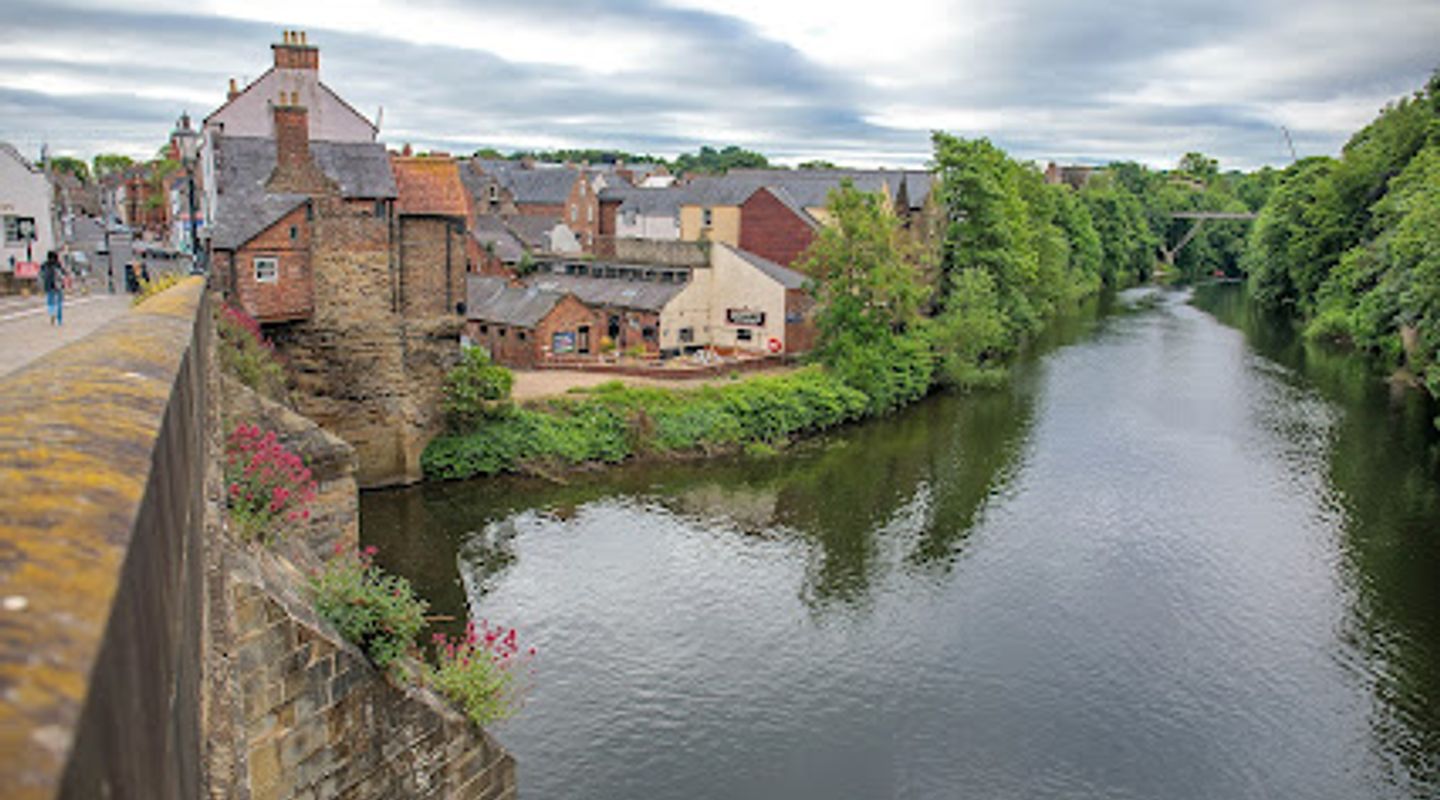
Today, Elvet Bridge is a vibrant public space, lined with cafes, restaurants and bars that spill out onto its broadened deck. It’s a natural meeting point, a place to pause and take in the dramatic views of Durham Cathedral perched on its rocky outcrop, the deep river gorge and the wooded banks of the Wear. From the bridge you can easily reach the riverside paths, the Count’s House and the city centre, making it both a thoroughfare and a destination in its own right. Its mix of ancient stonework and modern life gives it a unique, lived-in character that feels central to Durham’s identity.
Views, Walks and Atmosphere
Standing on Elvet Bridge, the city unfolds in layers: the soaring cathedral, the cobbled lanes of the peninsula, the green slopes of the riverbanks and the modern buildings of Elvet. The bridge offers some of the best elevated views of Durham’s UNESCO World Heritage skyline, especially at sunrise or dusk when the stone glows in the low light. It’s equally atmospheric on a misty morning or a rainy afternoon, when the river swirls beneath the arches and the city feels wrapped in history. Whether you’re crossing quickly or lingering over coffee, the bridge invites you to slow down and absorb the sense of place that makes Durham so distinctive.
Evendo Review Centre
 Google
Guest reviews
Best time to go
Quietest: Jan, Feb & Mar · at 1am or at 2am or at 3am
Busy times are Evendo estimates for a typical year, to help you plan. Actual crowds vary with events, school holidays and the weather.
Explore Elvet Bridge on the map
A handpicked selection of must-see spots near Elvet Bridge, mapped for you.
Get your free copy of our complete guide to Elvet Bridge, delivered straight to you.
Everything on this page, from opening hours and how to get there to Eve’s tips and the best time to go, in one PDF you can read offline, print or share.
Already have an account? Sign in
Your Elvet Bridge guide is ready.
We'll send it to · Not you? Sign out

Getting your guide ready…
We are putting together a fresh copy of the Elvet Bridge guide. This can take up to a minute.
This can take a few moments. If your browser asks, choose Allow so the download can start. You'll find the guide in your Downloads folder.
Nothing happened? Download it again
Sorry, the guide is taking longer than usual. Please try again in a minute, or get it by email instead.
Other nearby places you may find interesting
The closest places of the same kind, if this one is not quite what you had in mind.
-
-
-
-
-


Swipe for more places
More to explore near Elvet Bridge

 Best experiences near Elvet Bridge
 Best hotels near Elvet Bridge
 Best landmarks near Elvet Bridge
 Best attractions near Elvet Bridge
 Best shops near Elvet Bridge
 Best restaurants near Elvet Bridge
 Best bars near Elvet Bridge
Do you manage this location?
Take control to get all the benefits, like improved information, better appearance, and stronger visibility across AI-powered discovery.
Explore more

Explore more of Durham
Discover the unique blend of history and modernity in Durham. From the iconic Cathedral in England to the vibrant innovation hub in North Carolina.
Explore Durham
Explore more of United Kingdom
Discover the United Kingdom: A blend of rich history, stunning landscapes, and vibrant cities, offering a unique travel experience for every visitor.
Explore United Kingdom