Newcastle Castle
Medieval fortress where a thousand years of northern England's turbulent history unfolds within ancient stone walls.
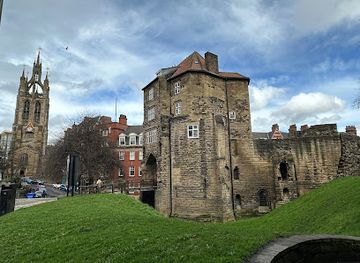
Newcastle Castle stands as a Grade I listed medieval fortress in the heart of Newcastle upon Tyne, comprising two surviving structures: the imposing 12th-century Keep and the 13th-century Black Gate. Built on a site with roots stretching back to Roman times, this Norman stronghold has witnessed nearly a thousand years of English history, from its foundation by Robert Curthose in 1080 through the English Civil War. Today, visitors explore ancient passageways, climb to panoramic rooftop views, and discover the turbulent stories of medieval life within these enduring stone walls.
A brief summary to Castle Garth
- Newcastle upon Tyne, NE1 1RQ, GB
- Duration: 1.5 to 3 hours
- Mid ranged
-
 Mixed
Mixed
- Mobile reception: 5 out of 5

Know before you go
Hi, I'm Eve. Here are a few practical things to know before exploring Castle Garth.
- Arrive early in the day to avoid crowds and allow ample time to explore both the Black Gate and Castle Keep. Last entry is at 4 PM, with the Black Gate closing at 4:30 PM and the Keep at 5 PM.
- Wear comfortable shoes with good grip—the Keep features many steep medieval stairs and uneven surfaces. The Black Gate is fully accessible with ramps and an external lift, making it the better choice for visitors with mobility concerns.
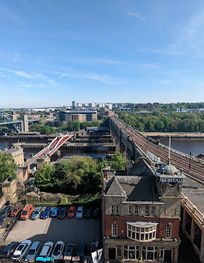
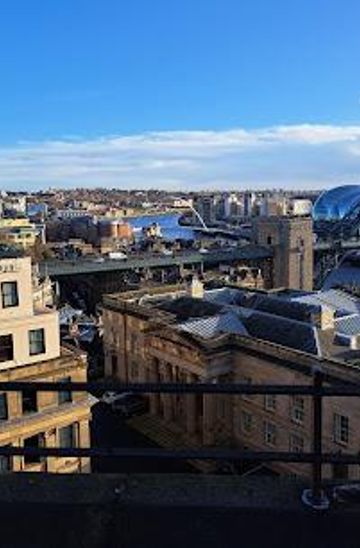
- Climb to the Keep's rooftop for commanding panoramic views of Newcastle's city center and the River Tyne. The effort is rewarded with some of the finest vantage points in the city.
- Your ticket is valid for 365 days from purchase, allowing multiple visits at no extra cost. This makes it ideal for exploring different sections on separate visits or returning to discover details you may have missed.
- Bring your own water bottle—the castle has no drinking fountains. St Nicholas Cathedral next door has a café open weekday mornings, and the Quayside is less than five minutes' walk away with numerous food and drink options.
Do you manage this location?
Take control to get all the benefits, like improved information, better appearance, and stronger visibility across AI-powered discovery. Learn more
Activate your presenceOther nearby places you may find interesting
Getting There
-
Metro
Newcastle Metro (light rail) provides the most convenient access. Monument Station and Central Station are both within 5–10 minutes' walk of Castle Garth. Trains run frequently throughout the day (typically every 5–10 minutes during peak hours). A single journey ticket costs around £1.80–£2.50 depending on zones traveled. The journey from most areas of Newcastle takes 10–20 minutes.
-
Train
Newcastle Central Station is approximately 10 minutes' walk downhill from Castle Garth. From the station, head north through the city center toward the Civic Centre and follow signs to Castle Garth. This option is ideal if arriving by mainline rail from other UK cities. Regional and national train services operate throughout the day with varying frequencies depending on your origin.
-
Bus
Multiple local bus routes serve the city center and stop within walking distance of Castle Garth. Journey times vary depending on your starting point, typically ranging from 10–30 minutes. Single fares cost approximately £1.80–£2.50. Check local timetables for specific routes, as services vary by time of day and day of week.
-
Walking
If staying in central Newcastle, Castle Garth is highly accessible on foot. From the Quayside (5 minutes), Grey's Monument (8 minutes), or the Cathedral (3 minutes), the route is straightforward with clear signage. The final approach involves climbing Castle Garth itself, a steep cobbled street with steps—allow extra time if you have mobility concerns or are carrying luggage.
For the on-the-go comforts that matter to you
-
 Restrooms
-
 Food Options
-
 Seating Areas
-
 Information Boards
-
 Visitor Center
Discover more about Castle Garth
From Roman Fort to Norman Fortress
The ground beneath Newcastle Castle holds layer upon layer of history. Long before the Normans arrived, the Romans recognized the strategic value of this rocky outcrop overlooking the River Tyne. Around 122 AD, they constructed Pons Aelius—a fort and bridge settlement named after the Roman emperor Hadrian—to protect a vital crossing point and supply route. Fragments of this Roman occupation remain visible today beneath a railway arch, a tangible link to nearly two millennia of continuous use.When William the Conqueror's eldest son, Robert Curthose, returned from campaigning against the Scots in 1080, he chose this very site to build a new fortress. His "New Castle upon Tyne" was constructed in the traditional motte-and-bailey style using earth and timber, and it would eventually give the entire city its name. For nearly a century, this wooden structure served as the primary defense of the settlement, though nothing of it remains above ground today.The Stone Keep and Medieval Transformation
The castle we see today took its present form during the reign of Henry II. Between 1172 and 1177, the renowned engineer Maurice oversaw a massive reconstruction project, transforming the wooden fortress into a formidable stone keep at a cost of over £1,144—equivalent to more than £600,000 in modern currency. This remarkable building campaign was interrupted twice by Scottish sieges in 1173 and 1174, yet the work persisted, producing the magnificent Keep that dominates Castle Garth to this day.The 13th century brought further enhancements under King John and his successors. A Great Hall, known as the Moot Hall, was constructed within the castle garth—the enclosed courtyard space surrounded by defensive walls. Between 1247 and 1250, the impressive Black Gate was added as a barbican, a fortified gatehouse that controlled access to the inner fortress. These additions transformed Newcastle Castle into one of northern England's most formidable strongholds, capable of withstanding sustained assault.Decline, Decay, and Urban Encroachment
By the early 14th century, the castle's military importance began to wane. As the town walls were completed and the threat of invasion diminished, the fortress gradually lost its strategic purpose. In 1400, Newcastle became a county in its own right, though the Castle Garth remained part of Northumberland—a legal quirk that would have lasting consequences. The Keep was repurposed as a county prison, while the Great Hall served the assizes courts.The turning point came in 1618 when King James I leased the castle to Alexander Stephenson, one of his courtiers. Stephenson seized the opportunity to profit from the site by allowing merchants, craftspeople, and residents to build homes and shops within the castle walls. Cobblers, tavern keepers, and traders established themselves in this semi-autonomous zone, transforming the medieval fortress into a densely packed urban neighborhood. By the end of the 18th century, the castle was almost entirely concealed beneath a maze of dwellings and commercial buildings.Civil War Siege and Victorian Restoration
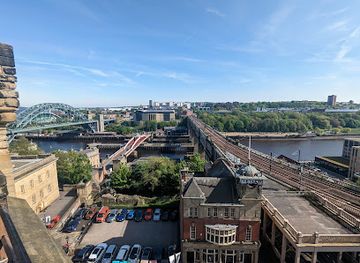
The English Civil War brought one final moment of military significance. In 1643, the Royalist Mayor, Sir John Marley, refortified the castle in preparation for conflict. When the Scottish Covenanter army—allied with Parliament—besieged Newcastle in 1644, the castle became the last stronghold of the town's Royalist defenders. After three months of siege, the garrison surrendered on October 19, 1644, marking the end of Newcastle Castle's active military life.Following the Civil War, the castle's decline accelerated. The slum housing that had accumulated within its walls continued to grow unchecked, creating a lawless quarter where debtors and criminals sought refuge from town authorities. This deterioration persisted until the Victorian era, when a group of history enthusiasts known as the Society of Antiquaries purchased the lease and initiated systematic clearance. Between 1810 and 1847, the medieval structures were painstakingly exposed, the surrounding buildings demolished, and the castle's stonework restored under the guidance of renowned local architect John Dobson. Though the railway viaduct built across the Castle Garth in 1847 obscured the view of the fortress as a unified defensive structure, it also ensured the preservation of these irreplaceable monuments for future generations.Explore the best of what Castle Garth has to offer













More about North East England
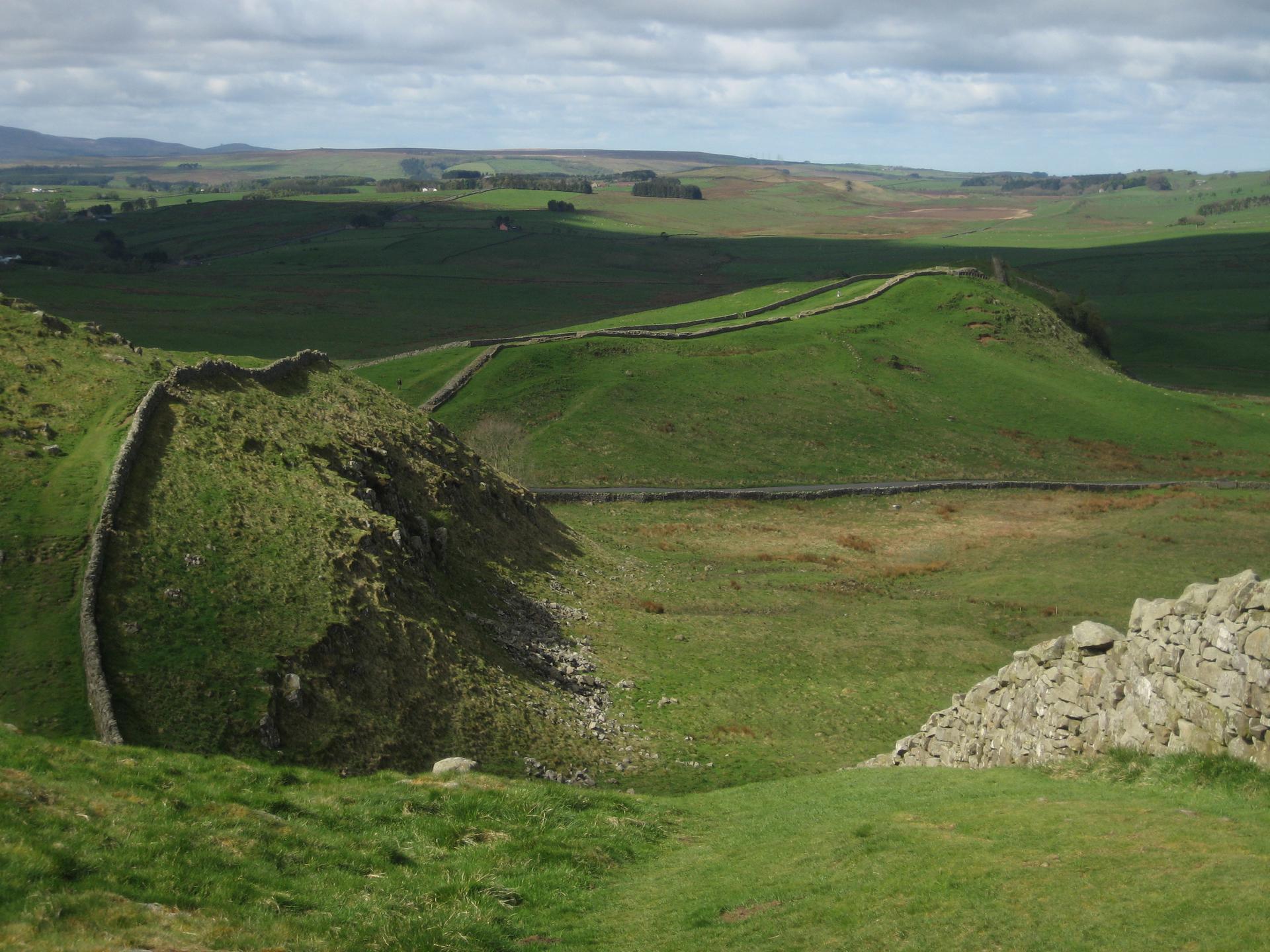
Explore North East England: From Roman Walls to Majestic Cathedrals and Scenic Coastlines, Discover a Region Rich in History and Natural Beauty.
Tell me more about North East England