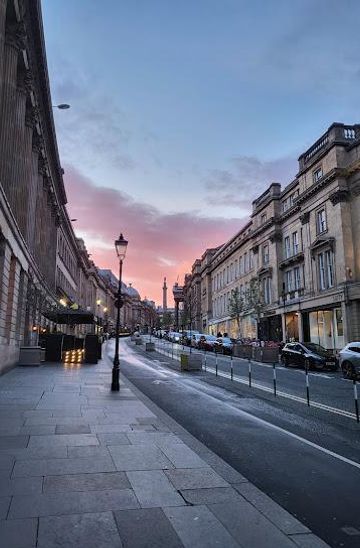
Grey St, North East England Travel Guide
Newcastle's finest street—a sweeping curve of neoclassical elegance and cultural heritage.
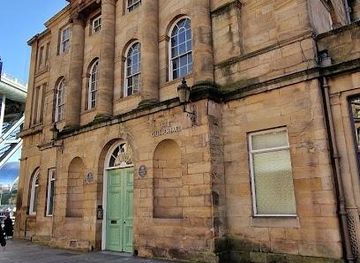
Grey Street is Newcastle's most celebrated thoroughfare, a sweeping curve of neoclassical elegance built between 1837 and 1839 by developer Richard Grainger and architect John Dobson. This Grade I listed street descends gracefully from Grey's Monument toward the Tyne, lined with refined Georgian facades, independent shops, and the Theatre Royal. Often described as one of England's finest streets, Grey Street embodies 19th-century urban ambition and remains the cultural and commercial heart of Grainger Town.
A brief summary to Grey St
- Newcastle upon Tyne, GB
- Duration: 0.5 to 3 hours
- Free
-
 Outdoor
- Mobile reception: 5 out of 5

Know before you go
Hi, I'm Eve. Here are a few practical things to know before exploring Grey St.
- Visit early morning or late afternoon for the best light and fewer crowds. The street's curve is particularly striking when traffic is minimal, allowing you to appreciate the architectural harmony.
- Explore the independent shops and cafés lining the street. Many occupy historic buildings with original features, offering a blend of heritage and contemporary retail.
- Check the Theatre Royal's programme for performances. Even if you don't attend a show, the building's exterior and foyer are architectural highlights worth viewing.
- Walk the full length from Grey's Monument to Mosley Street to experience the complete curve and descending perspective that made the street famous.
- Visit the Central Arcade for its Edwardian design and covered shopping. It provides shelter during wet weather while maintaining period character.
Do you manage this location?
Take control to get all the benefits, like improved information, better appearance, and stronger visibility across AI-powered discovery. Learn more
Activate your presenceOther nearby places you may find interesting
The closest places of the same kind, if this one is not quite what you had in mind.

Explore Grey St on the Map
A handpicked selection of must-see spots near Grey St, mapped for you.
Getting There
-
Metro (Light Rail)
Monument Metro station has its southern entrance directly on Grey Street. Tyne and Wear Metro trains serve the station with frequent service throughout the day. Journey times vary depending on your starting point within the metro network, typically ranging from 5 to 25 minutes from other major stations. Single fares cost approximately £1.70 to £3.00 depending on distance. The station is accessible and well-signposted.
-
Bus
Multiple bus routes serve Grey Street and the surrounding Grainger Town area. Services run throughout the day and evening with varying frequencies. Journey times depend on your starting location and route, typically 10 to 30 minutes from central Newcastle areas. Single fares are approximately £1.70 to £2.50. Bus stops are located along the street and nearby roads.
-
Walking
Grey Street is easily reached on foot from Newcastle Central Station (approximately 10 minutes' walk) or from Northumberland Street shopping area (approximately 5 minutes). The street itself is pedestrian-friendly with level paving. Walking allows you to appreciate the architectural details and the famous curve of the street at your own pace.
-
Taxi or Ride-Share
Taxis and ride-share services operate throughout Newcastle. Journey times from the city centre or railway station are typically 5 to 15 minutes depending on traffic and starting location. Fares vary but expect approximately £6 to £15 for journeys within central Newcastle. Taxi ranks are available near Central Station and other city centre locations.
For the on-the-go comforts that matter to you
-
 Restrooms
-
 Drink Options
-
 Food Options
-
 Seating Areas
-
 Sheltered Areas
-
 Information Boards
Discover more about Grey St
The Vision of Grainger and Dobson
Grey Street stands as the crowning achievement of Richard Grainger's ambitious urban transformation of Newcastle between 1824 and 1841. In spring 1834, Grainger purchased Anderson Place—a prominent medieval house—for £50,000, along with surrounding properties including the old Theatre Royal on Mosley Street. His vision was to create a magnificent thoroughfare connecting Blackett Street with Dean Street, replacing the Butcher and Vegetable Markets with a palatial new street. When Grainger presented his plans to the Town Council on 27 March 1834, they sparked considerable controversy. However, public support proved overwhelming: approximately 5,000 signatures were appended to a memorial in favour of the scheme, while a counter-petition garnered only 300. The Council voted 24 to 7 in Grainger's favour on 12 June, and formal sanction followed on 15 July. The town celebrated with church bells ringing and festivities throughout the streets.Architect John Dobson, born in North Shields in 1787, became the principal designer of this neoclassical masterpiece, though other architects contributed significantly, notably Benjamin Green. The entire western side of Grey Street was designed by John Wardle and George Walker from Grainger's office. Construction began in earnest, with the foundation stone for Grey's Monument laid on 6 September 1837 by Messrs. J. and B. Green, and the column completed by 11 August 1838.Architectural Splendour and Urban Design
Grey Street's most distinctive feature is its graceful descending curve, which follows the historic route of the Lorke Burn, now enclosed beneath the street. The curve was initially called Upper Dean Street before being renamed in honour of Charles Grey, the Northumbrian-born Prime Minister whose monument dominates the street's northern terminus. Sir John Betjeman, visiting in 1948, remarked that the curve surpassed even London's Regent Street, declaring: "As for the curve of Grey Street, I shall never forget seeing it to perfection, traffic-less on a misty Sunday morning. Not even Regent Street, even old Regent Street London, can compare with that descending subtle curve."The street's neoclassical facades display refined proportions and elegant detailing characteristic of the 1830s. The entire development originally included 325 shops alongside residential and commercial spaces, establishing Grey Street as the new commercial focal point for Newcastle. The street runs from Grey's Monument southward, curving gently eastward as it descends toward the Tyne, ending at the junction with Mosley Street where Dean Street, constructed in 1749, begins. In 1862, Prime Minister Gladstone famously described Grey Street as "our best modern street," a compliment that has endured for over 160 years. Sir Nikolaus Pevsner later called it "one of the finest streets in England," and BBC Radio 4 listeners voted it the "Best street in the UK" in 2010.The Theatre Royal: Cultural Landmark
The Theatre Royal, designed by John and Benjamin Green and completed in 1838, stands as a flagship of Grainger's redevelopment. The theatre replaced an earlier Theatre Royal from 1788 that stood on Mosley Street near Drury Lane. The new Theatre Royal opened on 20 February 1837 with a performance of The Merchant of Venice. The building was originally managed by Mr. Penley and has remained a popular venue for drama ever since, hosting many of the greatest players of successive generations who established their reputations on its stage. In 1901, a grand auditorium was added, designed by Frank Matcham, after the original interior was destroyed by fire in 1889. The theatre features one of the country's finest theatre facades and continues to serve as a cultural anchor for the city.Grainger Town's Commercial Heart
Grey Street forms the nucleus of Grainger Town, the historic commercial centre of Newcastle covering approximately 36 hectares. The area is almost entirely within Newcastle's Central Conservation Area, one of the first designated in England. Beyond Grey Street itself, the development includes Grainger Street and Clayton Street, all designed in classical style. The Grainger Market, designed by John Dobson and opened in 1835, provided covered shopping facilities with separate sections for meat and vegetable markets. The Central Exchange, containing the Edwardian Central Arcade, adds further architectural distinction to the area. Today, Grey Street and its surroundings feature high-quality shopping including designer fashions and jewellery, maintaining its role as a premier retail destination.Heritage and Modern Significance
Grey Street's heritage extends beyond its architecture to its role in Newcastle's social and political history. The street witnessed significant moments, including celebrations related to the suffragette movement in the early 20th century. The area around Grey's Monument continues to expand as a cultural and commercial hub. Despite challenges in the 1960s and 1970s when approximately a quarter of Grainger's original scheme was demolished for modern developments such as Eldon Square Shopping Centre, Grey Street itself has been carefully preserved. The street remains largely traffic-free during certain hours, allowing visitors to experience the architectural harmony that so captivated Betjeman. Monument Metro station, with its southern entrance on Grey Street, provides convenient access to this historic thoroughfare.












Your all‑in‑one travel companion app
Explore expert travel guides, compare and book tours, experiences, hotels, and more—all from the palm of your hand. Download now for seamless trip planning wherever your wanderlust takes you.


Explore More of North East England
Looking beyond Grey St? Discover North East England for broader travel guides, local hot-spots, and regional highlights.
Explore North East England