

Leith (Edinburgh) Travel Guide - Free
Explore Leith in Edinburgh with Evendo's free guide. Find the best shops, historic streets, restaurants, and gems on web or mobile.


Leith, Edinburgh blends maritime history, the Water of Leith, destination dining, creative bars, markets and the Royal Yacht Britannia by the docks.
A Port with Its Own Character
Leith occupies the northern edge of Edinburgh where the Water of Leith reaches the Firth of Forth. Though administratively part of the city since the early twentieth century, it retains a strong sense of having been a separate port town: its streets are broader and more workaday than those of the Old Town, its history is tied to shipping and trade, and its local identity remains unusually pronounced. The Shore, facing the tidal river, is the neighbourhood’s best-known waterside quarter, with converted warehouses, bridges, restaurants and pubs lining the route towards the docks.Read more about Leith
Historic Streets and Working Waterfront
Food, Culture and the Docks
Best attractions in Leith
The Shore is Leith’s principal sightseeing area, following the Water of Leith past former warehouses, stone buildings, bridges and waterside terraces. A walk towards the docks reveals the neighbourhood’s transition from historic port to redeveloped waterfront, while Leith Links offers an expansive green space associated with the old burgh and early golf history. At Ocean Terminal, the Royal Yacht Britannia provides the area’s most substantial visitor attraction, allowing visitors to explore the former royal vessel and its interiors. The Water of Leith itself offers quieter stretches for walking and wildlife observation, although routes can be interrupted by roads and harbour infrastructure. Nearby cultural venues and independent businesses add interest, but Leith’s appeal lies less in a dense sequence of monuments than in the contrast between maritime remnants, working urban streets, contemporary food culture and open views towards the Firth of Forth.
-
Tourist attraction
The Royal Yacht Britannia
Explore the majestic Royal Yacht Britannia in Edinburgh, a unique floating palace that reveals royal life at sea across five fascinating decks.
5 min drive · 1.6 km from neighbourhood centre
-
Pub
Teuchters Landing
Waterside freehouse on Leith’s Shore — wide whisky range, rotating ales, dockside beer garden and roomy conservatory for all seasons.
12 min walk · 1.0 km from neighbourhood centre
-
Park and Garden
Leith Links
Historic green oasis in Edinburgh’s Leith district, birthplace of golf and witness to centuries of Scottish history.
4 min walk · 0.3 km from neighbourhood centre
-
Gastropub
The King's Wark
A centuries-old Leith gastropub serving seasonal Scottish seafood and classic pub fare in a cosy waterside setting.
10 min walk · 0.8 km from neighbourhood centre


Best landmarks in Leith
Leith’s landmarks reflect its history as a port rather than a ceremonial city quarter. Trinity House on Kirkgate is a major reminder of the authority and wealth of Leith’s merchant community, with maritime connections reaching back centuries. The Shore preserves the scale and materials of the old waterfront through warehouses, stone façades, bridges and former commercial premises adapted for new uses. Leith Links forms another important historic landscape, associated with the burgh’s civic life and early golf tradition. At the northern docks, the Royal Yacht Britannia is both a visitor attraction and a prominent symbol of Leith’s continuing relationship with the sea. The Water of Leith, harbour edges and surviving dock infrastructure provide the physical framework for understanding the neighbourhood’s growth, while newer buildings show how former industrial land has been absorbed into contemporary Edinburgh.
-
Museum
Trinity House Maritime Museum
Explore Leith’s maritime heritage in this elegant Georgian house filled with rare artifacts, historic artworks, and captivating stories of Scotland’s seafaring past.
6 min walk · 0.4 km from neighbourhood centre
-
Historical landmark
Leith Citadel
Explore Leith Citadel’s historic gateway, a surviving remnant of Cromwell’s 17th-century fortress guarding Edinburgh’s vital port.
13 min walk · 1.0 km from neighbourhood centre
-
Historical landmark
Robert Burns Statue
A striking tribute to Scotland’s national poet, Robert Burns, set in the historic maritime district of Leith, Edinburgh.
9 min walk · 0.7 km from neighbourhood centre
-
Historical landmark
Water of Leith Walkway Finish
Edinburgh’s scenic 13-mile riverside trail ends at Leith’s historic waterfront, blending nature, heritage, and urban charm.
9 min walk · 0.7 km from neighbourhood centre


Explore Leith on the map
A handpicked selection of must-see spots in Leith, mapped for you.
Best hotels in Leith
Best restaurants in Leith
Leith has one of Edinburgh’s most recognisable dining areas, particularly around The Shore, Commercial Street and Bernard Street. Restaurants range from polished destination dining to relaxed seafood, modern Scottish cooking, cafés and pub kitchens, with the neighbourhood’s port history lending eating and drinking a strong waterfront context. The Kitchin and Restaurant Martin Wishart are established names associated with Leith’s fine-dining reputation, while Fishers and other long-running local establishments represent a more traditional connection with the shore. Teuchters Landing occupies a former waterside setting and combines food with a broad drinks selection. Leith Walk and the streets leading inland add cafés, bakeries, international cooking and informal places to eat. The scene is varied rather than uniform, with the most concentrated visitor choice near The Shore and more everyday options dispersed through the residential streets.
-
Fine dining
The Kitchin
Experience Scotland’s finest seasonal flavors elevated by classical French techniques in an intimate Leith waterfront setting at The Kitchin.
12 min walk · 1.0 km from neighbourhood centre
-
Restaurant
Roseleaf Bar Cafe
Eclectic family-run bar cafe in Leith serving fresh Scottish classics, inventive cocktails, and a quirky, artistic atmosphere.
11 min walk · 0.9 km from neighbourhood centre
-
Seafood
Fishers
Historic 17th-century watchtower turned seafood haven in Leith, serving fresh Scottish fish with a relaxed, waterfront charm.
12 min walk · 1.0 km from neighbourhood centre
-
Gastropub
The King's Wark
Historic 15th-century gastropub on Leith’s waterfront, serving classic Scottish dishes with fresh local produce in a cosy, character-filled setting.
10 min walk · 0.8 km from neighbourhood centre


Best bars in Leith
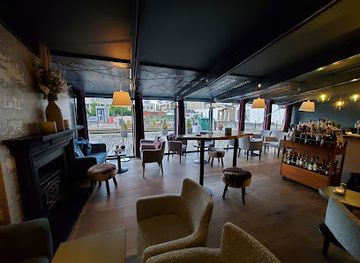
Leith’s evening scene is more varied than a single nightlife strip, combining waterside pubs, neighbourhood bars, restaurant-led drinking and small venues with music or cultural programming. The Shore and Commercial Street are the most visible focus, where former harbour buildings create intimate settings for an evening out, while Leith Walk supplies a longer run of pubs, bars and late-opening venues. Traditional places such as Teuchters Landing retain a strong pub character, and establishments including Nobles contribute to the area’s independent bar culture. Leith is also associated with live music and creative events, although specific programmes change regularly. The atmosphere shifts from dining and conversation near the river to busier late-night activity along the main roads; quieter residential streets begin close by, so visitors should leave venues considerately and use established transport routes.
-
Bar
Roseleaf Bar Cafe
Leith's quirky bohemian café-bar where Scottish comfort food meets Wonderland whimsy in teapots and hearty bowls.
11 min walk · 0.9 km from neighbourhood centre
-
Bar
The Lioness of Leith
Leith's quirky gastropub haven for gourmet burgers, craft cocktails, and electric vibes since 2013—where quality bites meet lively nights.
3 min walk · 0.2 km from neighbourhood centre
-
Pub
Malt & Hops
Historic Leith pub since 1749, pouring real ales and whiskies by a roaring fire amid maritime charm on the Shore.
10 min walk · 0.8 km from neighbourhood centre
-
Pub
The Barologist
A characterful Leith pub-cocktail bar mixing inventive drinks, rustic plates and quirky interiors for relaxed nights and small celebrations.
11 min walk · 0.9 km from neighbourhood centre


Best shops in Leith
Shopping in Leith is strongest in independent and everyday retail rather than large-scale luxury stores. Leith Walk and the streets around the Foot of the Walk combine cafés, convenience shops, specialist food businesses, charity shops, salons and small independent retailers, reflecting the neighbourhood’s mixed residential character. The Shore has galleries, design-led businesses and food-focused establishments, while Ocean Terminal provides a more conventional indoor retail setting alongside the Royal Yacht Britannia. The area is also known for changing local markets and community-oriented events, although their dates and locations vary. Visitors looking for distinctive purchases are more likely to find local food, creative goods, second-hand items and specialist products than a single concentrated shopping district. Exploring beyond the immediate waterfront is worthwhile, since much of Leith’s retail character is embedded in ordinary streets rather than arranged as a dedicated visitor quarter.
-
Gift shop
Build-A-Bear
Craft your own cuddly companion in Leith's lively workshop, where stuffing hearts and dreams creates lifelong memories for kids and families alike.
18 min walk · 1.5 km from neighbourhood centre
-
Gift shop
Britannia Gift Shop
Discover exclusive royal souvenirs and nautical treasures at the Britannia Gift Shop, where the legacy of Queen Elizabeth II's yacht comes alive in every carefully curated item.
5 min drive · 1.5 km from neighbourhood centre
-
Gift shop
Flux
Curated cards, artisan homewares and design-led gifts in a compact, maker-friendly shop on Bernard Street, Leith.
10 min walk · 0.8 km from neighbourhood centre
-
Gift shop
Logan Malloch Ltd
Edinburgh's Leith gem: artisanal gifts, art prints, witty cards, books & Scottish crafts in a charming shop on vibrant Leith Walk.
4 min walk · 0.3 km from neighbourhood centre


Leith essentials
Getting There
Getting Around
Safety
Emergency Situations
Do's and Don'ts
Local Tips

From Eve
Local phrases worth knowing
You don't need to get them perfect. A few words go a long way, and locals appreciate the effort.
Basics
| English | Local | Say it |
|---|---|---|
| Hello | Awrite | [uh-rite] |
| Goodbye | Cheerio | [cheer-ee-oh] |
| Yes | Aye | [aye] |
| No | Naw | [naw] |
| Please/You're welcome | Pleez | [pleez] |
| Thank you | Cheers | [cheers] |
| Excuse me/Sorry | Pardon | [par-dun] |
| How are you? | Hoo ye daein? | [hoo yee day-in] |
| Fine. And you? | Aw richt. An ye? | [aw rikht. an yee] |
| Do you speak English? | Dae ye speak Inglis? | [day yee speak ing-lis] |
| I don't understand | Ah dinnae ken | [ah din-ay ken] |
Eating & Drinking
| English | Local | Say it |
|---|---|---|
| I'd like to see the menu, please | Gies the menu, please | [geez the menu, please] |
| I don't eat meat | Ah dinnae eat meat | [ah din-ay eat meat] |
| Cheers! | Slainte! | [slan-cha] |
| I would like to pay, please | Ah wid like tae pay, please | [ah wid like tay pay, please] |
Emergencies
| English | Local | Say it |
|---|---|---|
| Help! | Help! | [help] |
| Go away! | Geez peace! | [geez peace] |
| Call the Police! | Phone the Polis! | [phone the polis] |
| Call a doctor! | Phone a doctor! | [phone a doctor] |
| I'm lost | Ah'm awa' aff ma heid | [ahm away aff ma heed] |
| I'm ill | Ah'm pure scunnered | [ahm pure skun-erd] |
Shopping
| English | Local | Say it |
|---|---|---|
| I'd like to buy... | Ah wid like tae buy... | [ah wid like tay buy] |
| I'm just looking | Ah'm jist haein a wee swatch | [ahm jist hay-in a wee swatch] |
| How much is it? | Hoo much is that? | [hoo much is that] |
| That's too expensive | Thit's ower dear | [thits our deer] |
| Can you lower the price? | Canny gie iz a better price? | [canny gie iz a better price] |
Time & Numbers
| English | Local | Say it |
|---|---|---|
| What time is it? | Whit time is it? | [whit time is it] |
| It's one o'clock | It's yin o'clock | [its yin o-clock] |
| Half past (10) | Half ten | [half ten] |
| Morning | Mornin | [morn-in] |
| Afternoon | Eftirnuin | [eft-ir-nu-in] |
| Evening | Evenin | [even-in] |
| Yesterday | Yestreen | [yes-treen] |
| Today | The-day | [the-day] |
| Tomorrow | Maurra | [maw-ra] |
| 1 | Yin | [yin] |
| 2 | Twa | [twa] |
| 3 | Three | [three] |
| 4 | Fower | [fow-er] |
| 5 | Five | [five] |
| 6 | Sex | [sex] |
| 7 | Seiven | [sev-en] |
| 8 | Echt | [echt] |
| 9 | Nin | [nin] |
| 10 | Ten | [ten] |
Transport & Directions
| English | Local | Say it |
|---|---|---|
| Where's a/the...? | Whaur's a/the...? | [whaur's a/the] |
| What's the address? | Whit's the address? | [whit's the address] |
| Can you show me (on the map)? | Canny sho me (on the map)? | [canny sho me (on the map)] |
| When's the next (bus)? | Whin's the next (bus)? | [whins the next (bus)] |
| A ticket (to ....) | A ticket (tae ....) | [a ticket (tay)] |
History of Leith
Medieval Port and Royal Burgh
Leith’s recorded history is closely connected with the port at the mouth of the Water of Leith. In the medieval period, the settlement served Edinburgh’s maritime needs and developed its own civic and commercial identity. Robert the Bruce granted Leith burgh status in 1329, helping formalise its role in trade and harbour administration. The port handled goods, vessels and royal movements that Edinburgh, situated inland, could not manage directly. This relationship was productive but sometimes tense, since Leith and Edinburgh were separate communities with competing interests in customs, commerce and local government.
War, Siege and Maritime Power
Leith’s harbour made it strategically important during conflicts involving Scotland, England and European powers. English forces attacked and burned parts of the settlement in 1544, and the port later became central to the military crisis surrounding the Scottish Reformation. French troops supported the regent Mary of Guise in holding Leith, while Protestant forces and their allies besieged it in 1560. The Treaty of Edinburgh ended the siege and required the withdrawal of French forces. These events left a lasting mark on Leith’s historical identity as both a commercial gateway and a defensible maritime stronghold.
Docks, Trade and Industrial Growth
From the eighteenth century onwards, Leith’s harbour expanded to cope with growing trade, shipbuilding and industrial activity. New docks, warehouses and quays extended the working waterfront, while merchants and shipping companies connected the port with the Baltic, northern Europe and destinations farther afield. The shore became associated with cargo handling, customs, sailors and specialised maritime trades. Institutions such as Trinity House expressed the authority of Leith’s merchant community, while streets of tenements and commercial premises accommodated the expanding population. Much of the built environment visible around the harbour today reflects these centuries of port development and adaptation.
Union with Edinburgh and Urban Renewal
Leith remained an independent burgh until 1920, when it was incorporated into Edinburgh after a politically contested process. The union linked the port more closely to the city’s administration but did not erase Leith’s separate civic memory or local loyalties. Port activity continued through the twentieth century, although containerisation and changes in shipping reduced the importance of some traditional waterfront industries. From the late twentieth century, former docklands and warehouse areas underwent redevelopment, bringing housing, restaurants, offices and cultural uses. The regeneration of The Shore and surrounding docks has created new forms of prosperity while leaving ongoing debates about affordability, identity and the relationship between residents and visitors.
Leith in Photos
Browse through our photo collection highlighting the charm and character of the destination.
Neighbourhoods near Leith
The closest neighbourhoods to Leith, if you have time for more than one stop.
-

-


Swipe for more neighbourhoods
Explore more

Explore more of Edinburgh
Edinburgh blends medieval lanes, castle history, Georgian architecture, literary culture and lively festivals with hills, gardens and coastal escapes.
Explore Edinburgh