
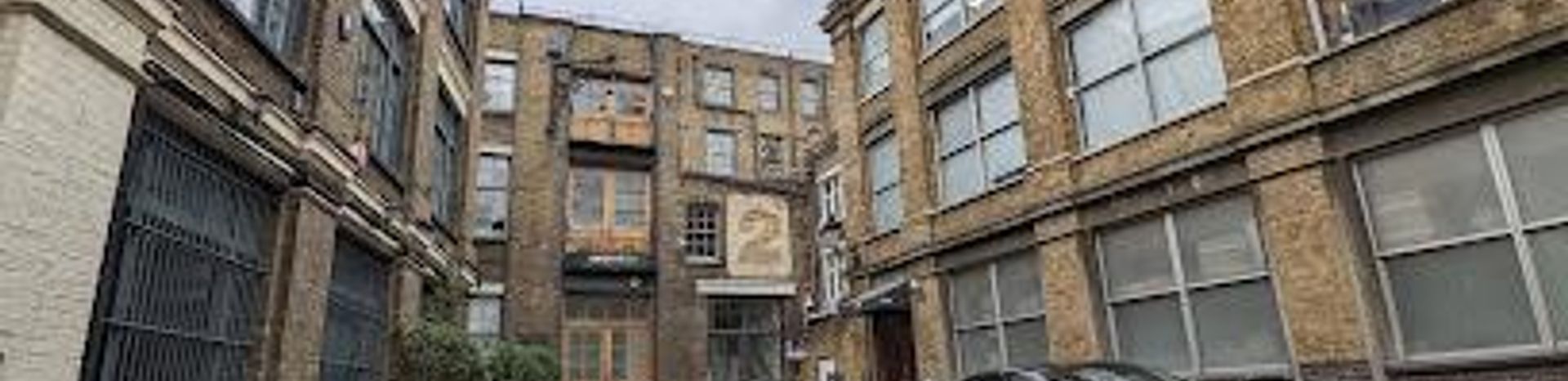
Bleeding Heart Yard
London's most haunted courtyard, where Gothic legend meets gritty Victorian history beneath ancient cobblestones.
Tucked away in Clerkenwell, Bleeding Heart Yard is a historic cobbled courtyard steeped in Gothic legend and dark history. Named after a 16th-century inn sign depicting the Virgin Mary's pierced heart, the yard has become synonymous with the gruesome tale of Lady Elizabeth Hatton, allegedly murdered here in 1626 after dancing with the Devil. Today, this atmospheric alley blends genuine medieval heritage with Victorian warehouses, offering visitors a tangible connection to London's most haunting urban myths and the gritty reality of its past.
A brief summary to Bleeding Heart Yard
- London, GB
- Duration: 0.5 to 2 hours
- Free
-
 Outdoor
- Mobile reception: 5 out of 5
Local tips
- Visit early morning or late afternoon to experience the yard's atmospheric character with fewer crowds and better light for photography. The cobblestones and Victorian warehouses are most evocative during golden hour.
- Combine your visit with nearby Ely Place to see the medieval Chapel of Ely, a rare survivor of the Great Fire of London, and understand the ecclesiastical heritage that shaped this area.
- Stop at the Bleeding Heart Tavern for a drink or meal while absorbing the yard's atmosphere. The pub's history as the Windsor Café and its connection to the location's naming make it an integral part of the experience.
- Read Charles Dickens's *Little Dorrit* before or after visiting to understand how the yard's faded grandeur and working-class character captured the Victorian imagination and shaped its literary legacy.
- Explore the surrounding Hatton Garden area to appreciate how the Hatton family's 17th-century development transformed this corner of London and how the yard fits into the broader neighborhood's evolution.

For the on-the-go comforts that matter to you
- Restrooms
- Drink Options
- Food Options
- Seating Areas
- Information Boards
Getting There
-
London Underground
Take the Circle, Hammersmith & City, or Metropolitan Line to Farringdon Station. Exit and follow signs toward Charterhouse Street. Walk approximately 5–7 minutes northwest through the Clerkenwell streets, passing Charterhouse and turning onto Greville Street, which leads directly to Bleeding Heart Yard. Journey time from central London: 15–25 minutes depending on your starting point. Service runs frequently throughout the day.
-
London Bus
Multiple bus routes serve the Clerkenwell area. Routes 38, 56, 63, 73, 153, and 205 stop near Farringdon or Charterhouse Street. Journey times vary from 20–45 minutes depending on traffic and your starting location. Buses run regularly, though journey times can be unpredictable during peak hours. Single fare approximately £1.75 with contactless payment.
-
Walking from King's Cross
From King's Cross Station, walk south through Clerkenwell Road for approximately 10–12 minutes. Turn onto Greville Street and continue for 3–4 minutes until you reach Bleeding Heart Yard on your left. The walk covers roughly 1.5 kilometers through busy urban streets with full sidewalk access. Allow 20–25 minutes total, including navigation time.
-
Taxi or Ride-Share
Black cabs and ride-share services (Uber, Bolt) can drop you directly at Bleeding Heart Yard or nearby Greville Street. Journey times from central London typically range from 10–20 minutes depending on traffic. Fares vary; expect £8–18 from central locations. Note that the yard itself has limited vehicle access, so drivers will drop you at the nearest street entrance.
Bleeding Heart Yard location weather suitability
-
 Any Weather
Discover more about Bleeding Heart Yard
Origins in Sacred Ground and Ecclesiastical Power
Bleeding Heart Yard's story begins not with blood, but with bishops. In 1290, when Bishop of Ely John Kirkby died, he bequeathed his London residence to his diocese, establishing it as the official home of successive Cambridgeshire bishops whenever they visited the capital. For centuries, this grand mansion dominated the landscape, occasionally rented to nobility—most notably to John of Gaunt, Duke of Lancaster, who sought refuge here after the Peasants' Revolt destroyed the Savoy Palace in 1381. The bishops held this land jealously, and their territorial claims would echo through the centuries, shaping the very geography of the yard that would eventually bear its haunting name.From Dung Heap to Stable Yard: The Arlidge Development
By the 1660s, the Hatton family had acquired neighboring land and demolished their old mansion to construct a fashionable residential district—what diarist John Evelyn called a "little towne." This became Hatton Garden, now famous as London's jewelry quarter. The Bishop of Ely, however, was not pleased. In the early 1680s, developer Abraham Arlidge leased what had been the bishop's dung heap and erected a stable yard on the site. A bitter dispute erupted when Arlidge's construction blocked the bishop's ancient right-of-way. The bishop fought back through legal channels and eventually forced the developer to restore his passage. The yard that emerged from this conflict was named Alldridges after its developer, though the name never quite lost its association with its malodorous origins. The cobbled courtyard, surrounded by modest warehouses and residential buildings, remained a working-class enclave for centuries.The Legend of Lady Hatton and the Devil's Dance
While the yard's true name likely derives from a nearby 16th-century pub sign depicting the Virgin Mary's heart pierced with five swords—a common Christian symbol—it is the legend of Lady Elizabeth Hatton that has captured imaginations for nearly four centuries. According to the most famous version, immortalized in Reverend Richard Harris Barham's 19th-century collection *The Ingoldsby Legends*, Lady Hatton made a pact with the Devil to secure her husband's advancement at court. When Sir Christopher Hatton was granted Ely Place and threw a grand housewarming celebration, the Devil arrived uninvited at midnight. During a dance, he tore out her heart and vanished, leaving only her bleeding organ on the cobblestones the next morning. Though no historical evidence supports this gruesome tale—and the Elizabeth involved remains unclear due to genealogical confusion—the story has become inseparable from the yard's identity, inspiring countless ghost stories and midnight warnings to avoid the alley after dark.Victorian Transformation and Industrial Character
By the end of the 18th century, the yard had been substantially rebuilt with Victorian warehouses that still dominate the space today. The residential population dwindled dramatically; by 1901, only ten people lived there. The yard's character became distinctly industrial, with the rhythmic clanking of metalworking echoing through the cobblestones—imagery that Charles Dickens captured in *Little Dorrit*, where he described the factory of Daniel Doyce beating "like a bleeding heart of iron." The Bleeding Heart Tavern, which still operates on the corner, became a focal point of the community, though it was known for much of the 20th century as the more prosaic Windsor Café. The yard's reputation as a dangerous place persisted well into the 19th century, when it lay adjacent to a notorious dunghill and was home to street performers with trained animals and other marginal trades.Architectural Remnants and Modern Preservation
Today, Bleeding Heart Yard retains much of its Victorian warehouse character, with the original cobblestones still underfoot and period brick facades dominating the space. A striking modern intervention—a 1970s office building recently clad in perforated steel panels designed to evoke 1920s warehouse architecture—adds contemporary contrast to the historic setting. The yard remains semi-enclosed, accessible through narrow passages that descend below street level, a topographical quirk resulting from centuries of urban development around it. Remarkably, a gate between Ely Place and the yard is occasionally opened to preserve the ancient right-of-way that bishops fought so fiercely to maintain—a tradition that continued even during the Blitz of 1940. The medieval Chapel of Ely Place, a survivor of the Great Fire of London, stands nearby as a tangible link to the ecclesiastical heritage that shaped this corner of Clerkenwell.Literary Legacy and Enduring Mystery
Bleeding Heart Yard's cultural significance extends far beyond its physical boundaries. Dickens's portrayal in *Little Dorrit* captured the yard's faded grandeur and the lives of its working-class inhabitants, who found poetry in their humble surroundings despite the yard's grim reputation. The yard has inspired countless ghost stories, urban legends, and historical investigations, all attempting to untangle fact from fiction. Whether one credits the Devil's Dance, a genuine 17th-century murder, or simply the symbolism of a religious inn sign, Bleeding Heart Yard remains one of London's most atmospheric and enigmatic addresses—a place where medieval ecclesiastical power, Gothic legend, industrial grit, and literary immortality converge on ancient cobblestones.For the vibe & atmosphere seeker
- Romantic
- Quirky
- Unique
- Scenic
For the design and aesthetic lover
- Vintage Styles
- Industrial Designs
- Retro Vibes
For the architecture buff
- Historic
- Industrial
- Heritage Neighborhoods
For the view chaser and sunset hunter
- Iconic Views
- Architectural Shots
For the social media creator & influencer
- Instagrammable
- Photo Spots
- Aesthetic Corners
- Architectural Shots
For the eco-conscious traveler
- Car-Free Access
- Public-Transport Accessible
For the kind of experience you’re after
- Myth & Legends
- Cultural Heritage
- Photowalk
- Day Trip
For how adventurous you want the journey to be
- Easy Access
Location Audience
- Family Friendly
- Solo Friendly
- Couple Friendly
- Solo Female Friendly


