

Denmark St, London Travel Guide
Free Guide: Britain's legendary Tin Pan Alley where rock and roll history was written in every studio, café, and guitar shop.


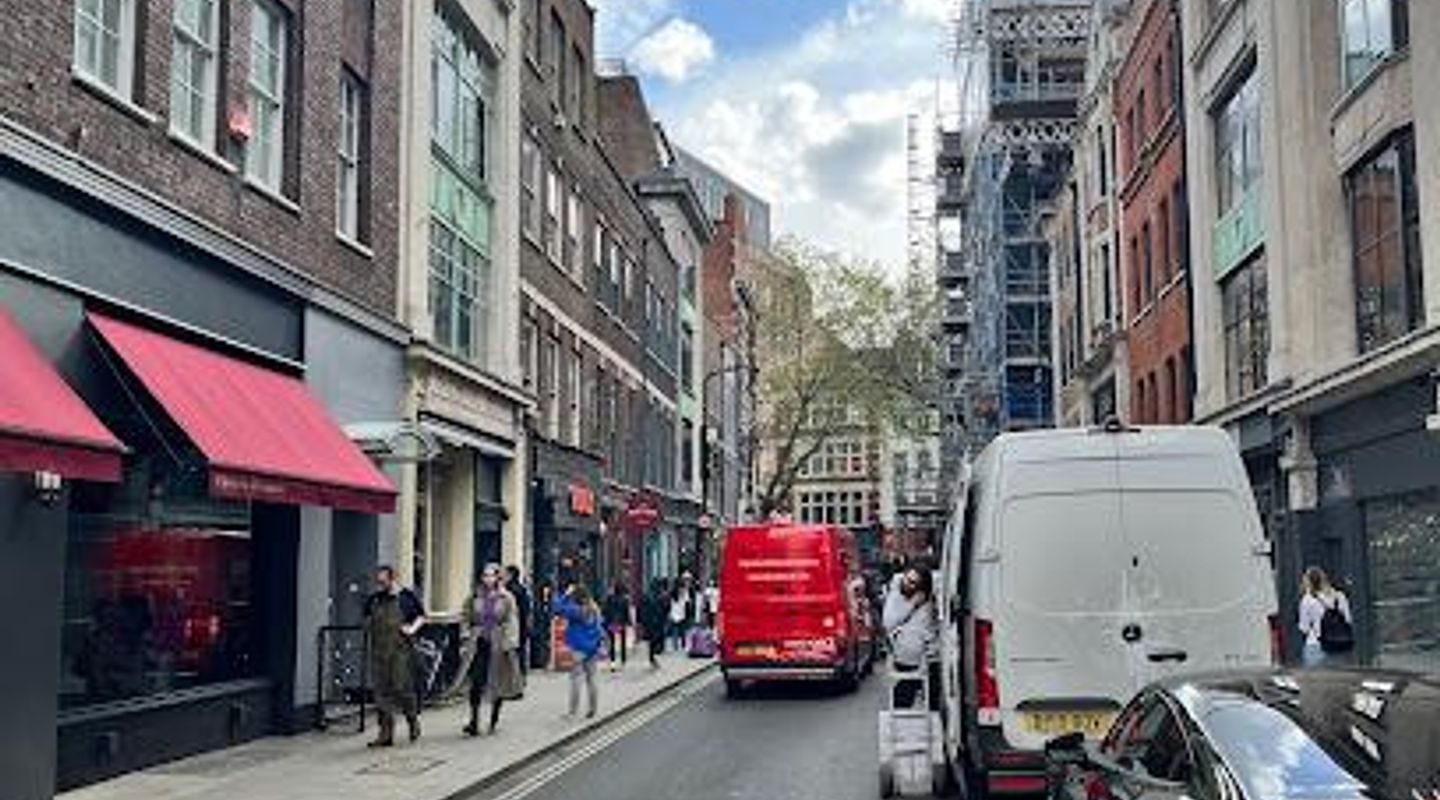
A brief summary of Denmark St
Britain's legendary Tin Pan Alley where rock and roll history was written in every studio, café, and guitar shop.
Denmark Street is a historic 108-foot thoroughfare in London's West End, renowned as Britain's 'Tin Pan Alley' and the epicenter of the music industry for over a century. Built in the 1680s on the grounds of a medieval leper hospital and named after Prince George of Denmark, the street retains its original seventeenth-century facades beneath modern shopfronts. From 1911 onwards, it became home to legendary recording studios, music publishers, and guitar shops where The Rolling Stones, David Bowie, Jimi Hendrix, Elton John, and countless other iconic musicians recorded, composed, and collaborated. Today it remains a vital hub for music retail and live performance, though undergoing significant redevelopment.
On-site amenities
 Restrooms
 Drink options
 Food options
 Seating areas
 Information boards
- Address
- London
Getting there
London Underground
Bus
Taxi or Ride-Hailing
Walking
Discover more about Denmark St
From Medieval Hospital to Musical Mecca
Denmark Street occupies one of London's most historically layered sites. Originally built in the 1680s on the grounds of a twelfth-century leper hospital founded by Matilda, wife of Henry I, the street was named in honour of Prince George of Denmark, who had recently married into the British Royal Family. The street's 108-foot length has witnessed centuries of transformation, yet remarkably, approximately half of the original seventeenth-century terraced houses still stand, their facades preserved beneath contemporary shopfronts. This architectural continuity anchors the street firmly in London's past even as its cultural significance evolved dramatically.For its first two centuries, Denmark Street served as a working-class thoroughfare hosting blacksmiths, cabinet-makers, soap-makers, goldsmiths, and various tradespeople. The surrounding area, known as the rookery of St Giles, was notorious for poverty, disease, and criminality. A devastating cholera outbreak struck the neighbourhood in 1848, yet Denmark Street itself survived the subsequent slum clearances largely unchanged. By the nineteenth century, the street had transitioned to offices and businesses, attracting innovators like Augustus Siebe, inventor of the diving helmet, whose blue plaque commemorates his residence.
The Birth of Britain's Tin Pan Alley
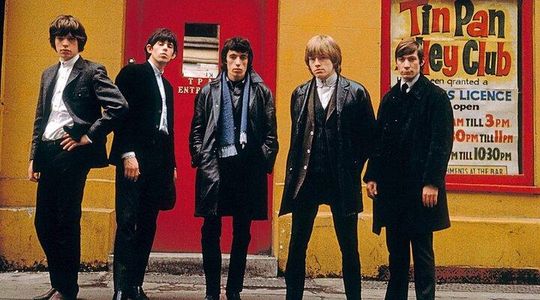
Denmark Street's transformation into a musical powerhouse began in 1911 when music publisher Lawrence Wright established his business there, founding the influential Melody Maker magazine in 1926. From the 1920s through the 1950s, the street became synonymous with popular music publishing, sheet music sales, and the emerging recording industry. By the end of the 1950s, Denmark Street had earned its nickname as Britain's answer to New York's Tin Pan Alley. Music publishers, songwriters, recording artists, and producers crowded the short street, making it essential to the success of virtually every popular song of the era. The NME published the first-ever singles chart from its Denmark Street office, a watershed moment in music history that reflected the industry's shift from sheet music to recorded music.
A Street of Legendary Recording Sessions
No. 4 Denmark Street, home to Regent Sounds Studio, became the recording birthplace of some of rock's most iconic moments. The Rolling Stones recorded their first demo and debut album here in 1964, capturing approximately 24 tracks. Jimi Hendrix rehearsed and demoed material at the studio after his arrival in Britain in 1967, though the band was famously ejected when the jewellery shop above complained about the noise. Black Sabbath recorded their first two albums here, including their self-titled debut and Paranoid. The Who, Elton John, David Bowie (then David Jones), and The Eagles all passed through its corridors. Session musicians including Jimmy Page, Eric Clapton, and Jeff Beck honed their craft within these walls.Elsewhere on the street, No. 6 housed Hipgnosis, the legendary album cover design studio founded by Storm Thorgerson and Aubrey Powell. They achieved fame designing Pink Floyd's A Saucerful of Secrets and The Dark Side of the Moon, later creating iconic artwork for Led Zeppelin, Black Sabbath, Peter Gabriel, and Genesis. No. 9, known for three decades as La Giaconda café, became the legendary meeting place where David Bowie encountered members of The Lower Third and where Ziggy Stardust was partly conceived, inspired by fellow patron Vince Taylor and Lou Reed. Chrissie Hynde recalled sitting there with Vivienne Westwood when members of The Clash and The Slits walked in. The 12 Bar Club at No. 26 served as a launching pad for emerging talent, while Nos. 21–25 housed record labels, producers, and publishers that attracted Chuck Berry, The Kinks, Small Faces, Bob Dylan, AC/DC, Stevie Wonder, and Brian Eno.
The Golden Age of Rock and Roll
During the 1960s and 1970s, Denmark Street became one of London's coolest destinations. The street attracted virtually every major rock and pop artist of the era. Reg Dwight, who would become Elton John, began working at a music publisher on the street in 1963; seven years later, he had changed his name and released 'Your Song'. Bob Marley recorded on the street and purchased his first guitar there. Simon and Garfunkel, Lou Reed, and The Clash all found their way to this remarkable thoroughfare. In the 1970s, guitar shops and a comic book store opened, cementing the street's identity as a destination for musicians seeking instruments and inspiration. The street's guitar-making tradition stretched back to the days of Queen Anne, and by the late twentieth century, it remained London's premier location for purchasing and repairing guitars.
Tragedy and Resilience
On 16 August 1980, Denmark Street experienced one of London's darkest nights. Several unlicensed nightclubs operated in the street with inadequate fire safety measures. When local criminal John Thompson was ejected from one venue, he returned and set fire to the ground floor of a building housing the Spanish Rooms nightclub. The fire spread with devastating speed, and fire escapes were chained shut. Thirty-seven people perished in the blaze, making it one of Britain's worst mass murder incidents. Some survivors escaped by smashing through into an adjacent guitar shop. Thompson spent the remainder of his life in prison. Despite this tragedy, the street's cultural significance endured.
Modern Era and Ongoing Transformation
In recent decades, Denmark Street has undergone radical redevelopment. The arrival of the Elizabeth Line at nearby Tottenham Court Road station and extensive surrounding construction projects have transformed the urban landscape. Major developments including Centre Point (1960s) and Central St Giles (2000s) have reshaped the neighbourhood. Remarkably, one of the world's first music download platforms was launched on Denmark Street in 1994, continuing the street's tradition of disrupting the music industry. Today, the street retains its irresistible charisma as a hub for live music, guitar retail, and recording, though its character continues to evolve amid ongoing urban regeneration.
Evendo Review Centre
 Google
Guest reviews
Best time to go
Quietest: Jan, Feb & Nov · at 1am or at 2am or at 5am
Busy times are Evendo estimates for a typical year, to help you plan. Actual crowds vary with events, school holidays and the weather.
Explore Denmark St on the map
A handpicked selection of must-see spots near Denmark St, mapped for you.
Get your free copy of our complete guide to Denmark St, delivered straight to you.
Everything on this page, from opening hours and how to get there to Eve’s tips and the best time to go, in one PDF you can read offline, print or share.
Already have an account? Sign in
Your Denmark St guide is ready.
We'll send it to · Not you? Sign out

Getting your guide ready…
We are putting together a fresh copy of the Denmark St guide. This can take up to a minute.
This can take a few moments. If your browser asks, choose Allow so the download can start. You'll find the guide in your Downloads folder.
Nothing happened? Download it again
Sorry, the guide is taking longer than usual. Please try again in a minute, or get it by email instead.
Unlock the best of Denmark St
Skip-the-line tickets, guided tours with entry, and walking tours of the area, booked in a few clicks.



Other nearby places you may find interesting
The closest places of the same kind, if this one is not quite what you had in mind.
-

-
-
-
-


Swipe for more places
More to explore near Denmark St

 Best experiences near Denmark St
 Best hotels near Denmark St
 Best landmarks near Denmark St
 Best attractions near Denmark St
 Best shops near Denmark St
 Best restaurants near Denmark St
 Best bars near Denmark St
Do you manage this location?
Take control to get all the benefits, like improved information, better appearance, and stronger visibility across AI-powered discovery.
Explore more

Explore more of London
Explore London: A city of iconic landmarks, rich history, vibrant culture, and endless attractions that cater to every taste, making it a must-visit destination.
Explore London
Explore more of United Kingdom
Discover the United Kingdom: A blend of rich history, stunning landscapes, and vibrant cities, offering a unique travel experience for every visitor.
Explore United Kingdom
