

St Nicholas Church Leicester
Leicester's oldest place of worship, where Roman foundations meet medieval splendour and 1,100 years of history.
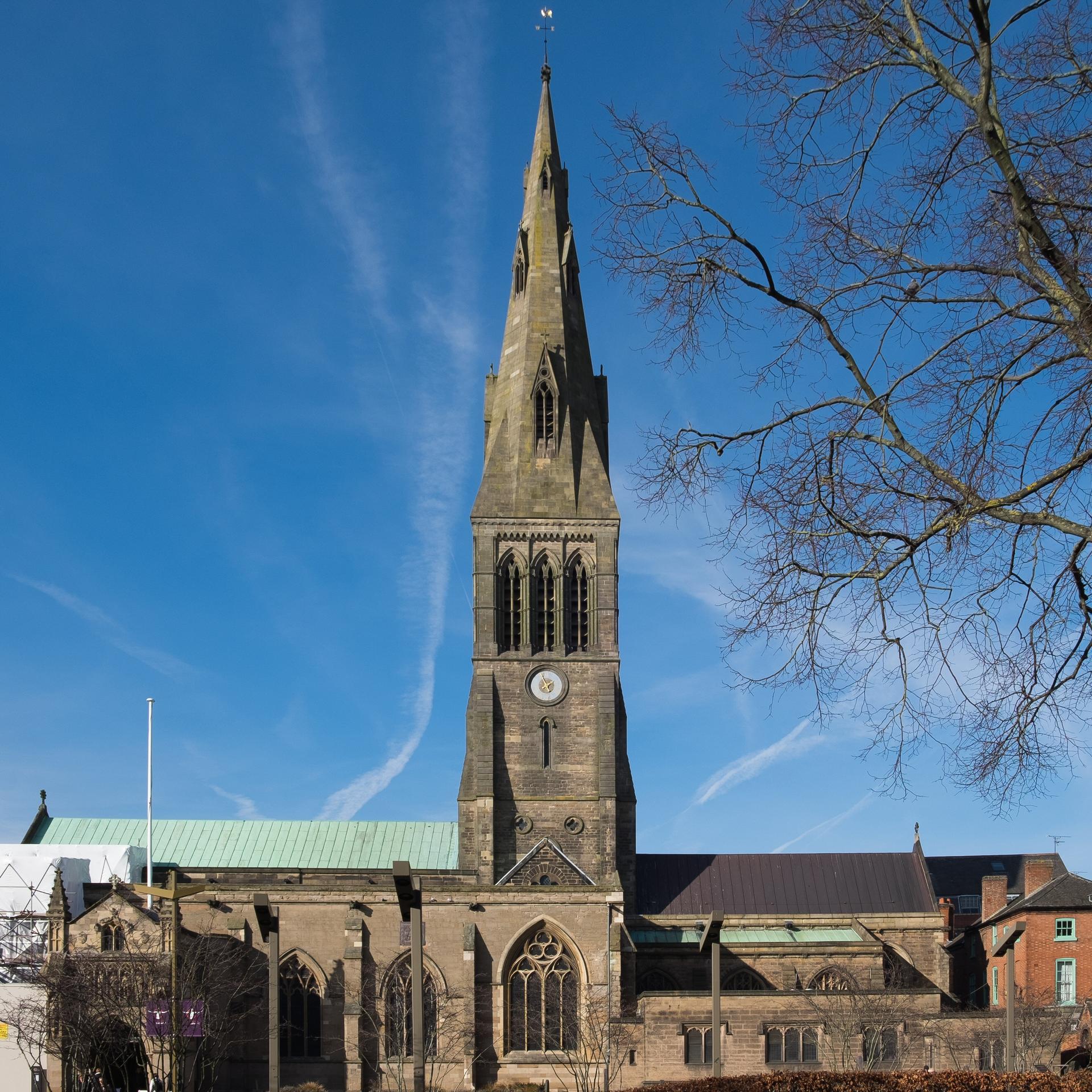
St Nicholas Church stands as Leicester's oldest surviving place of worship, with roots tracing back over 1,100 years to around 880 AD. Positioned adjacent to the Jewry Wall—remnants of Roman Leicester's bath complex—this medieval church embodies layers of history from Roman times through the Norman period to the present day. Its Norman tower, Early English Gothic chancel, and meticulously restored interior reflect centuries of architectural evolution and community devotion.
A brief summary to 23 St.Nicholas Pl
- 23 St.Nicholas Pl, Leicester, LE1 4LD, GB
- Duration: 0.5 to 1.5 hours
- Free
-
 Outdoor
- Mobile reception: 5 out of 5

Know before you go
Hi, I'm Eve. Here are a few practical things to know before exploring 23 St.Nicholas Pl.
- Visit the adjacent Jewry Wall to see the remarkably preserved remains of Leicester's Roman bath complex, just 12 feet from the church entrance. This pairing offers a complete journey from Roman Leicester to medieval times.
- Examine the Norman tower closely—its two lowest stages date between 900 and 1100 AD and represent some of the oldest surviving architecture in the city. The tower's solidity contrasts with the more delicate Early English Gothic of the 13th-century chancel.
- Look for the 15th-century octagonal font inside, relocated from Stamford's Church of Saint Michael the Greater. Its intricate carving reflects the craftsmanship of late medieval England.
- A guidebook is available for purchase inside the church, offering detailed historical information and architectural analysis that enriches understanding of the building's complex evolution.
- Attend a bell-ringing event if possible—the three historic bells (1617, 1656, 1710) were restored and reinstalled in 2002 and continue to mark significant occasions in Leicester's calendar.
Do you manage this location?
Take control to get all the benefits, like improved information, better appearance, and stronger visibility across AI-powered discovery. Learn more
Activate your presence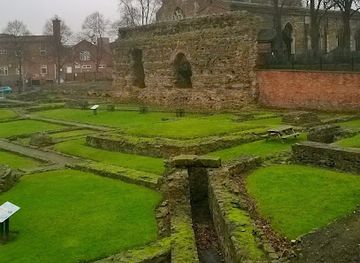
Getting There
-
Public Transport
From Leicester city centre, take any bus service on the inner ring road towards St Nicholas Circle. Journey time is typically 5–10 minutes depending on traffic. Buses stop near the church on St Nicholas Place. Single fares cost approximately £1.50–£2.50. Services run regularly throughout the day, with reduced frequency on Sundays and bank holidays.
-
Walking
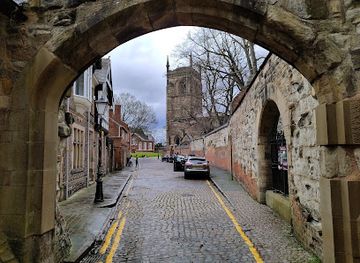
From Leicester Railway Station, walk north-west through the city centre towards the High Street, then continue to St Nicholas Place. The route is mostly flat and paved, taking approximately 15–20 minutes. From the Clock Tower in the city centre, the church is a 5–10 minute walk. The area is well-signposted and pedestrian-friendly.
-
Parking
Street parking is available on St Nicholas Place and surrounding roads, though spaces are limited and subject to time restrictions (typically 2 hours maximum). The nearby Southgates car park, located beneath Jubilee Square, offers multi-storey parking approximately 100 metres away, with charges around £1.50–£2.50 per hour. Disabled badge holders may find designated spaces closer to the church.
-
Taxi
Taxis are readily available from Leicester Railway Station and city centre ranks. Journey time to St Nicholas Church is approximately 5–10 minutes depending on traffic. Typical fares range from £6–£12. Ride-hailing apps operate in Leicester and offer similar journey times and pricing.
For the on-the-go comforts that matter to you
-
 Restrooms
-
 Seating Areas
-
 Information Boards
Discover more about 23 St.Nicholas Pl
A Foundation Built on Centuries of Settlement
The ground beneath St Nicholas Church has witnessed continuous human occupation since the Romans established Leicester as Ratae Corieltauvorum in the 1st century. By the 2nd century, the Roman settlement had grown substantial enough to support baths, temples, and civic buildings—the most significant remains of which lie just 12 feet west of the church in the form of the Jewry Wall. This proximity to Roman heritage makes St Nicholas not merely a medieval structure, but a living bridge connecting modern Leicester to its ancient past. The church's earliest documented phase dates to around 880 AD, though scholars debate whether earlier Saxon structures occupied the site following the Roman withdrawal in the 5th century.From Cathedral to Decline: The Medieval Transformation
In 679 AD, Leicester was elevated to a Bishopric, and the church standing on this site is believed to have served as Leicester's original cathedral. This prestigious status proved short-lived. When the Great Heathen Army of Vikings reached Leicester in the 800s, the Bishop fled the city, and by 886 the diocese was dissolved. Over a thousand years would pass before Leicester regained cathedral status in 1926. Despite this loss of ecclesiastical prominence, the church continued to develop architecturally. Between 900 and 1100, the first two stages of the tower were constructed alongside side chapels. The most dramatic expansion came in the 13th century with the addition of the entire east end—the chancel, Lady Chapel, and a now-vanished chantry chapel—executed in the fashionable Early English Gothic style, likely funded by a single wealthy benefactor as civic wealth migrated toward the Castle and St Martin's Church.Decay, Demolition, and Restoration
From the 16th century onward, St Nicholas entered a prolonged decline. The loss of patronage from the nearby Abbey following the Reformation, combined with structural deterioration, left the church increasingly vulnerable. The north aisle collapsed and disappeared during the 17th century; the side chapels vanished without trace. By the 19th century, the structure was deemed unsafe, the spire had been removed, and windows were sealed with brick and rubble due to lack of glass. By 1825, the church faced demolition, but financial constraints paradoxically saved it. Instead of replacement, an extensive restoration programme between 1875 and 1884 rebuilt the north aisle and arrested further decay. The 20th century brought continued conservation, including the installation of a 15th-century octagonal font salvaged from the former Church of Saint Michael the Greater in Stamford.Historic Furnishings and Modern Stewardship
St Nicholas houses several treasures of considerable age and craftsmanship. A distinctive 1890 organ built by local craftsman J. Porritt incorporates pipework from an earlier instrument dating to the 1830s, creating a hybrid instrument that speaks to the church's layered history. Three historic bells, cast in 1617, 1656, and 1710, were removed in 1949 due to structural concerns but were reinstalled in 2002, rung in celebration of Queen Elizabeth II's Jubilee Visit to Leicester that year. These bells represent nearly four centuries of continuous service, their voices having marked countless moments in the lives of Leicester's residents.A Living Monument in Modern Leicester
Today, St Nicholas Church stands just outside Leicester's inner ring road, one of only five surviving medieval churches in Leicester Old Town. Its Norman tower remains instantly recognisable on the city skyline, while its interior—carefully restored and maintained—welcomes visitors seeking to understand Leicester's spiritual and cultural heritage. The church balances its profound historical significance with a modern, inclusive vision, serving both as an active place of worship and as a tangible connection to over eleven centuries of Leicester's story.Explore the best of what 23 St.Nicholas Pl has to offer













More about Leicestershire
Discover Leicestershire: A captivating blend of history, nature, and culture in the heart of England, offering unique experiences for every traveler.
Tell me more about Leicestershire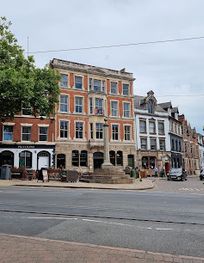
Discover Nottingham’s medieval market heart at the Weekday Cross Monument, a historic symbol of the city’s vibrant trading past and civic life.
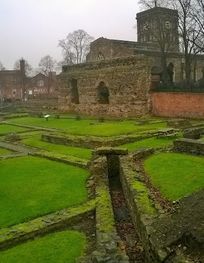
Explore one of Britain’s largest surviving Roman masonry structures and its fascinating public baths in the heart of Leicester.
