RAF Bicester Heritage
Britain's most complete WWII bomber airfield, now a thriving heritage business park preserving aviation and automotive craftsmanship.
RAF Bicester is Britain's most complete surviving World War II bomber airfield, now transformed into Bicester Heritage, the UK's first heritage business park dedicated to historic motoring and aviation. This Scheduled Monument preserves the original 1939 grass flying field, period hangars, bomb stores, and defensive structures that tell the story of RAF expansion and Bomber Command training. Visitors explore authentic wartime architecture, learn about legendary aircraft including the Handley Page Halifax prototype, and witness the restoration of vintage vehicles and aircraft by specialist craftspeople.
A brief summary to RAF Bicester
- Duration: 1.5 to 4 hours
- Free
-
 Outdoor
- Mobile reception: 4 out of 5

Know before you go
Hi, I'm Eve. Here are a few practical things to know before exploring RAF Bicester.
- Visit during daylight hours to fully appreciate the grass flying field's original 1939 boundaries and the spatial layout of the wartime station. The open landscape reveals how aircraft were dispersed and positioned for protection.
- Explore the Type-C hangars and workshops where specialist craftspeople actively restore vintage aircraft and motorcars. Watching restoration work in progress offers insight into traditional engineering skills and the site's living heritage mission.
- Study the defensive structures—pillboxes, trenches, and air-raid shelters—which document the station's wartime preparations. These structures are scattered across the site and provide tangible evidence of WWII-era military strategy.
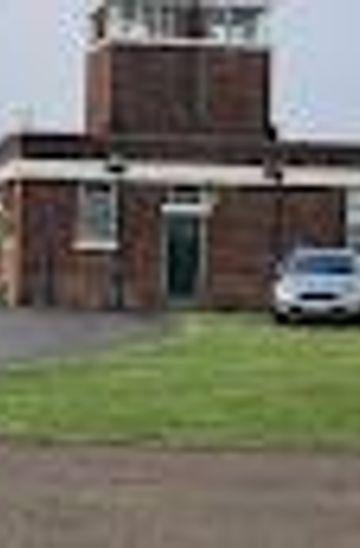
- Allow time to visit the control tower and bomb stores, which represent the operational and logistical heart of the station. These buildings illustrate the complexity of managing a major RAF training facility.
- Check for special events, apprenticeship demonstrations, or heritage talks that may be scheduled. These activities provide deeper context and allow interaction with specialists working on-site.
Do you manage this location?
Take control to get all the benefits, like improved information, better appearance, and stronger visibility across AI-powered discovery. Learn more
Activate your presenceGetting There
-
Car from Bicester Town Centre
From Bicester town centre, drive northwest on the A4421 toward Launton for approximately 3 kilometres. Follow signs for Bicester Heritage or RAF Bicester. The journey takes roughly 8–10 minutes depending on traffic. Ample car parking is available on-site at the heritage business park. No parking fees are charged for visitor parking.
-
Public Transport from Oxford
From Oxford city centre, take the Stagecoach service 20 or 20A bus heading toward Bicester. The journey takes approximately 45–60 minutes. Alight at Bicester town centre, then either take a local taxi for the final 3 kilometres to RAF Bicester (approximately 10 minutes, typically £8–12), or walk to nearby bus stops for onward services toward Launton. Alternatively, Oxford to Bicester North railway station takes 25–30 minutes; from there, a taxi to the site costs approximately £10–15.
-
Cycling from Bicester
RAF Bicester is accessible by bicycle from Bicester town centre via quiet country roads and cycle routes. The 3-kilometre journey takes approximately 12–15 minutes on a standard bicycle. The A4421 has limited cycle infrastructure, so alternative quieter routes through Launton are recommended. The site has secure bicycle parking facilities.
-
Taxi or Ride-Share from Bicester Station
Bicester North railway station (served by services from Oxford, London Marylebone, and Birmingham) is approximately 4 kilometres from RAF Bicester. A taxi or ride-share service takes 10–12 minutes and costs typically £12–18. This option is convenient for visitors arriving by train from London or other major cities.
For the on-the-go comforts that matter to you
-
 Restrooms
-
 Food Options
-
 Drink Options
-
 Seating Areas
-
 Information Boards
-
 Visitor Center
Discover more about RAF Bicester
A Living Testament to RAF Expansion and Strategic Bombing
RAF Bicester stands as the most complete surviving example of a British bomber airfield from the interwar expansion period. Established in 1916 as a Royal Flying Corps training depot, the site was developed into a permanent bomber station beginning in 1925 under the vision of Air Chief Marshal Sir Hugh Trenchard, whose doctrine of offensive deterrence shaped the RAF's independent identity. The airfield's layout, buildings, and defensive structures reflect the strategic thinking that dominated British air power from the 1920s through the Cold War. Today, the grass flying field retains its 1939 boundaries largely intact, bounded by original bomb stores and pillboxes that stand as silent witnesses to wartime preparations.Wartime Training and Historic Firsts
During World War II, RAF Bicester transformed into a critical Operational Training Unit, functioning from 1938 until October 1944. The station trained thousands of aircrew—British, Canadian, Australian, and New Zealand pilots, observers, and gunners—for service in Bomber Command. These operational training units fulfilled the essential role of enabling individual crew members trained in flying, bombing, gunnery, and navigation to form cohesive units ready for combat operations. The airfield achieved historic significance on 25 October 1939, when the prototype Handley Page Halifax made its maiden flight from Bicester. Assembled in secret at the station after being transported by road from Cricklewood, this four-engined bomber went on to become the RAF's second strategic bomber and the first four-engined aircraft to drop bombs on Germany. The Halifax remained in production until 1946, with 6,176 aircraft built in total.Architectural Heritage and Preservation
The site's architectural character reflects the standardised designs produced by the Air Ministry during the 1920s and 1930s expansion. The 1930s extensions carefully matched the style of the 1920s scheme, creating visual coherence across the station. Key structures include Type-C aircraft hangars completed in 1937, a control tower built in 1938 to manage the increasing complexity of airfield operations, and a distinctive group of bomb stores constructed between 1928 and 1939. The main workshops, served by an Air Ministry railway, represent the logistical infrastructure necessary to support bomber operations. Pillboxes, trenches, and other defensive structures built in the early stages of World War II remain visible on the east side of the hangars and across the southern flying field, documenting the station's preparation for potential enemy attack.From Military Station to Heritage Business Park
Following the RAF's closure of the station in 2004, Bicester Heritage purchased the site in 2013 and embarked on an ambitious restoration programme. The organisation has regenerated and restored over 70% of the buildings, transforming the former military airbase into the UK's first heritage business park dedicated exclusively to historic motoring and aviation specialists. This innovative approach preserves the site's character while creating a working environment where traditional skills are practised, taught, and passed to future generations. Specialist craftspeople—upholsterers, sandblasters, engineers, and restoration experts—work within the original hangars and workshops, ensuring that vintage aircraft and motorcars remain in active use rather than confined to museums. The RAF Bicester Conservation Area was removed from Historic England's Heritage at Risk Register in 2009, one of the fastest turnarounds for a site of this scale and significance.Scheduled Monument and Living History
RAF Bicester holds designation as a Scheduled Monument and appears on the National Heritage List for England, recognising its exceptional historical importance. Historic England has provided Heritage at Risk funding to support the restoration of eight defendable air-raid shelters and one gun emplacement, ensuring these structures survive for future generations. The site continues to reveal its secrets—in recent years, archaeologists and heritage specialists have investigated previously undocumented structures, including a mysterious brick shelter discovered in undergrowth near the fuel stores, which may have housed technical equipment during the war years. Visitors encounter not merely preserved buildings but an active community of craftspeople, apprentices, and enthusiasts who embody the site's living heritage.Educational Legacy and Future Vision
Bicester Heritage operates with a commitment to education and skills transfer. The organisation has established apprenticeship programmes, training the next generation of restoration specialists within the historic setting where their predecessors once prepared aircraft for combat. This approach ensures that knowledge of traditional aviation and automotive craftsmanship does not disappear but instead evolves and strengthens. The site attracts visitors interested in military history, aviation heritage, automotive restoration, and the broader story of the RAF's development as an independent air force. By combining heritage conservation with active business operations, Bicester Heritage demonstrates how historic military sites can remain relevant, economically viable, and educationally valuable in the contemporary world.Explore the best of what RAF Bicester has to offer















More about Oxfordshire

Discover Oxfordshire: Experience the timeless charm of England's countryside, historic landmarks, and cultural treasures in the heart of the United Kingdom.
Tell me more about Oxfordshire