

Kinnell Stone Circle Travel Guide
Free Guide: Explore the Bronze Age Kinnell Stone Circle by Loch Tay, a serene and well-preserved prehistoric monument near Killin, Scotland.


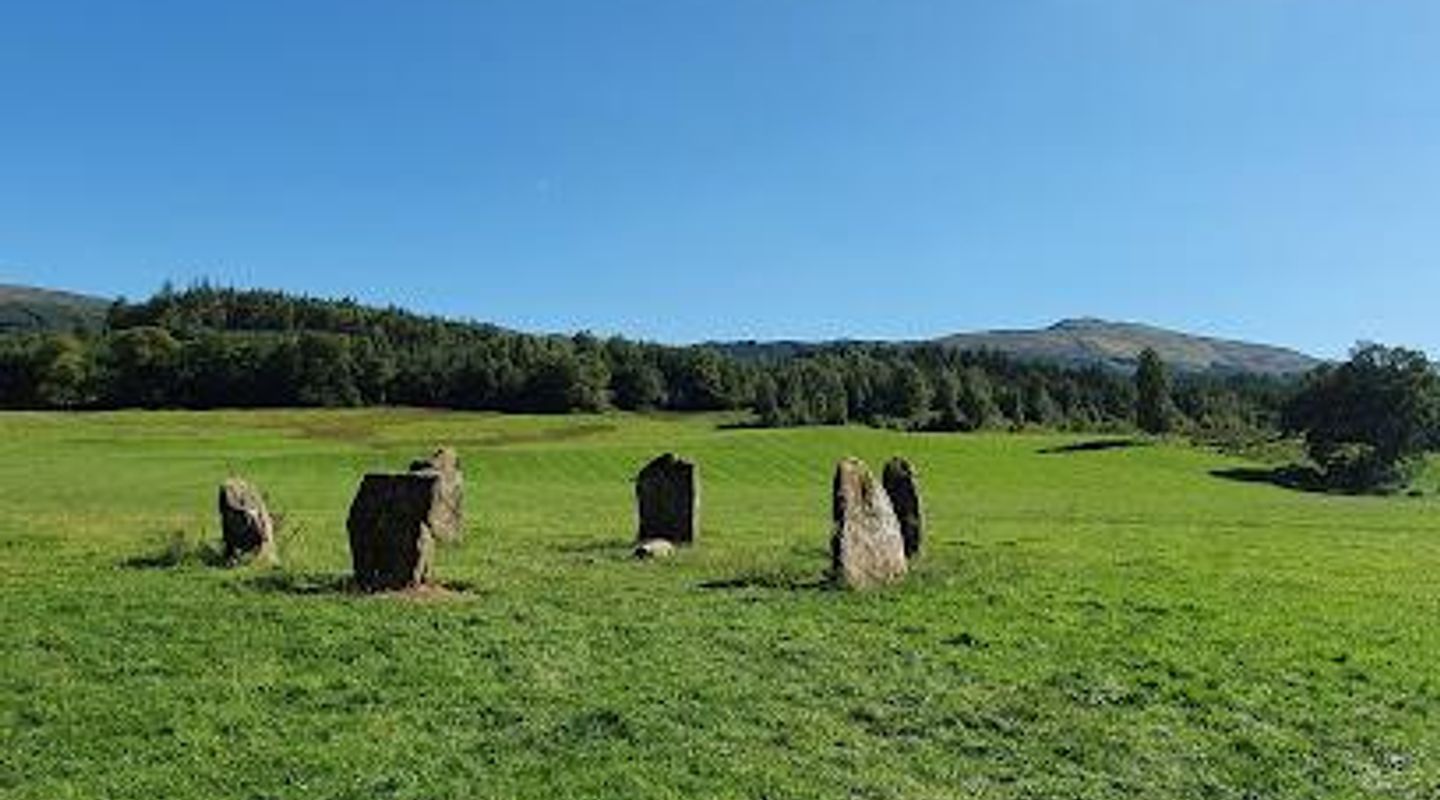
A brief summary of Kinnell Stone Circle
Explore the Bronze Age Kinnell Stone Circle by Loch Tay, a serene and well-preserved prehistoric monument near Killin, Scotland.
The Kinnell Stone Circle, also known as Killin Stone Circle, is a well-preserved Bronze Age monument near Killin, Scotland. Situated at the western end of Loch Tay, this prehistoric site features six upright dark grey schist stones forming a slightly flattened circle about 10 meters across. The tallest stones stand on the southwest side, and the northernmost stone bears three ancient cupmarks. Located on the grounds of Kinnell House, the circle’s excellent condition may be due to 18th or 19th-century restoration efforts.
On-site amenities
 Restrooms
 Drink options
 Food options
 Seating areas
 Information boards
- Address
- Loch Tay, Killin FK21 8SR
Getting there
Bus
Car
Walking
Discover more about Kinnell Stone Circle
Ancient Origins and Historical Setting
The Kinnell Stone Circle is a prehistoric monument dating back to the Bronze Age, located near the village of Killin at the western end of Loch Tay in Stirling, Scotland. This stone circle is part of a wider tradition of similar six-stone rings found predominantly in central and western Scotland. Its placement in a pasture field adjacent to Kinnell House suggests a historical continuity of land use and care, contributing to its remarkable preservation. The site is a scheduled monument, reflecting its cultural and archaeological significance.
Structure and Unique Features
The circle consists of six large upright slabs of dark grey schist rock, ranging from approximately 1.4 to 1.9 meters tall. These stones form a slightly flattened oval measuring about 10 meters in diameter, with the tallest stones positioned side by side on the southwest quadrant. The northernmost stone is distinctive for its three cupmarks—small, hollowed carvings that are believed to hold symbolic or ritual meaning. The stones’ height grading and arrangement suggest deliberate design, possibly related to ceremonial or astronomical functions.
Preservation and Restoration History
Kinnell Stone Circle is noted for being one of the best-preserved examples of its kind in the region. Historical records indicate that the circle may have undergone restoration in the 18th or 19th century, which likely contributed to its current condition. One stone that was partially fallen in the early 20th century has since been re-erected. The circle’s location within the grounds of Kinnell House, historically the seat of the MacNab clan, has helped protect it from agricultural or developmental damage.
Surrounding Cultural Landscape
The stone circle sits within a landscape rich in history and natural beauty. Killin village, nearby, is known for the Falls of Dochart and its connections to the MacNab clan and later the Campbells of Breadalbane. The area offers a blend of cultural heritage and scenic vistas, with Loch Tay providing a tranquil backdrop. The site’s proximity to other historical landmarks, such as Finlarig Castle ruins and the Moirlanich Longhouse, enhances its appeal as a window into Scotland’s ancient past.
Visitor Experience and Significance
Visitors to the Kinnell Stone Circle can appreciate the serene setting and the sense of mystery surrounding this ancient monument. The circle’s design and cupmarked stones invite reflection on Bronze Age beliefs and practices. The pastoral surroundings and views over Loch Tay create a peaceful atmosphere, making it a memorable stop for those interested in archaeology, history, and natural beauty. The site exemplifies the enduring legacy of prehistoric communities in Scotland.
Conservation and Accessibility
As a scheduled monument, the Kinnell Stone Circle is protected by law, ensuring its preservation for future generations. The site is accessible from Killin, with a short walk through pastureland. Its location on private estate grounds requires respectful visitation. The circle’s care over centuries highlights the importance of stewardship in maintaining Scotland’s archaeological heritage.
Evendo Review Centre
 Google
Guest reviews
Best time to go
Quietest: Jan, Feb & Dec · before 6am or at 9pm
Busy times are Evendo estimates for a typical year, to help you plan. Actual crowds vary with events, school holidays and the weather.
Explore Kinnell Stone Circle on the map
A handpicked selection of must-see spots near Kinnell Stone Circle, mapped for you.
Get your free copy of our complete guide to Kinnell Stone Circle, delivered straight to you.
Everything on this page, from opening hours and how to get there to Eve’s tips and the best time to go, in one PDF you can read offline, print or share.
Already have an account? Sign in
Your Kinnell Stone Circle guide is ready.
We'll send it to · Not you? Sign out

Getting your guide ready…
We are putting together a fresh copy of the Kinnell Stone Circle guide. This can take up to a minute.
This can take a few moments. If your browser asks, choose Allow so the download can start. You'll find the guide in your Downloads folder.
Nothing happened? Download it again
Sorry, the guide is taking longer than usual. Please try again in a minute, or get it by email instead.
Other nearby places you may find interesting
The closest places of the same kind, if this one is not quite what you had in mind.
-
-
-
-
-


Swipe for more places
More to explore near Kinnell Stone Circle

 Best experiences near Kinnell Stone Circle
 Best hotels near Kinnell Stone Circle
 Best landmarks near Kinnell Stone Circle
 Best attractions near Kinnell Stone Circle
 Best shops near Kinnell Stone Circle
 Best restaurants near Kinnell Stone Circle
 Best bars near Kinnell Stone Circle
Do you manage this location?
Take control to get all the benefits, like improved information, better appearance, and stronger visibility across AI-powered discovery.
Explore more
Explore more of Scotland
Discover the magic of Scotland: stunning landscapes, historic castles, vibrant cities, and world-famous whisky. An unforgettable journey awaits in this enchanting land.
Explore Scotland
Explore more of United Kingdom
Discover the United Kingdom: A blend of rich history, stunning landscapes, and vibrant cities, offering a unique travel experience for every visitor.
Explore United Kingdom
