

Melville Monument Travel Guide
Free Guide: A commanding granite obelisk atop Dun More hill, honoring Henry Dundas with breathtaking views over Perthshire’s scenic landscapes.


A brief summary of Melville Monument
A commanding granite obelisk atop Dun More hill, honoring Henry Dundas with breathtaking views over Perthshire’s scenic landscapes.
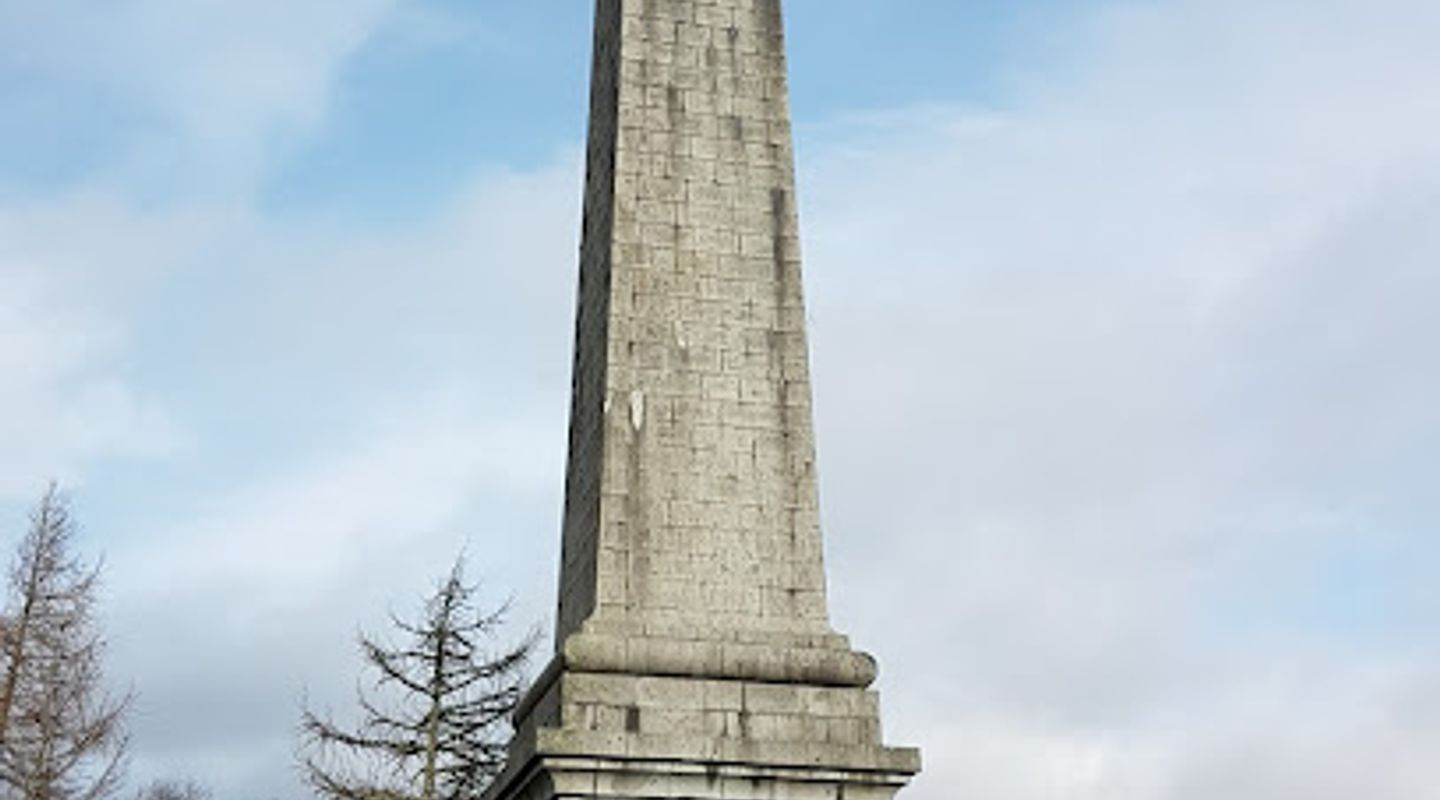
The Melville Monument in Comrie, Perth and Kinross, is a striking 72-foot granite obelisk atop Dun More hill, commemorating Henry Dundas, 1st Viscount Melville. Set in scenic Perthshire countryside, it offers panoramic views of the surrounding landscape and stands as a testament to Dundas’s political legacy and complex historical impact. The monument is accessible via a steep but rewarding hike, making it a notable landmark for visitors interested in Scottish history and natural beauty.
On-site amenities
 Restrooms
 Seating areas
 Trash bins
 Information boards
Opening hours
- Every dayOpen 24 hours
Opening hours as listed on the venue’s Google Business Profile. Hours can change for services and special events, so check with the venue before you go.
- Address
- Crieff PH6 2LY
- Website
Getting there
Car
Walking
Bus
Discover more about Melville Monument
Historical Significance of Henry Dundas and the Monument
The Melville Monument commemorates Henry Dundas, 1st Viscount Melville (1742–1811), a powerful Scottish statesman who played a central role in late 18th-century British politics. Dundas was instrumental in shaping Scotland’s political landscape as Lord Advocate and later as a key government minister. His legacy is complex: while he advanced some progressive causes such as the emancipation of Scottish coal miners and salt workers, he also delayed the abolition of the transatlantic slave trade, a fact that has sparked modern debate and reflection. The monument thus stands as a symbol of both political power and contested historical memory.
Location and Physical Description
Situated on the summit of Dun More, a 256-meter hill just north of Comrie, the Melville Monument is a 72-foot (approximately 22 meters) tall granite obelisk. Its elevated position on Dun More hill makes it a prominent landmark visible for miles around. The obelisk’s classical design, crafted from solid granite, reflects 19th-century commemorative architecture, emphasizing grandeur and permanence. The monument overlooks the picturesque Glen Lednock and the town of Comrie, offering sweeping views of Perthshire’s rolling hills and valleys.
Visitor Experience and Surroundings
Visitors typically reach the monument via a steep but rewarding hike from Comrie, often combined with a walk to the nearby natural attraction, the Deil’s Cauldron. The ascent provides an immersive experience in Perthshire’s woodland and upland scenery. At the summit, the monument’s base serves as a viewpoint, where visitors can enjoy expansive vistas of the surrounding countryside. The area is peaceful and scenic, ideal for nature lovers and history enthusiasts alike. The monument is accessible year-round, with no entrance fee, making it a popular destination for day trips and outdoor excursions.
Architectural and Cultural Context
The Melville Monument’s design is a classic example of an obelisk, a form often used in the 19th century to commemorate notable figures. Its granite construction and simple yet imposing form convey dignity and respect. The monument also forms part of the cultural heritage of the Perthshire region, linking local landscape with national history. It stands as a reminder of Scotland’s political past and the enduring influence of figures like Dundas. The site is also a focal point for reflection on Scotland’s imperial history and the complexities of commemorating historical figures with contested legacies.
Natural Environment and Accessibility
Dun More hill and the surrounding Glen Lednock provide a tranquil natural setting for the monument. The area is characterized by mixed woodland, open moorland, and river valleys, offering a rich habitat for local wildlife. The climb to the monument is steep and on rough paths, suitable for visitors with moderate fitness and good footwear. While the route can be challenging, it rewards hikers with stunning views and a sense of accomplishment. Facilities near Comrie include parking and basic amenities, but visitors should prepare accordingly for outdoor conditions.
Modern Reflections and Interpretations
In recent years, the Melville Monument has been part of broader discussions about how historical figures are commemorated in public spaces. Henry Dundas’s role in delaying abolition of the slave trade has led to calls for contextualization of the monument’s legacy. This reflects a wider movement to critically engage with history, acknowledging both achievements and controversies. The monument thus serves not only as a historical landmark but also as a catalyst for dialogue about Scotland’s past and its ongoing impact on present society.
Evendo Review Centre
 Google
Guest reviews
Best time to go
Quietest: Jan, Feb & Dec · before 6am or at 9pm
Busy times are Evendo estimates for a typical year, to help you plan. Actual crowds vary with events, school holidays and the weather.
Explore Melville Monument on the map
A handpicked selection of must-see spots near Melville Monument, mapped for you.
Get your free copy of our complete guide to Melville Monument, delivered straight to you.
Everything on this page, from opening hours and how to get there to Eve’s tips and the best time to go, in one PDF you can read offline, print or share.
Already have an account? Sign in
Your Melville Monument guide is ready.
We'll send it to · Not you? Sign out

Getting your guide ready…
We are putting together a fresh copy of the Melville Monument guide. This can take up to a minute.
This can take a few moments. If your browser asks, choose Allow so the download can start. You'll find the guide in your Downloads folder.
Nothing happened? Download it again
Sorry, the guide is taking longer than usual. Please try again in a minute, or get it by email instead.
Other nearby places you may find interesting
The closest places of the same kind, if this one is not quite what you had in mind.
-
-
-
-
-


Swipe for more places
More to explore near Melville Monument

 Best experiences near Melville Monument
 Best hotels near Melville Monument
 Best landmarks near Melville Monument
 Best attractions near Melville Monument
 Best shops near Melville Monument
 Best restaurants near Melville Monument
 Best bars near Melville Monument
Do you manage this location?
Take control to get all the benefits, like improved information, better appearance, and stronger visibility across AI-powered discovery.
Explore more
Explore more of Perthshire
Discover Perthshire: Scotland's Heartland of Natural Beauty, Cultural Heritage, and Outdoor Adventure.
Explore Perthshire
Explore more of United Kingdom
Discover the United Kingdom: A blend of rich history, stunning landscapes, and vibrant cities, offering a unique travel experience for every visitor.
Explore United Kingdom
