

Sheffield, United Kingdom Travel Guide
Sheffield travel guide: explore industrial heritage, green parks, galleries, live music, independent food and the Peak District from England's steel city.
A City Shaped by Water and Industry
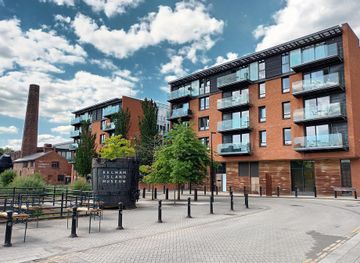
Sheffield rises across seven hills where the River Sheaf meets the River Don, its landscape carrying the marks of both woodland and heavy industry. Once internationally associated with cutlery and engineering, the South Yorkshire city has retained its manufacturing character while developing a strong cultural, educational and creative identity. Former industrial spaces now accommodate cafés, galleries, studios, breweries and music venues, particularly around Kelham Island and the city centre.Heritage in the City Centre
The Millennium Gallery, Graves Gallery and Weston Park Museum provide a useful introduction to Sheffield's art, social history and industrial past, while the National Emergency Services Museum occupies a former police and fire station. Sheffield Cathedral stands at the heart of the old centre, close to Fargate, the Moor and the Winter Garden, a large glasshouse linking the central shopping streets with public gardens. The Crucible Theatre gives the city an international profile through theatre and professional snooker, while the neighbouring Lyceum Theatre and City Hall add to its cultural life.Green Space and the Peak District
Greenery is one of Sheffield's defining qualities: Endcliffe Park, the Botanical Gardens, Graves Park and the wooded Porter Valley all bring accessible countryside into the urban area. To the west, the city meets the Peak District National Park, making Sheffield a practical base for walks around Stanage Edge, Forge Dam and the Hope Valley, although these are excursions beyond the city itself. Independent shops, live music, student energy and a broad dining scene give the centre a contemporary edge without erasing the industrial story embedded in its streets, rivers and surviving workshops.
Know before you go
Hi, I'm Eve. Here are a few practical things to know before exploring Sheffield.
- Use the Supertram and central bus network for neighbourhoods beyond the compact city centre, but allow extra time for Sheffield's hills.
- Walk through the Winter Garden, Millennium Gallery and Peace Gardens to connect several central cultural sights without relying on transport.
- Explore Kelham Island during the day for industrial heritage, independent businesses and riverside cafés, then check evening venue arrangements separately.
- Pack footwear suitable for steep pavements and muddy paths if combining city sightseeing with the western valleys or Peak District walks.
- Try Sheffield specialities such as a local fishcake or dishes featuring Henderson's Relish, a savoury sauce associated with the city.


Explore Sheffield: Things to Do, Places to Eat, Hotels & More
Handpicked recommendations for top attractions, local dining, accommodations, and more

Best attractions in Sheffield
Top-rated picks
Best Attractions

Kinder Scout
Explore Kinder Scout, the Peak District’s highest moorland plateau, famed for wild landscapes, dramatic waterfalls, and rich hiking heritage.

Peak District National Park
Britain’s first national park, offering wild moors, limestone dales, historic villages, and endless trails for every outdoor adventurer.

Mam Tor
Discover Mam Tor, the iconic 'Mother Hill' of the Peak District, offering ancient history, dramatic landslips, and panoramic views over Hope Valley.

Howst Food & Drink
Fresh, all-day brunch and vibrant café culture meet in the heart of Sheffield City Centre at HowSt Food & Drink.

Best landmarks in Sheffield
Top-rated picks
Best Landmarks

St Marie's Cathedral, Sheffield
A Gothic Revival masterpiece rising from three centuries of hidden faith, now Sheffield's beacon of Catholic heritage.
Sheffield Cathedral
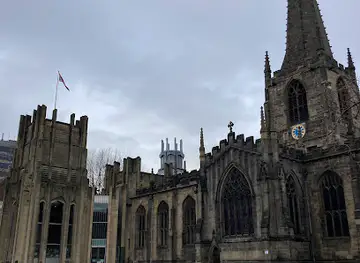
Sheffield’s oldest building in daily use, blending a thousand years of history with modern light, music, and community in the heart of the city.

Carl Wark
Explore Carl Wark, an ancient Iron Age hillfort on a rugged Peak District promontory with sweeping moorland views and rich prehistoric heritage.

Nine Ladies Stone Circle
An ancient stone circle steeped in Bronze Age mystery and modern spiritual reverence, commanding the windswept moorlands of the Peak District.

Best restaurants in Sheffield
Top-rated picks
Best Restaurants

Napoli Centro
Authentic Neapolitan pizza and unique Italian desserts in Sheffield’s vibrant Broomhall neighborhood.

The Chakra Lounge
A vibrant vegan café in Sheffield city centre serving fresh Indo-Western fusion dishes in a cozy, colorful setting with a welcoming community vibe.
Rafters Restaurant
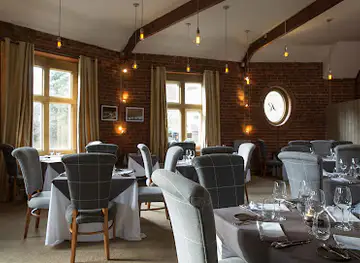
Discover Sheffield’s refined modern British dining at Rafters, where rustic charm meets innovative flavors and impeccable service.

Olive
A vibrant Mediterranean restaurant in Sheffield blending Italian and Moroccan flavors with rustic charm and a welcoming atmosphere.

Best bars in Sheffield
Top-rated picks
Best Bars

Church - Temple of Fun
A vibrant vegan barcade in Sheffield blending bold street food, quirky South American-inspired decor, and lively arcade fun.

The Dark Horse Bar
Sheffield's cozy fusion of pub warmth, cocktail flair, and burger bliss on vibrant Ecclesall Road—perfect for craft drinks and casual nights out.
Trippets Lounge Bar
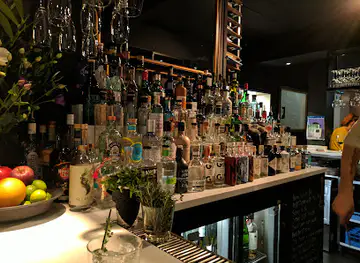
A stylish Sheffield bar blending live jazz, creative cuisine, and fine drinks in a warm, inviting atmosphere.

Bamboo Door
A vibrant tiki-themed cocktail bar in Sheffield City Centre, famed for exotic rum drinks and lively late-night vibes.

Best nightclubs in Sheffield
Top-rated picks
Best Nightclubs

Plot 22
Immerse in Sheffield's underground beats at Plot 22: no phones, pure rave energy, techno to jungle in an intimate 120-cap haven.

The Leadmill
Sheffield's 40-year heartbeat of live music, club nights, and comedy in a gritty, immersive venue near the station—where crowds roar and nights ignite.

The Night Kitchen
Sheffield’s legendary underground nightclub, The Night Kitchen pulses with rich history, vibrant beats, and a community spirit that defines the city’s nightlife.

Popworld - Sheffield
A vibrant nightclub in Sheffield city centre, Popworld offers lively pop beats, affordable drinks, and a welcoming party atmosphere every weekend.

Best shops in Sheffield
Top-rated picks
Best Shops

The Alternative Store
Fiercely independent since 1992, The Alternative Store offers unique Sheffield-inspired alternative fashion with top-quality clothing and jewellery.

Sheffield Store
Affordable, stylish clothing with a charitable spirit at the heart of Sheffield University’s Students' Union.

Airy Fairy
Discover unique gifts and spiritual treasures in a cozy bohemian café setting at Sheffield’s Airy Fairy.

The Famous Sheffield Shop
Discover authentic Sheffield-made cutlery and gifts in a charming shop that celebrates the city’s steel heritage since 1983.

Explore Sheffield on the Map
A handpicked selection of must-see spots in Sheffield, mapped for you.
Sheffield Essentials
-
Sheffield is served by Sheffield railway station, which has direct links to London, Leeds, Manchester, Birmingham and other major British cities, with additional regional services. The station stands on the southeastern edge of the central area, within walking distance of the main cultural quarter. There is no commercial passenger airport in Sheffield itself; Manchester Airport is the principal major international gateway for many overseas visitors, while East Midlands Airport also serves the wider region. Long-distance coaches use Sheffield Interchange, close to the railway station and city centre. The M1 motorway passes east of the city, with road access from junctions serving the urban area.
-
Much of central Sheffield is manageable on foot, although the city is hilly and districts spread along steep-sided valleys. The Supertram links the city centre with areas including Hillsborough, Meadowhall, Middlewood and Halfway, while local buses reach districts not served by tram and provide routes towards the western valleys. Taxis are available in the centre, and cycling is practical on selected flatter routes but more demanding across the hills. Meadowhall is a significant transport interchange east of the centre. Driving is rarely necessary for central sightseeing, and visitors following walks into the Peak District should check rural bus services or consider the practicalities of parking before setting out.
-
The currency is the pound sterling, commonly abbreviated as GBP or £. Debit and credit cards, including contactless payments, are widely accepted in hotels, shops, museums, cafés and restaurants, although small independent businesses or market stalls may have different policies. Cash remains useful for occasional small purchases, and ATMs are available in the city centre and shopping districts; check any charges displayed before confirming a withdrawal. International visitors should choose carefully between paying in pounds or accepting a card provider's currency conversion, as the latter may use its own exchange rate. Tipping is discretionary rather than compulsory, with modest rounding or around ten per cent sometimes offered for good table service.
-
Sheffield is a large regional city and ordinary urban precautions are appropriate. Keep phones, wallets and bags secure in crowded shopping areas, transport interchanges and busy evening streets, and use licensed taxis or recognised ride services when travelling late. Central areas can become quiet between districts after venues close, so plan routes rather than relying on unfamiliar shortcuts. Take care on steep, wet or poorly lit paths, especially around rivers, parks and wooded valleys. If walking in the Peak District, weather can change quickly and paths may be uneven or exposed. Follow local safety notices, avoid entering disused industrial sites and keep valuables out of parked vehicles.
-
In an immediate emergency, call 999 or 112 for police, fire and ambulance services in the United Kingdom. Give the operator the city, street name, building or landmark and any access details, and remain on the line until instructed otherwise. For urgent but non-life-threatening medical advice, NHS 111 can provide guidance by telephone or online, while pharmacies and GP practices can advise on routine healthcare. Visitors should carry travel insurance details and information about regular medication. In the countryside around Sheffield, emergency callers should describe the nearest path, road, car park, grid reference or visible landmark, as mobile coverage can vary in valleys and moorland.
-
Queueing, saying please and thank you, and respecting personal space are appreciated in everyday British interactions. On buses and trams, allow passengers to leave before boarding and follow local signage about tickets and priority spaces. Ask before photographing people in markets, workshops or community settings, and treat historic buildings, parks and waterways carefully. Pubs and restaurants usually expect payment at the bar or table according to the establishment, while tipping is optional rather than a fixed legal requirement. When visiting religious buildings or theatres, observe posted guidance and keep voices low. In the countryside, close gates, keep dogs under control where required and avoid blocking paths or farm access.
-
The city centre, Kelham Island, Sharrow and London Road offer contrasting perspectives on Sheffield's food, independent businesses and changing urban culture. For greenery close to the centre, the Botanical Gardens, Endcliffe Park and the Porter Valley are easily combined with a walk, though routes may include slopes and uneven ground. Kelham Island Museum and Abbeydale Industrial Hamlet explain the city's manufacturing story from different settings, with the latter outside the central core. Check public transport and weather conditions before planning a Peak District outing, as rural services are less frequent than city routes. University term time also influences the atmosphere around West Street, Division Street and Hallam Square.
When is the best time to visit Sheffield?
Useful Local Phrases for Sheffield
You don't need to speak the language perfectly. Even learning a few simple words can make conversations warmer—and locals usually appreciate the effort.
— Eve

Here are the phrases I use most often in Sheffield. Try a few—you'll be surprised how far they go! 😊
❤️
-
- HelloEy up
[ay up] - GoodbyeTa-ra
[tah-rah] - YesAye
[eye] - NoNaa
[nah] - Please/You're welcomePlease
[pleez] - Thank youCheers
[cheers] - Excuse me/SorrySorry
[sor-ree] - How are you?How's tha?
[how's thah] - Fine. And you?Reyt. An thee?
[right. an thee] - Do you speak English?Can tha speak English?
[can thah speak ing-glish] - I don't understandI don’t get it
[I don't get it]
- HelloEy up
-
- I'd like to see the menu, pleaseCan I see t' menu, please?
[can I see t' men-yoo, pleez] - I don't eat meatI don’t eat meat
[I don’t eat meat] - Cheers!Cheers!
[cheers] - I would like to pay, pleaseCan I pay, please?
[can I pay, pleez]
- I'd like to see the menu, pleaseCan I see t' menu, please?
-
- Help!Help!
[help] - Go away!Clear off!
[clear off] - Call the Police!Ring t' coppers!
[ring t' cop-pers] - Call a doctor!Get a doctor!
[get a doc-tor] - I'm lostI’m lost
[I’m lost] - I'm illI’m poorly
[I’m poor-ly]
- Help!Help!
-
- I'd like to buy...I want to buy...
[I want to buy] - I'm just lookingI’m just having a gander
[I’m just hav-ing a gan-der] - How much is it?How much is it?
[how much is it] - That's too expensiveThat’s proper expensive
[that’s prop-er expen-sive] - Can you lower the price?Can tha lower t' price?
[can thah low-er t' price]
- I'd like to buy...I want to buy...
-
- What time is it?Wot time is it?
[wot time is it] - It's one o'clockIt's one o'clock
[it's one o'clock] - Half past (10)Half past ten
[half past ten] - MorningMornin'
[morn-in] - AfternoonAfter-noon
[af-ter-noon] - EveningEvenin'
[eve-nin] - YesterdayYest'day
[yes-ter-day] - TodayToday
[to-day] - TomorrowTomorrah
[to-mor-rah] - 1One
[one] - 2Two
[two] - 3Three
[three] - 4Four
[four] - 5Five
[five] - 6Six
[six] - 7Seven
[seven] - 8Eight
[eight] - 9Nine
[nine] - 10Ten
[ten]
- What time is it?Wot time is it?
-
- Where's a/the...?Where's t'...?
[where's t'...?] - What's the address?Wot's t' address?
[wot's t' ad-dress] - Can you show me (on the map)?Can tha show me (on t' map)?
[can thah show me (on t' map)] - When's the next (bus)?When's t' next (bus)?
[when's t' next (bus)] - A ticket (to ....)A ticket (to ....)
[a ticket (to ....)]
- Where's a/the...?Where's t'...?
History of Sheffield
-
Sheffield developed at the meeting of the River Sheaf and River Don, within a region occupied by communities long before the town received its medieval identity. The name is generally linked to the River Sheaf, while the settlement grew under Anglo-Saxon and later Norman influence. A castle was established by the twelfth century, and Sheffield Castle became the administrative centre of the medieval manor. The town's market and parish church helped create a modest commercial focus, while surrounding valleys supplied water and woodland resources. Although little of the castle survives above ground, its site near the modern Castle Market area remains important to understanding how the settlement was organised before industrial expansion transformed the riverside districts.
-
By the sixteenth century, Sheffield was a market town with an increasingly specialised metalworking economy. Local craftsmen produced knives, tools and other edged goods, building skills that later underpinned the city's global reputation. Sheffield Castle was a substantial stronghold and became associated with Mary, Queen of Scots, who was held there during her captivity in England between 1570 and 1584. The castle was damaged during the English Civil War and later dismantled, leaving the town without its principal medieval landmark. The parish church, market and workshops continued to structure urban life, while Sheffield's access to waterpower encouraged metal trades in the surrounding valleys.
-
Sheffield's distinctive industrial development relied on small workshops as much as on large factories. Streams descending from the surrounding hills powered waterwheels used for grinding and forging, and the town became known for cutlery, files and other precision metal goods. The introduction of crucible steel, associated with Benjamin Huntsman in the eighteenth century, allowed Sheffield makers to produce more consistent high-quality steel. The city's craft economy gradually connected to expanding national and overseas markets. Buildings such as the Abbeydale Industrial Hamlet preserve the setting of earlier water-powered production, while surviving workshops and industrial landscapes explain why Sheffield's industrial history differs from the coal- and cotton-centred growth of many other northern cities.
-
During the nineteenth century, Sheffield expanded rapidly as mechanisation, railways and iron and steel production reshaped the town. New works and housing spread along the Don and its tributaries, and the population grew with workers arriving from across Britain and Ireland. The development of stainless steel in Sheffield, notably through Harry Brearley in 1913, strengthened the city's international industrial importance. Rail connections opened wider markets, while civic buildings, public parks and institutions reflected the confidence of an expanding industrial city. Pollution, overcrowded housing and hazardous work were also part of this transformation, prompting public-health reforms and social improvements that helped define modern Sheffield.
-
Sheffield's steelworks made the city strategically important during both world wars, while its industrial districts and population endured the pressures of wartime production and bombing. After 1945, changing manufacturing conditions brought redevelopment, clearance of older housing and major alterations to the city centre. Some traditional steel operations declined, but advanced engineering and specialist manufacturing remained important. Regeneration projects later returned attention to the rivers and former industrial quarters, with museums, cultural venues and new businesses occupying spaces once devoted to production. Kelham Island Museum, in a former industrial district, provides a particularly direct link between the working city of the nineteenth and twentieth centuries and Sheffield's contemporary identity.
-
Late twentieth- and early twenty-first-century Sheffield developed beyond its industrial image through universities, music, theatre, independent enterprise and environmental investment. The city gained a strong reputation for live music and hosts major cultural institutions including the Crucible Theatre, Millennium Gallery and Sheffield Hallam University's cultural precincts. Public parks, woodlands and valleys remain unusually prominent within the urban boundary, while the western edge provides access to the Peak District National Park. This combination of post-industrial regeneration, surviving manufacturing expertise and extensive green space shapes the city seen today. Sheffield's history is therefore present not only in museums and monuments, but also in its rivers, workshops, public landscapes and adapted industrial buildings.
Cities near Sheffield
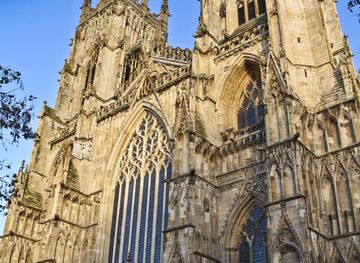
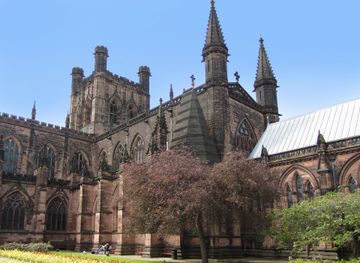
The closest cities to Sheffield, if you have time for more than one stop.



Your all‑in‑one travel companion app
Explore expert travel guides, compare and book tours, experiences, hotels, and more—all from the palm of your hand. Download now for seamless trip planning wherever your wanderlust takes you.


Sheffield in Photos
Browse through our photo collection highlighting the charm and character of the destination.


Sheffield: Steel Heritage and Green Horizons
<h3>A City Shaped by Water and Industry</h3> Sheffield rises across seven hills where the River Sheaf meets the River Don, its landscape carrying the marks of both woodland and heavy industry. Once internationally associated with cutlery and engineering, the South Yorkshire city has retained its manufacturing character while developing a strong cultural, educational and creative identity. Former industrial spaces now accommodate cafés, galleries, studios, breweries and music venues, particularly around Kelham Island and the city centre. <h3>Heritage in the City Centre</h3> The Millennium Gallery, Graves Gallery and Weston Park Museum provide a useful introduction to Sheffield's art, social history and industrial past, while the National Emergency Services Museum occupies a former police and fire station. Sheffield Cathedral stands at the heart of the old centre, close to Fargate, the Moor and the Winter Garden, a large glasshouse linking the central shopping streets with public gardens. The Crucible Theatre gives the city an international profile through theatre and professional snooker, while the neighbouring Lyceum Theatre and City Hall add to its cultural life. <h3>Green Space and the Peak District</h3> Greenery is one of Sheffield's defining qualities: Endcliffe Park, the Botanical Gardens, Graves Park and the wooded Porter Valley all bring accessible countryside into the urban area. To the west, the city meets the Peak District National Park, making Sheffield a practical base for walks around Stanage Edge, Forge Dam and the Hope Valley, although these are excursions beyond the city itself. Independent shops, live music, student energy and a broad dining scene give the centre a contemporary edge without erasing the industrial story embedded in its streets, rivers and surviving workshops.
Explore More of United Kingdom

Looking beyond Sheffield? Discover United Kingdom for broader travel guides, local hot-spots, and regional highlights.
Explore United Kingdom