Whaligoe Steps Travel Guide
Free Guide: A historic cliffside stairway leading to a secluded natural harbour, echoing with the legacy of Scotland’s fishing heritage and rugged coastal beauty.


A brief summary of Whaligoe Steps
A historic cliffside stairway leading to a secluded natural harbour, echoing with the legacy of Scotland’s fishing heritage and rugged coastal beauty.
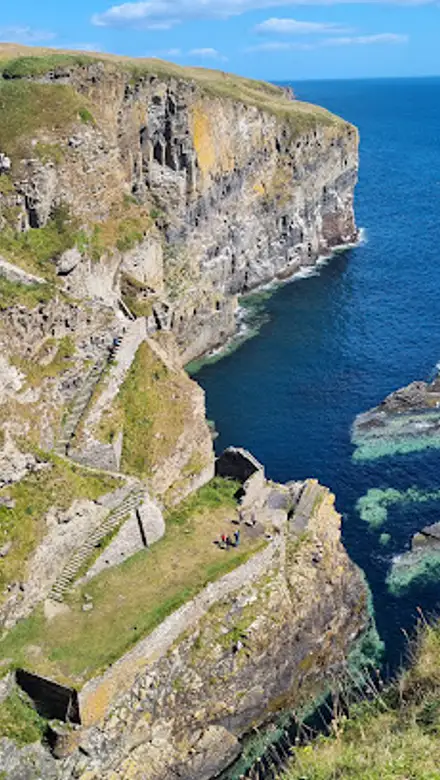
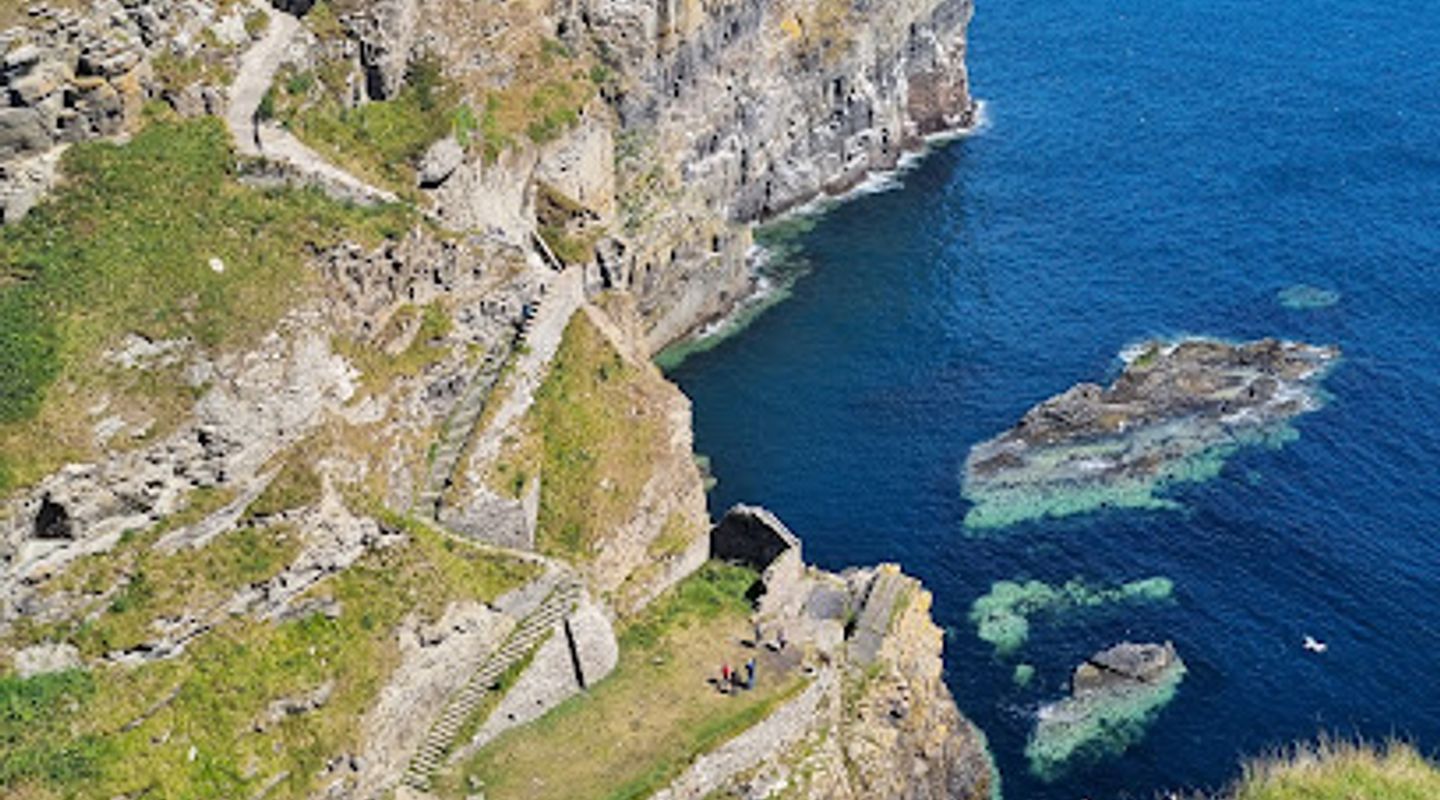
Whaligoe Steps is a dramatic man-made staircase of 330 to 365 stone steps descending a 250ft cliff to a tiny natural harbour on Scotland’s northeastern coast. Once vital for local fishermen and fisherwomen hauling catches to market, this remote site offers breathtaking coastal views, a grassy picnic spot called the Bink, and a glimpse into Scotland’s maritime heritage. The steps are steep and require care but reward visitors with a unique and tranquil atmosphere surrounded by towering cliffs and seabirds.
On-site amenities
 Parking
 Information boards
Opening hours
- Every dayOpen 24 hours
Opening hours as listed on the venue’s Google Business Profile. Hours can change for services and special events, so check with the venue before you go.
- Address
- Whaligoe, Lybster KW2 6AA
- Website
Getting there
Car
Bus
Walking
Discover more about Whaligoe Steps
Origins and Historical Significance of Whaligoe Steps
Whaligoe Steps were commissioned in 1793 by Captain David Brodie, who invested £8 to carve this remarkable stairway into the cliff face to improve access to Whaligoe Haven, a natural harbour surrounded on three sides by 250-foot cliffs. The steps served as a crucial link for the local fishing community, especially during the 19th century herring boom. Fisherwomen, some reportedly in their seventies, would descend these steep stone steps carrying heavy baskets of fish to be processed and transported on foot to markets in Wick, 7 to 8 miles away. The harbour supported numerous boats and fishermen until the mid-20th century, with the last fishing boat arriving in the 1960s. Since then, local volunteers have maintained the steps, preserving this slice of Scottish maritime heritage.
Architectural and Natural Features
The staircase zigzags down the cliff in a series of flagstone steps, with estimates ranging from 330 to 365 steps. The descent is steep and exposed, with a low stone wall on the seaward side for much of the route, disappearing near the bottom to reveal dramatic vertical drops. At the base lies the Bink, a grassy area roughly the size of a narrow tennis court, historically used for storing salt to cure fish. Beyond the Bink, additional steps lead to the rocky Neist shelf by the water’s edge, where remnants of fishing activity such as winches and drilled hoops in the cliffs remain. The surrounding cliffs are home to nesting seabirds like fulmars, oystercatchers, and terns, adding to the wild coastal atmosphere.
Visitor Experience and Surroundings
Visitors approach the steps via a short track past fishermen’s cottages, giving a sense of walking through a lived-in landscape. The route is lined with wildflowers in season and offers spectacular panoramic views of the North Sea and rugged coastline. The climb back up is physically demanding but rewarding, with a waist-high flat rock halfway down where fisherwomen once rested their baskets. Nearby, the Cairn o’ Get, an ancient chambered cairn, offers an additional historical point of interest. The small car park at the top has limited spaces and no facilities, so planning your visit outside peak times is advisable. Donations are encouraged to support ongoing maintenance by local volunteers.
Conservation and Community Efforts
The steps have undergone numerous repairs since their creation, including significant volunteer-led restoration after landslips. Dedicated locals like David Nicolson and historian Iain Sutherland have tirelessly worked to quarry stone, clear rubble, and maintain the path and surrounding grasslands. This community stewardship ensures the steps remain safe and accessible for visitors, preserving an essential part of Caithness’s cultural landscape. The site remains free to visit, emphasizing its value as a shared heritage asset.
Practical Considerations for Visitors
Due to the steepness and uneven stone surface, caution is advised, especially in wet or windy conditions. The steps are not suitable for those with mobility impairments. Parking is free but limited to around 10 vehicles, with alternative parking available at the nearby Cairn o’ Get site, about a 10-minute walk away. There are no public toilets or bins at the car park. The remote location means that personal vehicles are the most practical way to visit, as public transport is sparse. The best times to visit are early morning or late afternoon to avoid crowds and parking difficulties.
Whaligoe Steps in the Context of the Scottish Highlands
Whaligoe Steps is a quintessential North Coast 500 attraction, offering a blend of natural beauty, rugged adventure, and poignant history. It embodies the resilience and resourcefulness of coastal communities in Scotland’s far north and provides a striking contrast to more accessible tourist sites. The dramatic cliffs, echoing harbour, and the physical challenge of the climb create a memorable experience that connects visitors to the region’s maritime past and wild landscape.
Evendo Review Centre
 Google
Guest reviews
Best time to go
Quietest: Jan, Feb & Dec · before 6am or at 10pm
Busy times are Evendo estimates for a typical year, to help you plan. Actual crowds vary with events, school holidays and the weather.
Explore Whaligoe Steps on the map
A handpicked selection of must-see spots near Whaligoe Steps, mapped for you.
Get your free copy of our complete guide to Whaligoe Steps, delivered straight to you.
Everything on this page, from opening hours and how to get there to Eve’s tips and the best time to go, in one PDF you can read offline, print or share.
Already have an account? Sign in
Your Whaligoe Steps guide is ready.
We'll send it to · Not you? Sign out

Getting your guide ready…
We are putting together a fresh copy of the Whaligoe Steps guide. This can take up to a minute.
This can take a few moments. If your browser asks, choose Allow so the download can start. You'll find the guide in your Downloads folder.
Nothing happened? Download it again
Sorry, the guide is taking longer than usual. Please try again in a minute, or get it by email instead.
Other nearby places you may find interesting
The closest places of the same kind, if this one is not quite what you had in mind.
-
-
-
-
-


Swipe for more places
More to explore near Whaligoe Steps

 Best experiences near Whaligoe Steps
 Best hotels near Whaligoe Steps
 Best landmarks near Whaligoe Steps
 Best attractions near Whaligoe Steps
 Best shops near Whaligoe Steps
 Best restaurants near Whaligoe Steps
 Best bars near Whaligoe Steps
Do you manage this location?
Take control to get all the benefits, like improved information, better appearance, and stronger visibility across AI-powered discovery.
Explore more

Explore more of Sutherland
Discover Sutherland, the untamed beauty of the Scottish Highlands, where rugged landscapes, serene lochs, and dramatic coastlines await the adventurous traveler.
Explore Sutherland
Explore more of United Kingdom
Discover the United Kingdom: A blend of rich history, stunning landscapes, and vibrant cities, offering a unique travel experience for every visitor.
Explore United Kingdom