

Favour Royal Travel Guide
Free Guide: Explore Favour Royal, a historic Tudor-Gothic estate near Augher, steeped in royal heritage and surrounded by scenic Northern Irish countryside.


A brief summary of Favour Royal
Explore Favour Royal, a historic Tudor-Gothic estate near Augher, steeped in royal heritage and surrounded by scenic Northern Irish countryside.
Favour Royal is a historic Tudor-Gothic manor and estate located near Augher in County Tyrone, Northern Ireland. Originally granted by King James I in 1613, the estate has a rich history tied to prominent families such as the Ridgeways, Erskines, and Moutrays. The current mansion, built in 1825 after a fire destroyed the original 1670 house, stands beside the River Blackwater amid 740 acres of cultivated land. Though now derelict, it remains a striking symbol of Ulster's plantation heritage and architectural elegance.
On-site amenities
 Seating areas
 Information boards
- Address
- Augher BT69 6BS
- Website
Getting there
Bus
Car
Taxi
Discover more about Favour Royal
Origins and Royal Grants
The land now known as Favour Royal was originally called Portclare and was granted in 1613 by King James I to Sir Thomas Ridgeway, a key figure in the Ulster Plantation. Ridgeway’s grant covered approximately 3,000 acres including the areas around Augher and Aughnacloy. In 1622, Ridgeway sold the estate to Sir James Erskine, whose family received official confirmation of ownership from King Charles II in 1665 under the name Favour Royal, acknowledging the royal favor bestowed upon the estate. The estate was subsequently divided between Erskine’s granddaughters, with one part retaining the Favour Royal name and the other becoming Spur Royal or Augher Castle.
The Moutray Family and Architectural Legacy
The Moutray family became the owners of Favour Royal when John Moutray married the Erskine heiress. They built the first house on the estate in 1670, establishing the demesne that would be home to generations. This original house was tragically destroyed by an accidental fire in 1823. Captain John Corry Moutray then commissioned architect John Hargrave to design a new, larger mansion in the Tudor revival style, completed in 1825. This austere yet elegant two-storey mansion with an attic features a noble portico and fine architectural details, constructed from locally quarried freestone. The Moutrays also built a private chapel on the estate, consecrated in 1835, which remains today as St Mary’s Church, Portclare.
Estate Grounds and Natural Setting
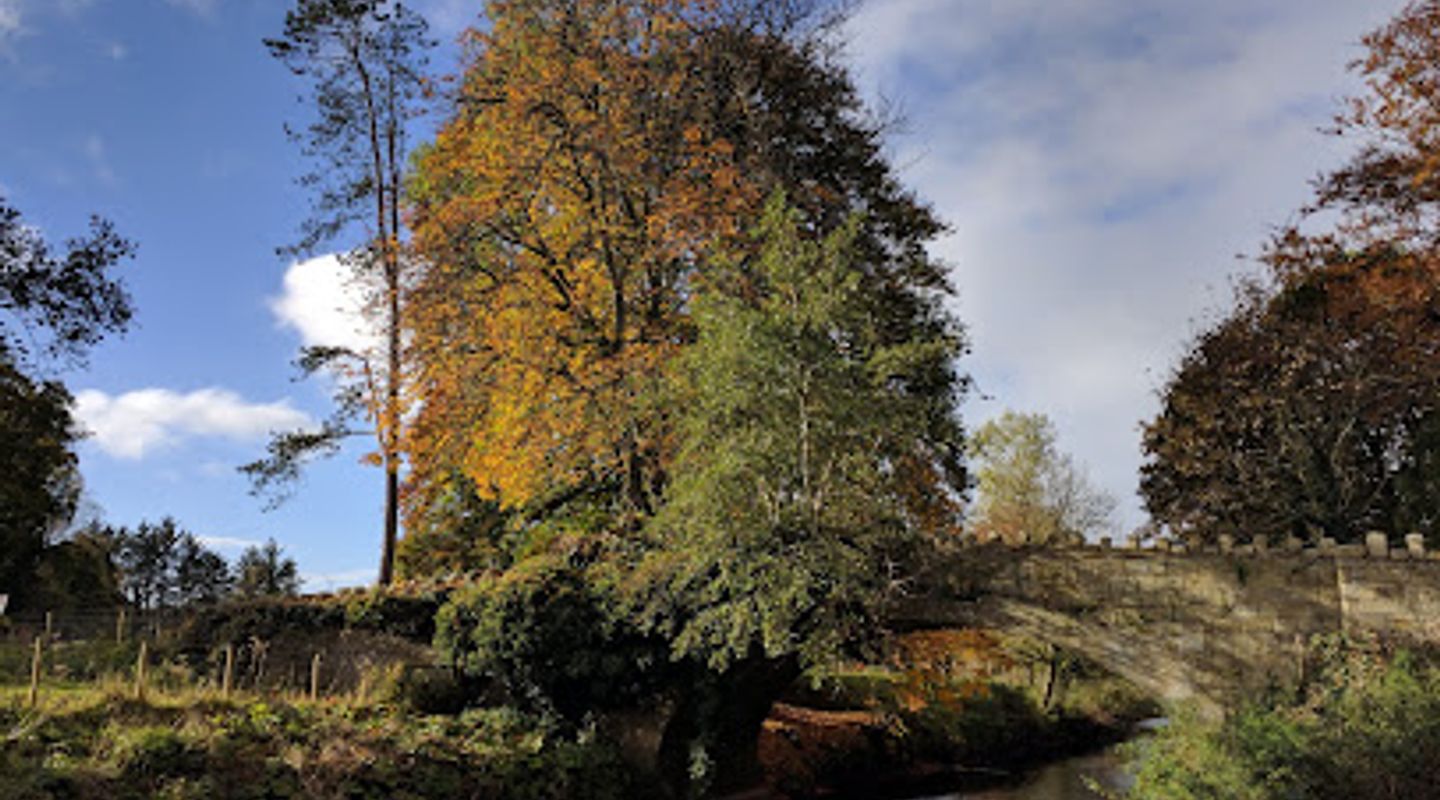
The estate’s demesne spans roughly 740 acres of fertile, well-cultivated land rich in diverse flora and mature woodland. The manor sits on the banks of the River Blackwater, enhancing its scenic charm. Historically, the grounds included sundials and a rockery with medieval carved stones, reflecting the estate’s cultivated character and the aesthetic tastes of its owners. The estate’s natural beauty and historic features make it a significant cultural landscape within County Tyrone.
Decline and Present State
The Moutray family maintained residence at Favour Royal until 1976, when the house, demesne, and contents were sold. Subsequently, much of the land was acquired by the Forest Service. Though the house was occupied into the 1990s, it has since fallen into dereliction, suffering from neglect and further fires. Despite this, the mansion’s Tudor-Gothic architecture and the estate’s historical significance continue to draw interest from heritage enthusiasts and visitors intrigued by Northern Ireland’s plantation history.
Historical Connections and Local Legacy
Favour Royal is linked to notable historical figures, including John Hughes, who worked briefly as a gardener's helper in 1816 before becoming the Catholic Archbishop of New York. The estate’s layered history reflects the complex social and political changes in Ulster over centuries, from royal land grants to plantation settlements, and the evolution of landed estates. Its proximity to Augher and the Irish border situates it within a rich tapestry of Northern Irish heritage.
Architectural and Cultural Significance
The mansion’s Tudor revival style is a distinctive example of early 19th-century architecture in Northern Ireland, blending historicism with local materials. The estate’s chapel, now St Mary’s Church, remains a sacred site for the community. Favour Royal’s combination of architectural elegance, historical depth, and natural beauty encapsulates the story of Ulster’s landed gentry and their estates, making it a unique cultural landmark despite its current abandoned state.
Evendo Review Centre
 Google
Guest reviews
Best time to go
Quietest: Jan, Feb & Dec · before 6am or at 9pm
Busy times are Evendo estimates for a typical year, to help you plan. Actual crowds vary with events, school holidays and the weather.
Explore Favour Royal on the map
A handpicked selection of must-see spots near Favour Royal, mapped for you.
Get your free copy of our complete guide to Favour Royal, delivered straight to you.
Everything on this page, from opening hours and how to get there to Eve’s tips and the best time to go, in one PDF you can read offline, print or share.
Already have an account? Sign in
Your Favour Royal guide is ready.
We'll send it to · Not you? Sign out

Getting your guide ready…
We are putting together a fresh copy of the Favour Royal guide. This can take up to a minute.
This can take a few moments. If your browser asks, choose Allow so the download can start. You'll find the guide in your Downloads folder.
Nothing happened? Download it again
Sorry, the guide is taking longer than usual. Please try again in a minute, or get it by email instead.
Other nearby places you may find interesting
The closest places of the same kind, if this one is not quite what you had in mind.
-

-
-
-
-


Swipe for more places
More to explore near Favour Royal

 Best experiences near Favour Royal
 Best hotels near Favour Royal
 Best landmarks near Favour Royal
 Best attractions near Favour Royal
 Best shops near Favour Royal
 Best restaurants near Favour Royal
 Best bars near Favour Royal
Do you manage this location?
Take control to get all the benefits, like improved information, better appearance, and stronger visibility across AI-powered discovery.
Explore more

Explore more of Tyrone
Discover Tyrone in Northern Ireland: A blend of natural beauty, rich history, and vibrant culture, offering outdoor adventures, historic sites, charming towns, and local festivals.
Explore Tyrone
Explore more of United Kingdom
Discover the United Kingdom: A blend of rich history, stunning landscapes, and vibrant cities, offering a unique travel experience for every visitor.
Explore United Kingdom
