Dunskey Castle Travel Guide
Free Guide: Atmospheric clifftop ruins steeped in medieval conflict, folklore, and coastal drama.


A brief summary of Dunskey Castle
Atmospheric clifftop ruins steeped in medieval conflict, folklore, and coastal drama.
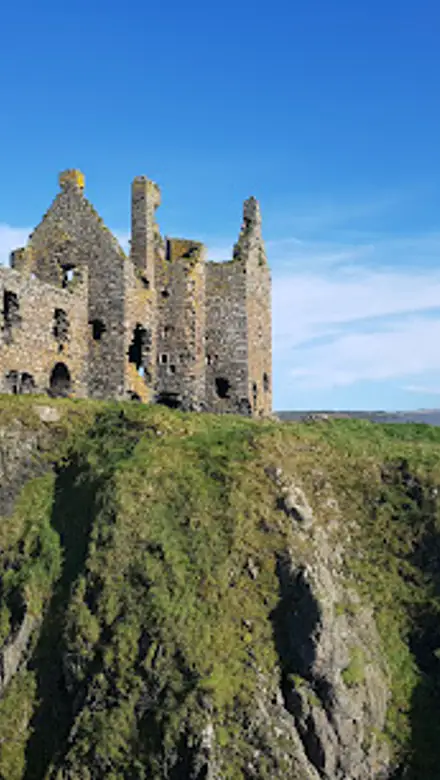
Dunskey Castle is a dramatic ruined 16th-century tower house perched on rocky cliffs overlooking the Irish Sea near Portpatrick in southwest Scotland. Built around 1510 by the Adairs of Kinhilt, this atmospheric fortress features a four-storey L-plan tower with vaulted cellars and a grand hall. Though the interior is inaccessible, the castle's imposing silhouette against the coastal landscape and its position on the scenic coastal path make it a striking landmark. The site carries centuries of history, from medieval conflicts to tales of ghostly inhabitants, offering visitors a glimpse into Scotland's turbulent past.
On-site amenities
 Information boards
Opening hours
- Every dayOpen 24 hours
Opening hours as listed on the venue’s Google Business Profile. Hours can change for services and special events, so check with the venue before you go.
- Address
- Dunskey Castle, Stranraer DG9 9AA
- Website
Getting there
Car from Portpatrick
Coastal Path Walk from Portpatrick
Bus from Stranraer
Taxi from Stranraer
Discover more about Dunskey Castle
A Fortress Born from Conflict and Ambition
Dunskey Castle stands as a testament to the turbulent history of southwest Scotland. An earlier fortification occupied this dramatic clifftop location as far back as the 12th century, but the castle was destroyed around 1489 during a fierce conflict between the Adairs and the McCullochs of Myrton. The present stronghold was rebuilt around 1510 by the Adairs of Kinhilt, a powerful local family who also constructed the Castle of St John in nearby Stranraer. The new tower house was designed on a magnificent scale, with a four-storey L-plan main block and a lower adjoining wing added in the 1620s. This architectural expansion reflected the Adairs' growing wealth and influence in the region.
The Castle's Architectural Character
The ruins reveal a sophisticated medieval design adapted for both defence and comfort. The massive tower house features a vaulted basement containing three cellars, including a dedicated wine cellar with its own staircase leading to the hall above. The main entrance passes through the tower into a wide scale-and-plait stair within the wing, ascending to the principal hall on the first floor. This hall was an impressive space, measuring 36 feet by 17 feet, with large windows and a substantial fireplace that still bears witness to its former grandeur. A rectangular stair-tower stands in the re-entrant angle where the two sections meet, and the tower was originally crowned with decorative bartizans, though these are now heavily ruined. The defensive ditch on the landward side, all that survives of the earlier medieval castle, protected the structure from land-based assault.
Decline and Transformation
By the late 17th century, Dunskey Castle's days as a functioning residence had ended. The structure was stripped of its dressed stone and timber, materials that were carefully stored and later incorporated into the construction of Dunskey House, a grand Edwardian mansion built in 1904 on the estate. By 1684, the castle was already described as a ruin, having served its purpose for little more than a century. The castle changed hands several times during the 17th century, passing from the Adairs to Hew Montgomery in 1620, then to John Blair, the Minister of Portpatrick, in the 1660s. A ratification document from 1672 still referred to it as a fortified structure, but this was merely a legal formality for a building already surrendering to time and the elements.
Legends and Ghostly Inhabitants
Dunskey Castle has long been shrouded in folklore and supernatural tales. The castle is said to be haunted by the ghost of a nursemaid who tragically dropped a baby from one of the upper windows onto the beach far below. Another spectral resident is a jester who was imprisoned within the castle but discovered a passage into the caves beneath the old stronghold. He vanished into those subterranean depths and was never seen again, though locals claim to hear the faint sound of his pipes echoing from the cliffs on certain nights. A brownie, or hairy man, is also said to haunt the ruins, adding to the castle's reputation as one of Scotland's more atmospheric and mysterious locations.
The Dramatic Coastal Setting
Perched on a rocky outcrop jutting into the Irish Sea, Dunskey Castle commands one of the most spectacular positions of any Scottish fortress. The steep cliffs that protect the castle on three sides create a naturally formidable defence, while the coastal path that passes nearby offers visitors dramatic views across the water toward Ireland. The castle's silhouette against the sea and sky has made it a favourite subject for artists and photographers for centuries, including the antiquarian Francis Grose, who sketched the ruins in the 1790s. The surrounding landscape remains largely unchanged, with the castle appearing much as it did in those early drawings, a timeless sentinel overlooking the turbulent waters of the Irish Sea.
Evendo Review Centre
 Google
Guest reviews
Best time to go
Quietest: Jan, Feb & Dec · before 7am or at 10pm
Busy times are Evendo estimates for a typical year, to help you plan. Actual crowds vary with events, school holidays and the weather.
Explore Dunskey Castle on the map
A handpicked selection of must-see spots near Dunskey Castle, mapped for you.
Get your free copy of our complete guide to Dunskey Castle, delivered straight to you.
Everything on this page, from opening hours and how to get there to Eve’s tips and the best time to go, in one PDF you can read offline, print or share.
Already have an account? Sign in
Your Dunskey Castle guide is ready.
We'll send it to · Not you? Sign out

Getting your guide ready…
We are putting together a fresh copy of the Dunskey Castle guide. This can take up to a minute.
This can take a few moments. If your browser asks, choose Allow so the download can start. You'll find the guide in your Downloads folder.
Nothing happened? Download it again
Sorry, the guide is taking longer than usual. Please try again in a minute, or get it by email instead.
Other nearby places you may find interesting
The closest places of the same kind, if this one is not quite what you had in mind.
-
-
-
-
-


Swipe for more places
More to explore near Dunskey Castle

 Best experiences near Dunskey Castle
 Best hotels near Dunskey Castle
 Best landmarks near Dunskey Castle
 Best attractions near Dunskey Castle
 Best shops near Dunskey Castle
 Best restaurants near Dunskey Castle
 Best bars near Dunskey Castle
Do you manage this location?
Take control to get all the benefits, like improved information, better appearance, and stronger visibility across AI-powered discovery.
Explore more

Explore more of Wigtownshire
Discover Wigtownshire: Scotland's literary haven with stunning coastlines, rich history, and serene natural beauty.
Explore Wigtownshire
Explore more of United Kingdom
Discover the United Kingdom: A blend of rich history, stunning landscapes, and vibrant cities, offering a unique travel experience for every visitor.
Explore United Kingdom