Stonegate, York Travel Guide
Free Guide: Discover Stonegate, York’s historic street where Roman roots meet medieval charm and vibrant cultural heritage in the city’s heart.


A brief summary of Stonegate
Discover Stonegate, York’s historic street where Roman roots meet medieval charm and vibrant cultural heritage in the city’s heart.
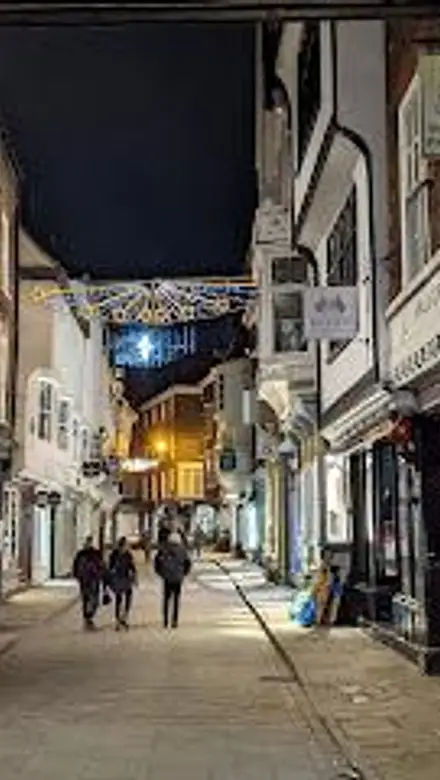
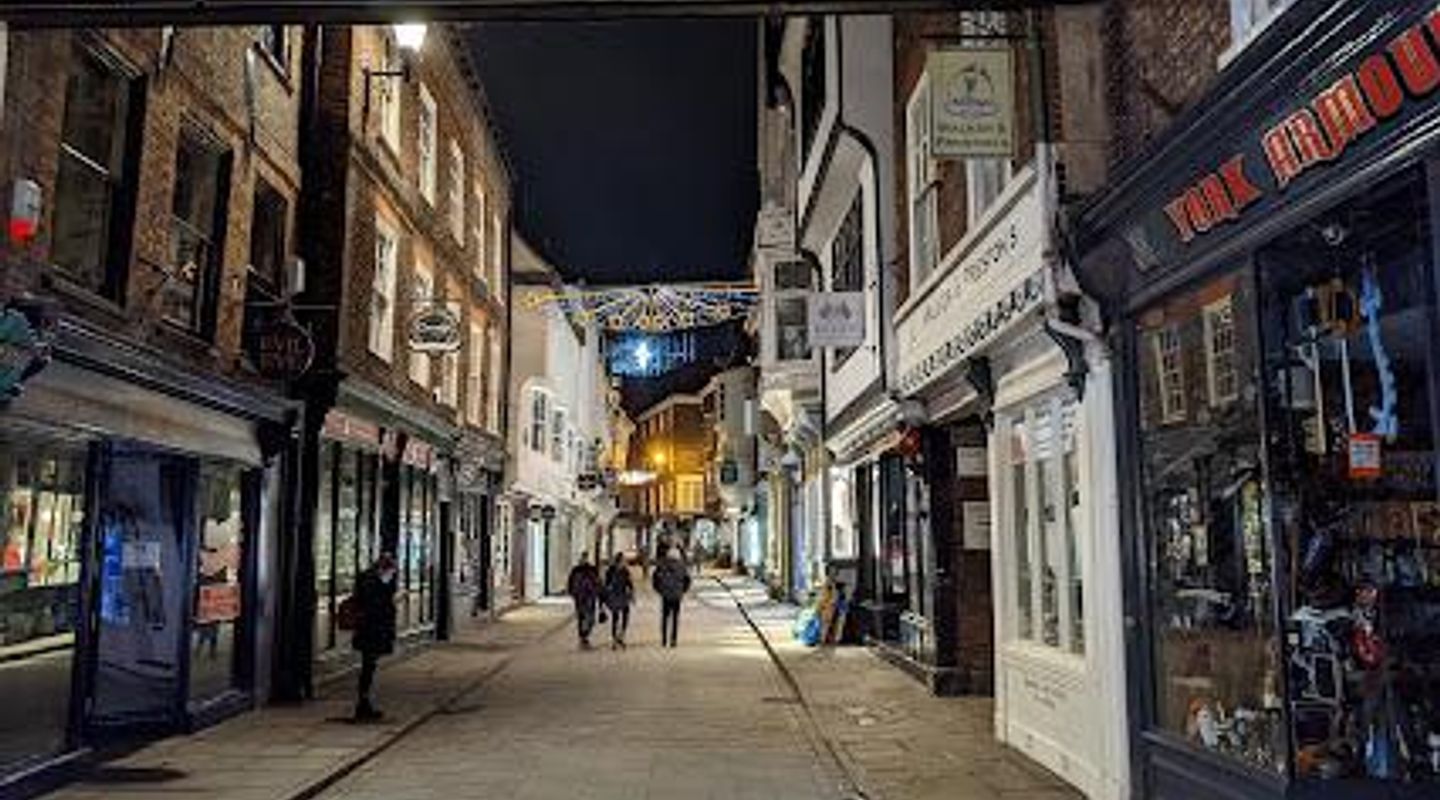
Stonegate is one of York’s most iconic and historically rich streets, tracing its origins to Roman times. Renowned for its medieval timber-framed buildings, listed architecture, and vibrant past as a hub for goldsmiths, printers, and bookshops, Stonegate blends deep heritage with a lively pedestrian atmosphere in the heart of York’s city centre.
On-site amenities
 Restrooms
 Drink options
 Food options
 Seating areas
 Information boards
- Address
- York
Getting there
Bus
Walking
Taxi
Discover more about Stonegate
Ancient Origins Beneath Modern Stone
Stonegate follows the line of the Roman via praetoria, a principal road of the fortress of Eboracum, connecting the main gate near St Helen's Square to the Roman headquarters beneath York Minster. This ancient route, paved with large granite-like stones, laid the foundation for Stonegate’s enduring importance. The street’s name, first recorded around 1118, likely refers to its unique stone paving or to the stone transported along it for the Norman construction of York Minster.
A Medieval and Ecclesiastical Centre
By the medieval period, Stonegate was a bustling street within the Liberty of St Peter’s, closely linked to York Minster. Many buildings belonged to the church or housed trades supporting ecclesiastical functions. Goldsmiths and glass painters flourished here from the 15th century, while from the 16th century the street gained renown for its printers and bookshops. It also served as a key route for civic processions between the Guildhall and the Minster and hosted performances of York’s historic Mystery Plays.
Architectural Heritage and Notable Buildings
Stonegate is lined with many listed buildings showcasing architectural styles from the 14th to 17th centuries. Highlights include Ye Olde Starre Inne, dating back to the 15th century and reputedly York’s oldest continuously operating pub, and the Norman House, a rare 12th-century stone building discovered behind Nos. 48-50. The street’s timber-framed houses often feature jettied upper floors and ornate details such as bressumer beams. The York Medical Society Rooms at No. 23 reveal a layered history with a hidden garden and Victorian-era decorative elements.
A Street of Trades and Traditions
Historically, Stonegate hosted a diverse range of trades including goldsmiths, glaziers, hosiers, saddlers, apothecaries, tailors, artists, and antique dealers. John Todd’s famous 18th-century library and bookshop was located here, reflecting the street’s longstanding literary connections. The presence of printers is symbolized by the Red Devil sign outside No. 33, pointing to Coffee Yard, once home to the eccentric publisher Thomas Gent.
Modern-Day Experience and Atmosphere
Today, Stonegate is a pedestrian-friendly street that remains a focal point for visitors exploring York’s rich heritage. Its charming mix of medieval architecture, boutique shops, cafes, and pubs creates a vibrant yet historic atmosphere. The street’s layout, with narrow yards and snickleways leading off, invites exploration and discovery, making it a quintessential York experience.
Legacy and Cultural Significance
Stonegate’s enduring legacy is reflected in its continuous use as a major thoroughfare for over two millennia. From Roman legions to medieval guilds and modern tourists, the street has been a stage for York’s evolving story. Its buildings and layout preserve layers of history, while its role in civic and cultural life underscores its importance as a living monument to the city’s past and present.
Evendo Review Centre
 Google
Guest reviews
Best time to go
Quietest: Jan, Feb & Mar · before 3am
Busy times are Evendo estimates for a typical year, to help you plan. Actual crowds vary with events, school holidays and the weather.
Explore Stonegate on the map
A handpicked selection of must-see spots near Stonegate, mapped for you.
Get your free copy of our complete guide to Stonegate, delivered straight to you.
Everything on this page, from opening hours and how to get there to Eve’s tips and the best time to go, in one PDF you can read offline, print or share.
Already have an account? Sign in
Your Stonegate guide is ready.
We'll send it to · Not you? Sign out

Getting your guide ready…
We are putting together a fresh copy of the Stonegate guide. This can take up to a minute.
This can take a few moments. If your browser asks, choose Allow so the download can start. You'll find the guide in your Downloads folder.
Nothing happened? Download it again
Sorry, the guide is taking longer than usual. Please try again in a minute, or get it by email instead.
Unlock the best of Stonegate
Skip-the-line tickets, guided tours with entry, and walking tours of the area, booked in a few clicks.
 Tour with entry
Self Guided Walking Tour of York with Audio Guide
from $5.34 Tour with entry
York Minster Cathedral to Stonegate audio self-guided walking tour
from $6.32 Tour with entry
Ghosts and Ghouls Haunted York Self Guided Audio Tour
from $6.64 Tour with entry
History and Hauntings Self Guided Walking Tour in York with App
from $8.54


Other nearby places you may find interesting
The closest places of the same kind, if this one is not quite what you had in mind.
-
-
-
-
-


Swipe for more places
More to explore near Stonegate

 Best experiences near Stonegate
 Best hotels near Stonegate
 Best landmarks near Stonegate
 Best attractions near Stonegate
 Best shops near Stonegate
 Best restaurants near Stonegate
 Best bars near Stonegate
Do you manage this location?
Take control to get all the benefits, like improved information, better appearance, and stronger visibility across AI-powered discovery.
Explore more

Explore more of York
Explore York, a captivating city where medieval history meets modern charm. Discover York Minster, The Shambles, and a vibrant food scene in this must-visit UK destination.
Explore York
Explore more of United Kingdom
Discover the United Kingdom: A blend of rich history, stunning landscapes, and vibrant cities, offering a unique travel experience for every visitor.
Explore United Kingdom