

Sundial Column, York Travel Guide
Free Guide: An elegant 18th-century sundial column on stone lions, quietly marking time just east of York Minster in a peaceful corner of the cathedral precincts.


A brief summary of Sundial Column
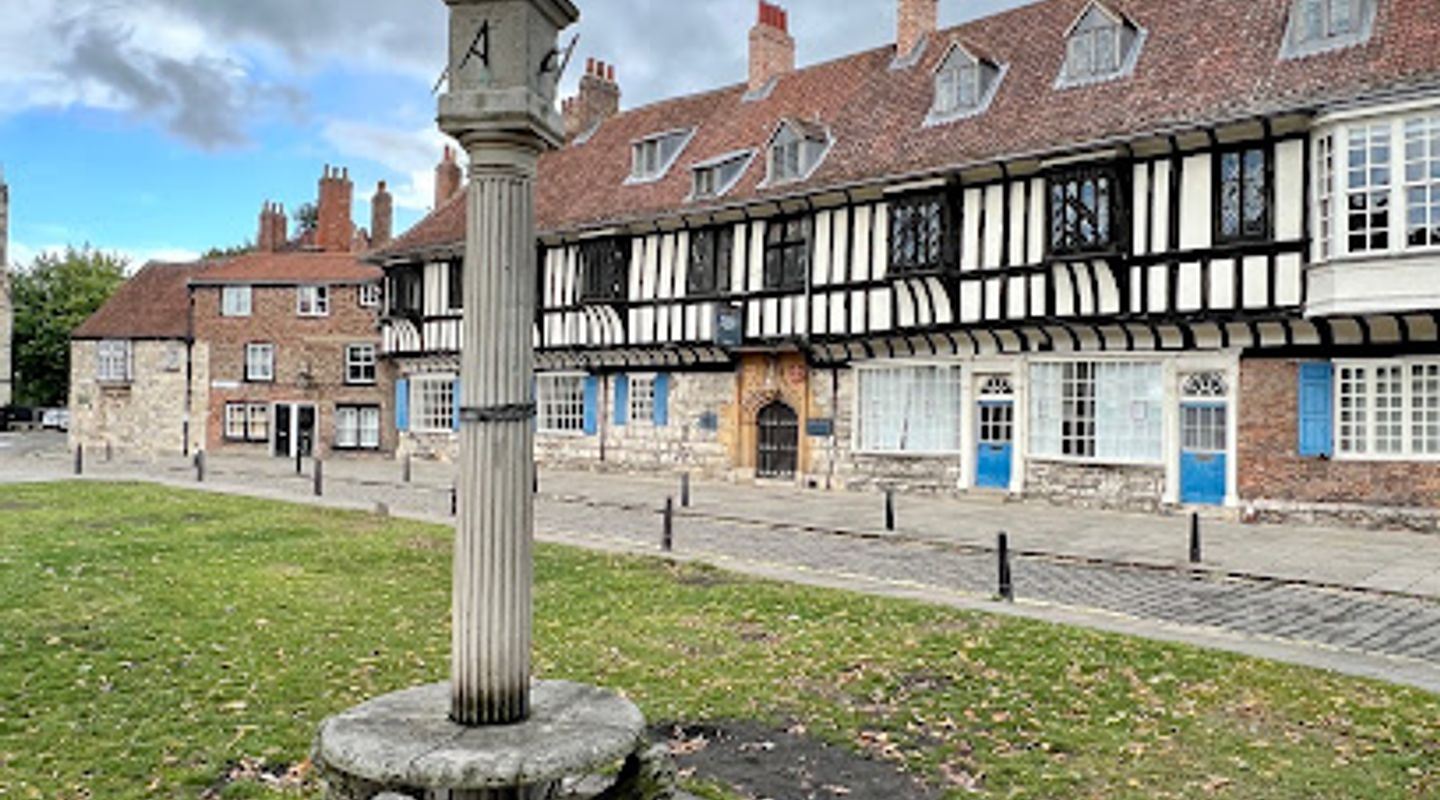
An elegant 18th-century sundial column on stone lions, quietly marking time just east of York Minster in a peaceful corner of the cathedral precincts.
Standing just east of York Minster, this elegant 18th-century sundial column is a graceful blend of art and timekeeping. Resting on four stone lions and encircled by a bench, it was originally from Drakelowe Hall in Burton-on-Trent and moved to its current spot in 1955. The column’s intricate carvings and peaceful setting make it a quiet highlight of the Minster’s eastern precincts, inviting visitors to pause and reflect in the shadow of one of England’s greatest cathedrals.
On-site amenities
 Seating areas
 Trash bins
 Information boards
Opening hours
- Every dayOpen 24 hours
Opening hours as listed on the venue’s Google Business Profile. Hours can change for services and special events, so check with the venue before you go.
- Address
- College St, York YO1 7JF
Getting there
Walking from York Minster
Public transport to York city center
Bus to the city center
Discover more about Sundial Column
A Timepiece in Stone
Rising about four meters tall near the east end of York Minster, the Sundial Column is a striking example of Georgian craftsmanship. The column itself supports a flat stone seat, which in turn rests on the backs of four recumbent stone lions, their forms both sturdy and decorative. Atop the column sits the sundial, its face marked with hour lines and designed to tell the time using the sun’s shadow cast by a central gnomon. Though not in constant use today, the dial remains a functional reminder of how time was once measured in public spaces, blending utility with ornamental elegance.
From Burton to York
The column did not originate in York. It once stood at Drakelowe Hall, a historic estate in Burton-on-Trent, Staffordshire. In the mid-20th century, the Friends of York Minster arranged for its relocation to enhance the cathedral’s surroundings. Moved in 1955, the sundial was carefully re-erected on College Street, approximately 40 meters east of the Minster’s eastern end. This relocation preserved an important piece of architectural heritage and gave it a new life in one of England’s most celebrated ecclesiastical settings, where it now complements the grandeur of the Minster without competing with it.
Setting and Surroundings
Positioned in the open space near the Minster’s eastern precincts, the column occupies a quiet, contemplative corner of the city. It stands close to the Dean’s Park area, where lawns and mature trees frame views of the cathedral’s eastern arm and its famous stained glass. The surrounding area is largely pedestrian, with York Minster itself dominating the skyline. The column’s location makes it a natural pause point for visitors exploring the Minster and its grounds, offering a moment of stillness amid the bustle of the city center.
Design and Symbolism
The column’s design is both classical and symbolic. The four lions, a traditional motif of strength and guardianship, support the seat and dial, suggesting protection and permanence. The circular bench invites visitors to sit and rest, turning the sundial into a social as well as a timekeeping feature. The inscriptions and carvings, though weathered, reflect the craftsmanship typical of 18th-century garden and estate ornamentation. While not as ancient as the Minster itself, the column contributes to the layered history of the site, where centuries of architecture and landscape design coexist.
A Quiet Corner of the Minster
Unlike the more crowded west front of York Minster, the eastern precincts around the Sundial Column are relatively tranquil, especially outside peak visiting hours. The area is often used for quiet reflection, photography, and as a vantage point for appreciating the Minster’s eastern elevation. The column’s presence adds a human scale to the monumental architecture nearby, reminding visitors that even in a place of such grandeur, there are intimate, personal spaces to discover. It is a fitting companion to the Minster: not a rival landmark, but a subtle, thoughtful addition to the cathedral’s story.
Evendo Review Centre
 Google
Guest reviews
Best time to go
Quietest: Jan, Feb & Nov · before 3am
Busy times are Evendo estimates for a typical year, to help you plan. Actual crowds vary with events, school holidays and the weather.
Explore Sundial Column on the map
A handpicked selection of must-see spots near Sundial Column, mapped for you.
Get your free copy of our complete guide to Sundial Column, delivered straight to you.
Everything on this page, from opening hours and how to get there to Eve’s tips and the best time to go, in one PDF you can read offline, print or share.
Already have an account? Sign in
Your Sundial Column guide is ready.
We'll send it to · Not you? Sign out

Getting your guide ready…
We are putting together a fresh copy of the Sundial Column guide. This can take up to a minute.
This can take a few moments. If your browser asks, choose Allow so the download can start. You'll find the guide in your Downloads folder.
Nothing happened? Download it again
Sorry, the guide is taking longer than usual. Please try again in a minute, or get it by email instead.
Other nearby places you may find interesting
The closest places of the same kind, if this one is not quite what you had in mind.
-
-
-
-
-


Swipe for more places
More to explore near Sundial Column

 Best experiences near Sundial Column
 Best hotels near Sundial Column
 Best landmarks near Sundial Column
 Best attractions near Sundial Column
 Best shops near Sundial Column
 Best restaurants near Sundial Column
 Best bars near Sundial Column
Do you manage this location?
Take control to get all the benefits, like improved information, better appearance, and stronger visibility across AI-powered discovery.
Explore more

Explore more of York
Explore York, a captivating city where medieval history meets modern charm. Discover York Minster, The Shambles, and a vibrant food scene in this must-visit UK destination.
Explore York
Explore more of United Kingdom
Discover the United Kingdom: A blend of rich history, stunning landscapes, and vibrant cities, offering a unique travel experience for every visitor.
Explore United Kingdom
