

Bootham Bar, Leeds Travel Guide
Free Guide: Explore Bootham Bar, York’s medieval gateway with Roman roots, historic portcullis, and stunning views of the city’s ancient walls and Minster.


A brief summary of Bootham Bar
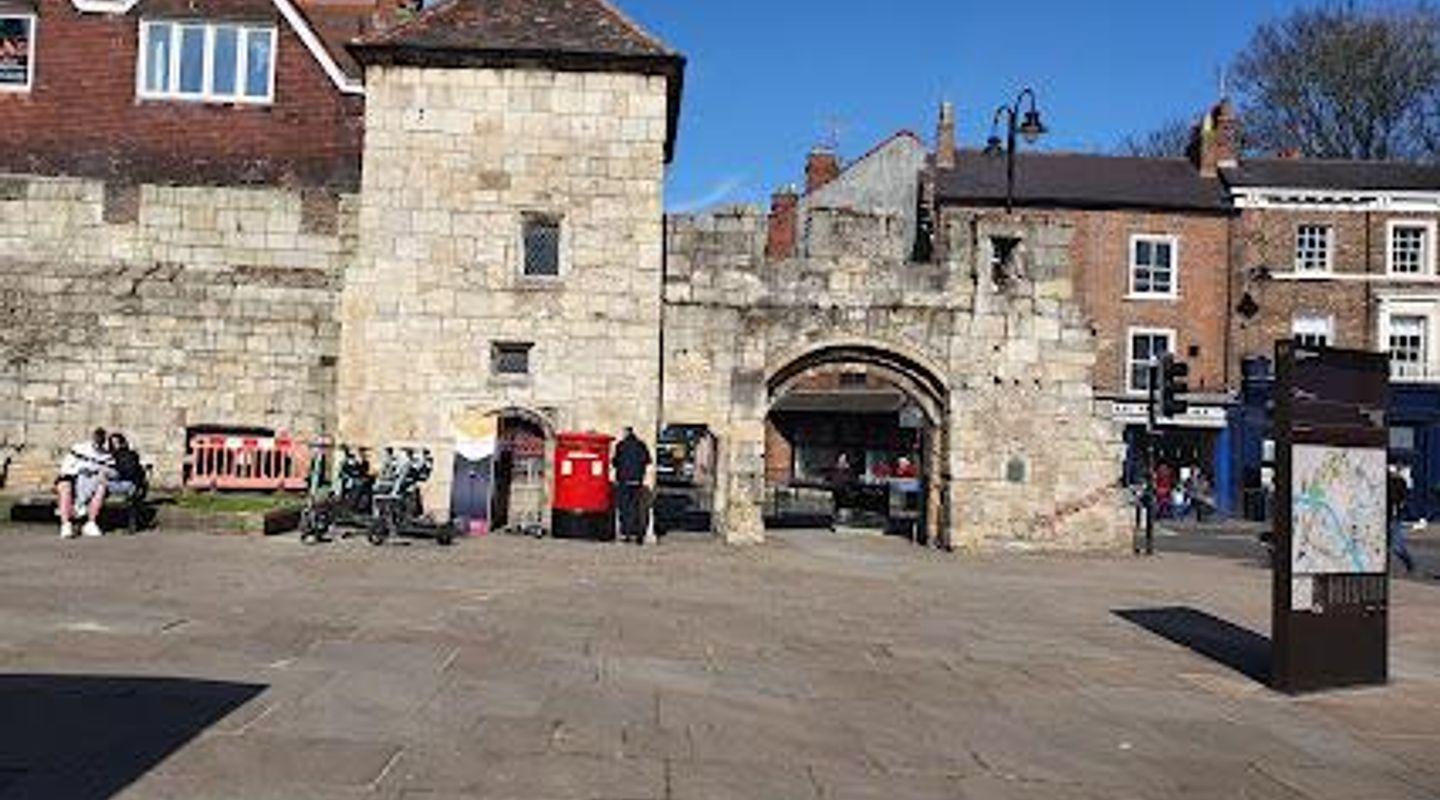
Explore Bootham Bar, York’s medieval gateway with Roman roots, historic portcullis, and stunning views of the city’s ancient walls and Minster.
Bootham Bar is a medieval city gate in York, England, with origins dating back to the 11th century and built atop the Roman fortress’s northwestern gate. This Grade I listed structure features medieval stonework, a portcullis, and statues, reflecting its long history as a defensive gateway, market access point, and symbol of York’s heritage. Visitors can explore its interior chambers and enjoy views of York Minster and the city walls.
On-site amenities
 Restrooms
 Information boards
 Seating areas
Opening hours
- Every day8 am–6 pm
Opening hours as listed on the venue’s Google Business Profile. Hours can change for services and special events, so check with the venue before you go.
- Address
- 2-4 High Petergate, York YO1 7EH
- Website
Getting there
Bus
Walking
Taxi
Discover more about Bootham Bar
Ancient Foundations and Medieval Origins
Bootham Bar stands on the site of the Porta Principalis Dextra, the northwestern gate of the Roman fortress of Eboracum, established around 72 AD. The earliest visible stonework of the current gate dates from the 11th century, with the name "Bootham" first recorded around 1200, meaning "the bar at the booths," a reference to the nearby market booths held by St Mary's Abbey. The gate replaced the Roman gateway and served as a critical defensive and administrative point for the city.
Architectural Evolution Through Centuries
The gate’s structure largely dates from the 13th and 14th centuries, with gritstone and magnesium limestone forming its walls. In the 14th century, the bar was heightened to accommodate a portcullis and a barbican was added, although the latter was removed in the 19th century to make way for urban development. The gate features three floors plus a turret level, topped by three Portland stone statues carved in 1894, representing a stone mason, a 14th-century mayor, and a medieval knight.
Historical Significance and Events
Bootham Bar has witnessed significant historical events, including damage during the English Civil War siege of 1644 and repairs in 1645. It was also a site where the heads of traitors were displayed, such as Thomas Mowbray in 1405. The gate was redecorated in preparation for royal visits in 1633 and again in later centuries. It served as a toll gate and market access point, linking the city with the northern roads and the Forest of Galtres.
Modern Conservation and Visitor Experience
Today, Bootham Bar is a Grade I listed building and scheduled ancient monument, maintained through ongoing conservation efforts to preserve its medieval fabric. Visitors can enter the gate to see the fixed portcullis and enjoy views through its small arched windows of York Minster and the surrounding cityscape. The gate remains an integral part of York’s medieval city walls, offering a tangible connection to the city’s layered history.
Surrounding Context and Urban Setting
Located at 2-4 High Petergate, Bootham Bar is the closest city gate to York Minster and lies along one of the most attractive sections of the city walls. The surrounding area includes Georgian townhouses, historic streets, and the remnants of St Mary’s Abbey walls. The gate’s position marks a historic route from the north and the Forest of Galtres into York, emphasizing its long-standing role in trade and defense.
Architectural Details and Artistic Features
The gate’s exterior showcases a blend of Norman and medieval architecture, with later stonework restorations from the 18th and 19th centuries. The three statues atop the turret level are notable artistic features, replacing deteriorated medieval originals and symbolizing the gate’s historical functions. Inside, the gate’s chambers reveal medieval defensive mechanisms and provide a unique vantage point over the city’s iconic landmarks.
Evendo Review Centre
 Google
Guest reviews
Best time to go
Quietest: Jan, Feb & Dec · before 6am or at 10pm
Busy times are Evendo estimates for a typical year, to help you plan. Actual crowds vary with events, school holidays and the weather.
Explore Bootham Bar on the map
A handpicked selection of must-see spots near Bootham Bar, mapped for you.
Get your free copy of our complete guide to Bootham Bar, delivered straight to you.
Everything on this page, from opening hours and how to get there to Eve’s tips and the best time to go, in one PDF you can read offline, print or share.
Already have an account? Sign in
Your Bootham Bar guide is ready.
We'll send it to · Not you? Sign out

Getting your guide ready…
We are putting together a fresh copy of the Bootham Bar guide. This can take up to a minute.
This can take a few moments. If your browser asks, choose Allow so the download can start. You'll find the guide in your Downloads folder.
Nothing happened? Download it again
Sorry, the guide is taking longer than usual. Please try again in a minute, or get it by email instead.
Unlock the best of Bootham Bar
Skip-the-line tickets, guided tours with entry, and walking tours of the area, booked in a few clicks.



Other nearby places you may find interesting
The closest places of the same kind, if this one is not quite what you had in mind.
-
-
-
-
-


Swipe for more places
More to explore near Bootham Bar

 Best experiences near Bootham Bar
 Best hotels near Bootham Bar
 Best landmarks near Bootham Bar
 Best attractions near Bootham Bar
 Best shops near Bootham Bar
 Best restaurants near Bootham Bar
 Best bars near Bootham Bar
Do you manage this location?
Take control to get all the benefits, like improved information, better appearance, and stronger visibility across AI-powered discovery.
Explore more

Explore more of Leeds
Discover Leeds: A dynamic city where history meets innovation, offering cultural treasures, stunning architecture, and a gateway to the scenic Yorkshire Dales.
Explore Leeds
Explore more of United Kingdom
Discover the United Kingdom: A blend of rich history, stunning landscapes, and vibrant cities, offering a unique travel experience for every visitor.
Explore United Kingdom
