St Crux, York Travel Guide
Free Guide: Medieval church ruins preserved in a modest 1888 parish hall, marking the burial site of a beatified Catholic martyr.


A brief summary of St Crux
Medieval church ruins preserved in a modest 1888 parish hall, marking the burial site of a beatified Catholic martyr.
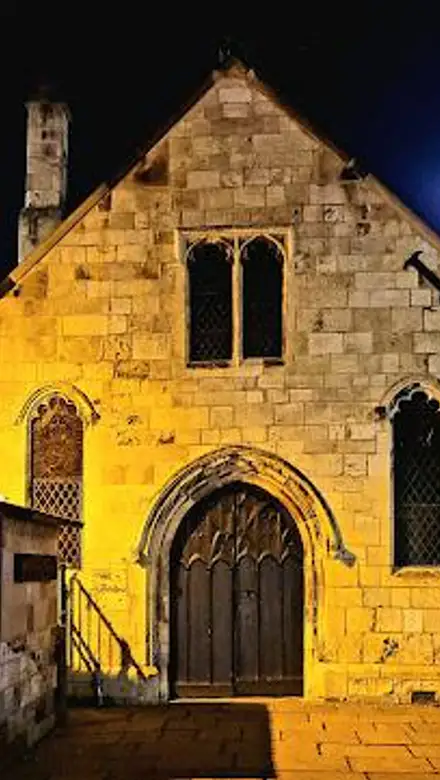
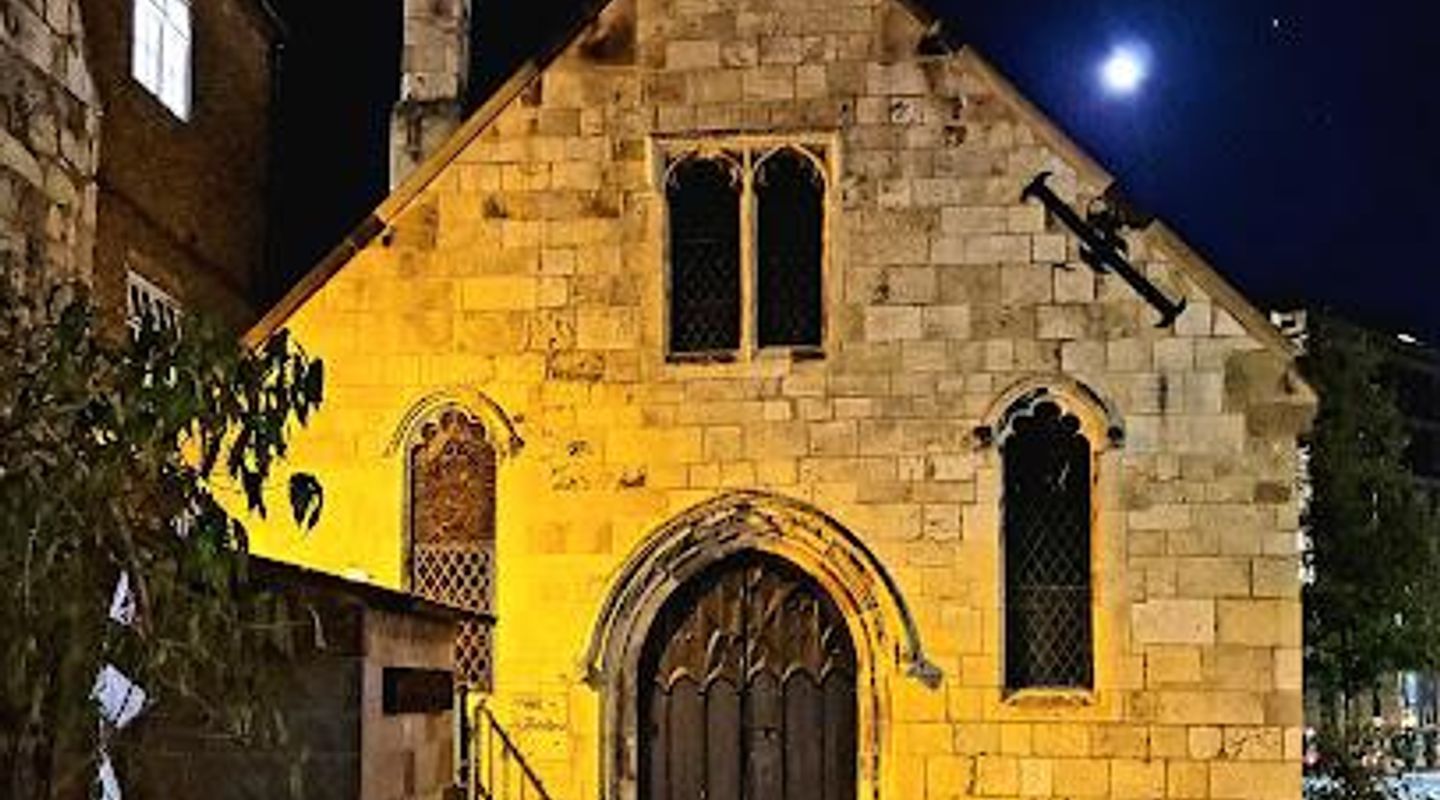
St Crux Parish Room is a Grade II listed building in York's city centre, constructed in 1888 from the salvaged remains of a grand medieval church. Built on the site of the original St Crux—a church documented since the Domesday Book—the modest hall preserves fragments of 15th-century masonry, architectural elements, and funerary monuments from its predecessor. The location carries profound historical significance as the burial site of Thomas Percy, seventh Earl of Northumberland, a Catholic martyr executed in 1572 and later beatified by Pope Leo XIII.
On-site amenities
 Restrooms
 Information boards
- Address
- York YO1 8BL
Getting there
Walking from York City Centre
Public Transport by Bus
Taxi or Ride-Share
Discover more about St Crux
A Church Reborn as a Parish Hall
St Crux Parish Room stands as a humble testament to York's medieval past. This Grade II listed building, erected in 1888, occupies the site of a once-grand medieval church that dominated the city centre for centuries. The original St Crux was first documented in the Domesday Book of 1085–86 as one of seven churches in York, initially serving as a private chapel before falling under the ownership of St Mary's Abbey. The current parish hall incorporates carefully preserved elements from its illustrious predecessor, including early 15th-century masonry from the north aisle wall, architectural fragments, and numerous funerary monuments that were rescued from demolition.
The Rise and Fall of a Medieval Giant
The medieval church of St Crux underwent significant transformation between 1402 and 1424, when a substantial new structure replaced the earlier modest building, making it the largest parish church in York. In 1697, an impressive Italianate tower crowned with urns and a cupola was added to the north-west corner, becoming an admired architectural landmark that pleased both architects and visitors. However, the church's foundations proved problematic from the outset, requiring constant maintenance throughout its existence. By the 19th century, decades of exposure to the elements—including the collapse of the cupola and deterioration of tower decorations—had rendered the building increasingly unsafe. The church closed to public worship around 1880, and city authorities deemed it an eyesore that threatened public safety.
Demolition and Preservation Efforts
Despite passionate appeals from the Society for the Protection of Ancient Buildings and various fundraising schemes, restoration proposals were repeatedly rejected by city authorities. The distinctive Italianate tower, which had survived centuries of use, proved so structurally sound that its demolition required extensive use of dynamite. The complete dismantling of St Crux took three years, with work repeatedly paused as new preservation proposals emerged, but ultimately all efforts to save the building proved unsuccessful. By 1887, the medieval church had been entirely destroyed. The following year, the current parish hall was constructed from the rubble, incorporating salvaged architectural elements including a perpendicular window, sections of the north wall, and numerous memorials from the original church.
A Martyr's Final Resting Place
St Crux holds profound religious and historical significance as the burial site of Thomas Percy, seventh Earl of Northumberland, a Catholic martyr of the Tudor era. On 22 August 1572, Thomas was publicly executed at Pavement—the very location where St Crux now stands—after refusing to renounce his Catholic faith despite being offered his life in exchange. His headless body was interred within the original St Crux church beneath an elaborate memorial, while his head was displayed on Micklegate Bar as a warning to potential dissenters. In 1895, more than three centuries after his execution, Pope Leo XIII beatified Thomas Percy, elevating him to sainthood in Catholic memory. The parish hall thus preserves the memory of this remarkable figure, whose steadfast faith cost him his life yet earned him eternal veneration.
Memorials and Civic Legacy
Beyond Thomas Percy's monument, the parish hall houses memorials to other significant York figures, including Thomas Bowes and Robert Welles, both former Lord Mayors of the city, and Sir Thomas Herbert, a gentleman of the bedchamber to King Charles I. These monuments represent the civic and ecclesiastical importance of St Crux throughout York's medieval and early modern periods. The funerary monuments and architectural fragments preserved within the hall serve as tangible connections to the lives and deaths of York's prominent citizens across several centuries.
Evendo Review Centre
 Google
Guest reviews
Best time to go
Quietest: Jan, Feb & Dec · before 7am or at 9pm
Busy times are Evendo estimates for a typical year, to help you plan. Actual crowds vary with events, school holidays and the weather.
Explore St Crux on the map
A handpicked selection of must-see spots near St Crux, mapped for you.
Get your free copy of our complete guide to St Crux, delivered straight to you.
Everything on this page, from opening hours and how to get there to Eve’s tips and the best time to go, in one PDF you can read offline, print or share.
Already have an account? Sign in
Your St Crux guide is ready.
We'll send it to · Not you? Sign out

Getting your guide ready…
We are putting together a fresh copy of the St Crux guide. This can take up to a minute.
This can take a few moments. If your browser asks, choose Allow so the download can start. You'll find the guide in your Downloads folder.
Nothing happened? Download it again
Sorry, the guide is taking longer than usual. Please try again in a minute, or get it by email instead.
Unlock the best of St Crux
Skip-the-line tickets, guided tours with entry, and walking tours of the area, booked in a few clicks.

Other nearby places you may find interesting
The closest places of the same kind, if this one is not quite what you had in mind.
-
-
-
-
-


Swipe for more places
More to explore near St Crux

 Best experiences near St Crux
 Best hotels near St Crux
 Best landmarks near St Crux
 Best attractions near St Crux
 Best shops near St Crux
 Best restaurants near St Crux
 Best bars near St Crux
Do you manage this location?
Take control to get all the benefits, like improved information, better appearance, and stronger visibility across AI-powered discovery.
Explore more
Explore more of York
Explore York, a captivating city where medieval history meets modern charm. Discover York Minster, The Shambles, and a vibrant food scene in this must-visit UK destination.
Explore York
Explore more of United Kingdom
Discover the United Kingdom: A blend of rich history, stunning landscapes, and vibrant cities, offering a unique travel experience for every visitor.
Explore United Kingdom