On a warm midsummer afternoon in Melbourne, where the light hangs long over the Yarra River and the city hums with expectancy, the Midsumma Festival does more than simply begin. It unfurls – as a banner, as a heartbeat, as a promise that for the next three weeks, love, difference, and chosen family will not just be welcomed, but gloriously centre stage.Melbourne's Rainbow Radiance: A Grand Opening
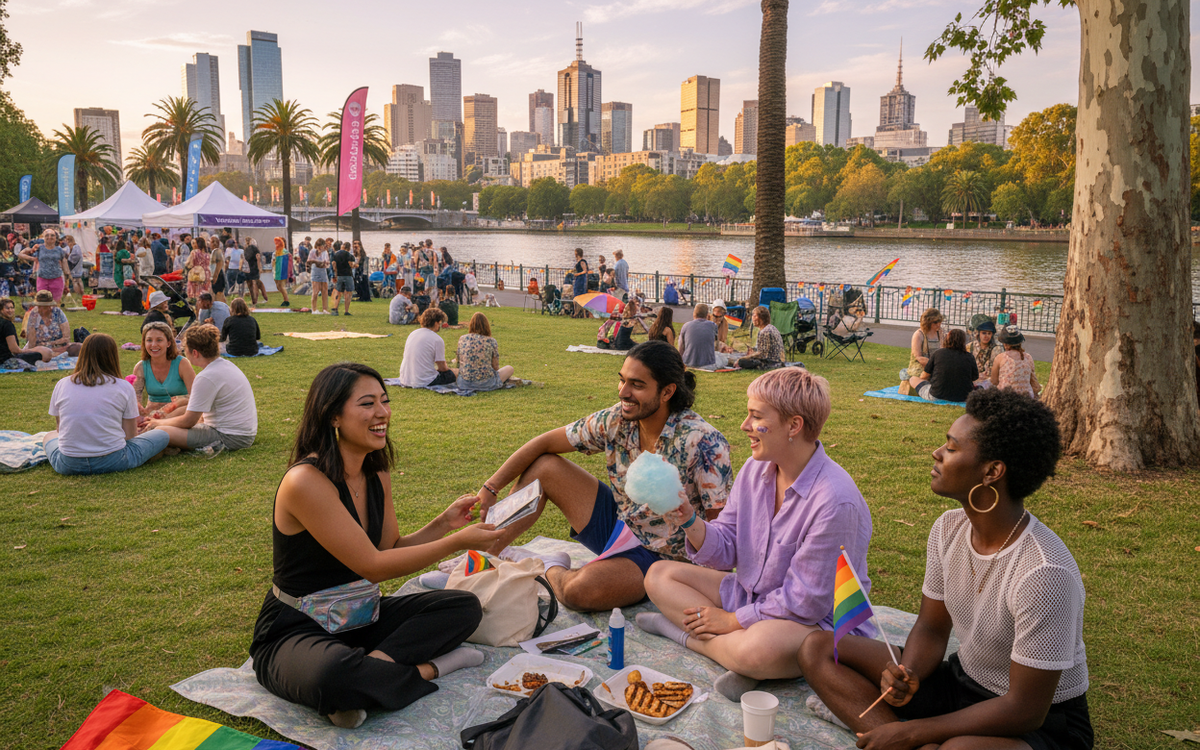
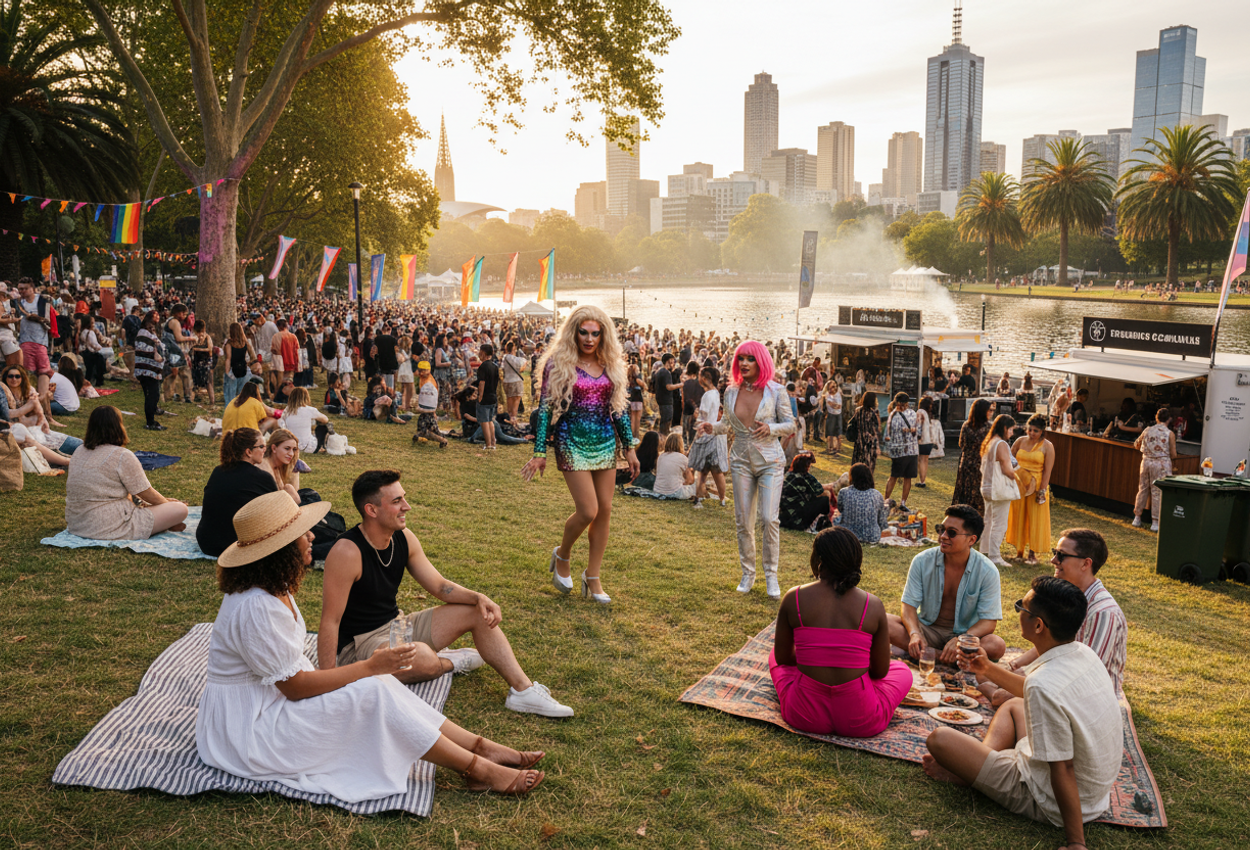
By late morning, the lawns of Alexandra Gardens are already a tapestry of picnic rugs and parasols, sequins and sunscreen. The air carries competing scents – eucalyptus drifting down from Kings Domain, smoky notes of grilled haloumi from a food stall near the river, the sugar-snap of fairy floss spinning in bright clouds. Above it all, banners in every shade of the rainbow sway lazily, tethered between palm trunks like joyful proclamations.
This is Midsumma Carnival, the free, full‑day takeover that launches the city’s premier queer arts and culture festival. As the afternoon gathers pace, the crowd surges towards the four main hubs – the Main Stage, Picnic Stage, Sports precinct and the family-friendly zone – each a small universe of sound and colour in its own right. On the grass near the Main Stage, a group of friends from Brunswick are painting tiny trans and non-binary flags onto one another’s cheeks, their giggles punctuated by the thump of bass testing the speakers for the evening’s dance party.
Just beyond them, the Yarra River laps gently at its embankment, mirroring clouds that glance by in cottony streaks. Overhead, the skylines of Southbank and the CBD form a jagged silver border. As the sun begins its slow descent, the glass towers ignite with warm gold, and the wide trunks of plane trees lining the gardens catch the light, their mottled bark the colour of cream and smoke. Rainbow flags clipped to the railings along Princes Bridge flutter in the breeze, casting brief, prismatic shadows on the pavement.
Near a row of stalls where community organisations have set up their tents, 26‑year‑old Tiana, a queer Vietnamese‑Australian artist from Footscray, is handing out zines for a grassroots collective. Her nails are painted neon green, her eyeliner wings dramatic and precise. When asked what Midsumma means to her, she pauses for a moment, looking out across the lawns where families with prams mingle with leather‑clad couples and groups of teenagers draped in bi and pan flags.
It is like exhaling after holding your breath all year, she says, eyes crinkling. Out here I do not need to shrink myself, or translate my queerness, or worry what my grandparents might think. I just exist – loudly, with my people. That is everything.
Nearby, at a stall hosted by the Victorian Pride Centre, volunteers hand out pamphlets on mental health services, HIV prevention, and regional pride events. It is a reminder that beneath the glitter and the drag shows, this festival is also infrastructure – a visible network of support, woven from decades of activism and quiet persistence. On one side of the tent, a wall of archival photographs shows scenes from earlier marches and rallies: homemade banners, 80s haircuts, police lines in the distance. On the other, today’s faces turn towards the camera for polaroids, scrawling messages of hope for the next generation in thick permanent marker.
As the sky bruises toward evening, the light show along the river awakens. Soft washes of magenta and cobalt rise up the trunks of the garden’s palms; zigzags of neon run along the footpaths like electric vines. Across the water, the spire of Arts Centre Melbourne glows with rotating bands of colour, as if responding to the thrum of music from the Carnival stages. From the footbridge, the view is quietly astonishing: the Yarra River transformed into an inky ribbon stitched with reflections of rainbow lights, the silhouettes of drag performers in enormous wigs gliding across the lawns, strings of festoon bulbs turning faces golden as darkness thickens.
On the Main Stage, a non-binary MC in a rhinestoned blazer introduces a local choir of trans and gender diverse singers, their harmonies pouring into the night like warm honey. In the crowd, a middle‑aged couple from Geelong stand hand in hand, small pride flags tucked into the back pockets of their shorts. They tell me they first came to Midsumma in the late 1990s, when the festival felt more fringe, more precarious. Tonight, gazing out over an estimated hundred thousand revellers, they shake their heads softly.
We never imagined this, one of them says. Back then it felt like we were always watching our backs. Now, I look around and see kids running with rainbow capes, grandparents on picnic chairs, people in uniforms from their jobs marching in the parade. This is what surviving looks like. This is what winning feels like.
Their words echo as, much later, a DJ ramps up the tempo for the night‑time dance party. Lasers comb the sky above the trees, fog machines billow gentle clouds across the stage, and the crowd becomes a single, pulsing organism. Bodies of every shape and gender expression are pressed shoulder to shoulder, moving as one to a remix of an old queer anthem. Somewhere in the middle, a trans teen from a small town two hours away is seeing, for the first time, a version of adulthood where they not only fit, but shine. The festival’s opening night, in its heady mix of spectacle and everyday tenderness, makes a quiet, radical promise: you are not alone here. You never were.
Hidden Gem – The Riverbank Glow
If you slip away from the thrum of the stages just after dusk and walk the path that hugs the Yarra River edge of Alexandra Gardens, you will find one of the festival’s most intimate vantage points. Here, couples lean against the railings, sharing ice cream from nearby carts; drag kings in half‑unbuttoned shirts sit on the grass, boots kicked off, bathed in the spill of coloured light. From this quieter strip of riverbank, the full sweep of Carnival reveals itself – a shimmering, luminous village that exists for one day, then vanishes, leaving only the faint echo of bass and the memory of thousands of strangers turning to one another in recognition.
Victoria's Pride Street Party: Unity in Motion
A week later, queer joy has migrated north. On Gertrude Street in Fitzroy, the late-morning sun slides between Victorian façades and heritage shopfronts, gleaming off second‑hand bike frames chained to posts. The street is closed to traffic, its familiar tram tracks now bordered with stages, food trucks, and roving performers in towering heels. Victoria’s Pride Street Party – the state‑wide celebration capping off the Midsumma season – is about to inhale deeply and roar to life.
By midday, the asphalt is a mosaic of scuffed Doc Martens, platform boots, and bare feet. The scent of espresso from Morning Market Fitzroy mingles with the caramel richness of churros frying in a stall further down the block. A DJ on one of the main stages launches into a set of house tracks spliced with queer pop classics, the bassline vibrating through the old brick terrace walls. Above, strings of rainbow bunting crisscross the sky, catching the breeze like patches of prayer flags.
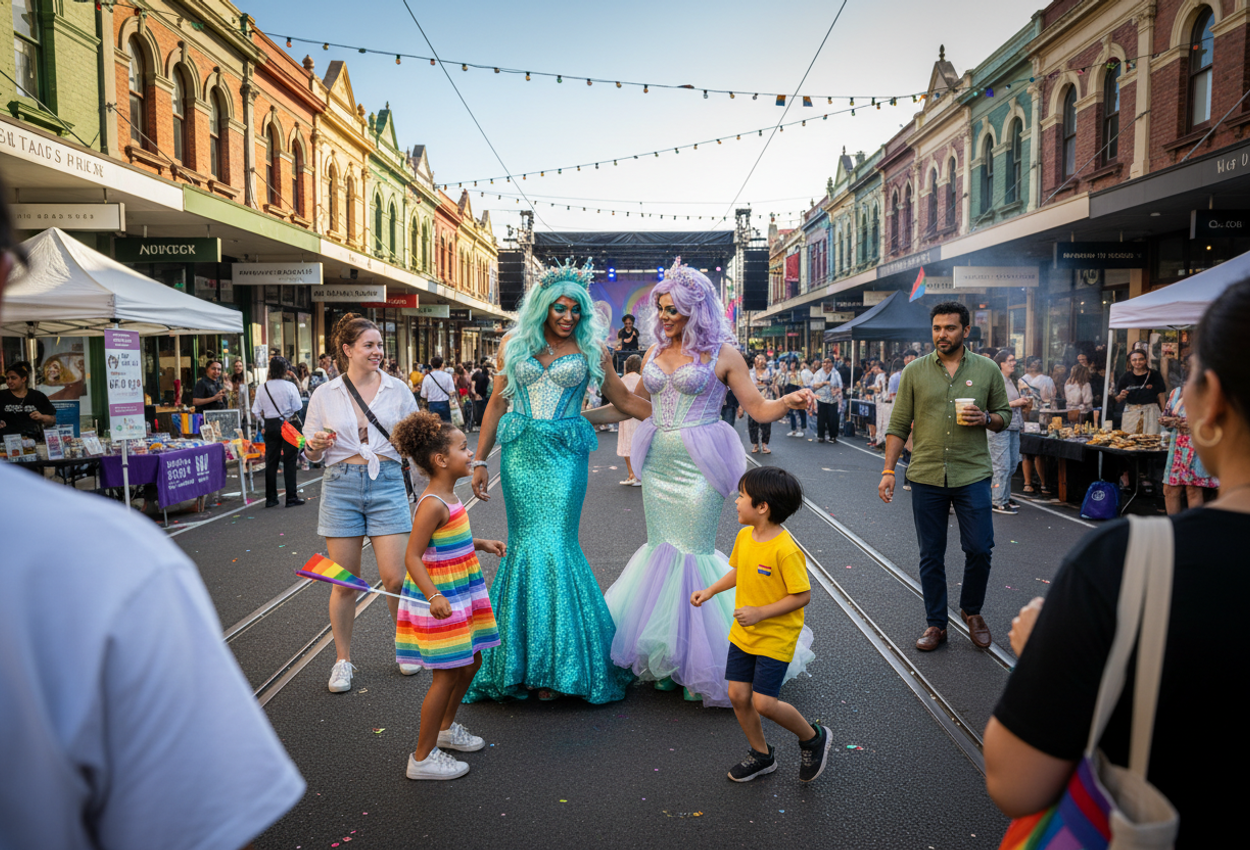
The further you wander towards the intersection of Gertrude Street and Smith Street, the denser and more delirious the scene becomes. On one corner, a troupe of drag performers dressed as mermaids – sequinned tails shimmering in shades of teal and fuchsia – pose for photos with kids clutching rainbow ice blocks. On another, a group of queer elders from regional Victoria sway to a soul band’s cover of a 70s anthem, their faces crinkled with the particular joy of having lived long enough to see a city close its streets in their honour.
At an interactive art installation set up in front of Gertrude Glasshouse, festival‑goers are invited to write messages on small mirrored tiles and attach them to an enormous sculpted heart. Some etch jokes or nicknames; others write confessions, apologies, or wishes. By late afternoon, the heart glitters with hundreds of fragments, reflecting back a fractured, dazzling version of the crowd. Step close and you can read lines like I found my family here and For my younger self who thought she was alone. Step back, and the whole structure throws shards of light across the bitumen, tiny constellations shimmering over passing arms and faces.
On a side street, a pop‑up performance space has become an accidental runway. Two friends in matching silver lamé bodysuits practice their struts, cheered on by strangers who whoop and clap in time. Nearby, a group of queer Pacific Islander performers rehearse a routine that blends traditional dance with contemporary choreography, their movements fluid and precise, the beat from a portable speaker rippling through the small crowd that has gathered to watch.
I meet Aiden, 19, perched on the curb with glitter dusting their collarbones and a small ace flag tucked into their belt loop. They have travelled down from Bendigo with a group they met online through a regional youth support program. Their eyes are wide, darting constantly between the stages, the stalls, the swaying crowd.
Where I am from, there are maybe four of us that I know of, and we mostly talk in group chats, they say. Here, I step out of the train at Parliament and there are rainbow posters on the station walls, people holding hands, drag queens just… existing. It makes me feel like the future is bigger than I thought. Like there is somewhere for me to land.
Visibility is more than spectacle here; it is a kind of oxygen. Along the length of Gertrude Street, stalls hosted by organisations like Switchboard Victoria and Trans Pride Australia offer everything from crisis support information to free badges declaring pronouns and identities. Volunteers talk softly with parents of newly out teens, with migrants navigating the complexity of overlapping cultures, with older community members who recall when gatherings like this felt unimaginable.
Music spills from every direction. On one main stage, neo‑soul artist Mo’Ju leans into the mic, their voice threading vulnerable lyrics through a horn section that radiates warmth. Down the road, a DJ spins an Afro‑house set while drag kings in tailored suits and painted moustaches hand out flyers for a late‑night show at The Night Cat. The tangle of sound is layered: whistles, laughter, footsteps on asphalt, the sharp hiss of beer cans opening, a child’s squeal as a glitter cannon erupts overhead and rains sparkling confetti over the crowd.
Local Tip – Follow the Laneway Echoes
One of the quiet marvels of Victoria’s Pride Street Party hides in the laneways that branch off Gertrude Street and Smith Street. Duck into Napier Street or one of the narrower alleys between old warehouses, and you will find micro‑worlds: an impromptu vogue battle under the shadow of a mural, a pop‑up poetry reading in a loading dock, a tiny bar serving gin spritzes from a roller door. Here the party feels more like a small‑town block gathering than a large‑scale event; locals lean out of upstairs windows to watch, dogs tug impatiently at their leads, and the music arrives in softened fragments, like someone else’s dream drifting through brick.
As golden hour descends, the façades of Fitzroy and Collingwood glow a deep terracotta, and the streetlights flicker on. Couples find perches on stoops and milk crates, sharing plates of dumplings from Shu Xiang Ge or paper‑wrapped serves of fish and chips from a shop near the corner. The party will run until the last DJ winds down at nine, but already the mood is mellowing, the sky softening to violet overhead. For many, this is the most cherished part: leaning into the shoulder of someone they love, watching a river of strangers move past in every possible incarnation of queer and allied life, knowing they are part of a story much longer and broader than any individual biography.
Art Amplified: Queer Voices on Display
A short tram ride from the roar of street parties, the atmosphere shifts. Inside the cool, white rooms of Victorian Pride Centre in St Kilda, the Midsumma and Australia Post Art Award exhibition offers a different but no less potent form of celebration. Here, the clatter of beer cans and beats is replaced by the soft shuffle of shoes on polished floors, the distant hum of Acland Street traffic a muted backdrop to the quiet shock of colour on canvas, ceramic, and screen.
The exhibition’s works – drawn from queer artists across the country – arc across mediums and generations. Near the entrance, a large‑scale painting arrests the room. It shows a suburban backyard typical of outer‑metro Melbourne: fibro fence, rotary clothesline, a strip of patchy grass. But between the folds of laundry, a figure half‑emerges, their body rendered as a translucent shimmer of pinks and blues, like heat haze. The title on the wall plaque reads simply Coming Out, Again . The artist statement explains that the work traces the artist’s experience of returning to their childhood home as an out trans adult, each piece of laundry a memory imbued with both tenderness and ache.
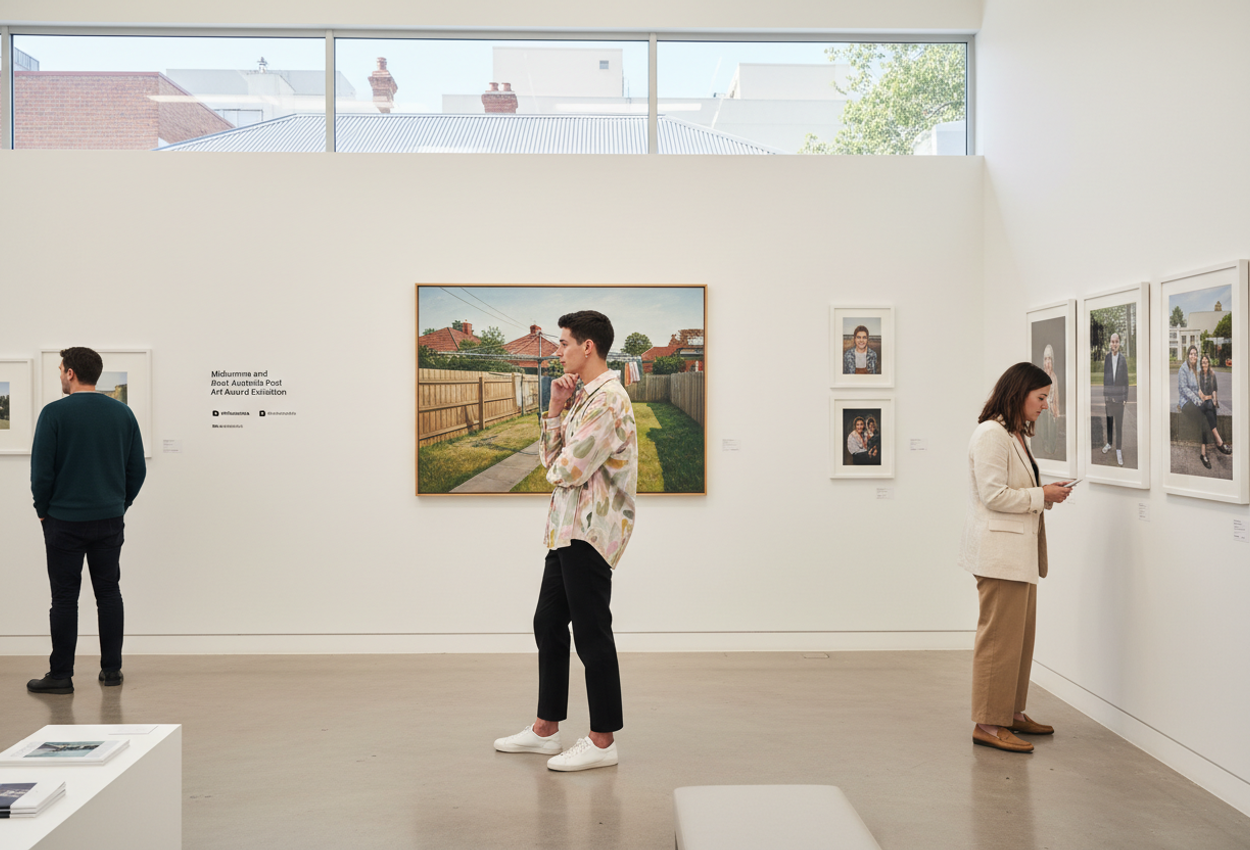
In another room, a series of photographic portraits lines one wall. Each subject is bathed in soft, almost syrupy evening light, shot in everyday locations – the corner booth of a suburban Chinese restaurant, the fluorescent-lit aisles of a 24‑hour supermarket in Footscray, a windswept stretch of St Kilda Beach. The sitters meet the camera with a mixture of defiance and vulnerability, their chosen objects – a T‑shirt, a set of house keys, a worn paperback – cradled gently in their hands. The accompanying text reveals these items as talismans of queer becoming: the first piece of clothing worn on a date where they felt seen, the keys to a flat shared with chosen family, the book that named a desire previously unspoken.
I find Mira, a non‑binary photographer in their early thirties, standing beside these prints, watching visitors lean in close. They are wearing a crisp white shirt spattered with paint, a small enamel badge of the trans flag pinned neatly above their heart.
For me, the camera is an excuse to linger, they say. To say to someone: your ordinary life is worthy of this level of attention. So much queer art focuses on nightlife, on drag, on the spectacular – which I love, obviously – but our quiet moments matter too. A supermarket aisle at 11pm can be just as sacred as a dance floor if you are finally holding hands with the right person.
Further along, a digital installation bathes a small, darkened space in oceanic blues and greens. An animation of overlapping bodies made of light sways gently across the walls, accompanied by an ambient soundtrack of recorded heartbeats and distant waves. Visitors step inside and, for a moment, disappear into the projection, their silhouettes merging with the shifting forms. A motion sensor triggers whispered phrases in multiple languages, fragments of queer love stories that span decades and diasporas. The effect is both soothing and disorienting, like slipping into a vast, shared dream.
In a corner, a smaller work is drawing disproportionate attention: a delicate ceramic sculpture of a binder – the chest‑flattening garment used by many trans and non‑binary people – rendered in eggshell‑thin porcelain, its surface hairline‑cracked but still intact. The artist, a young trans man from regional New South Wales, writes that the piece honours the first binder he bought in secret as a teenager. Viewers linger in front of it, some with tears in their eyes, others taking photos to send to friends who could not make it to the city.
Nearby, I speak with curator Hannah, who has overseen the Art Award for several years. She describes the exhibition as a barometer of queer life in Australia – every year, recurring themes like family, migration, embodiment, and climate anxiety reappear in new guises, shaped by different hands.
Art lets us say the unsayable, she notes. Sometimes that is joy and euphoria; sometimes it is rage, grief, or boredom. In a political moment where trans and queer bodies are so often reduced to talking points or headlines, these works insist on nuance. They demand that you stand still, that you look, that you feel. It is a quiet but powerful form of resistance.
The People’s Choice Award box near the exit is already fat with folded slips of paper. Visitors hover nearby with pens, debating favourites with partners and friends. A couple in their sixties argues gently over whether a haunting video work, shot among the charred remains of a bushfire‑ravaged forest, should trump a joyous textile piece that reimagines the Aboriginal flag in threads of neon. Around them, younger visitors scroll through the exhibition app on their phones, bookmarking artists to follow on social media, making plans to return with others before the show closes.
Local Tip – Linger on the Rooftop
After you have cast your vote and drifted through the last quiet gallery, take the elevator to the rooftop terrace of the Victorian Pride Centre. In the late afternoon, the view stretches out over the terracotta roofs and palm trees of St Kilda towards the pewter expanse of Port Phillip Bay. On Midsumma evenings, small knots of visitors gather here with coffees from downstairs or gelato from Monarch Cakes on Acland Street, debriefing the works they have seen, pointing out favourite murals and venues in the streets below. It is a perfect vantage point from which to reflect on how far the city – and its queer communities – have travelled, and how many stories are still waiting to be told.
Harmonies of the Heart: A Concert to Remember
If Carnival is the festival’s beating heart and the street party its exuberant limbs, then a concert like Homophonic! is its nervous system – intricate, surprising, carrying signals of intimacy and solidarity to every part of the body. On a balmy February evening, Theatre Works on Acland Street hums with anticipation as audience members file in for the Midsumma run of this beloved new‑music series showcasing contemporary works by LGBTQIA+ composers.
The small foyer is thick with chatter and the aromatic blend of perfume, beer, and the faint dustiness particular to independent theatres. Posters from past shows – avant‑garde cabaret, experimental dance, queer reimaginings of classical texts – layer the walls, while a bar tucked into the corner dispenses plastic cups of chilled white wine and sparkling water. Outside, the last of the day’s light washes the plane trees lining Acland Street in orange; inside, ushers shepherd patrons up a narrow staircase into the black‑box theatre, where rows of simple chairs curve intimately around the stage.
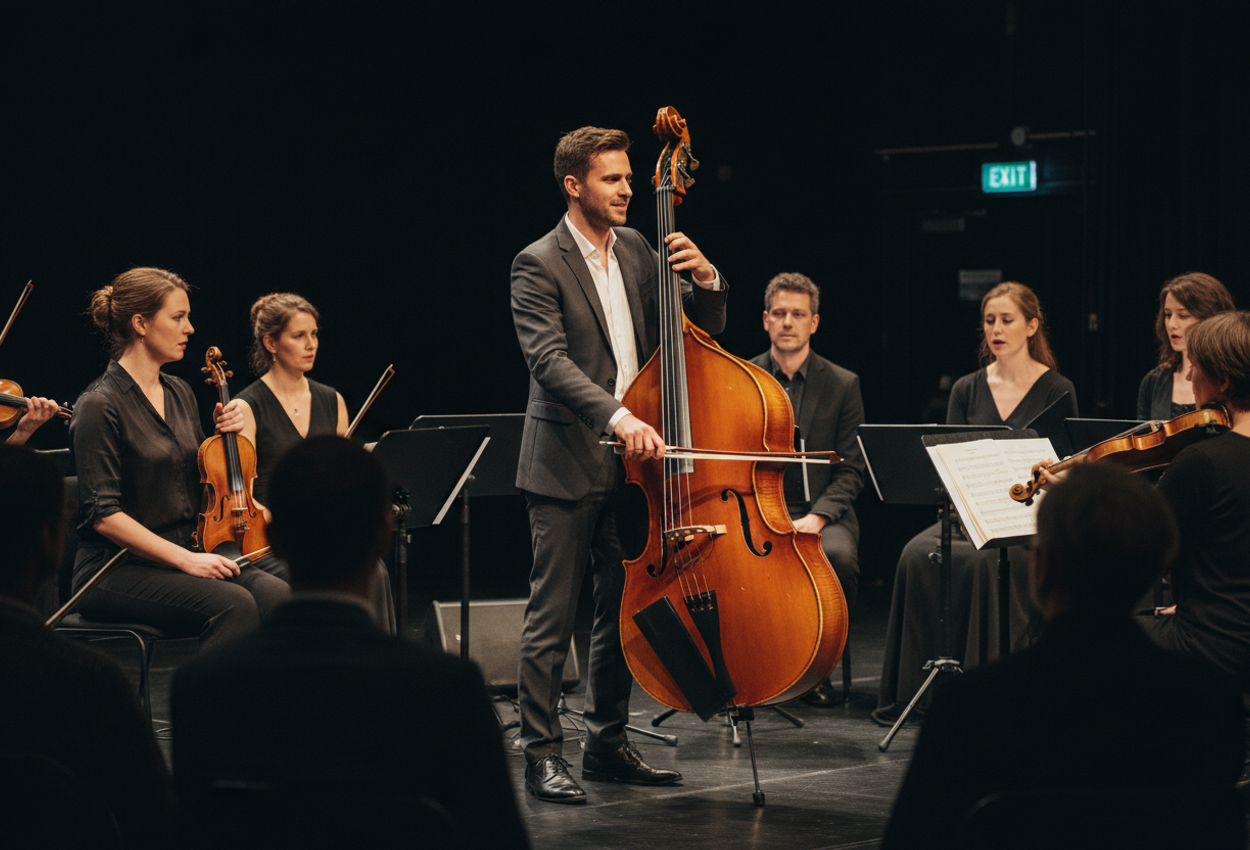
The set‑up is minimal but deliberate. A cluster of music stands gleams under soft spotlights. At the centre, a double bass reclines against a stool, its varnished curve catching a warm glow. Nearby, chairs await string players and singers from The Consort of Melbourne, who will join forces with the Homophonic! Chamber Ensemble to premiere works commissioned especially for the festival, including the latest winner of the Homophonic! Pride Prize.
As the house lights dim, a hush ripples through the room, followed by the faint susurration of programs being folded onto laps. Artistic director and double bassist Miranda Hill steps forward to introduce the evening. Dressed in a tailored suit embroidered with tiny bursts of colour, she speaks with relaxed warmth, acknowledging the Traditional Owners of the lands on which we gather, then reflecting on what it means to play music written by composers who once had to encode their desires in subtext, if they were allowed to be heard at all.
Tonight, the closet exists only as a musical device, she quips gently. Our composers are out, proud, and turning their stories into sound.
The first piece begins with a single, questioning violin note, hanging in the dark like a distant star. Gradually, other instruments join – a murmured cello line, a tentative clarinet, a soft brush of percussion – until the ensemble is a living organism breathing together. The work, inspired by fragmented love letters between two women separated by migration restrictions, moves in waves, dissonances resolving into sudden, luminous chords before slipping away again. In the silence that follows its final note, you can hear someone in the back row sniffle quietly.
Between pieces, snippets of the composers’ voices play through the speakers, each explaining the story behind their work. One talks about building a soundscape from the beeps and clicks of dating apps; another describes translating the rhythm of protest chants from marches along Fitzroy Street into complex polyrhythms for percussion. These pre‑recorded reflections, paired with live performance, collapse the distance between audience, performer, and creator, turning the evening into a conversation across time and experience.
Midway through the concert, the Pride Prize commission premieres: a virtuosic double bass solo that begins with scratchy, whispered harmonics and evolves into a throbbing, percussive tour de force. At points, Miranda slaps the body of the instrument, bows below the bridge, and sings gently into its f‑holes, her voice merging with the instrument’s resonance. The piece is dedicated to queer elders who survived the AIDS crisis, and to those who did not. As the final rumble fades into silence, the audience erupts into applause that feels part ovation, part cathartic release.
After the interval, a work for voices and strings draws on stories collected from LGBTIQA+ seniors living in aged‑care facilities around Melbourne. Snatches of their speech – about secret relationships, about codes used to find one another in hostile times, about the first time they saw a rainbow flag on a government building – are woven into the lyrics. The singers’ voices rise and fall like a tide, threading tenderness and humour through the ache of memory. In the row ahead, a woman in her seventies squeezes her partner’s hand as a line about finally dancing together in public, decades after they met, floats into the dark.
In the post‑show glow, as people spill back into the foyer, flushed and animated, I speak with Jordan, a thirty‑something composer whose trio for clarinet, viola, and piano reimagined a classic nightclub anthem as a nocturne. They grin when asked why they continue to bring new pieces to Homophonic! year after year.
There is a particular magic in knowing that everyone in the room gets the references, they say. When I write a joke into the music – like a tiny snippet of a Kylie hook – I know this audience will catch it and laugh. But more than that, playing here means my work is part of a lineage. We are saying: queer composers are not footnotes. We are the main story, and we sound like this.
Outside, Acland Street is still busy with festival‑goers drifting between bars, bakeries, and late‑night gelaterias. The salty tang of the sea rides the breeze from nearby St Kilda Beach; the neon signs of cake shops glow above trays piled high with cheesecakes and cherry strudels. Groups from the concert gather in small huddles, dissecting favourite moments, trading recommendations for other Midsumma shows. A pair of young musicians in all‑black concert attire lean against a street tree, instruments slung casually over their shoulders, their conversation punctuated by bursts of laughter.
Local Tip – A Post‑Concert Pilgrimage
If you want to extend the spell of a night at Theatre Works, wander the few minutes down Acland Street to the shoreline. Even late in the evening, the promenade by St Kilda Pier buzzes softly – couples sharing chips from paper packets, night‑fishermen casting thin silver arcs into the dark water, the city skyline across the bay a glittering band of light. Find a spot along the low sea wall, let the sound of waves against the rocks blend with the echoes of strings and voices still reverberating in your chest, and look back towards the glowing shape of the Victorian Pride Centre standing watch over the neighbourhood. In that moment, the logic of Midsumma becomes crystalline: art, protest, and joy are not separate strands, but a single braided rope, strong enough to pull a city – and all who call it home – towards a kinder future.
As the festival’s days and nights unfurl – from riverside lawns to inner‑north streets, from gallery walls to intimate black‑box stages – a common thread emerges. Midsumma is not merely a program of events; it is an annual act of collective authorship. Every attendee, artist, volunteer, and passer‑by helps write a chapter in an ever‑evolving story about who we are when we gather without shame. In the twinned glow of streetlights and stage lights, love and culture are not abstract themes but tangible forces – something you can taste in the air, hear in the chorus of voices, feel in the press of a stranger’s hand as the bass drops and the crowd surges as one. Long after the banners are packed away and the last flyers curl in guttering rain, that feeling remains: a quiet insistence that another, more expansive way of being together is not only possible, but already here, pulsing just beneath the surface of the city, waiting for the next summer to bring it blazing back into view.