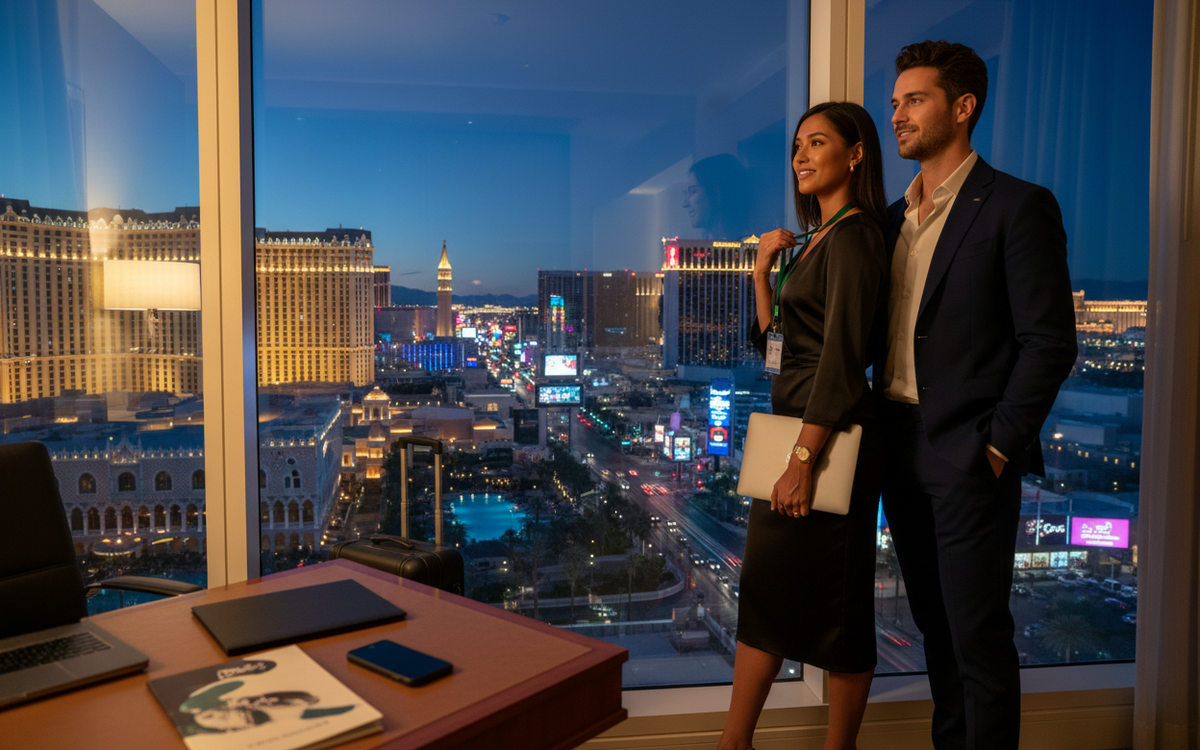
Somewhere between the conference room and the corner suite, a new kind of romance is unfolding: couples slipping into evening wear after keynote sessions, stealing sunrise swims before sales calls, and turning the dead time between flights into the heartbeat of their relationship.Once, business trips were the antithesis of romance, the sworn enemy of anniversaries and date nights. Today, they are increasingly its accomplice. As remote work softens schedules and flight routes thicken between global hubs, couples are quietly rewriting the rulebook of travel. Instead of planning separate vacations that demand more days off, more logistics, and more money, they are folding thin slices of leisure into the architecture of work itself, creating journeys that feel both indulgent and improbably efficient.
This is the world of bleisure travel, where meeting agendas and couples massages coexist on the same calendar, and where the romance lies as much in the cleverness of the planning as in the destination. It is strategic, cost-savvy, and very often, deeply intimate: a stolen long weekend tacked onto the end of a board meeting in Las Vegas, a Friday night of wine tasting after a Thursday client visit near Niagara Falls, or a Monday morning Zoom call taken from a sunlit balcony in the Dolomites before a hike through alpine meadows.
Unveiling the Bleisure Romance: When Work Trips Become Love Stories
At its simplest, bleisure is the blending of business and leisure travel, but in the context of modern romance, it has become something more nuanced: a strategy for couples to stay connected while careers pull them around the globe. The classic narrative of the lonely hotel bar and the partner left at home refreshing flight trackers is giving way to a new script. Increasingly, when one half of a couple is dispatched to a client meeting, product launch, or industry conference, the other joins for a carefully orchestrated window of shared time before or after the official agenda.
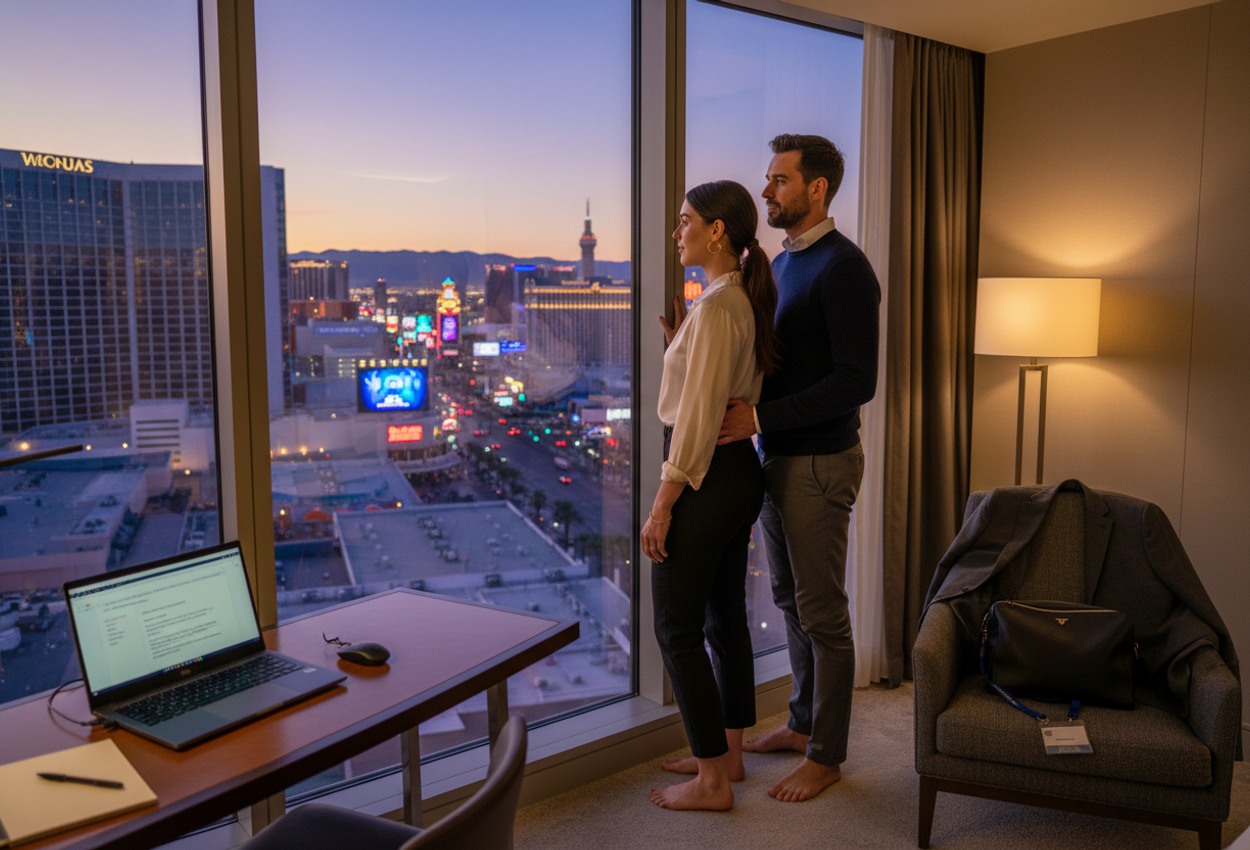
In practice, the rhythm is deceptively simple. A consultant flies into Las Vegas on a Wednesday for a three-day convention at The Venetian Resort Las Vegas. While they spend their days in ballroom breakout sessions, their partner arrives Friday afternoon, checking into the same room on the negotiated corporate rate. By the time the lanyards are tossed onto the desk and laptops are closed, the city has transformed from a trade show backdrop into a playground of rooftop cocktails, Cirque du Soleil performances, and late-night dinners at Estiatorio Milos – The Venetian. Come Monday, the couple is back home, yet it feels like they somehow slipped a full vacation into a single long weekend.
The travel industry has noticed. Analysts tracking the bleisure segment describe it as one of the fastest-growing slices of global travel. Recent projections suggest the global bleisure market could be worth well over eight hundred billion dollars as early as 2026, with some forecasts placing its 2026 value in the high hundreds of billions and others projecting beyond that as definitions widen and hybrid work accelerates. Whatever the final number, the trajectory is unmistakable: double-digit annual growth driven by professionals who finally have the flexibility—and the appetite—to blend their work obligations with personal discovery.
Equally telling is how short these trips have become. While the old model of the two-week grand tour still holds its allure, modern bleisure romance is often built around itineraries that last two to four days. Data from market researchers show that this 2–4 day segment is becoming a prime driver of growth, dovetailing neatly with how many conferences are scheduled and how reluctant professionals are to burn through scarce vacation days. In other words, couples are no longer waiting for the mythical perfect holiday window; they are learning to treat a Thursday flight and a Monday morning check-in as the spine of their love stories.
The emotional appeal is powerful. There is something inherently romantic about slipping off together to a city one of you has known only through PowerPoint decks and expense reports. Even the most clinical convention center district becomes intriguing when you are suddenly seeing it through your partner’s eyes: the café where they always grab a pre-meeting espresso, the hotel lobby where they once landed a career-defining client, the quiet route they walk between calls to reset their thoughts. Bleisure trips invite couples to step into each other’s professional worlds briefly, then step right back out into a shared bubble of leisure.
It also taps into an emotional undercurrent of our age: the desire to make life feel less compartmentalized. The sharp line that once separated weekdays from weekends, office from home, duty from pleasure, has blurred, and many couples no longer want to pretend otherwise. Bleisure romance is, at its heart, an answer to a modern question: how do we nurture ambition without sacrificing intimacy? The solution, it turns out, might be as straightforward as booking one extra night, sending one extra text that says bring your passport, and letting the boardroom quietly open onto the beach.
Cost-Effective Cupid: The Financial Perks of Bleisure
Behind the dreamy Instagram captures and rooftop selfies, bleisure has a distinctly practical side. For many couples, its true seduction lies in the math. When one flight is already paid for, the meeting days are covered under corporate policy, and the hotel’s base rate has been negotiated by a global procurement team, every extra hour spent together can feel like a small financial coup.
Consider a common scenario. A marketing executive from New York City is sent to Las Vegas for a Thursday–Friday product launch at Mandalay Bay Resort and Casino. Her round-trip airfare, checked bag, and three nights in a standard king room at the conference hotel are all covered by her employer. If she and her partner were to plan a separate long-weekend getaway to the same destination, they might easily spend thousands on flights, airport transfers, and three nights in a similar room at standard leisure rates.
Instead, they choose the bleisure route. Her partner books a comparatively inexpensive return ticket that departs on Sunday night, cleverly taking advantage of lower fares tied to Saturday-night stays, a longstanding quirk of airline pricing that often makes itineraries spanning a weekend significantly cheaper than midweek round-trips. They extend the hotel booking for two additional nights, attaching those stays to the existing corporate rate. While companies differ in their policies, many allow employees to add personal nights at the same negotiated price, so long as the business portion of the stay remains clearly delineated on the invoice.
The financial outcome can be striking. Because one traveler’s airfare is fully covered for the business portion, the couple essentially halves their flight costs compared with booking two purely leisure tickets. By keeping the itinerary anchored around weekend dates, they may also secure more favorable fares for the partner’s travel. On the ground, the savings continue: ride-shares to and from the airport are shared, and the couple can often benefit from loyalty perks—free breakfasts, late checkouts, room upgrades—that the business traveler has earned over years of corporate stays.
Bleisure shines even more brightly in destinations where hotel prices are volatile. In a city like Las Vegas, where convention weeks can push rates to eye-watering highs, corporate-negotiated prices often remain remarkably stable. Extending a work stay into a weekend can mean enjoying a private cabana by the pool or a room with a Strip view at a fraction of the typical leisure cost. Similar dynamics unfold in gateway cities such as Toronto—perfectly positioned for a side trip to Niagara Falls—or tech hubs like San Francisco, where weekday corporate stays often unlock reward nights that can be used for romantic add-ons later.
Savings are not limited to beds and boarding passes. Business travelers are frequently entitled to a per diem for meals and incidental expenses during the official portion of their trip. While companies rightly expect these allowances to be used responsibly, couples can still benefit indirectly. A work-sponsored breakfast in the hotel restaurant or a client lunch at a chic downtown bistro covers one half of the couple’s dining needs early in the trip, making it easier to justify a lavish shared dinner once the leisure portion begins. Some travelers also capitalize on corporate ground transportation while remaining within policy—taking the same ride-share from airport to hotel whether or not their partner is in the back seat beside them.
There is also an opportunity cost that bleisure neatly sidesteps. Organizing two separate trips—one for business, one for pleasure—means two rounds of packing and unpacking, two bouts of jet lag, and double the time away from home routines. By consolidating obligations and indulgence into a single, thoughtfully extended trip, couples stretch not only their dollars but their energy. The result is a kind of travel efficiency that feels almost decadent: less money spent, less logistical friction, more shared sunsets.
For companies, this cost-effective Cupid can even be a hidden asset. Employees who feel empowered to make their work travel personally meaningful often report lower burnout and higher satisfaction. When a quarterly sales meeting in a distant city can double as a micro-honeymoon, the grind of constant flights becomes just a little more bearable, and the spreadsheets are shaded with the memory of a poolside cocktail or a late-night walk under neon lights.
Balancing Briefcases and Beaches: Crafting a Seamless Bleisure Escape
The genius of bleisure romance lies in its apparent effortlessness: the way a spreadsheet-filled afternoon seems to dissolve into a candlelit dinner as if by magic. In reality, the most seamless bleisure trips are choreographed with the precision of a dance, each step pre-planned so that work commitments and leisure moments glide around one another rather than collide.
It begins long before boarding. The most successful couples treat a bleisure trip not as a casual tagalong but as a shared project. They sit down with the meeting agenda or client schedule and map out, together, where the white space lies. If a conference in Las Vegas ends at 4 p.m. daily, they might agree that late afternoons are theirs to fill with a swim in the pool complex at The Venetian Resort Las Vegas or a leisurely stroll into the Arts District. If one partner will be leading a high-stakes presentation on Friday morning, they may deliberately keep Thursday night low-key, opting for room service and an early bedtime over a heady spin through the casino floor.
Clear boundaries are essential. Rather than letting work emails infiltrate every moment of the trip, couples often decide on specific windows for professional tasks. Mornings might belong to meetings and inbox triage, while afternoons and evenings are earmarked for togetherness. Tools like shared digital calendars, status messages on communication platforms, and even simple out-of-office replies can signal to colleagues—and to each other—when availability ends and leisure begins.
Technology is both enabler and potential saboteur here. On the one hand, fast hotel Wi-Fi, noise-cancelling headphones, and lightweight laptops make it easy to squeeze in an hour of focused work from a quiet corner of the lobby or a balcony overlooking the Strip. On the other, the omnipresence of devices can quickly erode the very sense of escape bleisure promises. Couples who thrive in this blended world are often those who agree, in advance, on small rituals to protect their romantic time: phones stacked face down at dinner, laptops zipped decisively into luggage once the official last meeting is over, a firm promise not to sneak peeks at email during a hike or a wine tasting.
Communication, in the end, is the invisible carry-on that makes bleisure work. The partner traveling for business may feel torn between professional expectations and the desire to be fully present for their companion. The partner joining for leisure may struggle with feeling sidelined while the other disappears into breakout rooms. Discussing those dynamics openly—before check-in, not after a misaligned afternoon—can transform potential friction into a sense of collaboration. Perhaps the leisure partner uses solo hours to explore a museum or café, bringing back stories, photos, and local snacks to share. Maybe the business traveler asks their partner to help choose which optional networking events are truly worth attending and which can be skipped in favor of a moonlit walk.
Timing matters too. Short itineraries benefit from ruthless prioritization: a three-night stay does not need a dozen activities to feel complete. Instead, couples might pick one anchor experience per day—a show on the Las Vegas Strip, a spa afternoon, a riverside walk, a single exceptional meal—and leave the rest as generous unstructured time. This prevents the trip from becoming a second job of sightseeing and ensures there is space to do nothing together, which is often the rarest luxury of all.
Finally, the most satisfying bleisure journeys extend beyond logistics into intention. Before departure, many couples find it powerful to articulate what they want the trip to mean. Is it a chance to reconnect after months of conflicting schedules? An opportunity for one partner to finally see the city that has been a backdrop to so many work stories? A low-pressure way to test how they travel together before planning a bigger adventure? Holding that shared purpose gently in mind as they move between conference halls and hotel rooftops can turn even the smallest stolen moment—a shared coffee in the lobby before a keynote, a midnight room-service dessert eaten in bathrobes—into a thread in a larger, more deliberate narrative.

Romantic Rendezvous: Top Bleisure Destinations for Couples
Some cities seem almost designed for bleisure romance, where airport efficiency, convention centers, and five-star hotels sit within easy reach of candlelit restaurants, art-filled streets, and restorative landscapes. They are places where a morning keynote is only a short ride away from a sunset that feels like pure vacation, and where couples can slip effortlessly from professional polish to private reverie.
Las Vegas, Nevada, remains one of the reigning capitals of bleisure. Long known as the ultimate convention city, it has quietly matured into a destination where serious business and extravagant pleasure live side by side. At The Venetian Resort Las Vegas, tone-setting ballrooms and meeting suites sit just floors away from serene spa facilities and suites with floor-to-ceiling views. After a day beneath the glow of projector screens, couples can step directly onto the Las Vegas Strip, drifting past choreographed fountains and glittering marquees toward dinner at Estiatorio Milos – The Venetian, where pristine seafood and Greek coastal flavors feel worlds away from the sales figures discussed an hour earlier.
What makes Las Vegas particularly compelling for couples is its flexibility. Some pairs lean into the city’s high-octane glamour: booking VIP tables at rooftop lounges, catching late-night residencies, or floating down the faux canals in a gondola before slipping back to their suite. Others discover a softer side: sunrise walks in the nearby desert, quiet afternoons by a pool shaded by palms, or a shared visit to a wellness-focused spa before the next round of meetings. The city’s tight cluster of major hotels means that even if the conference is held in one property and the couple stays in another, distances are manageable, and every commute can become a mini-date.
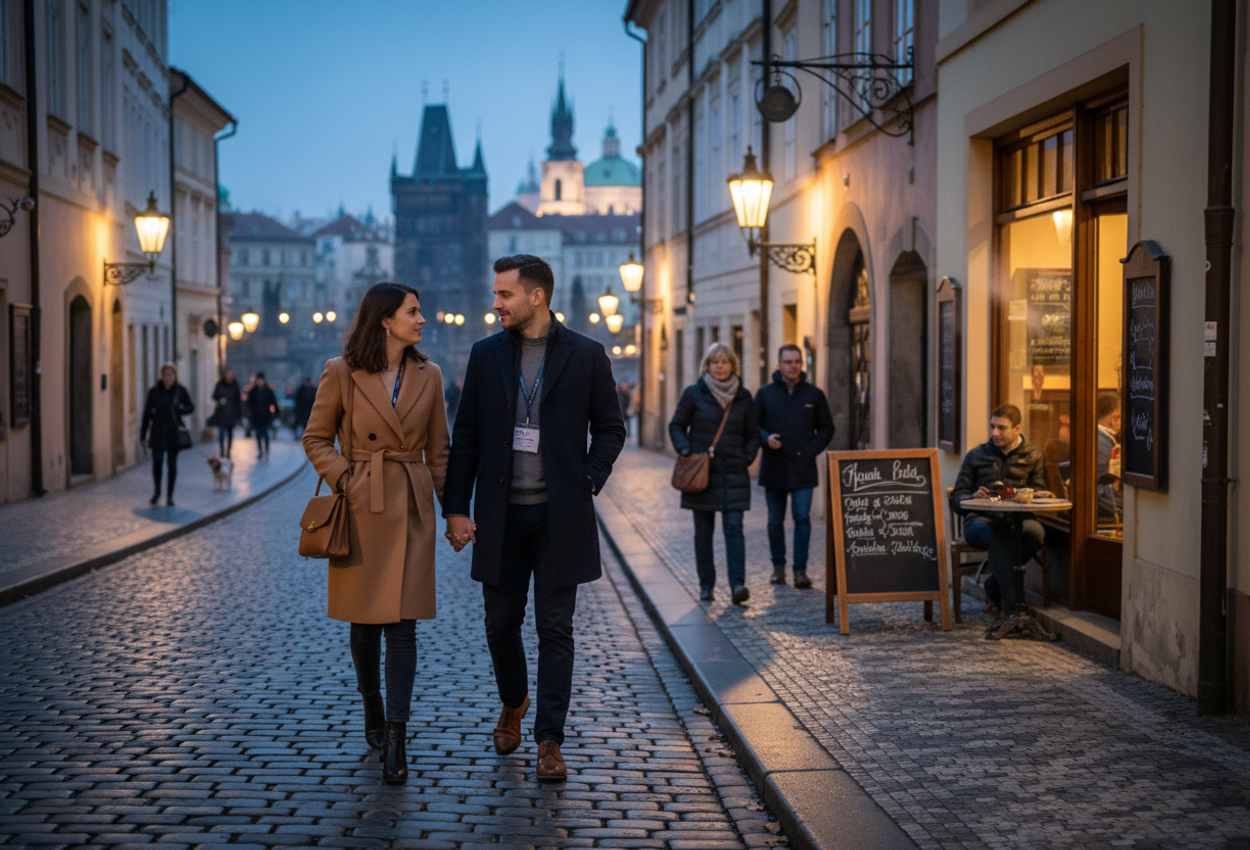
Across the Atlantic, Eastern European cities are emerging as some of the savviest bleisure choices for couples in search of culture and connectivity. Think of a long weekend tacked onto a client visit to a tech hub like Warsaw or Prague, where modern conference facilities sit within walking distance of cobblestoned streets, ornate opera houses, and riverfront promenades. Fast-growing air routes and improving rail links make these cities increasingly accessible, while hotel prices often remain gentler than their Western European counterparts.
In a city like Prague, a partner might spend their mornings in sleek glass towers overlooking the Vltava, then meet their loved one in the afternoon beneath the astronomical clock in Old Town Square. Together, they cross the Charles Bridge as buskers play and the light fades over baroque facades, then climb up toward Prague Castle for a panoramic view that makes the day’s emails feel like a distant concern. In Budapest, business meetings in downtown Pest can easily be followed by a twilight soak in the geothermal waters of the Szechenyi Thermal Bath, steam curling in the cold air as couples lean side by side against warm stone.
For those who crave the sound of waves more than the hum of a tram, bleisure blends beautifully with beachside cities. Coastal hubs like Miami, Barcelona, and Lisbon offer the rare pleasure of stepping directly from a video conference into the sea. Picture a trip to Lisbon for partner meetings: mornings spent under the high ceilings of a historic hotel’s meeting rooms, afternoons riding the yellow tram 28 up steep hills toward miradouros where the entire city spreads out in terracotta and teal. With good timing, couples can cap off the day with grilled seafood in the Alfama district before waking early to take a quick train out to the sand dunes of Costa da Caparica.
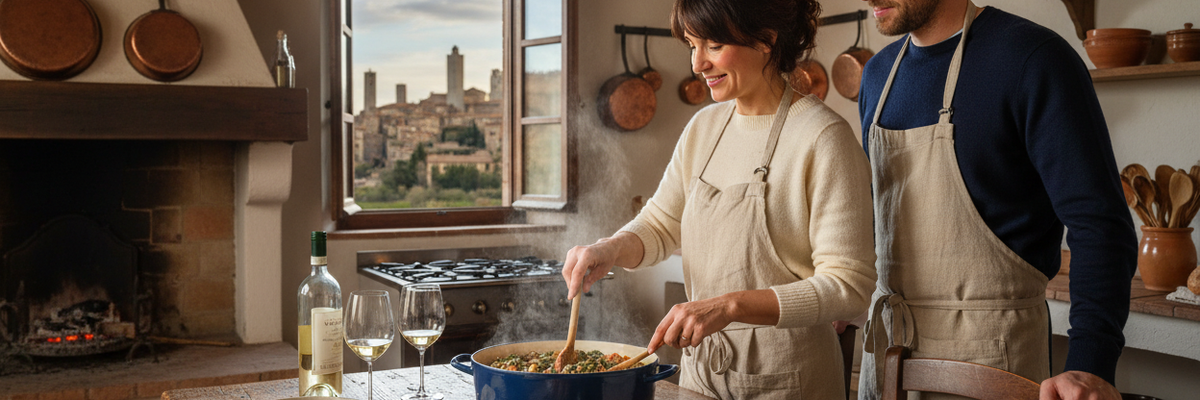
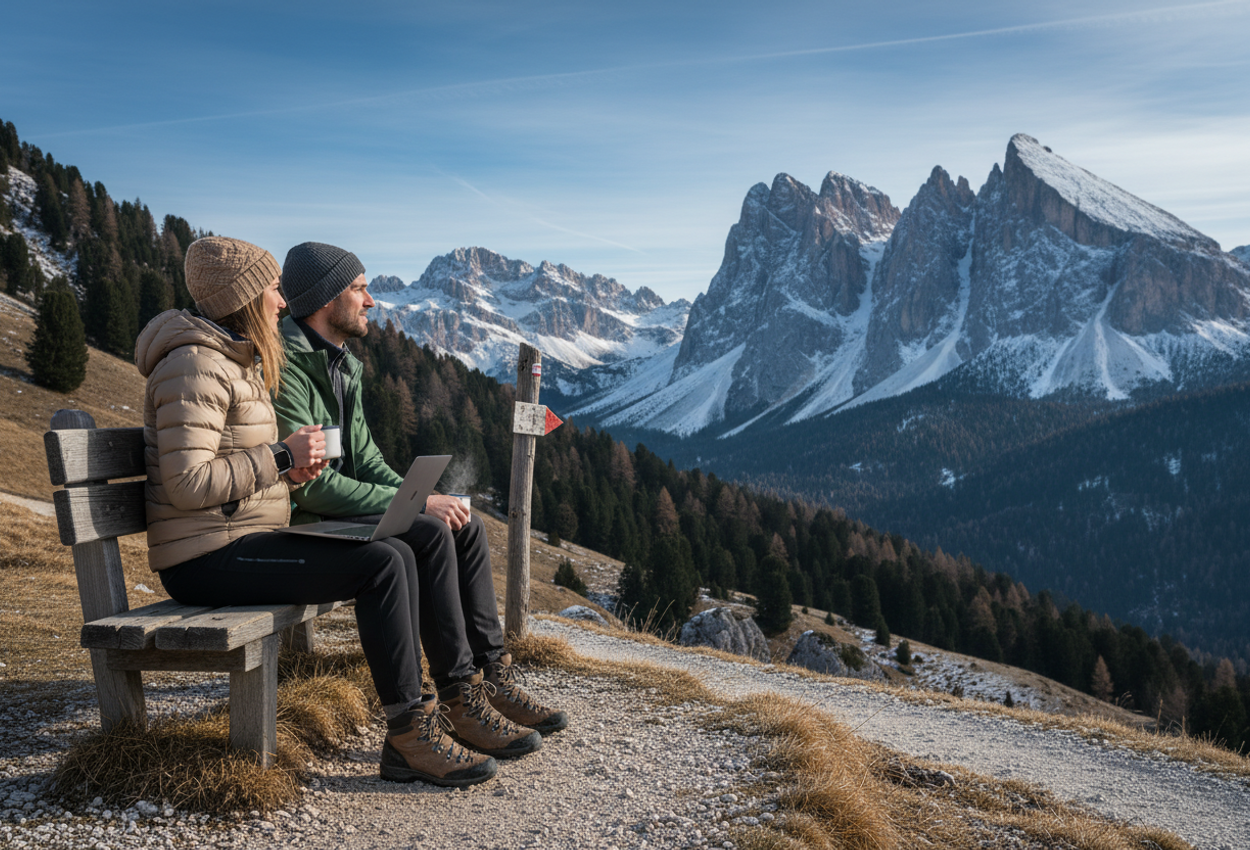
Even classically romantic destinations like the Dolomites are joining the bleisure conversation, particularly as more companies embrace remote or hybrid work. Flights into northern Italian gateways such as Venice or Innsbruck can be justified for meetings in Milan or Munich, but a determined couple can quietly allow an extra two days in the mountains. Modern retreats such as Forestis Dolomites on Mount Plose offer spacious suites with uninterrupted views of sawtoothed peaks, where one partner might begin the day with a video call from a minimalist wooden desk, then close their laptop and step straight into a forest of larch and spruce.
Connectivity, in all senses, is the thread that ties these bleisure hotspots together. They are cities with reliable Wi-Fi and multiple daily flights, but also with emotional infrastructure: restaurants that understand the need for an early dinner after a conference, museums that stay open into the evening, neighborhood cafés where a late-afternoon cappuccino can effortlessly segue into a nightcap. For couples, the most romantic destination may not be the most remote or the most lavish, but the one that allows them to move easily between their professional selves and their private, shared world.
Beyond the Boardroom: Experiential Romance in Bleisure Hotspots
If destinations are the canvas of bleisure romance, experiences are the brushstrokes that give it life. What distinguishes a truly memorable trip from a merely convenient one is not the hotel brand or the lounge access, but those vivid, specific moments when couples find themselves utterly elsewhere—walking streets older than the countries they call home, tasting wines grown on hillsides they had only ever seen in postcards, or standing in a mountain meadow so quiet they can hear their own breath.
In St. Augustine, Florida, often cited as the oldest continuously inhabited city in the United States, bleisure unfolds against a palimpsest of centuries. Business travelers might come for regional conferences or corporate retreats, drawn by the city’s growing reputation as both friendly and walkable. But for couples who extend their stay, the workday gives way to an immersive journey through layers of history. After closing their laptops, they might wander hand in hand through the thick stone walls of Castillo de San Marcos National Monument, the 17th-century fort presiding over Matanzas Bay, imagining the shifting empires and storms it has silently withstood.
A few streets away, they could find themselves in the quiet courtyard of the Ximenez-Fatio House Museum, one of the best-preserved Second Spanish Period residences in the city, where tour guides bring to life the lives of the women who once ran it as a fashionable boarding house. As dusk deepens, they might drift toward the Oldest House Museum, whose weathered coquina walls and lush gardens speak to the centuries of domestic life that have unfolded there. Later, perhaps, they cross the bridge to Anastasia State Park, letting the roar of the Atlantic cancel out the memory of conference calls as they walk a boardwalk out to a wide, pale beach, the sand cool underfoot as stars rise.
Farther north, bleisure romance finds a different expression in Niagara Falls, New York. Here, the thunder of water is the constant soundtrack, a reminder that nature operates on a scale far grander than quarterly targets. Many travelers arrive on the back of business in nearby Buffalo or Toronto, then carve out time to approach the falls not just as sightseers but as participants in the region’s quieter pleasures. After leaning over railings at Niagara Falls State Park, mist beading on their faces, couples can drive a short distance into the countryside to follow the Niagara Wine Trail, USA.
There, among rolling fields and tidy rows of vines, they move slowly from one family-owned winery to the next. At spots like Freedom Run Winery in Lockport or Arrowhead Spring Vineyard in Lockport, they might sample cool-climate varietals—crisp Rieslings, elegant Pinot Noirs—while chatting with winemakers about the quirks of lake-effect weather. The contrast with the roar of the falls is poignant: one moment, raw power; the next, the quiet concentration of a cellar where barrels breathe in the dim light. When they finally return to their hotel, maybe with a carefully wrapped bottle tucked into their luggage, they carry with them a sense of having truly inhabited the region, not merely glimpsed its most photographed angle.
In the Dolomites, experiential romance takes on a more vertical dimension. Couples who add a few days in the mountains to a European business itinerary often describe it as a kind of recalibration. After days spent under fluorescent lights in urban offices or expo halls, the first glimpse of jagged peaks carved against an impossibly blue sky can feel almost shocking. At retreats such as Forestis Dolomites near Bressanone, suites are oriented so that the mountains seem to press right up against the glass; it is entirely possible to dial into a video conference in the morning with the same peaks reflected in the laptop screen that will later frame an evening cocktail.
Once work obligations end, couples step onto trails that meander through spruce forests and alpine meadows saturated with wildflowers in summer or blanketed in crisp snow in winter. They might ride a cable car up from nearby villages and then hike, side by side, across ridgelines where cowbells echo and distant church spires glint in the light. Lunch could be a simple plate of canederli dumplings or a shared charcuterie board at a high-altitude rifugio, the kind of mountain hut where time seems to move according to the sun rather than any calendar app.
What links these bleisure hotspots—from St. Augustine’s colonial streets to the vineyards above Niagara and the high meadows of the Dolomites—is the way they invite couples to experience transformation together. These are not merely backdrops for a nice dinner or a swim; they are places that ask the traveler to slow down, to listen, and to imagine themselves differently. To stand inside a 300-year-old house and feel the weight of history, to taste a wine that could only have grown on that exact slope, to walk under stone peaks that once lay on a prehistoric seabed, is to be reminded of scale and continuity beyond any single inbox.
For couples navigating demanding careers, that perspective can be unexpectedly romantic. Bleisure becomes a chance not only to enjoy new places but to renegotiate what their shared life looks like: perhaps deciding, somewhere between a conference keynote and a hillside picnic, that this is how they want to travel going forward—less spectacle, more depth; fewer rushed vacations, more intentional interludes woven into the existing fabric of their lives.
Ultimately, the rise of bleisure for romantic travel is less a trend than a quiet reimagining of how love and work coexist. It suggests that the most meaningful journeys may not be the ones that require the most vacation days or the longest flights, but those that emerge, cleverly and tenderly, from the margins: an extra night here, a Saturday there, a decision to invite a partner along on a trip that would once have been taken alone. In these liminal spaces—between conference and cab ride, between check-out and boarding time—modern couples are discovering that romance does not always require a grand escape. Sometimes, it just needs a slightly later return flight.