

Sight Sailing in Lisbon
 Lisbon, PT
 100% of travellers recommend this

Non-refundable - Your booking can not be cancelled, modified or refunded.
Guaranteed Lowest Prices - Find a lower price? We'll match it!
Highlights
- Unique perspective of Lisbon
- Magnificent views of the city
- Relaxing and unforgettable experience
- Opportunity to taste Portuguese gastronomy
- Sailing on a comfortable and secure boat
-
Duration 2 hours 30 minutes
-
Private tour experience
-
Local guide included
-
Wine tasting included
-
Bottled water provided
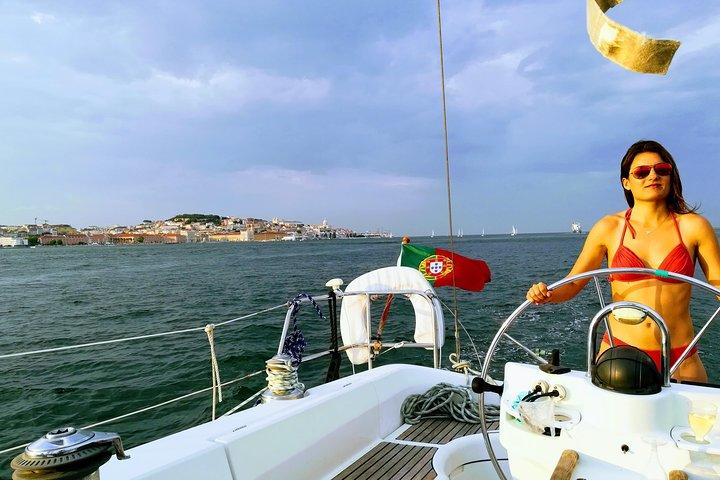
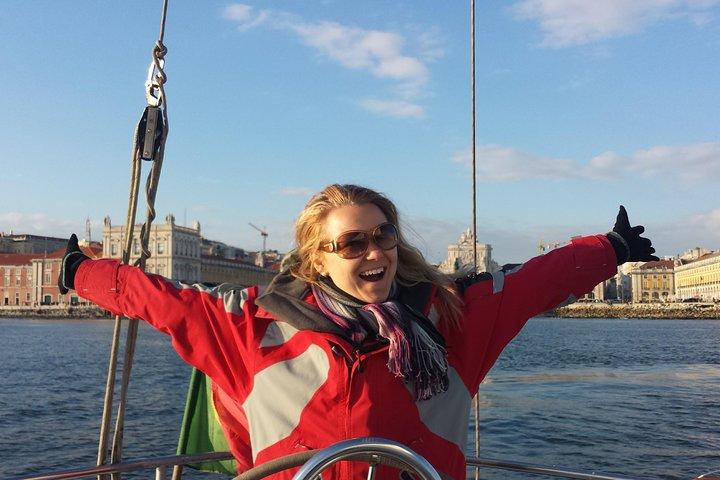
Experience the magic of Lisbon from a whole new perspective with Sight Sailing in Lisbon. This unforgettable and relaxing tour takes you on a journey along the stunning banks of the Tagus River, offering magnificent views of the city's iconic monuments and enchantments. Step aboard a specially designed sailing boat, where comfort and security are guaranteed, and let the wind guide you through this incredible spectacle. As the sails meet the Atlantic Ocean, you'll be treated to a truly unique sightseeing experience, showcasing the beauty of Lisbon from the water. Along the way, enjoy a wine tasting and the opportunity to taste the flavors of Portuguese gastronomy. With a local guide, all fees and taxes included, and breathtaking sights to behold, this is a must-do experience for any traveler visiting Lisbon. Welcome aboard!
At a Glance
-
 2 hours 30 minutes
-
 Instant Confirmation
-
 Available in Spanish; Castilian, English, Portuguese
-
 Mobile voucher
-
 Private Tour
-
 Guided
-
 Family friendly

Featured Reviews

Experience the beauty of Lisbon from the water with a private sailing tour, featuring stunning views, local cuisine, and wine tasting on the Tagus River.
Included
-
 OtherLocal guide
 -
Bottled waterBottled water
-
OtherPrivate tour
-
Alcoholic beveragesAlcoholic Beverages
-
OtherWine tasting
-
OtherAll Fees and Taxes
-
OtherOpportunity to taste the Portuguese gastronomy
Excluded
-
 OtherHotel pickup and drop-off
Meeting Point
The meeting point is Gate 1 which gives access to the marina "Doca de Recreio de Santo Amaro", under the 25 de Abril Bridge. If you have any questions, please do not hesitate to call or email us. Welcome aboard!

Av. Brasília 5, 1350-353 Lisboa , Portugal

End Point
The meeting point is Gate 1 which gives access to the marina "Doca de Recreio de Santo Amaro", under the 25 de Abril Bridge. If you have any questions, please do not hesitate to call or email us. Welcome aboard!

Av. Brasília 5, 1350-353 Lisboa , Portugal
What to expect

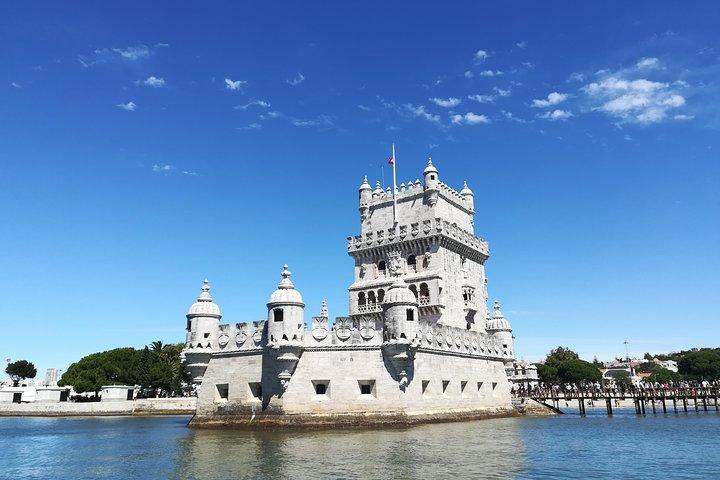
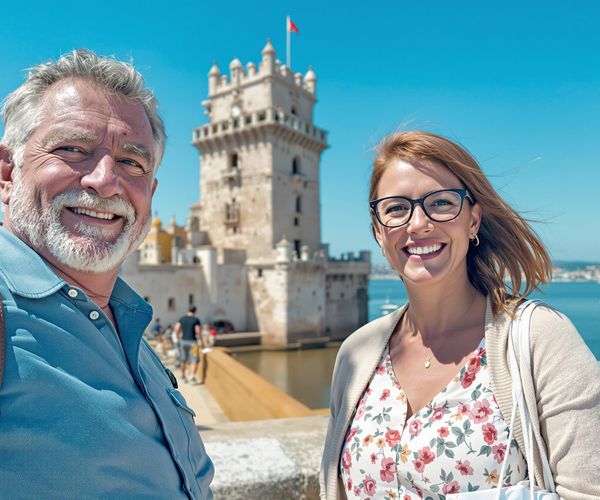
The Belém Tower, built at the narrowest point of the Tagus estuary, was intended to defend Lisbon. Initially surrounded by the waters around its perimeter, today, this structure is symbolically linked to land by a pedestrian bridge. This was the way found to preserve its original context. Classified as a World Heritage Site by UNESCO, since 1983, Belém Tower is undoubtedly one of the most expressive monuments of Lisbon.
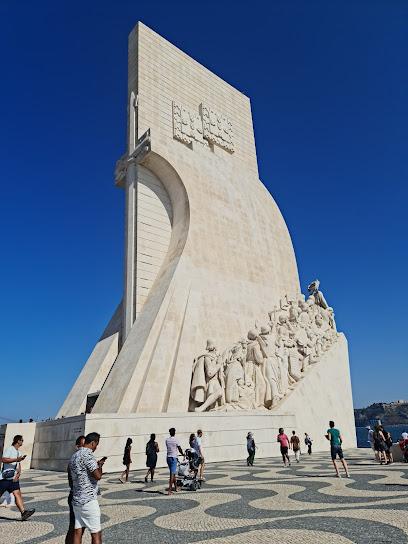
With 50 meters high, the Discoveries Monument has the shape of a ship, comprising two ramps that ends on the prow with the statue of the initiator of the Discoveries Age – Henry, the Navigator. Also, Fernão de Magalhães, Luís de Camões, Pedro Álvares Cabral and Vasco da Gama are some of the 32 figures sculpted in stone and that can be found on the monument. These represents an historical summary of personalities linked directly or indirectly to the Age of the Discoveries. The original Discoveries Monument was built in 1940 for the Portuguese World Exhibition. It was designed by the architec and film-maker Continelli Telmo. It was built on perishable materials and dismantled three years later, in 1943.

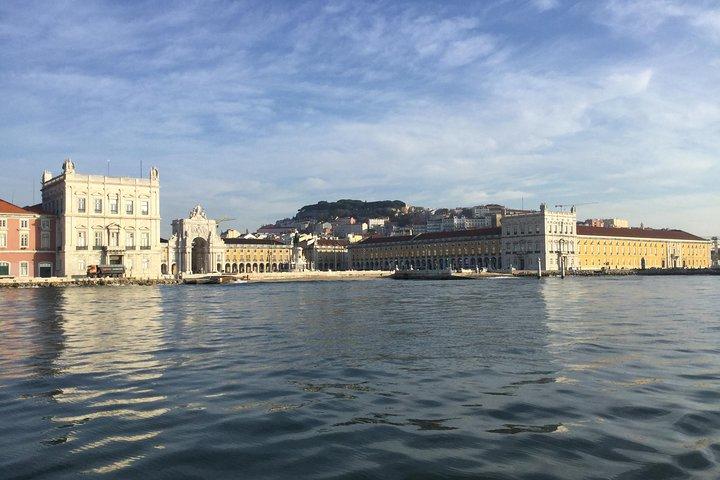
The earthquake that destroyed Lisbon started around 9:30 a.m. on November 1, 1755. The earth shook violently. Thousands of buildings collapsed mainly in the downtown area and on the hillside to the Chiado. The Palácio Real da Ribeira, the Teatro da Ópera, convents, palaces, schools, hospitals, … Everything collapsed. The square adopted in the reconstruction plans made it possible to design Terreiro do Paço, a majestic square open onto the Tagus estuary. Today this square hosts major events all year round. One of the most impressive is the fireworks display put on by the Lisbon City Council on New Year’s Eve.
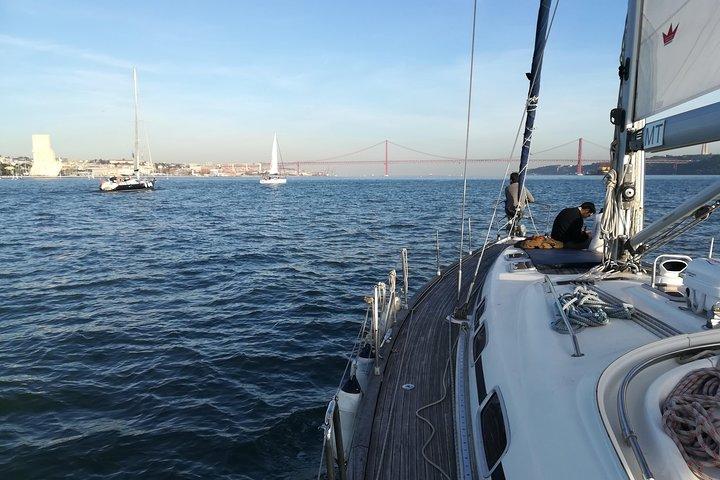
Sometimes named as the “Portuguese Golden Gate Bridge” because of its similarities with the suspension bridge of San Francisco (USA). In fact, after more than 50 years of ideas and projects, the construction of this bridge was attributed to the same North American company. Originally known as Ponte Salazar, this engineering work would go down in the city’s history for several reasons. Having cost less than anticipated and being executed in record time were two of them. This bridge is essential in the communication of the two banks, connecting the cities of Lisbon and Almada.
Alfama
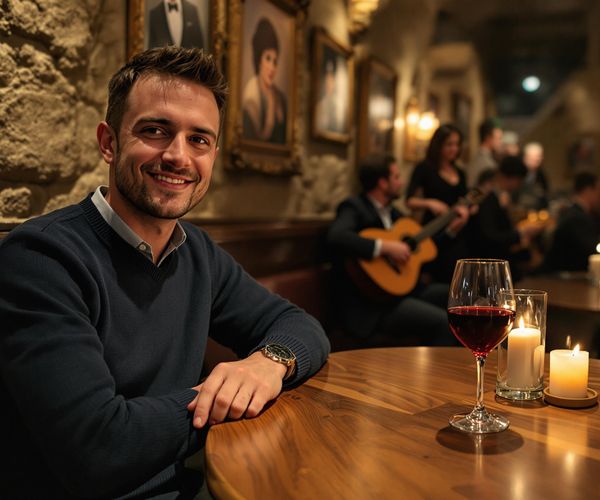
Alfama is the oldest neighborhood in Portugal and one of the oldest in Europe. It is located on the slope of the hill next to the Castle of São Jorge and has the Tagus River as one of its limits. It is one of the most characteristic and picturesque neighborhoods in the city, with narrow cobbled streets, colorful houses and stunning views over the Tagus River. Alfama is also famous for its musical culture, especially Fado, a traditional form of Portuguese music. There are several bars and restaurants in the neighborhood that offer live Fado performances, where visitors can enjoy an evening of music and gastronomy.
Santuario Nacional de Cristo Rei
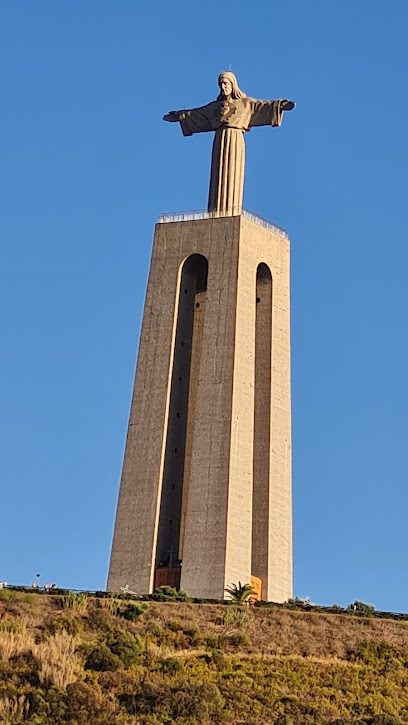
Christ-King is made up of a 75-metre-high portico, topped by the statue of the Most Holy Redeemer with open arms facing the city of Lisbon, 28 meters high. The pedestal, including the portico, rises to 82 meters in height. The monument to Christ-King is the biggest attraction in the municipality of Almada. But, in reality, the monument to Christ-King was built in fulfillment of a vow made by the Portuguese episcopate in 1940, which asked God to free Portugal from participating in the Second World War. The President of the Council of Ministers, António Oliveira Salazar, preferred to remain neutral, as Portugal did not participate in that war.
Palacio Nacional da Ajuda
Ajuda Palace is a historic landmark in the Portuguese capital. Built in the 19th century, the palace was designed as a residence for the Portuguese royal family and is now an important national museum. In addition to its historical and architectural importance, Ajuda Palace is also known for its privileged location, with stunning views over the Tagus and the city of Lisbon. Today, Ajuda Palace is an important national museum, with permanent exhibitions on the history of the Portuguese royal family and on the architecture and decorativism of the palace.
São Jorge Castle rises in a dominant position on a high hill in the historic center, offering visitors one of the most beautiful views over the city and the Tagus river estuary. The castle itself was founded in the 10th and 11th centuries, when Lisbon was an important Muslim port city. In 1147, the first king of Portugal, D. Afonso Henriques, conquered the castle and city from the Moors.
Panteao Nacional
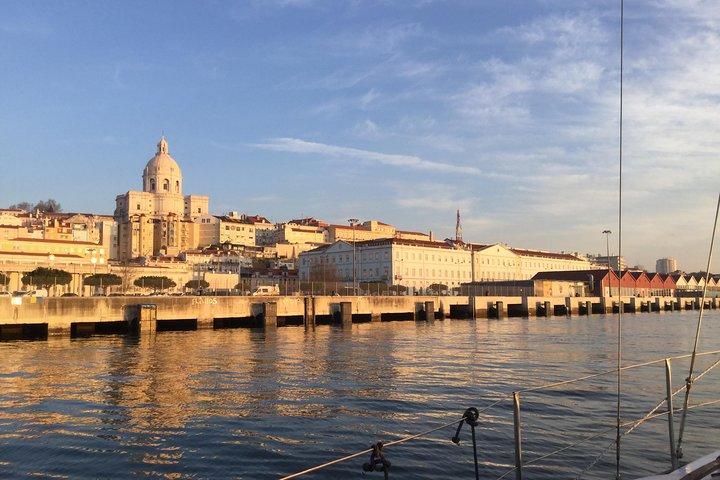
The National Pantheon, also known as the Church of Santa Engrácia, is one of the main tourist attractions in Lisbon, located in Alfama district. It certainly is an important architectural attraction in the city, with a rich history and stunning panoramic views. The imposing appearance and unique character of the work justify its classification as a National Monument and legitimize its choice to house the remains of exceptional Portuguese people.
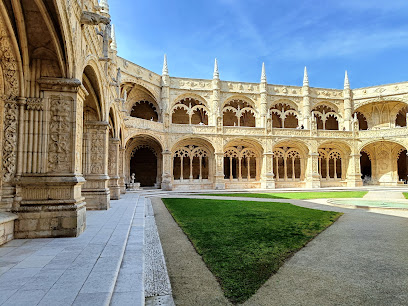
Jerónimos Monastery is 16th century Portuguese architecture masterpiece classified as a national monument. It´s located in one of the most emblematic areas of Lisbon, in a historical and monumental setting – along the river Tagus. Between the Monastery of Jerónimos and the river you can also find the Empire square. It was from here that the Portuguese navigators departed. It is here that you can find Vasco da Gama and Luís de Camões, the maximum representatives of the Portuguese maritime discoveries.
MAAT - Museu de Arte, Arquitetura e Tecnologia
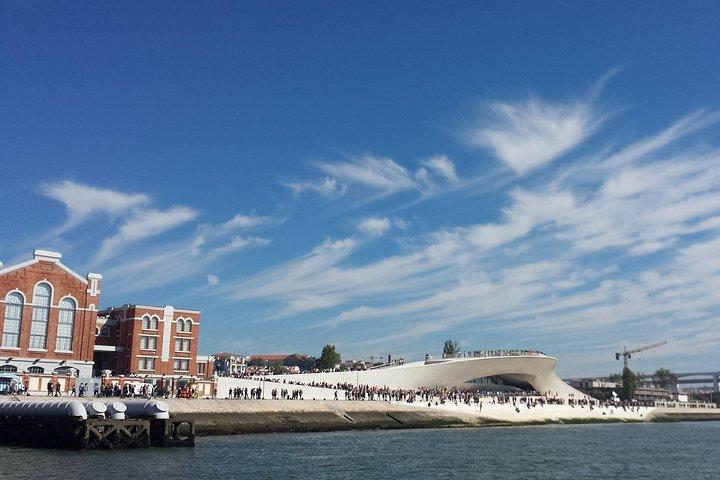
Central Tejo was a thermoelectric plant that supplied electricity to the entire Lisbon region. Built in 1908, its period of productive activity spans between 1909 and 1972. Central Tejo opened to the public for the first time in 1990 as the Electricity Museum. Soon after a new period of restoration work on its buildings and equipment, it reopened definitively in 2006.
MAAT - Museu de Arte, Arquitetura e Tecnologia
The Museum of Art, Architecture and Technology (MAAT) is a cultural institution located in Lisbon, which opened in 2016. MAAT was designed by British architect Amanda Levete, internationally known for her innovative and futuristic approach. It systematically presents exhibitions – national and international – with the contribution of contemporary artists, architects and thinkers, as well as events and educational programs.
Museu Nacional De Arte Antiga
The National Ancient Art Museum is a testimony of the Portuguese cultural heritage. Founded in 1884, the museum is located in a former palace, the Palácio dos Condes de Alvor, which contributes to its grandeur and charm. Today, its collection covers more than 500 years of art history, with pieces of sculpture, painting, goldsmithing and decorative arts from Europe, Africa and the Orient. In addition to its impressive collection, the National Ancient Art Museum is a typical example of Portuguese civil architecture of the time. The building’s design reflects the grandeur and elegance of the palace it once was, with its ornate façade and intricate detailing.
Cais do Sodre Train Station
Cais do Sodré is one of the most historic and iconic places in the city. With its privileged location in front of the Tagus River, Cais do Sodré is a mandatory stop for tourists and residents of Lisbon. In the 17th century, Cais do Sodré was known as the “Port of Vessels”, where ships left for the Portuguese colonies. During the 19th century, Cais do Sodré became an area of bars and entertainment venues, attracting sailors and adventurers from all over the world.
Lisbon Cathedral
The Lisbon Cathedral is located in the Alfama district. Its construction began in the second half of the 12th century, after the conquest of the city from the Moors. It is the oldest church in Lisbon and one of the most important religious buildings in Portugal. One of the main attractions of the Lisbon Cathedral is its treasury, which includes valuable objects such as relics, jewels and sacred art and extends over four halls.
Terminal de passageiros de Santa Apolonia
Santa Apolónia Station is one of the oldest train stations in Portugal, having been inaugurated in 1865 in a building where there used to be a convent. Originally planned as a railway and river station, it is an important connection point for travelers visiting the Portuguese capital. Since 2007 it has also been the final station for one of Lisbon’s metro lines, and is located very close to the Cruise Port terminal. Now, the five-star hotel The Editory Riverside Santa Apolónia occupies part of the station with a total of 126 rooms alluding to the theme of Portuguese railway heritage.
Torre VTS de Algés
The Maritime Traffic Control Centre, VTS Tower, manages navigation within the area of jurisdiction of the Administration of the Port of Lisbon – provides information and advises ships sailing in the Tagus estuary and approaching it – up to a radius of 16.5 nautical miles, centered on the VTS – Lisboa and having the Vasco da Gama Bridge as an upstream limit. Thus, controllers, through surveillance cameras, radars, sensors, among other support equipment, receive data that allows them to monitor and control maritime movement. Additionally, they are also responsible for managing the wharves. It currently also accommodates the Dolphin observatory on the Tagus River.
Champalimaud Foundation
This foundation, also known as the Research Center for the Unknown, was created by António Champalimaud (1918-2004) in his will and is primarily dedicated to the development of advanced biomedical research programs and the provision of interdisciplinary clinical care. The Champalimaud Foundation is known for being an institution of excellence in scientific research. Its researchers have already published more than 1,200 scientific articles and have received several awards and distinctions, including the Champalimaud Prize for Medical Research, which is one of the highest awards in Europe in the field of medicine.
Museu de Arte Popular
Lisbon’s Folk Art Museum (FAM) has a history that goes back to the 19th century. At first, it was designed as a pavilion for the “Popular Life Section” of the Portuguese World Exhibition in 1940. Five years later, a new project emerged that initiated the transformation of the previous pavilion into the Folk Art Museum. This project consisted of adapting the previous building into a museum. The museum opened on July 15, 1948. Nowadays, the museum is in charge of the Ethnology Museum and is a cultural landmark in Lisbon, attracting art lovers from all over the world.
Belem River Station
The South and Southeast River Station is an important historical and cultural landmark in Lisbon, offering a variety of transport, leisure and entertainment options for visitors. South and Southeast River Station is located in Commerce Square, in Lisbon, where it is possible to catch the boats that make the connection to the south bank of the Tagus. Next to Navy Dock and Commerce Square, it is a point with history by the river. Inaugurated in 1932, it has undergone several renovations, the last one being completed in May 2021.
The experience can be subject to change due to bad weather or unforseen circumstances. We always endeavour to give you the best possible experience.
Additional Information
-
 Infants and small children can ride in a pram or stroller
 -
Public transportation options are available nearby
-
Specialized infant seats are available
-
Suitable for all physical fitness levels
What our experts say
-
 Try local seafood at nearby restaurants.
 -
Arrive early to enjoy the marina views.
-
Capture photos under the 25 de Abril Bridge.
-
Avoid peak hours for a more peaceful sail.
-
Bring a light jacket; it can get breezy.

More About this Experience
Introduction
Welcome to the delightful Sight Sailing experience in Lisbon! This tour offers a unique perspective of the city, providing you with unforgettable moments aboard a sailing boat. With comfort and security in mind, you'll embark on a journey to discover the breathtaking banks of the Tagus River and enjoy magnificent views of Lisbon's iconic monuments and enchanting landscapes.What to Expect?
During this unforgettable and relaxing experience, you can expect to be captivated by the beauty of Lisbon from a different angle. As you sail along the Tagus River, you'll witness the meeting point between the river and the Atlantic Ocean, creating a spectacle of nature that will leave you in awe. The tour includes a local guide who will share interesting insights about the city and its attractions. You'll also have the opportunity to indulge in a wine tasting session and savor the flavors of Portuguese gastronomy. Bottled water, all fees and taxes, as well as an alcoholic beverage, are included in the package.Who is This For?
This Sight Sailing tour is designed for anyone seeking a unique and relaxing experience in Lisbon. Whether you're a solo traveler, a couple looking for a romantic getaway, or a group of friends wanting to explore the city together, this tour is suitable for all. It offers a different perspective of Lisbon, making it perfect for those who want to escape the bustling city streets and immerse themselves in the tranquility of the Tagus River.Why Book This?
Embarking on this Sight Sailing tour in Lisbon guarantees an exceptional experience. Not only will you escape the crowds and enjoy a relaxing time on a sailing boat, but you'll also be treated to magnificent views of the city's landmarks. The blend of comfort, security, and the expertise of the local guide ensures that you'll have a memorable and informative journey. Additionally, the opportunity to taste Portuguese gastronomy and indulge in a wine tasting session adds a touch of luxury to the experience. This tour offers a unique perspective of Lisbon that cannot be replicated elsewhere, making it a must-book for those who want to see the city in a whole new light.Good to Know
When booking this tour, keep in mind that hotel pickup and drop-off are not included. The meeting point is Gate 1, which gives access to the marina "Doca de Recreio de Santo Amaro" under the 25 de Abril Bridge. If you have any questions or need further assistance, the tour operators are just a call or email away. Come aboard and get ready for a delightful journey through the captivating sights of Lisbon!Reviews
Customers who have experienced the Sight Sailing tour in Lisbon have been overwhelmingly positive in their feedback. They rave about the unique perspective it offers, allowing them to see the city's landmarks from a different angle. The comfort and security provided by the sailing boat, along with the expertise of the local guide, have been highly praised. The wine tasting session and opportunity to taste Portuguese gastronomy have also been highlighted as enjoyable and memorable experiences. Overall, customers express their satisfaction with the tour, describing it as a must-do activity for anyone visiting Lisbon.Journals from our explorers at this location








Your all‑in‑one travel companion app
Explore expert travel guides, compare and book tours, experiences, hotels, and more—all from the palm of your hand. Download now for seamless trip planning wherever your wanderlust takes you.


This is a popular product and the date you are looking for just sold out. Next available date is
