

Oak Mountain State Park Travel Guide - Free Web & App
Your ultimate guide to Oak Mountain State Park. Discover top landmarks, proposed trips, and local tips. Free on the web or via the Evendo companion app.


Oak Mountain State Park in Alabama combines forest trails, lakes, wildlife encounters, camping and outdoor adventures within easy reach of Birmingham.
Landscape and Location
Oak Mountain State Park occupies nearly 10,000 acres in Shelby County, south of Birmingham and close to the communities of Pelham and Hoover. It is Alabama’s largest state park, a broad landscape of wooded ridges, valleys, streams and lakes within the southern Appalachian foothills. The park’s varied terrain gives it a distinctly rural atmosphere despite its proximity to the Birmingham metropolitan area, with open water at Double Oak Lake, shaded woodland roads and extensive trails leading through habitats shaped by the region’s warm, humid climate.Read more about Oak Mountain State Park
Outdoor Character
Wildlife and Conservation
When is the best time to visit Oak Mountain State Park?
Best: April, September–October · 24–31°C| Month | High (°C) | Rainfall (mm) |
|---|---|---|
| January | 13 | 122 |
| February | 16 | 125 |
| March | 19 | 152 |
| April (best) | 24 | 122 |
| May | 29 | 137 |
| June | 32 | 117 |
| July | 34 | 137 |
| August | 34 | 135 |
| September (best) | 31 | 107 |
| October (best) | 24 | 107 |
| November | 18 | 127 |
| December | 14 | 127 |
Getting to and around Oak Mountain State Park
How to get there
Transportation
Best attractions in Oak Mountain State Park
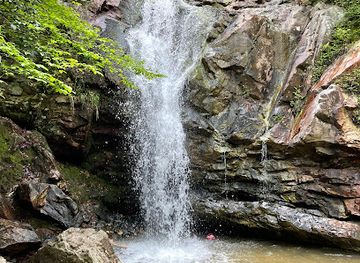
Oak Mountain State Park’s attractions are spread across a large wooded landscape rather than concentrated in a single visitor centre. Double Oak Lake is a focal point for boating, fishing, shoreline recreation and the park’s beach area, subject to current rules and conditions. Peavine Falls offers a popular woodland destination whose appearance changes markedly with rainfall. The extensive trail system includes routes for hikers and mountain bikers, with forested ridges and valleys providing varied scenery. The Alabama Wildlife Center introduces visitors to native birds through rehabilitation and education, while the park’s campgrounds, cabins, golf course and picnic areas support longer visits. Families may also explore the Treetop Nature Trail, an elevated interpretive experience designed to reveal the woodland environment from above. Because facilities are widely separated, Oak Mountain is best understood as a collection of outdoor areas connected by park roads and trails rather than a compact attraction.
-
Live Music
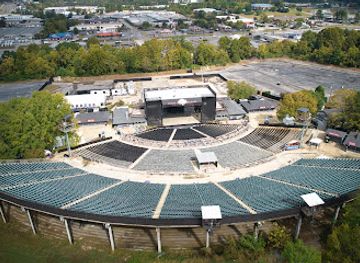
Oak Mountain Amphitheatre
Alabama's former premier outdoor music venue, hosting legendary artists in rock, country, pop, and R&B for decades. A cherished memory for music fans.
-
Park
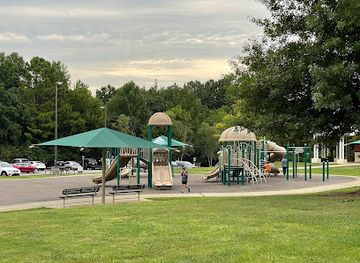
Veterans Park
Honoring veterans with recreational trails, playgrounds, and a serene memorial in Meadowbrook, Alabama.
-
Park
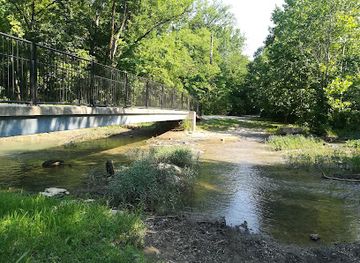
Buck Creek Park
Escape to nature in Alabaster at Buck Creek Park, offering trails, sports, playgrounds, and community events for outdoor fun.
-
City park
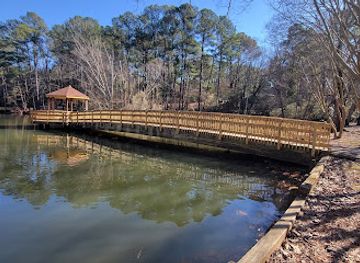
Georgetown Lake Park
Discover a peaceful retreat at Georgetown Lake Park in Hoover, AL, offering scenic trails, a tranquil lake, and family-friendly amenities for outdoor enjoyment.
Explore Oak Mountain State Park on the map
Plan your trip on one map. See where the top attractions, landmarks, restaurants and hotels are, and book hotels and experiences in a few clicks.
Best hotels in Oak Mountain State Park
Best restaurants in Oak Mountain State Park
Oak Mountain State Park is not primarily a dining destination, and visitors spending a full day on the trails should plan food and water in advance. Picnic areas provide opportunities to eat outdoors, while the park’s facilities and nearby visitor areas may offer limited refreshments depending on the season and current operations. The main concentration of restaurants is outside the park in Pelham, Hoover, Birmingham and other communities along the U.S. 280 corridor. These areas reflect central Alabama’s broad food culture, including Southern cooking, barbecue, burgers, seafood, international cuisines and casual cafés, although the exact choice changes with the settlement. Farm shops and food retailers around the Birmingham metropolitan area can also be useful for assembling a picnic. Visitors camping in the park should confirm what cooking facilities are provided and bring supplies rather than assuming that a substantial restaurant service is available on site.
-
Steak
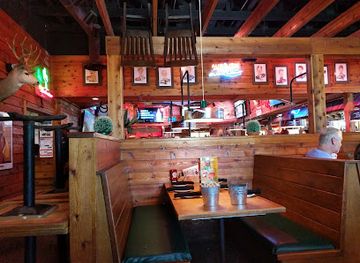
Texas Roadhouse
Discover the best of American cuisine at Texas Roadhouse in Pelham - where flavorful steaks meet warm hospitality.
-
American
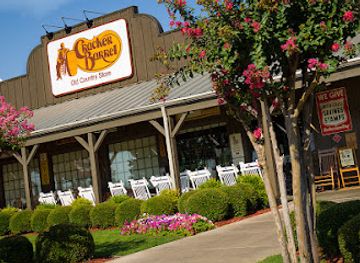
Cracker Barrel Old Country Store
Savor the taste of traditional American cuisine at Cracker Barrel Old Country Store in Pelham—where Southern charm meets delicious comfort food.
-
Fast Food
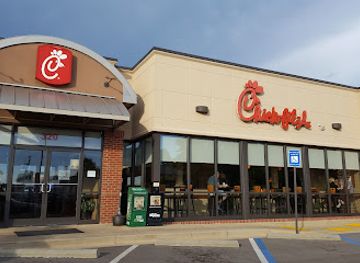
Chick-fil-A
Discover Chick-fil-A in Pelham: where delicious chicken meets family-friendly dining in a vibrant atmosphere.
-
Barbecue
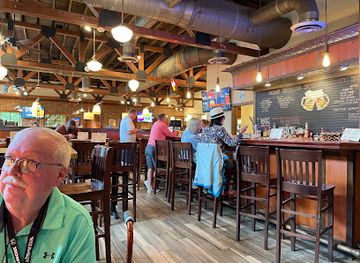
Jim 'N Nick's Bar-B-Q
Experience the best of Southern barbecue at Jim 'N Nick's Bar-B-Q in Hoover—where every bite tells a story of tradition and flavor.
Best bars in Oak Mountain State Park
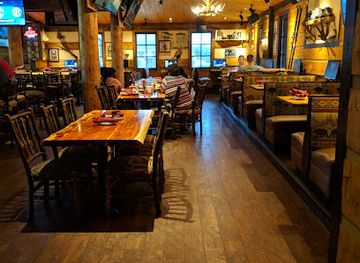
Evening entertainment inside Oak Mountain State Park is limited and generally centres on quiet camping, lakeside time and the natural sounds of the woodland rather than bars or nightclubs. Visitors staying in the park can spend the evening around their accommodation in accordance with current park rules, but should not expect a developed nightlife district within the grounds. For restaurants, pubs and organised entertainment, the nearest substantial choices are in Pelham, Hoover and Birmingham outside the park. Birmingham offers the region’s broadest selection of bars, live music and evening venues, while the suburban communities closer to Oak Mountain provide more dispersed, casual options. Travel after dark requires attention to rural park roads, weather and wildlife, and visitors should check current operating information before making specific evening plans.
-
Sports bar
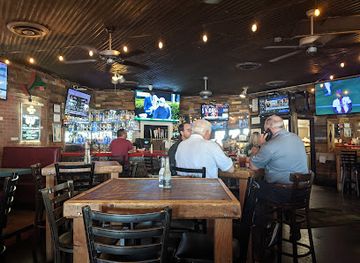
Twin Peaks
Experience the ultimate sports bar at Twin Peaks in Hoover, AL, where great food, cold drinks, and live sports create unforgettable moments.
-
Bar
Margarita Grill
Experience the vibrant taste of Latin American cuisine at Margarita Grill in Pelham, Alabama, featuring mouthwatering dishes and refreshing margaritas.
-
Restaurant
Applebee's Grill + Bar
Savor the authentic flavors of American cuisine at Applebee's Grill + Bar in Pelham, Alabama, where great food meets a friendly atmosphere.
-
Bar
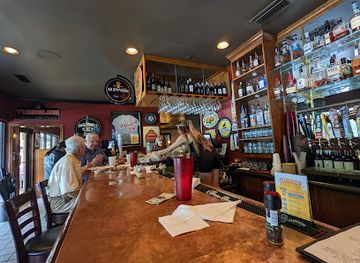
Ragtime Cafe
Experience the vibrant flavors of American cuisine at Ragtime Cafe, Birmingham's lively bar and restaurant perfect for casual dining and social gatherings.

Best shops in Oak Mountain State Park
Shopping within Oak Mountain State Park is limited and practical rather than extensive. Visitors may find park-related supplies or souvenirs through current state-park facilities, but availability and opening arrangements can vary, so essential food, medication and specialist outdoor equipment are best obtained before arrival. Pelham, Hoover and Birmingham provide the nearest broad range of supermarkets, sporting-goods retailers, cafés and general shops. The wider Birmingham area is also the most useful place to seek Alabama-made food products, arts and crafts, books, outdoor clothing and locally produced gifts, although these are not specific to the park itself. Visitors camping or undertaking long rides and walks should treat nearby towns as supply bases, especially because there is no substantial shopping district inside the park. Local markets and independent businesses may operate seasonally or on particular days rather than continuously.
-
Shopping mall
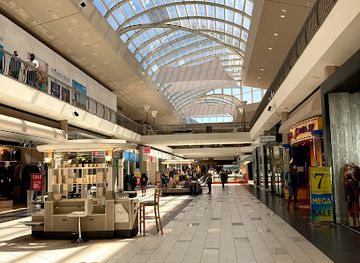
Riverchase Galleria
Discover the Riverchase Galleria: a premier shopping mall in Hoover, Alabama, with diverse stores, dining, and entertainment for every tourist.
-
State park
Oak Mountain State Park
Explore the beauty of Oak Mountain State Park, Alabama's largest state park, offering nature trails, fishing, and breathtaking landscapes.
-
Sporting goods store
Academy Sports + Outdoors
Explore the outdoors with Academy Sports + Outdoors—your ultimate destination for sporting goods in Hoover, Alabama.
-
Furniture store
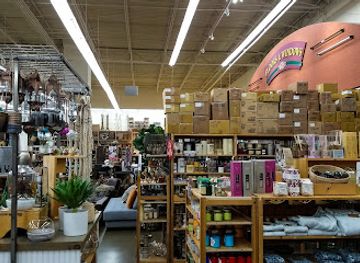
World Market
Explore World Market in Hoover, Alabama, for a unique selection of global home decor, furniture, and gourmet delights, perfect for every taste and budget.

Get your free copy of our complete guide to Oak Mountain State Park, delivered straight to you.
Everything on this page, from attractions and restaurants to essentials and local phrases, in one PDF you can read offline, print or share.
Already have an account? Sign in
Your Oak Mountain State Park guide is ready.
We'll send it to · Not you? Sign out

Getting your guide ready…
We are putting together a fresh copy of the Oak Mountain State Park guide. This can take up to a minute.
This can take a few moments. If your browser asks, choose Allow so the download can start. You'll find the guide in your Downloads folder.
Nothing happened? Download it again
Sorry, the guide is taking longer than usual. Please try again in a minute, or get it by email instead.
Oak Mountain State Park essentials
Currency and Payment
Safety
Emergency Situations
Do's and Don'ts
Local Tips
From Eve
Local phrases worth knowing
You don't need to get them perfect. A few words go a long way, and locals appreciate the effort.
Basics
| English | Local | Say it |
|---|---|---|
| Hello | Hey y'all | [Hey yawl] |
| Goodbye | See y'all later | [See yawl lay-ter] |
| Yes | Yessir | [Yes-sir] |
| No | Nah | [Nah] |
| Please/You're welcome | Please/No problem | [Please/No prob-lem] |
| Thank you | Thank ya kindly | [Thank ya kine-ly] |
| Excuse me/Sorry | Pardon me/My bad | [Par-dun me/My bad] |
| How are you? | How y'all doin'? | [How yawl doin'] |
| Fine. And you? | Fine. How 'bout you? | [Fine. How 'bout you?] |
| Do you speak English? | Ya speak English? | [Ya speak English?] |
| I don't understand | I ain't catchin' on | [I ain't catch-in' on] |
Eating & Drinking
| English | Local | Say it |
|---|---|---|
| I'd like to see the menu, please | Let me see the menu, please | [Let me see the menu, please] |
| I don't eat meat | I don't eat meat | [I don't eat meat] |
| Cheers! | Cheers! | [Cheers!] |
| I would like to pay, please | I'd like to settle up, please | [I'd like to set-tle up, please] |
Emergencies
| English | Local | Say it |
|---|---|---|
| Help! | Help! | [Help!] |
| Go away! | Git! | [Git!] |
| Call the Police! | Call the Sheriff's Office! | [Call the Sheriff's Office!] |
| Call a doctor! | Get a doc! | [Get a doc!] |
| I'm lost | I'm turned around | [I'm turned around] |
| I'm ill | I'm feelin' poorly | [I'm feel-in' poorly] |
Shopping
| English | Local | Say it |
|---|---|---|
| I'd like to buy... | I wanna buy... | [I wanna buy...] |
| I'm just looking | I'm just lookin' | [I'm just look-in'] |
| How much is it? | How much does it cost? | [How much does it cost?] |
| That's too expensive | That's too steep | [That's too steep] |
| Can you lower the price? | Can you come down on the price? | [Can you come down on the price?] |
Time & Numbers
| English | Local | Say it |
|---|---|---|
| What time is it? | What time is it? | [What time is it?] |
| It's one o'clock | It's one o'clock | [It's one o'clock] |
| Half past (10) | Half past ten | [Half past ten] |
| Morning | Mornin' | [Mornin'] |
| Afternoon | Afternoon | [Afternoon] |
| Evening | Evenin' | [Evenin'] |
| Yesterday | Yesterday | [Yesterday] |
| Today | Today | [Today] |
| Tomorrow | Tomorrow | [Tomorrow] |
| 1 | One | [One] |
| 2 | Two | [Two] |
| 3 | Three | [Three] |
| 4 | Four | [Four] |
| 5 | Five | [Five] |
| 6 | Six | [Six] |
| 7 | Seven | [Seven] |
| 8 | Eight | [Eight] |
| 9 | Nine | [Nine] |
| 10 | Ten | [Ten] |
Transport & Directions
| English | Local | Say it |
|---|---|---|
| Where's a/the...? | Where's the...? | [Where's the...?] |
| What's the address? | What's the address? | [What's the address?] |
| Can you show me (on the map)? | Can you show me (on the map)? | [Can you show me (on the map)?] |
| When's the next (bus)? | When's the next (bus)? | [When's the next (bus)?] |
| A ticket (to ....) | A ticket (to ....) | [A ticket (to ....)] |
History of Oak Mountain State Park
A Foothill Landscape Before the Park
The land now occupied by Oak Mountain State Park forms part of the wooded foothill country south of Birmingham, where ridges, creeks and seasonal watercourses have long shaped movement and land use. Before recreational development, the area was understood through its forests, agricultural clearings and rural settlements rather than as a single visitor destination. Its geology and topography helped create the alternating slopes and valleys that now define the park, while the surrounding region’s growth was later accelerated by Birmingham’s industrial and transport development.
Creation of Oak Mountain State Park
Oak Mountain became one of Alabama’s early state parks in the twentieth century, with its development beginning in the 1920s. The park was created to preserve a substantial tract of wooded countryside while providing public access to outdoor recreation near Birmingham. Roads, lakes, picnic areas and other visitor facilities gradually transformed the landscape into a managed public park, while the underlying forests and ridges remained its defining character. Its location in Shelby County allowed it to serve both local residents and visitors travelling through central Alabama.
The Civilian Conservation Corps Era
During the New Deal period of the 1930s, the Civilian Conservation Corps contributed to the development of many American public landscapes, including Oak Mountain. Work associated with this wider state-park expansion helped establish practical infrastructure such as roads, trails, water-management features and recreational facilities. The period was significant because it linked conservation with public employment and outdoor access, creating the foundations of a park that could be used for day visits as well as longer stays. Some later facilities and alignments reflect this history of planned landscape improvement.
Recreation, Conservation and Urban Growth
As Birmingham and its southern suburbs expanded, Oak Mountain became increasingly important as a large protected landscape close to a growing metropolitan population. Recreation broadened from picnicking and lake use to include organised trail networks, mountain biking, camping, golf and nature education. Conservation also became more visible through the Alabama Wildlife Center, which operates within the park as a rehabilitation and educational organisation for native birds. Today, management must balance heavy public use with the protection of woodland habitats, waterways and wildlife.
Oak Mountain State Park in Photos
Browse through our photo collection highlighting the charm and character of the destination.
Neighbouring destination travel guides
The closest destinations to Oak Mountain State Park, if you have time for more than one.
-

-

-

-

-


Swipe for more destinations
Explore more

Explore more of Central Alabama
Explore Central Alabama for Birmingham’s industrial heritage, Montgomery’s civil rights history, Selma’s landmarks, river landscapes and Southern food.
Explore Central Alabama
Explore more of Alabama
Discover Alabama: A Southern state rich in history, culture, and natural beauty, offering unforgettable experiences from vibrant cities to serene beaches and majestic mountains.
Explore Alabama