

Free Sipsey Wilderness Travel Guide & Mobile App
Explore Sipsey Wilderness with free travel guides. Discover regional history, expert tips, proposed trips, and audio guides on web or mobile app.


Sipsey Wilderness in Alabama offers backcountry hiking, sandstone canyons, free-flowing streams and quiet forest trails within Bankhead National Forest.
Read more about Sipsey Wilderness
When is the best time to visit Sipsey Wilderness?
Best: May, September–October · 22–28°C| Month | High (°C) | Rainfall (mm) |
|---|---|---|
| January | 11 | 120 |
| February | 13 | 120 |
| March | 18 | 140 |
| April | 22 | 120 |
| May (best) | 26 | 110 |
| June | 30 | 100 |
| July | 32 | 120 |
| August | 31 | 110 |
| September (best) | 28 | 100 |
| October (best) | 22 | 90 |
| November | 16 | 110 |
| December | 12 | 120 |
Getting to and around Sipsey Wilderness
How to get there
Transportation
Destinations in Sipsey Wilderness
Resorts, valleys and scenic spots worth a trip of their own.

Swipe for more destinations
Best attractions in Sipsey Wilderness
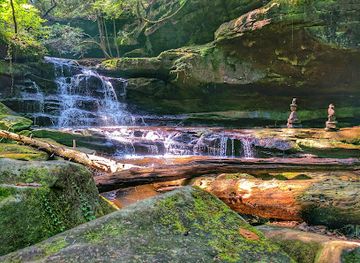
The central attraction is the wilderness landscape itself: the Sipsey River, tributary valleys, sandstone cliffs, shaded hardwood forest and the changing appearance of the streams after rain. Hiking and backpacking routes range from exploratory day walks to demanding multi-day journeys involving navigation and repeated water crossings. Photography is rewarding at bluff faces, cascades, woodland openings and river bends, while birdwatching and quiet observation suit the protected setting. Outside the designated wilderness but within the broader Bankhead National Forest, visitors can find developed recreation areas, forest roads, lakes and waterfall sites, including places accessed from routes near Kinlock Falls; these should be checked carefully on maps because they are not all part of Sipsey Wilderness. Nearby communities provide the practical base for exploring the forest, while the wilderness itself has no visitor centre, formal attraction complex or interpretive infrastructure. Its appeal lies in the continuity of natural terrain and the opportunity to travel through a legally protected, roadless landscape rather than in a concentration of built sights.
-
Tourist attraction
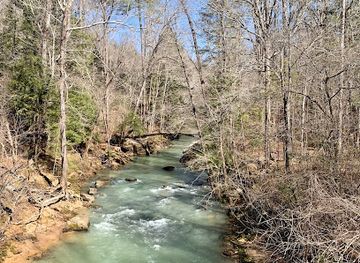
Sipsey River Picnic Area
Explore Alabama's natural beauty at Sipsey River Picnic Area: Hike scenic trails, paddle the Sipsey Fork, and discover the wonders of Bankhead National Forest.
-
Tourist attraction
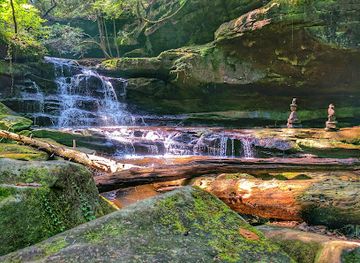
Sipsey Wilderness
Explore Alabama's Sipsey Wilderness: A natural wonderland of waterfalls, canyons, and pristine forests in Bankhead National Forest.
-
Tourist attraction
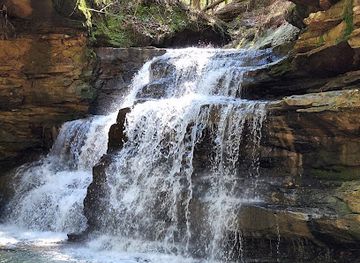
Mize Mill Falls
Discover the serene beauty of Mize Mill Falls in Bankhead National Forest, a hidden gem with a picturesque waterfall and tranquil hiking trails.
-
Park
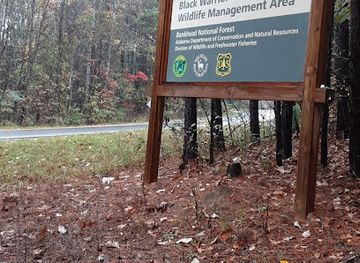
Black Warrior Wildlife Management Area
Explore Alabama's wild side at Black Warrior WMA: Hunting, hiking, birdwatching, and outdoor adventures await in this diverse natural landscape.
Explore Sipsey Wilderness on the map
Plan your trip on one map. See where the top cities, national parks and sights are, and book hotels and experiences in a few clicks.
Best hotels in Sipsey Wilderness
Best restaurants in Sipsey Wilderness
There are no restaurants within Sipsey Wilderness, so food planning is part of any visit. Nearby communities including Double Springs, Moulton and Russellville provide the most practical choices for diners, groceries and takeaway supplies, with the selection varying according to the route used to reach a trailhead. Rural north-western Alabama dining commonly includes Southern staples such as barbecue, fried chicken, catfish, biscuits, vegetables and sweet desserts, alongside nationally familiar cafés and casual restaurants. Visitors staying in cabins or self-catering accommodation can make use of regional produce bought before entering the forest, while backpackers should bring all meals and cooking supplies with them. Do not rely on a trailhead or recreation site for provisions, and remember that food must be stored responsibly in camp. A packed picnic is often the simplest way to eat during a day walk, provided every item and scrap is carried out again.
-
Hiking area
Sipsey River Picnic Area
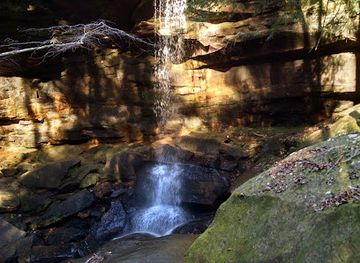
Experience tranquility at Sipsey River Picnic Area - a scenic haven for hiking, picnicking, and enjoying Alabama's natural beauty.
Best bars in Sipsey Wilderness
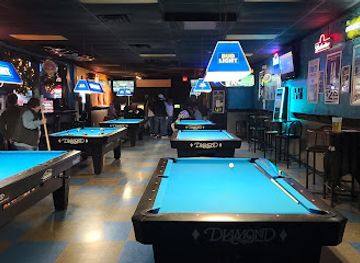
Sipsey Wilderness has no bars, clubs or evening venues, and the surrounding forest becomes dark and quiet after sunset. Evening options are concentrated in the nearby towns, where visitors are more likely to find casual restaurants, traditional pubs or locally oriented social venues than a dedicated nightclub district. Russellville and other larger communities in the wider area offer a broader choice than the small settlements closest to some trailheads, but opening arrangements and venue availability can change. In the forest, evening culture is centred on camping, conversation, stargazing and listening to the river rather than organised entertainment. Campfires are subject to current regulations and weather conditions, so check restrictions before travelling. Anyone planning to drink in town should arrange transport and avoid driving on unfamiliar rural roads at night.
-
Grill
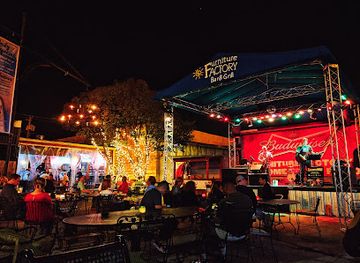
Furniture Factory Bar & Grill
Discover the vibrant atmosphere and mouthwatering grilled flavors at Furniture Factory Bar & Grill, a must-visit spot in Huntsville, Alabama.
-
Fast Food
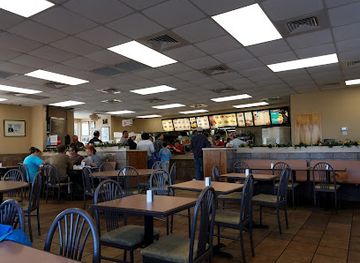
Jack's Family Restaurants
Experience authentic Southern comfort food at Jack's Family Restaurants, where fast food meets warm hospitality in Double Springs, Alabama.
-
Bar
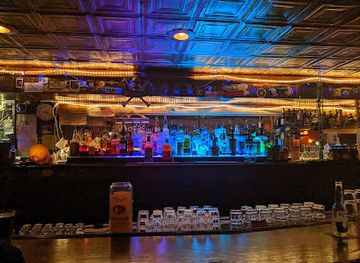
Voodoo Lounge Bar & Grill
Discover the vibrant atmosphere of Voodoo Lounge Bar & Grill in Huntsville, where delicious food meets live music for an unforgettable experience.
-
Pub
Pub 261
Discover Pub 261: A vibrant Birmingham pub offering delicious food, local brews, and a welcoming atmosphere for every traveler.
Best nightclubs in Sipsey Wilderness
-
National forest
Sipsey Wilderness
Explore the breathtaking landscapes and diverse ecosystems of Sipsey Wilderness, a premier national forest destination in Alabama for outdoor adventure and tranquility.
Best shops in Sipsey Wilderness
Shopping is limited to the communities and forest-edge roads around Sipsey Wilderness rather than the wilderness itself. Double Springs, Moulton and Russellville are useful places to buy fuel, groceries, camping supplies and packed food, with the larger towns generally offering the broadest practical choice. Independent shops, local markets and roadside sellers in north-western Alabama may feature regional produce, baked goods, preserves, crafts and other locally made items, but availability is seasonal and not guaranteed. Visitors should purchase specialist hiking equipment, detailed maps and backup supplies before leaving the larger commercial centres. The most appropriate souvenirs are often locally produced foods, small craft items or books and maps relating to Bankhead National Forest and Alabama’s natural heritage. There are no shopping centres, gift shops or regular retail services inside Sipsey Wilderness, and anything carried into the backcountry should be selected for necessity, low packaging and easy removal.
-
Gift shop
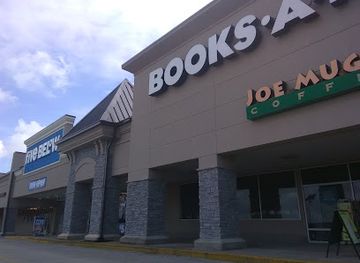
Books-A-Million
Discover a world of books, collectibles, and unique gifts at Books-A-Million in Cullman, Alabama - a paradise for enthusiasts and casual shoppers alike.
-
Department store
Shelton's Clothing
Discover the charm of Shelton's Clothing in Moulton, Alabama, where fashion meets fishing gear for a unique shopping experience.
-
Supermarket
Goar's Supermarket
Explore Goar's Supermarket in Haleyville, Alabama for fresh local produce and unique Southern specialties that encapsulate the charm of the region.
-
Toy store
Total Nostalgia
Discover a treasure trove of nostalgia at Total Nostalgia, where toys come to life and memories are made in Trinity, Alabama.
Get your free copy of our complete guide to Sipsey Wilderness, delivered straight to you.
Everything on this page, from attractions and restaurants to essentials and local phrases, in one PDF you can read offline, print or share.
Already have an account? Sign in
Your Sipsey Wilderness guide is ready.
We'll send it to · Not you? Sign out

Getting your guide ready…
We are putting together a fresh copy of the Sipsey Wilderness guide. This can take up to a minute.
This can take a few moments. If your browser asks, choose Allow so the download can start. You'll find the guide in your Downloads folder.
Nothing happened? Download it again
Sorry, the guide is taking longer than usual. Please try again in a minute, or get it by email instead.
Sipsey Wilderness essentials
Currency and Payment
Safety
Emergency Situations
Do's and Don'ts
Local Tips
From Eve
Local phrases worth knowing
You don't need to get them perfect. A few words go a long way, and locals appreciate the effort.
Basics
| English | Local | Say it |
|---|---|---|
| Hello | Howdy | [ha-dee] |
| Goodbye | See ya | [see yah] |
| Yes | Yep | [yehp] |
| No | Nope | [noh-p] |
| Please/You’re welcome | Please/No problem | [pleez/no prob-luhm] |
| Thank you | Thanks | [thangks] |
| Excuse me/Sorry | Excuse me/Sorry | [ex-kyoos mee/sor-ee] |
| How are you? | How ya doin’? | [how yah doin'?] |
| Fine. And you? | I’m doin’ good. And you? | [I'm doin' gud. And you?] |
| Do you speak English? | You speakin’ English? | [yoo speek-in' ing-glish?] |
| I don’t understand | I don’t get it | [I don’t get it] |
Eating & Drinking
| English | Local | Say it |
|---|---|---|
| I’d like to see the menu, please | Can I see the menu, please? | [can I see the men-yoo, pleez?] |
| I don’t eat meat | I ain’t eatin’ meat | [I aynt eatin' meet] |
| Cheers! | Cheers! | [cheers!] |
| I would like to pay, please | I’d like to pay up, please | [I'd like to pay up, pleez] |
Emergencies
| English | Local | Say it |
|---|---|---|
| Help! | Help! | [help!] |
| Go away! | Get lost! | [get lost!] |
| Call the Police! | Call the cops! | [call the cops!] |
| Call a doctor! | Get a doc! | [get a doc!] |
| I’m lost | I’m turned around | [I'm turned around] |
| I’m ill | I ain’t feelin’ good | [I aynt feelin' good] |
Shopping
| English | Local | Say it |
|---|---|---|
| I’d like to buy... | I wanna buy... | [I wanna buy...] |
| I’m just looking | Just lookin’ around | [just lookin' around] |
| How much is it? | What’s it gonna cost? | [what’s it gonna cost?] |
| That’s too expensive | That’s way too high | [that’s way too high] |
| Can you lower the price? | Can ya bring the price down? | [can ya bring the price down?] |
Time & Numbers
| English | Local | Say it |
|---|---|---|
| What time is it? | What time ya got? | [what time ya got?] |
| It’s one o’clock | It’s one | [it's won] |
| Half past (10) | Half past ten | [half past ten] |
| Morning | Mornin’ | [mornin'] |
| Afternoon | Afternoon | [afternoon] |
| Evening | Evenin’ | [evenin'] |
| Yesterday | Yesterday | [yesterday] |
| Today | Today | [today] |
| Tomorrow | Tomorrow | [tomorrow] |
| 1 | One | [won] |
| 2 | Two | [too] |
| 3 | Three | [three] |
| 4 | Four | [for] |
| 5 | Five | [five] |
| 6 | Six | [siks] |
| 7 | Seven | [sev-en] |
| 8 | Eight | [ate] |
| 9 | Nine | [nine] |
| 10 | Ten | [ten] |
Transport & Directions
| English | Local | Say it |
|---|---|---|
| Where's a/the...? | Where’s a...? | [where's a...?] |
| What’s the address? | What’s the address? | [what's the ad-dress?] |
| Can you show me (on the map)? | Can ya point it out? | [can ya point it out?] |
| When’s the next (bus)? | When’s the next bus? | [when’s the next bus?] |
| A ticket (to ....) | A ticket to... | [a ticket to...] |
History of Sipsey Wilderness
Indigenous Landscapes Before American Settlement
The forests and river valleys of north-western Alabama were used and shaped by Indigenous peoples long before the creation of the United States. Hunting, fishing, travel and seasonal use connected communities to the streams and uplands, while the wider region formed part of a complex cultural landscape involving peoples including the Chickasaw and other Southeastern nations. Place names and archaeological evidence provide reminders that the wilderness is not an untouched landscape in the sense of having no human history. Its present protected status follows a much older relationship between people, rivers, forests and sandstone country.
Cession, Settlement and Changing Boundaries
During the early nineteenth century, treaties and federal policies transferred large areas of Indigenous land to the United States, opening north-western Alabama to intensified American settlement. Farms, roads and small communities developed around the forested uplands and river valleys. The area that later became Bankhead National Forest was not a completely isolated frontier: it was connected to the agricultural, commercial and political development of Alabama. The wilderness designation came much later, preserving a portion of this broader landscape while surrounding communities continued to use the national forest for work, recreation and access.
Timber, Farming and the Working Forest
The forests of the Bankhead region supported timber cutting, small-scale farming and other extractive activities during the nineteenth and early twentieth centuries. Roads and mills altered parts of the landscape, while difficult terrain and steep stream valleys left some areas less intensively developed. The contrast between managed forest and recovering woodland remains important to understanding Sipsey: its apparent wildness is protected by law today, but the surrounding region has a long history of practical use. Forestry, road building and later conservation all influenced the landscape visitors see.
Creation of Bankhead National Forest
The federal government established the Alabama National Forest in the early twentieth century, bringing what is now Bankhead National Forest into a national programme of forest management and public ownership. It was renamed in 1942 in honour of John H. Bankhead, an Alabama politician associated with national forestry legislation. Public management allowed timber production, recreation, wildlife protection and watershed conservation to coexist across the wider forest. Sipsey’s later protection reflects a shift from managing every part of the woodland for production towards retaining a substantial area with minimal development.
The Wilderness Act and Sipsey’s Designation
The United States Wilderness Act of 1964 created a national framework for protecting lands where natural processes could continue with little mechanical intrusion. Sipsey Wilderness was designated in 1975 within Bankhead National Forest, giving legal protection to a large tract of river valleys, sandstone formations and forest. The designation limits roads, motorised equipment and permanent development, making the area fundamentally different from ordinary national-forest recreation sites. Hiking, camping and other forms of low-impact travel remain possible, but the absence of built infrastructure is itself part of the historical and legal purpose.
Expansion and Modern Conservation
Subsequent conservation measures enlarged the protected Sipsey landscape to roughly its present extent and strengthened its role as one of Alabama’s major backcountry areas. Modern management focuses on maintaining natural conditions, protecting watercourses and allowing visitors to experience the area without urban infrastructure. The wilderness now sits within a working national forest that includes roads, recreation facilities and managed woodland, creating a clear boundary between developed public access and the roadless interior. Its significance lies both in its scenery and in the scarcity of sizeable, legally protected wilderness landscapes in the eastern United States.
Sipsey Wilderness in Photos
Browse through our photo collection highlighting the charm and character of the destination.
Neighbouring regions of Sipsey Wilderness
The closest regions to Sipsey Wilderness, if you have time for more than one.
-

-

-

-

-


Swipe for more regions
Explore more

Explore more of Alabama
Discover Alabama: A Southern state rich in history, culture, and natural beauty, offering unforgettable experiences from vibrant cities to serene beaches and majestic mountains.
Explore Alabama