

Ta'u Island Travel Guide - Free Web & App
Your ultimate guide to Ta'u Island. Discover top landmarks, proposed trips, and local tips. Free on the web or via the Evendo companion app.


Ta'u Island, American Samoa, pairs volcanic peaks, rainforest, coral reefs and Polynesian heritage with remote hiking, fishing and village life.
A Remote Manu'a Island
Ta'u is the largest and highest island in the Manu'a group of American Samoa, lying far east of Tutuila in the South Pacific. Its volcanic interior rises steeply to Mount Lata, whose summit reaches about 966 metres and is the highest point in American Samoa. Dense rainforest covers the upper slopes, while villages, plantations and narrow coastal flats occupy the more accessible margins. Offshore, the island descends into reefs and deep Pacific water, creating a dramatic meeting of forest, cliff and ocean.Read more about Ta'u Island
Landscape and Conservation
Culture and Exploration
When is the best time to visit Ta'u Island?
Best: June–August · 30°C| Month | High (°C) | Rainfall (mm) |
|---|---|---|
| January | 31 | 200 |
| February | 31 | 200 |
| March | 31 | 200 |
| April | 31 | 200 |
| May | 31 | 200 |
| June (best) | 30 | 200 |
| July (best) | 30 | 200 |
| August (best) | 30 | 200 |
| September | 30 | 200 |
| October | 31 | 200 |
| November | 31 | 200 |
| December | 31 | 200 |
Getting to and around Ta'u Island
How to get there
Transportation
Best attractions in Ta'u Island
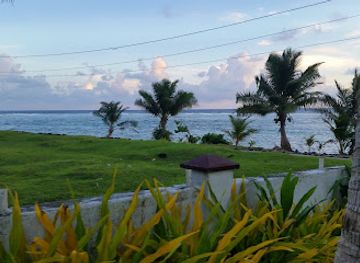
Ta'u's principal attractions are its landscapes and living cultural places rather than a large collection of built visitor facilities. The National Park of American Samoa protects forested uplands and coastal environments, with Mount Lata defining the island's mountainous interior and offering the setting for demanding walks where local access and trail conditions should be confirmed. Saua, on the eastern coast, is a significant traditional and archaeological location associated with the Tui Manu'a chiefly line. The villages of Ta'u and Fitiuta provide insight into contemporary Samoan life through churches, plantations, family compounds and coastal roads, although visitors should explore respectfully and seek permission where necessary. Offshore reefs and open Pacific waters create opportunities for carefully arranged boating, fishing and marine observation, while the island's cliffs, bays and volcanic slopes are best appreciated from the road, shore or locally known viewpoints rather than from an extensive formal network of lookouts.
Best landmarks in Ta'u Island
Mount Lata is Ta'u's defining natural landmark and the highest summit in American Samoa, rising above a steep island of volcanic ridges and rainforest. The surrounding uplands form part of the National Park of American Samoa, whose significance lies in protecting a tropical island ecosystem alongside inhabited customary lands. Saua is the island's most important cultural landmark, a coastal place linked by Samoan tradition with the origins of the Tui Manu'a chiefly line and the ancestral history of Manu'a. Ta'u's shoreline, offshore reefs and forested slopes are landmarks in their own right, expressing the relationship between ocean travel, cultivation and settlement. Churches and village spaces also have social importance, but they remain active community places rather than monuments arranged for casual sightseeing, so respectful behaviour and local permission are essential.

Explore Ta'u Island on the map
Plan your trip on one map. See where the top attractions, landmarks, restaurants and hotels are, and book hotels and experiences in a few clicks.
Best hotels in Ta'u Island
Best nightclubs in Ta'u Island
Ta'u has little conventional nightlife and no established concentration of nightclubs, cocktail bars or late-opening entertainment venues. Evenings are more likely to centre on family accommodation, village conversation, church and community life, or the quiet experience of a remote Pacific island after dark. Alcohol should be handled discreetly and in accordance with local expectations, particularly around churches, families and Sunday observance. There may be occasional community events or informal social gatherings, but these are not a dependable visitor programme and should not be presumed available. Travellers seeking a wider choice of bars, live music or evening venues will find the greatest concentration in and around Pago Pago on Tutuila, outside Ta'u and requiring separate travel arrangements.
Get your free copy of our complete guide to Ta'u Island, delivered straight to you.
Everything on this page, from attractions and restaurants to essentials and local phrases, in one PDF you can read offline, print or share.
Already have an account? Sign in
Your Ta'u Island guide is ready.
We'll send it to · Not you? Sign out

Getting your guide ready…
We are putting together a fresh copy of the Ta'u Island guide. This can take up to a minute.
This can take a few moments. If your browser asks, choose Allow so the download can start. You'll find the guide in your Downloads folder.
Nothing happened? Download it again
Sorry, the guide is taking longer than usual. Please try again in a minute, or get it by email instead.
Ta'u Island essentials
Currency and Payment
Safety
Emergency Situations
Do's and Don'ts
Local Tips
From Eve
Local phrases worth knowing
You don't need to get them perfect. A few words go a long way, and locals appreciate the effort.
Basics
| English | Local | Say it |
|---|---|---|
| Hello | Talofa | [Tah-loh-fah] |
| Goodbye | Fa | [Fah] |
| Yes | Ioe | [Ee-oh-eh] |
| No | Leai | [Leh-ai] |
| Please/You're welcome | Fa'amalie | [Fah-ah-mah-lee-eh] |
| Thank you | Fa'afetai | [Fah-ah-feh-tie] |
| Excuse me/Sorry | Fa'amalie | [Fah-ah-mah-lee-eh] |
| How are you? | O ai oe? | [Oh-ai-oh-eh] |
| Fine. And you? | Lelei. Oe a? | [Leh-leh-ee. Oh-eh-ah] |
| Do you speak English? | Ou te lelei ona fa'ailoa i le Igoa? | [Oh-teh-leh-leh-ee-oh-nah-fah-ai-loh-ah-ee-leh-ee-go-ah] |
| I don't understand | E le mafai ona ou te maua | [Eh-leh-mah-fai-oh-nah-oh-teh-mah-oo-ah] |
Eating & Drinking
| English | Local | Say it |
|---|---|---|
| I'd like to see the menu, please | Fa'amalie, ou te fia vaega i le fa'amaona | [Fah-ah-mah-lee-eh-oh-teh-fee-ah-vah-eh-gah-ee-leh-fah-ah-mah-oh-nah] |
| I don't eat meat | E le auai au i lau pisupo | [Eh-leh-ah-oo-ah-ee-lau-pee-soo-poh] |
| Cheers! | Manuia! | [Mah-noo-ee-ah] |
| I would like to pay, please | Fa'amalie, ou te fia totogi | [Fah-ah-mah-lee-eh-oh-teh-fee-ah-toh-toh-gee] |
Emergencies
| English | Local | Say it |
|---|---|---|
| Help! | Fesoasoani! | [Feh-so-ah-soh-ah-nee] |
| Go away! | Alu! | [Ah-loo] |
| Call the Police! | Fesoasoani i le Ofisa Fa'aleoleo! | [Feh-so-ah-soh-ah-nee-ee-leh-oh-fee-sah-fah-ah-leh-oh-leh-oh] |
| Call a doctor! | Fesoasoani i le foma'i! | [Feh-so-ah-soh-ah-nee-ee-leh-foh-mah-ee] |
| I'm lost | Ua ou su'e | [Oo-ah-oh-oo-soo-eh] |
| I'm ill | Ua ou mate | [Oo-ah-oh-oo-mah-teh] |
Shopping
| English | Local | Say it |
|---|---|---|
| I'd like to buy... | Ou te fia fa'atau... | [Oh-teh-fee-ah-fah-ah-tau] |
| I'm just looking | Ou te iai | [Oh-teh-ee-eye] |
| How much is it? | E fia fa'afeso'ota'i? | [Eh-fee-ah-fah-ah-feh-soh-oh-tah-ee] |
| That's too expensive | O lelei le totogi | [Oh-leh-leh-ee-leh-toh-toh-gee] |
| Can you lower the price? | Ou te mafai ona fa'asa'i le totogi? | [Oh-teh-mah-fai-oh-nah-fah-ah-sah-ee-leh-toh-toh-gee] |
Time & Numbers
| English | Local | Say it |
|---|---|---|
| What time is it? | O le a le taimi? | [Oh-leh-ah-leh-tie-mee] |
| It's one o'clock | Ua le tasi | [Oo-ah-leh-tah-see] |
| Half past (10) | I le itula | [Ee-leh-ee-too-lah] |
| Morning | Ao | [Ah-oh] |
| Afternoon | Afiafi | [Ah-fee-ah-fee] |
| Evening | Ili | [Ee-lee] |
| Yesterday | Ananafi | [Ah-nah-nah-fee] |
| Today | Lenei | [Leh-neh-ee] |
| Tomorrow | Aso | [Ah-soh] |
| 1 | Tasi | [Tah-see] |
| 2 | Lua | [Loo-ah] |
| 3 | Tolu | [Toh-loo] |
| 4 | Fa | [Fah] |
| 5 | Lima | [Lee-mah] |
| 6 | Ono | [Oh-no] |
| 7 | Fitu | [Fee-too] |
| 8 | Valu | [Vah-loo] |
| 9 | Iva | [Ee-vah] |
| 10 | Sefulu | [Seh-foo-loo] |
Transport & Directions
| English | Local | Say it |
|---|---|---|
| Where's a/the...? | O fea le...? | [Oh-feh-ah-leh] |
| What's the address? | O le a le tuatusi? | [Oh-leh-ah-leh-too-ah-too-see] |
| Can you show me (on the map)? | Ou te mafai ona fa'ailoa ia te a'u (i le mapa)? | [Oh-teh-mah-fai-oh-nah-fah-ai-loh-ah-ee-ah-teh-ah-oo-ee-leh-mah-pah] |
| When's the next (bus)? | O le a le taimi o le tele (autapuna)? | [Oh-leh-ah-leh-tie-mee-oh-leh-teh-leh-ah-oo-teh-poo-nah] |
| A ticket (to ....) | Tiketi (i le ....) | [Tee-keh-tee-ee-leh] |
History of Ta'u Island
A Volcanic Island in the Manu'a Group
Ta'u is a volcanic island formed by the geological processes that created the Samoan archipelago, with a steep mountainous interior and narrow coastal margins. Its high central terrain, deeply cut slopes and offshore reefs shaped where people could settle, cultivate land and travel. Unlike a monument built at a single historical moment, the island's physical form remains the foundation for its history: villages and plantations occupy the more accessible coast, while forested uplands have retained a wilder character.
Early Polynesian Settlement
Polynesian communities established themselves on Ta'u centuries before European navigation reached the Samoan islands. Settlement was connected to ocean voyaging, extended family networks and the cultivation of crops suited to a tropical volcanic environment, including taro, breadfruit and coconut. Archaeological places and oral traditions preserve evidence of long residence, but the island's history is also carried through village genealogies, chiefly relationships and customary knowledge rather than through a large written archive.
Saua and the Tui Manu'a Tradition
The eastern coastal site of Saua holds exceptional importance in Samoan tradition. It is associated with the emergence of the Tui Manu'a, a chiefly title that historically connected Manu'a with a wider Samoan political and ceremonial world. Accounts of Saua combine genealogy, sacred geography and oral history, so interpretations should be understood within Samoan cultural tradition rather than reduced to a single archaeological explanation. The site remains a place where landscape and chiefly heritage are closely linked.
Contact, Christianity and American Rule
European contact brought new religious, commercial and political influences to Manu'a, followed by the spread of Christianity and the changing role of traditional chiefly authority. In the early twentieth century, the islands of Manu'a became part of American Samoa under the 1900 Deed of Cession, while village life continued to be organised through Samoan communities, churches and customary leadership. Ta'u's remote location limited the scale of outside development compared with Tutuila, helping preserve a predominantly rural social and physical landscape.
National Park and Contemporary Stewardship
Ta'u became part of the National Park of American Samoa through a late twentieth-century agreement that protected rainforest, coastal ecosystems and marine environments while recognising the importance of customary land ownership. The park's presence reflects a distinctive arrangement: conservation operates alongside Samoan village life and land tenure rather than replacing it. Today, the island's heritage includes both its living communities and the continuing effort to manage forests, reefs and culturally significant places responsibly.
Ta'u Island in Photos
Browse through our photo collection highlighting the charm and character of the destination.
Neighbouring destination travel guides
The closest destinations to Ta'u Island, if you have time for more than one.
-

-

-

-

-


Swipe for more destinations

