

Downtown Tucson (Tucson) Travel Guide - Free
Explore Downtown Tucson in Tucson with Evendo's free guide. Find the best shops, historic streets, restaurants, and gems on web or mobile.


Downtown Tucson blends historic adobe, Sonoran Desert culture, museums, live music, independent dining and the modern Sun Link streetcar in Arizona’s Old Pueblo.
Historic Core and Desert Setting
Downtown Tucson occupies the historic centre of the city, where the grid of modern streets meets the older adobe fabric of the Presidio and El Presidio districts. Its identity is shaped by the Sonoran Desert: intense light, broad skies, drought-tolerant landscaping and a culinary culture influenced by northern Mexico and the borderlands. The area is compact enough to explore on foot, although the heat of summer makes shade, water and sensible timing important.Read more about Downtown Tucson
Architecture, Culture and Street Life
Food, Markets and Public Spaces
Best attractions in Downtown Tucson
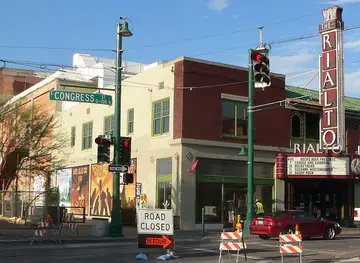
Downtown Tucson’s attractions are concentrated within a walkable historic core. The Presidio San Agustín del Tucson Museum interprets the Spanish military settlement and the earlier Indigenous landscape, while the Tucson Museum of Art and Historic Block combines galleries with preserved adobe buildings on the western side of downtown. Congress Street provides a changing streetscape of historic façades, independent businesses, murals and outdoor dining, and the Fox Tucson Theatre offers a restored setting for performances and tours when scheduled. The Rialto Theatre is another prominent cultural venue, known for concerts and live events in a historic downtown building. Jácome Plaza and nearby civic spaces provide places to pause, while Mercado San Agustín, just beyond the conventional downtown core, adds food stalls, shops and public programming within an easy streetcar connection.
-
Children's museum
Children's Museum Tucson
Explore creativity and fun at Children's Museum Tucson, a must-visit destination for families seeking educational and entertaining experiences.
8 min walk · 0.6 km from neighbourhood centre
-
Museum
Tucson Museum Of Art
Explore the vibrant art and rich history at Tucson Museum of Art, a cultural gem nestled in the heart of Tucson's El Presidio district.
1 min walk · 0.1 km from neighbourhood centre
-
Rail museum
Southern Arizona Transportation Museum
Immerse yourself in Tucson's rich rail history at the Southern Arizona Transportation Museum, showcasing vintage trains and interactive exhibits for all ages.
9 min walk · 0.7 km from neighbourhood centre
-
History museum
Presidio San Agustín del Tucson Museum
Experience the vibrant history of Tucson at the Presidio San Agustín del Tucson Museum, a captivating journey through time.
2 min walk · 0.2 km from neighbourhood centre


Best landmarks in Downtown Tucson
The Presidio San Agustín del Tucson Museum is Downtown Tucson’s most important historical landmark, marking the site of the Spanish presidio established in 1775 and presenting a reconstructed section of its defensive wall. Nearby adobe buildings and the Tucson Museum of Art’s Historic Block preserve the architectural language of the city’s early settlement. Congress Street is lined with commercial buildings from Tucson’s railway and early twentieth-century expansion, including the Fox Tucson Theatre and the Rialto Theatre. Hotel Congress, opened in 1919, is a defining example of the downtown hotel tradition and remains closely linked to the district’s cultural life. The Sun Link streetcar is a newer civic landmark: its tracks and stops connect the historic centre with later urban districts while reinforcing downtown’s role as a public gathering place.
-
History museum
Presidio San Agustín del Tucson Museum
Step back in time at the Presidio San Agustín del Tucson Museum, exploring Tucson's rich history and cultural heritage in the heart of downtown.
2 min walk · 0.2 km from neighbourhood centre
-
City park
El Presidio Plaza
Discover Tucson's birthplace at El Presidio Plaza, a historic park with gardens, art, and a glimpse into the city's rich past.
1 min walk · 0.1 km from neighbourhood centre
-
Community center
The Historic Y
Experience Tucson's vibrant arts scene at The Historic Y, a community hub for art exhibitions, workshops, and performances.
15 min walk · 1.2 km from neighbourhood centre
-
Historical landmark
Pima County Historic Courthouse
Explore Tucson's history and architecture at the iconic Pima County Historic Courthouse, home to heritage and visitor attractions.
2 min walk · 0.2 km from neighbourhood centre


Explore Downtown Tucson on the map
A handpicked selection of must-see spots in Downtown Tucson, mapped for you.
Best hotels in Downtown Tucson
Best restaurants in Downtown Tucson
Downtown Tucson’s food scene reflects the city’s Sonoran borderlands identity while ranging well beyond traditional Mexican cooking. Restaurants and cafés around Congress Street, the Presidio and the blocks near the theatres include Sonoran-style dishes, contemporary Southwestern food, vegetarian cooking, bakeries, coffee shops and bars with substantial menus. The historic core is particularly suited to combining dinner with a performance, and independent businesses occupy many of the older commercial buildings. Mercado San Agustín, immediately west of downtown, offers a more market-oriented experience with food vendors and small food businesses, making it a useful nearby extension of the central dining scene. Visitors should distinguish local specialties from generic Southwestern branding and look for menus that explain regional ingredients such as chiltepin, mesquite and desert-grown produce.
-
American
HUB Restaurant & Ice Creamery
Experience the best of American cuisine paired with inventive desserts at HUB Restaurant & Ice Creamery in Tucson.
8 min walk · 0.7 km from neighbourhood centre
-
Restaurant
JoJo's Restaurant
Experience vibrant dining at JoJo's Restaurant in Tucson - where delicious cuisine meets live music in an inviting atmosphere.
3 min walk · 0.2 km from neighbourhood centre
-
Italian
Reilly Craft Pizza and Drink
Experience the essence of Italian dining at Reilly Craft Pizza and Drink in downtown Tucson – where delicious pizza meets vibrant atmosphere.
6 min walk · 0.5 km from neighbourhood centre
-
Cafe
Café à La C'Art
Discover Café à La C'Art: A charming Tucson café serving delicious American breakfast favorites in an inviting setting.
2 min walk · 0.1 km from neighbourhood centre


Best bars in Downtown Tucson
Downtown Tucson has one of the city’s clearest evening corridors, centred on Congress Street and the blocks around Hotel Congress, the Rialto Theatre and nearby music venues. The atmosphere ranges from historic bars and relaxed beer-focused spots to cocktail rooms, late-night restaurants and concert crowds, with much of the activity tied to scheduled performances rather than a single continuous club district. The Rialto and Fox Tucson Theatre bring music, film and other cultural events, while Hotel Congress remains a prominent social landmark with several distinct spaces. Nightlife is more concentrated downtown than in the surrounding residential streets, so conditions vary noticeably from one block to the next. Check individual venue programmes and entry arrangements in advance, particularly when concerts or festivals are taking place.
-
Gastropub
Ermanos Bar
Experience Tucson's vibrant gastropub scene at Ermanos Bar, where craft beer meets artisanal cuisine in a lively and welcoming atmosphere.
11 min walk · 0.9 km from neighbourhood centre
-
Bar
Cobra Arcade Bar Tucson
Experience the thrill of gaming and craft drinks at Cobra Arcade Bar in Tucson, where nostalgia meets nightlife in a vibrant atmosphere.
6 min walk · 0.5 km from neighbourhood centre
-
Bar
Batch
Discover Batch in Tucson: A delightful fusion of artisan cocktails, gourmet donuts, and a lively atmosphere perfect for any occasion.
6 min walk · 0.5 km from neighbourhood centre
-
Grill
HighWire Tucson
Discover the vibrant flavors of HighWire Tucson, a dynamic grill in downtown offering delicious dishes and a lively atmosphere for an unforgettable dining experience.
8 min walk · 0.7 km from neighbourhood centre


Best nightclubs in Downtown Tucson
Downtown Tucson has one of the city’s clearest evening corridors, centred on Congress Street and the blocks around Hotel Congress, the Rialto Theatre and nearby music venues. The atmosphere ranges from historic bars and relaxed beer-focused spots to cocktail rooms, late-night restaurants and concert crowds, with much of the activity tied to scheduled performances rather than a single continuous club district. The Rialto and Fox Tucson Theatre bring music, film and other cultural events, while Hotel Congress remains a prominent social landmark with several distinct spaces. Nightlife is more concentrated downtown than in the surrounding residential streets, so conditions vary noticeably from one block to the next. Check individual venue programmes and entry arrangements in advance, particularly when concerts or festivals are taking place.
-
Bar
Playground Bar and Lounge
Immerse yourself in Tucson's nightlife at Playground Bar and Lounge, where vibrant cocktails meet an electrifying atmosphere.
9 min walk · 0.7 km from neighbourhood centre
-
Night club
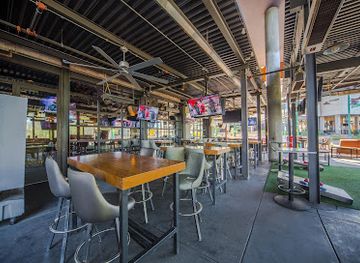
Hi Fi Kitchen Cocktails
Discover the vibrant nightlife at Hi Fi Kitchen Cocktails in Tucson – where exquisite cocktails meet delicious dining in a lively atmosphere.
11 min walk · 0.9 km from neighbourhood centre
-
Jazz
The Century Room
Experience the soulful rhythms of jazz at The Century Room, Tucson's premier jazz club, offering live music and an intimate atmosphere.
9 min walk · 0.7 km from neighbourhood centre
-
Night club
Zen Nightclub
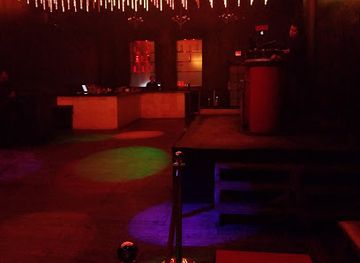
Discover Tucson's vibrant nightlife at Zen Nightclub, where live music, electrifying beats, and a lively crowd create unforgettable experiences.
6 min walk · 0.5 km from neighbourhood centre


Best shops in Downtown Tucson
Shopping in Downtown Tucson is largely independent and cultural rather than dominated by large retail chains. Congress Street and adjoining blocks contain boutiques, gift shops, galleries, bookshops, vintage clothing and specialist businesses, often occupying historic commercial buildings. The Tucson Museum of Art shop provides a useful place to browse regional art and design, while the Presidio area offers locally themed gifts connected with Tucson’s history and desert setting. Mercado San Agustín, just west of the central downtown streets, combines food vendors with small retailers and craft-oriented businesses, although it is best understood as a nearby extension rather than part of every definition of downtown. Stock and opening arrangements vary, so the most rewarding visits usually allow time for browsing rather than relying on a fixed shopping list.
-
Gift shop
Old Town Artisans | Downtown Tucson Shops
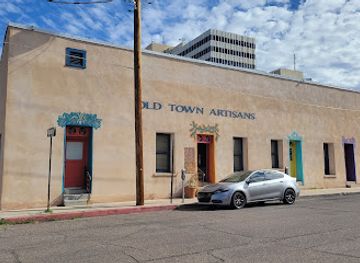
Explore Old Town Artisans, a vibrant gift shop and art gallery in Tucson, offering handcrafted treasures and unique local art.
2 min walk · 0.2 km from neighbourhood centre
-
Costume store
Tucson Thrift Shop
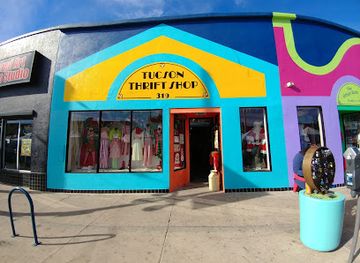
Explore Tucson Thrift Shop, where vintage treasures meet modern style in a vibrant atmosphere on Historic Fourth Avenue.
11 min walk · 0.9 km from neighbourhood centre
-
Gift shop
Pop Cycle
Explore Pop Cycle in Tucson: a charming gift shop offering unique art and handcrafted treasures from local artisans.
12 min walk · 1.0 km from neighbourhood centre
-
Gift shop
Arizona Poppy
Explore Arizona Poppy, Tucson's charming gift shop offering unique, locally crafted items that capture the essence of Arizona's artistry and culture.
11 min walk · 0.9 km from neighbourhood centre


Downtown Tucson essentials
Getting There
Getting Around
Safety
Emergency Situations
Do's and Don'ts
Local Tips

From Eve
Local phrases worth knowing
You don't need to get them perfect. A few words go a long way, and locals appreciate the effort.
Basics
| English | Local | Say it |
|---|---|---|
| Hello | Howdy | [Hou-dee] |
| Goodbye | Adios | [Ah-dee-ose] |
| Yes | Ya | [Yah] |
| No | Nope | [Nope] |
| Please/You're welcome | Por favor | [Pour fah-vore] |
| Thank you | Gracias | [Grah-see-ahs] |
| Excuse me/Sorry | Perdón | [Pair-dohn] |
| How are you? | ¿Cómo estás? | [Koh-moh ess-tahs] |
| Fine. And you? | Bien. ¿Y tú? | [Bee-en. Ee too] |
| Do you speak English? | ¿Hablas inglés? | [Ah-blahs een-glays] |
| I don't understand | No entiendo | [No en-tee-en-doh] |
Eating & Drinking
| English | Local | Say it |
|---|---|---|
| I'd like to see the menu, please | Me gustaría ver el menú, por favor | [May goo-stah-ree-ah ver ell meh-noo, pour fah-vore] |
| I don't eat meat | No como carne | [No koh-moh kahr-nay] |
| Cheers! | Salud! | [Sah-loohd] |
| I would like to pay, please | Me gustaría pagar, por favor | [May goo-stah-ree-ah pah-gar, pour fah-vore] |
Emergencies
| English | Local | Say it |
|---|---|---|
| Help! | ¡Ayuda! | [Ah-yoo-dah] |
| Go away! | ¡Vete! | [Veh-teh] |
| Call the Police! | Llama a la policía! | [Yah-mah ah lah poh-lee-see-ah] |
| Call a doctor! | Llama a un médico! | [Yah-mah ah oon meh-dee-koh] |
| I'm lost | Estoy perdido | [Eh-stoy pair-dee-doh] |
| I'm ill | Estoy enfermo | [Eh-stoy ehn-fehr-moh] |
Shopping
| English | Local | Say it |
|---|---|---|
| I'd like to buy... | Me gustaría comprar... | [May goo-stah-ree-ah kohm-prahr...] |
| I'm just looking | Sólo estoy mirando | [Soh-loh eh-stoy mee-rahn-doh] |
| How much is it? | ¿Cuánto cuesta? | [Kwan-to kway-stah] |
| That's too expensive | Eso es demasiado caro | [Eh-so ess day-mah-see-ah-doh kah-roh] |
| Can you lower the price? | ¿Puedes bajar el precio? | [Pway-dess bah-har ell pree-syoh] |
Time & Numbers
| English | Local | Say it |
|---|---|---|
| What time is it? | ¿Qué hora es? | [Kay oh-rah ess] |
| It's one o'clock | Es la una en punto | [Ess lah oo-nah en poon-toh] |
| Half past (10) | Y media (10) | [Ee may-dee-ah (10)] |
| Morning | Mañana | [Mah-nyah-nah] |
| Afternoon | Tarde | [Tahr-day] |
| Evening | Noche | [Noh-chay] |
| Yesterday | Ayer | [Ah-yair] |
| Today | Hoy | [Oy] |
| Tomorrow | Mañana | [Mah-nyah-nah] |
| 1 | Uno | [Oo-noh] |
| 2 | Dos | [Dohs] |
| 3 | Tres | [Tress] |
| 4 | Cuatro | [Kwah-troh] |
| 5 | Cinco | [Sink-oh] |
| 6 | Seis | [Says] |
| 7 | Siete | [See-ay-tay] |
| 8 | Ocho | [Oh-choh] |
| 9 | Nueve | [Noo-ay-vay] |
| 10 | Diez | [Dee-ess] |
Transport & Directions
| English | Local | Say it |
|---|---|---|
| Where's a/the...? | ¿Dónde está...? | [Dohn-deh ess-tah] |
| What's the address? | ¿Cuál es la dirección? | [Kwahl ess lah dee-rehk-see-ohn] |
| Can you show me (on the map)? | ¿Puedes mostrarme (en el mapa)? | [Pway-dess mohs-trar-may (en ell mah-pah)] |
| When's the next (bus)? | ¿Cuándo es el próximo (autobús)? | [Kwan-doh ess ell proh-ksih-moh (ow-toh-boos)] |
| A ticket (to ....) | Un boleto (a ...) | [Oon boh-leh-toh (ah ...)] |
History of Downtown Tucson
The Presidio and the Walled Settlement
Downtown Tucson developed around the Presidio San Agustín del Tucson, a Spanish military settlement established in 1775 near an older O’odham settlement and important water sources. The presidio’s walls enclosed soldiers, families, artisans and merchants, helping establish Tucson’s long-term civic centre. Much of the original fort disappeared as the city expanded, but portions of the reconstructed presidio and surviving adobe structures preserve the character of the early settlement. The area’s street plan, building traditions and relationship with the Santa Cruz River remain central to understanding why downtown occupies this location.
Mexican Tucson and Territorial Growth
After Mexican independence in 1821, Tucson remained a frontier settlement shaped by regional trade, ranching, farming and military movement. The community continued to grow around adobe homes, small businesses and religious institutions, while connections across present-day southern Arizona and northern Mexico influenced language, food and building practices. Tucson became part of the United States through the Gadsden Purchase in 1854, but the downtown area retained a strongly Mexican and borderlands character. The historic core’s adobe walls and narrow lanes reflect this layered political and cultural history.
Railways, Commerce and a New Main Street
The arrival of the Southern Pacific Railroad in 1880 shifted Tucson’s commercial geography and accelerated growth beyond the old presidio. Downtown gained hotels, banks, shops, offices and entertainment venues serving railway passengers, merchants and a growing population. Congress Street became an important commercial route, while brick and stucco buildings increasingly stood alongside older adobe structures. The early twentieth century brought theatres and larger commercial premises, creating much of the architectural framework that visitors still see around Congress Street, Stone Avenue and the blocks near the former railway corridor.
Preservation and Downtown Renewal
Like many American city centres, Downtown Tucson experienced suburban competition and disinvestment during the mid- to late twentieth century. Local preservation efforts helped protect adobe buildings, historic theatres and the remaining traces of the presidio, while cultural organisations and independent businesses gradually reoccupied older premises. The Fox Tucson Theatre and Rialto Theatre became important parts of this renewed cultural landscape, and the Sun Link streetcar, opened in 2014, strengthened connections with Fourth Avenue, the University of Arizona and west-side destinations. Contemporary downtown development continues to balance new housing, hospitality and creative uses with the protection of Tucson’s historic core.
Neighbourhoods near Downtown Tucson
The closest neighbourhoods to Downtown Tucson, if you have time for more than one stop.
-

-
-


Swipe for more neighbourhoods
Explore more

Explore more of Tucson
Discover Tucson, Arizona: A desert oasis rich in cultural heritage, natural beauty, and culinary delights, perfect for explorers and food enthusiasts alike.
Explore Tucson