

Free Yavapai County Travel Guide & Mobile App
Explore Yavapai County with free travel guides. Discover regional history, expert tips, proposed trips, and audio guides on web or mobile app.


Yavapai County blends Prescott’s western heritage, Verde Valley archaeology, pine forests, red-rock landscapes, vineyards and outdoor adventure.
Read more about Yavapai County
When is the best time to visit Yavapai County?
Best: April–May, October · 24–29°C| Month | High (°C) | Rainfall (mm) |
|---|---|---|
| January | 13 | 26 |
| February | 16 | 24 |
| March | 19 | 25 |
| April (best) | 24 | 19 |
| May (best) | 29 | 14 |
| June | 34 | 8 |
| July | 37 | 41 |
| August | 37 | 49 |
| September | 33 | 32 |
| October (best) | 26 | 22 |
| November | 18 | 28 |
| December | 14 | 30 |
Getting to and around Yavapai County
How to get there
Transportation
Top city travel guides in Yavapai County
The cities of Yavapai County, and the easiest places to base yourself.
-

-

-

-

-

-


Swipe for more cities
Destinations in Yavapai County
Resorts, valleys and scenic spots worth a trip of their own.
-

-

-

-


Swipe for more destinations
Best attractions in Yavapai County
Yavapai County’s attractions range from archaeological monuments and territorial history to forest trails, river parks and former mining settlements. Tuzigoot National Monument, near Clarkdale, preserves a hilltop pueblo with views across the Verde Valley, while Montezuma Castle and Montezuma Well show how earlier communities adapted to scarce water and rugged terrain. Fort Verde State Historic Park interprets the period of military expansion and conflict in the Verde Valley. Around Prescott, Prescott National Forest and the Granite Dells provide opportunities for hiking, cycling, climbing, wildlife observation and photography, with lakes and woodland offering a cooler contrast to the lower valley. Dead Horse Ranch State Park combines ponds, cottonwoods and access to the Verde River. Jerome’s steep streets, museums and industrial remnants reveal the county’s copper-mining past, while Clarkdale offers railway and smelter history. The Verde Canyon Railroad provides a heritage journey through river scenery, and the western part of the county includes Route 66 landscapes and small-town road-trip culture. Activities are seasonal and dispersed, so visitors should check access, weather and fire conditions before travelling.
-
Wildlife and safari park
Bearizona Wildlife Park
Experience the thrill of North American wildlife at Bearizona Wildlife Park, a family-friendly destination for animal lovers in Williams, Arizona.
-
Tourist attraction
Verde Canyon Railroad
Discover the breathtaking Verde Canyon aboard the historic Verde Canyon Railroad, where stunning landscapes meet rich history in Arizona.
-
National reserve
Tuzigoot National Monument
Experience the rich history of the Sinagua people at Tuzigoot National Monument, a stunning archaeological site in the heart of Arizona.
-
Tourist attraction
Blazin' M Ranch
Experience the charm of the Old West at Blazin' M Ranch, where cowboy culture meets delightful dining and live entertainment.


Best landmarks in Yavapai County
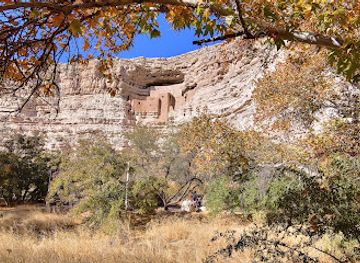
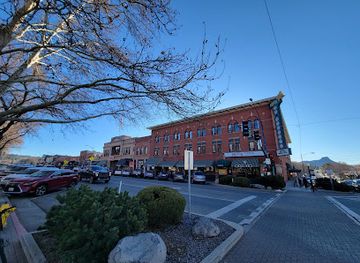
Prescott’s Courthouse Plaza is Yavapai County’s most recognisable civic landmark, surrounded by preserved territorial-era commercial buildings and shaded by mature trees. The granite formations of the Granite Dells form a distinctive natural backdrop north-east of the city, with rounded boulders and narrow waterways shaped by long geological processes. In the Verde Valley, Tuzigoot rises above the river corridor as a prominent archaeological landmark, its stone walls marking a substantial ancestral pueblo. Montezuma Castle, built into a limestone cliff, is one of Arizona’s best-known Indigenous architectural sites, while Montezuma Well is a striking natural spring and archaeological landscape. Jerome’s densely built streets cling to the side of Mingus Mountain, making the town itself a landmark of mining-era engineering and adaptation. Clarkdale’s historic industrial landscape recalls the copper-smelting economy that once dominated the valley. The Verde River, though less visually dramatic than the county’s rock formations, is a major geographical landmark whose wooded corridor supports communities, farms, wildlife and recreation. Together these places express the county’s combination of ancient settlement, territorial development, mining and high-desert geography.
-
National reserve
Montezuma Castle National Monument
Discover the ancient cliff dwellings of the Sinagua people at Montezuma Castle National Monument, a remarkably preserved window into the past.
-
Rest stop
Sunset Point
Enjoy breathtaking views and convenient amenities at Sunset Point, a must-stop rest area on I-17 with a million-dollar view of Arizona's landscape.
-
National forest
Prescott National Forest
Explore Arizona's diverse landscapes: Hike, camp, and discover history in Prescott National Forest, a million-acre playground near Prescott.
-
Wildlife park
Out of Africa Wildlife Park
Experience the wild in Arizona! Out of Africa Wildlife Park: Safaris, shows, and close encounters with exotic animals in a natural setting.


Explore Yavapai County on the map
Plan your trip on one map. See where the top cities, national parks and sights are, and book hotels and experiences in a few clicks.
Best hotels in Yavapai County
Best restaurants in Yavapai County
Dining in Yavapai County reflects the contrast between high-country Prescott and the warmer Verde Valley. Prescott’s historic centre has cafés, bakeries, traditional American restaurants, bars and independent eateries, while the surrounding ranching country supports a relaxed culture of grills, diners and locally focused establishments. Cottonwood is the principal dining base in the Verde Valley, with restaurants ranging from casual Mexican and Southwestern cooking to contemporary menus, cafés and wine-oriented venues. Local produce, including fruit and vegetables grown in the valley, appears seasonally, and the region’s vineyards have helped develop tasting rooms and food-pairing experiences. Farm shops and small producers may offer wine, cider, preserves or other regional products, but availability varies by season. In Camp Verde and Clarkdale, dining is generally more spread out and often linked to road travel and visitor attractions. Jerome’s hillside setting supports cafés, restaurants and wine venues with views across the valley. Regional food is best understood as part of broader Arizona and American Southwest cooking, rather than as a single county-specific cuisine.
-
Restaurant
Rock Springs Café
Discover Rock Springs Café: A culinary gem offering delicious homemade pies and hearty meals in the heart of Arizona's stunning landscape.
-
Hamburger restaurant
Haunted Hamburger
Juicy burgers haunted by Jerome's mining ghosts, savored on patios with epic Verde Valley views in Arizona's mile-high artist town.
-
American
Pine Country Restaurant
Discover delicious American cuisine at Pine Country Restaurant in Williams, AZ – your gateway to unforgettable flavors and warm hospitality.
-
American
Cruiser's Route 66 Cafe
Experience classic American diner culture at Cruiser's Route 66 Cafe in Williams, Arizona - where nostalgia meets delicious comfort food.




Best bars in Yavapai County
Nightlife in Yavapai County is concentrated in Prescott, Cottonwood and Jerome rather than in a large club district. Prescott’s Courthouse Plaza and adjacent streets contain historic pubs, bars, live-music venues and restaurants, giving the town the county’s broadest choice for an evening out. Cottonwood has a growing concentration of wine bars, tasting rooms, breweries, casual bars and restaurants, particularly suited to relaxed evenings rather than late-night clubbing. Jerome’s nightlife is smaller and atmospheric, with hillside bars, music and venues connected to its historic mining-town character; some businesses operate seasonally or close earlier than visitors may expect. Camp Verde and other rural communities generally centre their evening life on local restaurants, taverns and occasional live entertainment. Visitors should arrange transport in advance when exploring vineyards or remote venues, as taxi and ride-hailing coverage can be limited. Nightlife schedules change, so check current arrangements locally rather than assuming every venue operates late.
-
American
Pine Country Restaurant
Experience authentic American flavors at Pine Country Restaurant, the heart of Williams, AZ, known for its cozy atmosphere and delicious homemade pies.
-
American
Cruiser's Route 66 Cafe
Discover the nostalgic charm and delicious American cuisine at Cruiser's Route 66 Cafe in Williams, Arizona, the perfect stop on your Route 66 adventure.
-
Bar
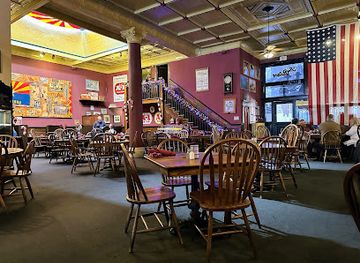
Palace Restaurant & Saloon
Discover the historic charm of Prescott at the Palace Restaurant & Saloon, where American cuisine meets a rich Old West heritage.
-
Brewpub
LazyG Brewhouse
Discover the craft of brewing at LazyG Brewhouse in Prescott, where artisanal beers and a welcoming atmosphere come together for a memorable experience.



Best nightclubs in Yavapai County
Nightlife in Yavapai County is concentrated in Prescott, Cottonwood and Jerome rather than in a large club district. Prescott’s Courthouse Plaza and adjacent streets contain historic pubs, bars, live-music venues and restaurants, giving the town the county’s broadest choice for an evening out. Cottonwood has a growing concentration of wine bars, tasting rooms, breweries, casual bars and restaurants, particularly suited to relaxed evenings rather than late-night clubbing. Jerome’s nightlife is smaller and atmospheric, with hillside bars, music and venues connected to its historic mining-town character; some businesses operate seasonally or close earlier than visitors may expect. Camp Verde and other rural communities generally centre their evening life on local restaurants, taverns and occasional live entertainment. Visitors should arrange transport in advance when exploring vineyards or remote venues, as taxi and ride-hailing coverage can be limited. Nightlife schedules change, so check current arrangements locally rather than assuming every venue operates late.
-
Bar
The Point Bar and Lounge
Discover the vibrant atmosphere of The Point Bar and Lounge, where cocktails meet live music in the heart of Prescott.
-
Cocktail bar
Canyon Club
Experience the best of Williams nightlife at Canyon Club - a lively cocktail bar and karaoke hotspot that welcomes you with open arms.
-
Night club
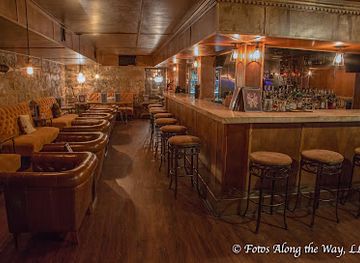
Jersey Lilly Saloon
Discover the lively nightlife at Jersey Lilly Saloon in Prescott, AZ, where music, dancing, and signature cocktails await every night.


Best shops in Yavapai County
Shopping in Yavapai County is oriented towards independent businesses, regional food and locally made goods rather than large-scale retail tourism. Prescott’s historic centre has western clothing, books, antiques, galleries, craft shops, jewellery and practical outdoor retailers, alongside everyday stores serving local residents. Cottonwood provides the Verde Valley’s broadest concentration of independent shops, galleries, tasting rooms and food-related businesses, with wine and locally produced goods among the most distinctive purchases. Jerome’s steep historic streets are lined with art galleries, studios, vintage items, mineral-related souvenirs and shops occupying former commercial buildings, although the town’s small scale means prices and stock vary considerably. Camp Verde and Clarkdale offer more limited retail, with visitor shops and local services rather than a continuous shopping district. Farmers’ markets and seasonal markets may provide fruit, preserves, baked goods and crafts, but dates and locations change. Sensible regional souvenirs include Arizona wine, locally made art, books on Indigenous and mining history, and practical outdoor equipment; archaeological artefacts should never be bought unless their legal provenance is beyond doubt.
-
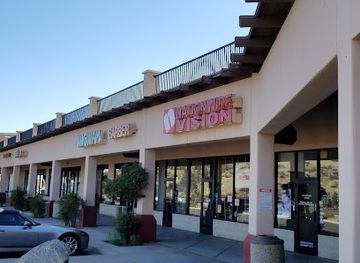
Shopping mall
Frontier Village Center
Explore Frontier Village Center in Prescott, AZ - a vibrant shopping mall with diverse stores and delightful dining options for every visitor.
-
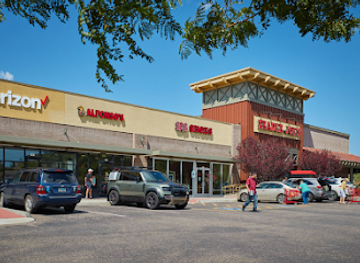
Shopping mall
Pine Ridge Marketplace
Discover unique shopping experiences and delightful dining at Pine Ridge Marketplace in Prescott, Arizona – a must-visit destination for tourists.
-
Shopping mall
Bashford Courts
Experience the unique blend of shopping, art, and relaxation at Bashford Courts in Prescott, Arizona.
-
Shopping mall
The Shops at Prescott Gateway
Discover a vibrant shopping experience at The Shops at Prescott Gateway, blending local boutiques with popular brands in Prescott, Arizona.

Get your free copy of our complete guide to Yavapai County, delivered straight to you.
Everything on this page, from attractions and restaurants to essentials and local phrases, in one PDF you can read offline, print or share.
Already have an account? Sign in
Your Yavapai County guide is ready.
We'll send it to · Not you? Sign out

Getting your guide ready…
We are putting together a fresh copy of the Yavapai County guide. This can take up to a minute.
This can take a few moments. If your browser asks, choose Allow so the download can start. You'll find the guide in your Downloads folder.
Nothing happened? Download it again
Sorry, the guide is taking longer than usual. Please try again in a minute, or get it by email instead.
Yavapai County essentials
Currency and Payment
Safety
Emergency Situations
Do's and Don'ts
Local Tips
From Eve
Local phrases worth knowing
You don't need to get them perfect. A few words go a long way, and locals appreciate the effort.
Basics
| English | Local | Say it |
|---|---|---|
| Hello | Hey there | [Hey thair] |
| Goodbye | See ya later | [See ya lay-ter] |
| Yes | Yep | [Yep] |
| No | Nah | [Nah] |
| Please/You're welcome | No problem | [No prob-lum] |
| Thank you | Thanks a lot | [Thanks uh lot] |
| Excuse me/Sorry | Pardon me | [Pardon mee] |
| How are you? | How ya doin'? | [How ya doin'?] |
| Fine. And you? | Good, how 'bout you? | [Good, how 'bout you?] |
| Do you speak English? | You speakin' English? | [You speakin' English?] |
| I don't understand | I ain't gettin' it | [I ain't gettin' it] |
Eating & Drinking
| English | Local | Say it |
|---|---|---|
| I'd like to see the menu, please | Can I see the menu? | [Can I see the men-yoo?] |
| I don't eat meat | I'm a vegetarian | [I'm a vege-ta-rian] |
| Cheers! | Cheers! | [Cheers!] |
| I would like to pay, please | Can I get the check? | [Can I get the check?] |
Emergencies
| English | Local | Say it |
|---|---|---|
| Help! | Help! | [Help!] |
| Go away! | Leave me alone! | [Leave me alone!] |
| Call the Police! | Call 911! | [Call nine-one-one!] |
| Call a doctor! | Get a doctor! | [Get a doctor!] |
| I'm lost | I'm turned around | [I'm turned around] |
| I'm ill | I'm not feelin' good | [I'm not feelin' good] |
Shopping
| English | Local | Say it |
|---|---|---|
| I'd like to buy... | I wanna buy... | [I wanna buy...] |
| I'm just looking | Just browsin' | [Just browsin'] |
| How much is it? | What’s the price? | [What’s the price?] |
| That's too expensive | That costs too much | [That costs too much] |
| Can you lower the price? | Can you give me a better deal? | [Can you give me a better deal?] |
Time & Numbers
| English | Local | Say it |
|---|---|---|
| What time is it? | What time ya got? | [What time ya got?] |
| It's one o'clock | It's one o'clock | [It's one o'clock] |
| Half past (10) | Half past ten | [Half past ten] |
| Morning | Morning | [Morning] |
| Afternoon | Afternoon | [Afternoon] |
| Evening | Evening | [Evening] |
| Yesterday | Yesterday | [Yesterday] |
| Today | Today | [Today] |
| Tomorrow | Tomorrow | [Tomorrow] |
| 1 | One | [One] |
| 2 | Two | [Two] |
| 3 | Three | [Three] |
| 4 | Four | [Four] |
| 5 | Five | [Five] |
| 6 | Six | [Six] |
| 7 | Seven | [Seven] |
| 8 | Eight | [Eight] |
| 9 | Nine | [Nine] |
| 10 | Ten | [Ten] |
Transport & Directions
| English | Local | Say it |
|---|---|---|
| Where's a/the...? | Where's the...? | [Where's the...?] |
| What's the address? | What’s the address? | [What’s the address?] |
| Can you show me (on the map)? | Can you point it out? | [Can you point it out?] |
| When's the next (bus)? | When’s the next bus? | [When’s the next bus?] |
| A ticket (to ....) | A ticket to... | [A ticket to...] |
History of Yavapai County
Ancient Verde Valley Communities
The Verde Valley contains substantial archaeological evidence of communities often described by archaeologists as Sinagua, a name used for a broad cultural tradition rather than a single political group. Tuzigoot, Montezuma Castle and Montezuma Well reveal sophisticated settlement, masonry construction and adaptation to a dry environment with access to the Verde River and springs. These sites date principally from the centuries before European colonisation. Their preserved walls and agricultural landscapes demonstrate that central Arizona supported established communities with complex social and economic lives long before the United States existed.
Yavapai and Apache Homelands
Yavapai and Apache peoples have deep historical and continuing connections with the lands now contained within Yavapai County. Their communities used the region’s mountains, valleys, rivers and uplands for seasonal travel, hunting, gathering and settlement. Nineteenth-century American expansion brought military conflict, displacement and reservation policies that profoundly disrupted Indigenous life. Fort Verde, near Camp Verde, remains an important place for understanding this period, although the wider history includes Indigenous resistance, adaptation and survival rather than only the military narrative preserved in federal sites.
Creation of Yavapai County and Territorial Prescott
Yavapai County was established in 1864, during the territorial period of Arizona, and Prescott became an early administrative and military centre. The town served as Arizona’s territorial capital for several periods before the capital moved permanently to Phoenix. Government buildings, commercial structures and the street plan around Prescott’s Courthouse Plaza reflect this formative era. Cattle ranching, mining, military activity and overland travel helped shape the county’s early non-Indigenous economy, while the surrounding terrain made Prescott an important regional centre in the high country.
Mining in Jerome and the Verde District
Mineral extraction transformed the Verde Valley during the late nineteenth and early twentieth centuries. Jerome developed on Mingus Mountain as a major copper-mining town, with steep streets, densely built housing and industrial works adapted to difficult terrain. Other mining settlements and prospects appeared across the county, including in the Bradshaw Mountains. Mining brought railways, investment, labour migration and commercial growth, but also environmental change and economic dependence on fluctuating mineral markets. Jerome’s surviving buildings and museum collections preserve the physical character of this mining era.
Railways, Ranching and Regional Trade
Railway construction connected the county’s mines, ranches and settlements with wider markets, helping move ore, livestock, timber and supplies. The Verde Valley’s agricultural potential was strengthened by irrigation and transport links, while river settlements developed around farming and commerce. Rail history remains visible in Clarkdale and along the Verde Canyon route, where the line was originally associated with the movement of copper from the mining district. In the west of the county, later highways and Route 66 further connected communities to national travel networks.
The Verde Valley’s Modern Heritage Economy
After large-scale mining declined, communities in the Verde Valley increasingly drew on archaeology, historic preservation, outdoor recreation, agriculture and tourism. Cottonwood developed as a service and dining centre, while former industrial and mining settlements interpreted their past through museums, historic buildings and cultural programmes. Vineyards and tasting rooms became a visible part of the valley’s agricultural identity, especially around Cottonwood and nearby communities. Prescott likewise retained its historic core while expanding as a centre for public services, arts, retirement and access to the surrounding forest and granite landscapes.
Preservation and Indigenous Interpretation
Modern Yavapai County contains a growing network of national monuments, state parks, historic districts and museums that protect archaeological, natural and built heritage. Interpretation has increasingly acknowledged that the region’s story extends beyond frontier settlement and mining to include Indigenous continuity and the consequences of colonisation. Visitors encounter these layered histories at archaeological sites, Fort Verde, Jerome, Prescott and community museums. Responsible travel means treating ancestral places as protected cultural landscapes rather than simply scenic ruins.
Yavapai County in Photos
Browse through our photo collection highlighting the charm and character of the destination.
Neighbouring regions of Yavapai County
The closest regions to Yavapai County, if you have time for more than one.
-

-

-

-

-


Swipe for more regions
Explore more

Explore more of Arizona
Discover Arizona: From the majestic Grand Canyon and red rocks of Sedona to the vibrant cities of Phoenix and Scottsdale, explore the diverse beauty and culture of the Grand Canyon State.
Explore Arizona