

Free Western District Travel Guide & Mobile App
Explore Western District with free travel guides. Discover regional history, expert tips, proposed trips, and audio guides on web or mobile app.


Explore Western District Victoria for volcanic plains, Gunditjmara heritage, pastoral towns, coastal wildlife and the wide landscapes of south-west Australia.
Read more about Western District
When is the best time to visit Western District?
Best: December–January · 25–27°C| Month | High (°C) | Rainfall (mm) |
|---|---|---|
| January (best) | 27 | 30 |
| February | 27 | 30 |
| March (best) | 25 | 35 |
| April | 21 | 40 |
| May | 18 | 45 |
| June | 15 | 50 |
| July | 15 | 50 |
| August | 16 | 50 |
| September | 17 | 45 |
| October | 21 | 40 |
| November | 22 | 35 |
| December (best) | 25 | 30 |
Getting to and around Western District
How to get there
Transportation
Destinations in Western District
Resorts, valleys and scenic spots worth a trip of their own.
-

-


Swipe for more destinations
Best attractions in Western District
The Western District’s attractions range from Aboriginal cultural landscapes and volcanic geology to coastal wildlife and pastoral heritage. Budj Bim National Park, Lake Condah and the Tyrendarra Indigenous Protected Area reveal the Gunditjmara relationship with wetlands, lava country and eel aquaculture; cultural visits should be arranged respectfully and, where appropriate, with Indigenous guides. Tower Hill Wildlife Reserve occupies a volcanic crater near the coast and offers walking tracks, birdlife and opportunities to see emus and koalas. Warrnambool provides maritime museums, beaches and seasonal southern right whale viewing at Logans Beach, while Port Fairy adds river walks, historic streets and access to coastal scenery. Inland, Hamilton, Dunkeld, Camperdown and other country towns provide galleries, gardens, heritage buildings and links to the pastoral economy. The southern edge of the Grampians offers walking and mountain viewpoints, while the Shipwreck Coast presents cliffs, coves and ocean lookouts. Across the region, farm landscapes, historic homesteads, wetlands and volcanic lakes create an attraction network best explored by car and at a measured pace.
-
Theme park
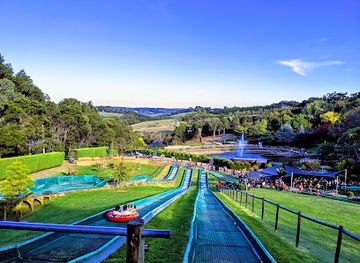
Enchanted Adventure
Experience the magic of Enchanted Adventure Park, a family-friendly theme park filled with thrilling rides, beautiful landscapes, and exciting attractions in Victoria, Australia.
-
Tourist attraction
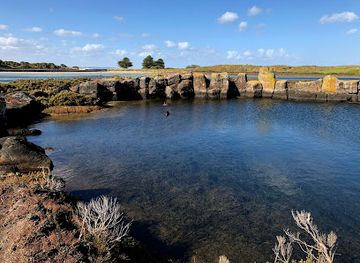
Port Fairy Lighthouse On Griffiths Island
Explore Port Fairy Lighthouse on Griffiths Island: A historic gem offering stunning coastal views and a peaceful retreat in Victoria, Australia.
-
Museum
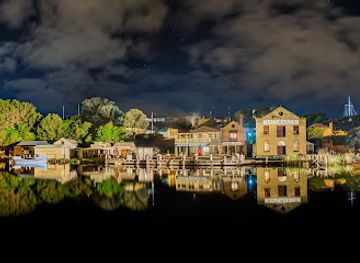
Flagstaff Hill Maritime Village
Explore the maritime history of Australia at Flagstaff Hill Maritime Village, a unique outdoor museum in Warrnambool showcasing shipwrecks and maritime life.
-
National reserve
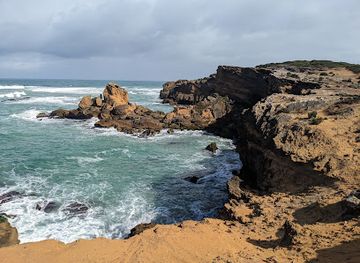
Thunder Point
Explore Thunder Point National Reserve, a breathtaking coastal escape in Warrnambool, Victoria, where stunning ocean views and diverse wildlife await.
Best landmarks in Western District
Budj Bim is the Western District’s most important cultural landmark: the volcanic peak, lava flows, wetlands and engineered aquaculture features together express the continuing cultural history of the Gunditjmara people. The landscape is protected and interpreted across several locations, including Budj Bim National Park and Lake Condah, but visitors should follow Indigenous custodial guidance rather than treating every feature as an open-access monument. Tower Hill’s broad volcanic crater is another defining natural landmark, combining geological history with a major Indigenous cultural and wildlife setting. Along the coast, Warrnambool’s breakwater and maritime landscape recall the town’s port history, while Port Fairy’s Moyne River, historic harbour area and nearby coastal islands reflect fishing and sailing traditions. Inland, the volcanic cones and crater country around Camperdown and the pastoral architecture of Hamilton and Dunkeld express the region’s agricultural history. The dramatic Grampians escarpment visible from Dunkeld forms a powerful eastern edge to the Western District, although the wider national park extends beyond the immediate townland and demands separate planning.
-
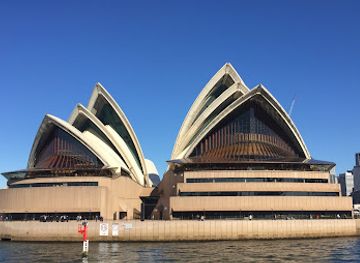
Performing arts theater
Sydney Opera House
Discover the Sydney Opera House, an architectural marvel and cultural hub that offers world-class performances and breathtaking views of Sydney Harbour.
-
Market
Queen Victoria Market
Explore the vibrant Queen Victoria Market in Melbourne, where fresh produce, artisanal goods, and local culture come together in a unique shopping experience.
-
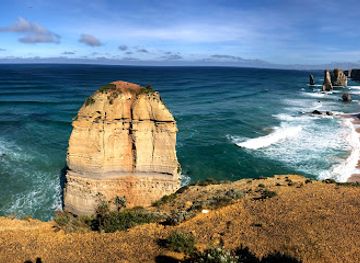
Scenic spot
Twelve Apostles
Experience the breathtaking beauty of the Twelve Apostles, Australia's iconic limestone stacks along the Great Ocean Road, a true natural wonder.
-
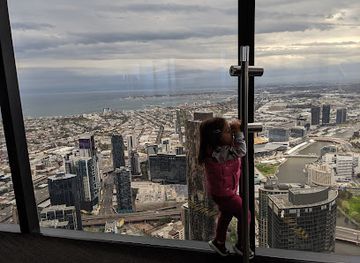
Observation deck
Melbourne Skydeck
Discover breathtaking views of Melbourne's skyline from the iconic Melbourne Skydeck, the Southern Hemisphere's highest observation deck.
Explore Western District on the map
Plan your trip on one map. See where the top cities, national parks and sights are, and book hotels and experiences in a few clicks.
Best hotels in Western District
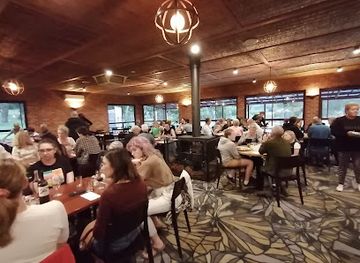
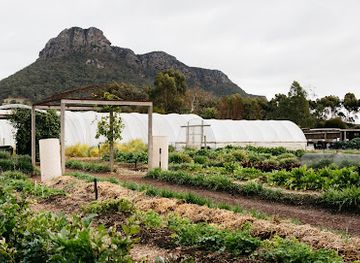
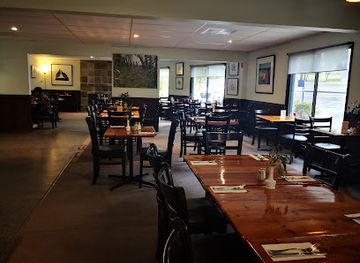
Best restaurants in Western District
Dining in the Western District reflects its farms, dairies, fishing ports and long-established country-town culture. Warrnambool and Port Fairy offer cafés, pubs and restaurants using local seafood, dairy products, lamb, beef and seasonal vegetables, while inland towns are known for substantial country meals, bakeries and community-minded dining rooms. Regional cheeses, yoghurt, butter and other dairy products are an important expression of the volcanic plain and its productive pasture. Farm shops and farmers’ markets may offer preserves, bread, honey, fruit and small-scale artisan produce, depending on the season. The area is also within reach of western Victorian wine producers, although cellar doors are dispersed and should be planned rather than encountered by chance. Menus vary considerably between coastal and inland districts: seafood and contemporary casual dining are more visible around Warrnambool and Port Fairy, while Hamilton, Dunkeld and smaller settlements combine modern cooking with the traditions of the pub, bakery and rural inn.
-
Restaurant
Halls Gap Hotel Restaurant
Discover exquisite dining at Halls Gap Hotel Restaurant – where local flavors meet stunning views in Victoria's beautiful Grampians region.
-
 Restaurant
Lake House
Experience culinary artistry at Lake House in Daylesford—where fine dining meets luxury accommodation amidst stunning lakeside views.
-
Restaurant
Royal Mail Hotel, Dunkeld
Experience fine dining and luxurious accommodation at Royal Mail Hotel Dunkeld while exploring Victoria's breathtaking landscapes.
-
Restaurant
Kookaburra Hotel
Discover Kookaburra Hotel in Halls Gap: A perfect blend of great food, stunning views, and local Australian charm awaits you.
Best bars in Western District
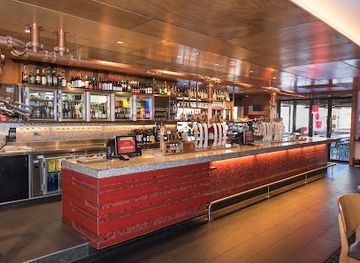
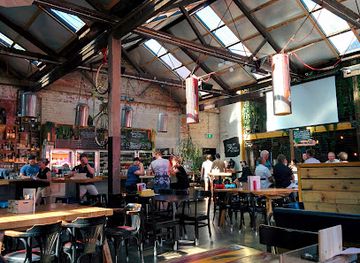
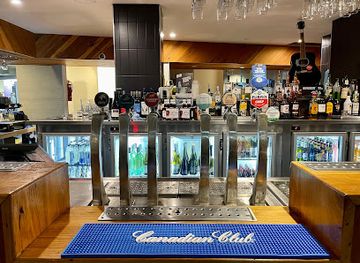
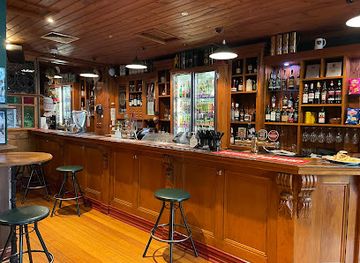
Nightlife in the Western District is generally social and local rather than centred on large clubs. Warrnambool has the broadest evening choice, with pubs, hotel dining rooms, small bars, live music and occasional performances providing activity after dark. Port Fairy’s evening scene is shaped by its restaurants, pubs, historic hotels and seasonal visitor population, while Hamilton and other inland centres rely mainly on country pubs, clubs, cafés and community venues. Craft beer, Victorian wine and regional spirits may appear on drinks lists, but venue offerings change and rural establishments can close earlier than visitors expect. During festival or holiday periods, coastal towns become busier, whereas inland evenings are usually quieter and organised around dining, conversation and local events. Plan transport before drinking, particularly outside town centres, because taxis and rideshare availability may be limited in smaller settlements.
-
Bar
The Red Lion Ballarat
Experience the lively atmosphere of The Red Lion Ballarat, where great food, drinks, and local events come together in a vibrant setting.
-
Bar
Hop Temple
Discover the vibrant atmosphere of Hop Temple, Ballarat's premier bar and restaurant, offering craft beers, delectable dishes, and live music.
-
Pub
The Flying Horse
Discover Warrnambool's vibrant pub scene at The Flying Horse, where exceptional food, a great selection of drinks, and a welcoming atmosphere await.
-
Irish pub
Irish Murphy's
Discover the charm of Ireland at Irish Murphy's, Ballarat's vibrant pub offering delicious food, drinks, and live entertainment.
Best nightclubs in Western District
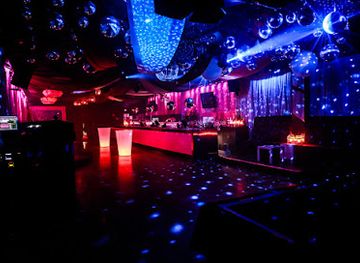
Nightlife in the Western District is generally social and local rather than centred on large clubs. Warrnambool has the broadest evening choice, with pubs, hotel dining rooms, small bars, live music and occasional performances providing activity after dark. Port Fairy’s evening scene is shaped by its restaurants, pubs, historic hotels and seasonal visitor population, while Hamilton and other inland centres rely mainly on country pubs, clubs, cafés and community venues. Craft beer, Victorian wine and regional spirits may appear on drinks lists, but venue offerings change and rural establishments can close earlier than visitors expect. During festival or holiday periods, coastal towns become busier, whereas inland evenings are usually quieter and organised around dining, conversation and local events. Plan transport before drinking, particularly outside town centres, because taxis and rideshare availability may be limited in smaller settlements.
-
Night club
Magic Men Australia
Discover the exhilarating nightlife at Magic Men Australia, where captivating performances and lively entertainment await in Prahran, Victoria.
-
Disco club
Club Retro
Explore the vibrant nightlife at Club Retro, a dynamic disco club and bar in Melbourne offering delicious food and an unforgettable dance experience.
-
Disco club
New Guernica
Discover the vibrant nightlife of Melbourne at New Guernica, a premier disco club known for its great music and lively atmosphere.
-
Night club
Glamorama Nightclub
Unleash your inner night owl at Glamorama Nightclub, Fitzroy's premier destination for cocktails, dancing, and unforgettable nightlife experiences.



Best shops in Western District
Shopping in the Western District is concentrated in the high streets and independent centres of Warrnambool, Hamilton, Port Fairy, Camperdown and other market towns. Warrnambool has the widest practical choice of supermarkets, department-style retail, clothing, books and locally owned shops, while Port Fairy is better known for galleries, craft, homewares and small-scale visitor shopping. Hamilton serves a large inland district and combines everyday services with antiques, rural supplies, galleries and food retailers. Farmers’ markets and farm shops are useful places to look for regional cheese, preserves, honey, wine, baked goods and seasonal produce, although market schedules vary. Pottery, textiles, paintings, jewellery and locally made gifts are more meaningful souvenirs than generic merchandise, especially when purchased from artists or makers who identify with the region. Travellers heading into rural areas should stock up in larger towns, as retail choices become limited once outside the main centres.
-
Gift shop
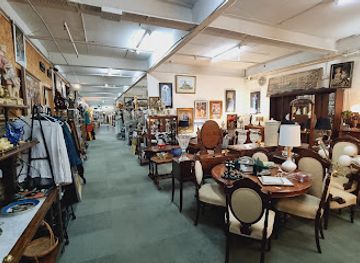
Fletcher Jones Market
Explore Fletcher Jones Market in Warrnambool for unique antiques, vintage finds, and gifts that tell a story, perfect for every treasure seeker.
-
Bakery
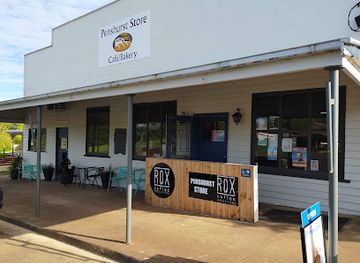
Penshurst Store
Experience the best of local baking at Penshurst Store, where fresh pastries and artisanal breads await in a charming bakery setting.
-
Gift shop
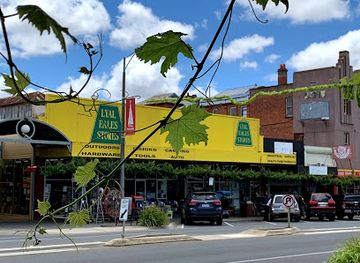
Lyal Eales Stores
Explore Lyal Eales Stores in Ararat for unique gifts, camping essentials, and local treasures that define the spirit of Victoria.
-
Gourmet grocery store
GRAMPIANS PROVIDORE
Experience the flavors of Victoria at Grampians Providore, your go-to gourmet grocery store for local cheeses, hams, and fine wines.

Get your free copy of our complete guide to Western District, delivered straight to you.
Everything on this page, from attractions and restaurants to essentials and local phrases, in one PDF you can read offline, print or share.
Already have an account? Sign in
Your Western District guide is ready.
We'll send it to · Not you? Sign out

Getting your guide ready…
We are putting together a fresh copy of the Western District guide. This can take up to a minute.
This can take a few moments. If your browser asks, choose Allow so the download can start. You'll find the guide in your Downloads folder.
Nothing happened? Download it again
Sorry, the guide is taking longer than usual. Please try again in a minute, or get it by email instead.
Western District essentials
Currency and Payment
Safety
Emergency Situations
Do's and Don'ts
Local Tips
From Eve
Local phrases worth knowing
You don't need to get them perfect. A few words go a long way, and locals appreciate the effort.
Basics
| English | Local | Say it |
|---|---|---|
| Hello | G'day | [guh-day] |
| Goodbye | See ya | [see yah] |
| Yes | Yep | [yehp] |
| No | Nah | [nah] |
| Please/You're welcome | No worries | [noh wuh-riz] |
| Thank you | Cheers | [cheerz] |
| Excuse me/Sorry | Sorry mate | [saw-ree mayt] |
| How are you? | How's it going? | [howz it go-ing] |
| Fine. And you? | Good, and you? | [good, and yoo] |
| Do you speak English? | Do ya speak English? | [do yah speek ing-glish] |
| I don't understand | I don’t get it | [i dont get it] |
Eating & Drinking
| English | Local | Say it |
|---|---|---|
| I'd like to see the menu, please | Can I have a look at the menu? | [can i hav a luk at the men-yoo] |
| I don't eat meat | I’m a vegetarian | [im a vege-tair-ian] |
| Cheers! | Cheers! | [cheerz] |
| I would like to pay, please | Can I get the bill, please? | [can i get the bil, pleez] |
Emergencies
| English | Local | Say it |
|---|---|---|
| Help! | Help! | [help] |
| Go away! | Get lost! | [get lost] |
| Call the Police! | Call the cops! | [call the cops] |
| Call a doctor! | Get a doctor! | [get a doc-tah] |
| I'm lost | I’m lost | [im lost] |
| I'm ill | I’m not feeling well | [im not feel-ing well] |
Shopping
| English | Local | Say it |
|---|---|---|
| I'd like to buy... | I wanna buy... | [i wanna buy] |
| I'm just looking | Just browsing, thanks | [just brows-ing, thanks] |
| How much is it? | What’s the price? | [whats the pryce] |
| That's too expensive | That's a bit pricey | [thats a bit pry-see] |
| Can you lower the price? | Can ya do any better on the price? | [can yah do any bet-tah on the pryce] |
Time & Numbers
| English | Local | Say it |
|---|---|---|
| What time is it? | What’s the time? | [whats the time] |
| It's one o'clock | It’s one o’clock | [its wun o-clock] |
| Half past (10) | Half past ten | [half past ten] |
| Morning | Morning | [mor-ning] |
| Afternoon | Arvo | [ahr-vo] |
| Evening | Evening | [eev-ning] |
| Yesterday | Yesterday | [yes-ter-day] |
| Today | Today | [to-day] |
| Tomorrow | Tomorrow | [to-mor-row] |
| 1 | One | [wun] |
| 2 | Two | [too] |
| 3 | Three | [three] |
| 4 | Four | [for] |
| 5 | Five | [fiv] |
| 6 | Six | [siks] |
| 7 | Seven | [sev-en] |
| 8 | Eight | [ayt] |
| 9 | Nine | [nyn] |
| 10 | Ten | [ten] |
Transport & Directions
| English | Local | Say it |
|---|---|---|
| Where's a/the...? | Where’s the...? | [wherez the] |
| What's the address? | What’s the address? | [whats the ad-dress] |
| Can you show me (on the map)? | Can ya point it out on the map? | [can yah point it out on the map] |
| When's the next (bus)? | When’s the next bus? | [whenz the next bus] |
| A ticket (to ....) | A ticket to... | [a tik-et to] |
History of Western District
Gunditjmara Country and Ancient Aquaculture
Gunditjmara people have lived across south-west Victoria for many thousands of years, developing a detailed relationship with lava flows, wetlands, rivers and coastal resources. Around Lake Condah and the Budj Bim lava plain, they constructed channels, weirs and other features to manage water and harvest short-finned eel. This was not simply seasonal food gathering but a sophisticated system supporting settled communities and cultural life. The Budj Bim Cultural Landscape preserves this continuing tradition and demonstrates the depth of Aboriginal engineering, land management and custodianship in the Western District.
Volcanic Landscapes and Early European Exploration
The Western District’s fertile plains were formed by lava flows and volcanic activity extending across south-west Victoria over a long geological period. European exploration followed Aboriginal pathways and coastal routes in the early nineteenth century, including journeys by explorers such as Thomas Mitchell. The open grasslands appeared attractive to pastoralists, but their apparent emptiness concealed established Aboriginal societies and carefully managed environments. Volcanic cones, crater lakes and lava features later influenced the placement of roads, farms and settlements and remain among the region’s defining physical characteristics.
Pastoral Expansion and Squatting
From the 1830s, pastoralists moved into the Western District with large sheep runs, often occupying land without formal purchase under the colonial squatting system. Wool became the foundation of the regional economy, and stations expanded across the grasslands around Hamilton, Dunkeld and the volcanic plain. This expansion dispossessed Aboriginal communities, disrupted established land management and brought violent conflict and disease. The wealth generated by wool survives in homesteads, bluestone buildings, shearing sheds, avenues of trees and the grand pastoral architecture found throughout inland western Victoria.
The Gunditjmara Struggle and Lake Condah Mission
Colonial authorities established missions and reserves as European settlement intensified. The Lake Condah Mission, founded in the nineteenth century, became an important place for Gunditjmara people, though life there was controlled by government and church authorities and shaped by restrictive policies. Gunditjmara families maintained cultural knowledge and connections to Country despite dispossession and institutional pressure. In the twentieth and twenty-first centuries, campaigns for land rights and cultural recognition helped return land and strengthen community authority, contributing to the protection and interpretation of the Budj Bim Cultural Landscape.
Ports, Railways and Coastal Trade
Coastal ports including Warrnambool and Port Fairy connected the pastoral interior with wider markets, exporting wool, livestock and agricultural produce. Shipbuilding, fishing and coastal trade became important parts of local economies, while the dangerous coastline generated a substantial shipwreck history. Nineteenth-century railway construction linked inland towns with Melbourne and the ports, reducing reliance on rough roads and coastal shipping. Railway lines helped establish Hamilton, Camperdown, Terang and other centres as commercial hubs, although several regional passenger services later declined or ended.
Agricultural Change and Dairy Country
The Western District economy diversified during the late nineteenth and twentieth centuries. Sheep remained central across the drier inland plains, while reliable rainfall and fertile volcanic soils encouraged dairying around towns such as Terang, Camperdown and Cobden. Cooperative factories, stock markets and railway sidings supported farmers and connected rural production to national markets. Mechanisation, changing commodity prices and farm consolidation altered the countryside, but wool, beef, lamb, dairy products and grain still shape the region’s working landscapes and food culture.
Heritage Recognition and Regional Tourism
From the later twentieth century, conservation and heritage movements brought renewed attention to Aboriginal cultural landscapes, volcanic geology, pastoral buildings and the Shipwreck Coast. Tower Hill became an important example of Indigenous-guided environmental restoration, while Budj Bim gained international recognition through UNESCO World Heritage inscription in 2019. Tourism now complements, rather than replaces, agriculture and port activity. Visitors encounter a region where contemporary Gunditjmara cultural authority, working farms, wildlife conservation, food production and historic towns are all part of an evolving regional identity.
Western District in Photos
Browse through our photo collection highlighting the charm and character of the destination.
Neighbouring regions of Western District
The closest regions to Western District, if you have time for more than one.
-

-

-

-

-


Swipe for more regions
Explore more

Explore more of Australia
Discover the diverse landscapes, vibrant cities, and unique wildlife of Australia, a captivating destination offering endless adventures and unforgettable experiences.
Explore Australia