

The Twelve Apostles Travel Guide - Free Web & App
Your ultimate guide to The Twelve Apostles. Discover top landmarks, proposed trips, and local tips. Free on the web or via the Evendo companion app.


The Twelve Apostles in Australia rise beside Victoria’s Great Ocean Road, offering sea stacks, cliff walks, sunset views, wildlife and coastal heritage.
Sea Stacks and Southern Ocean Cliffs
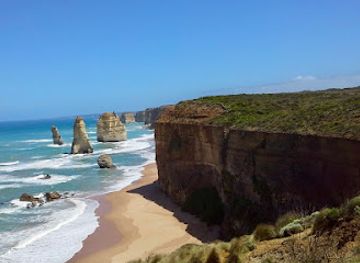
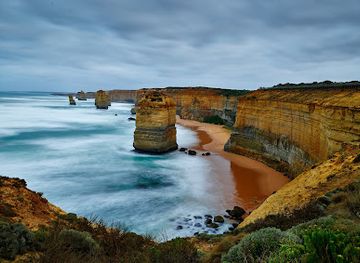
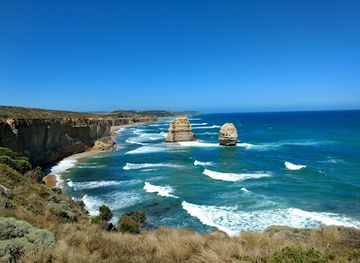
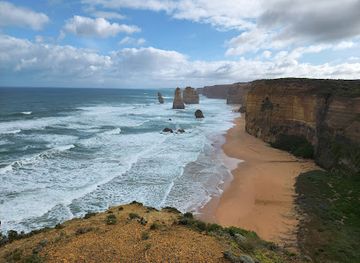
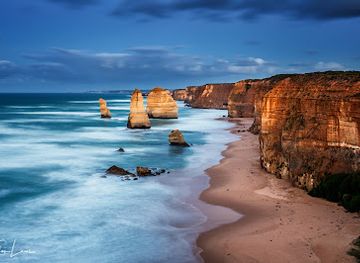
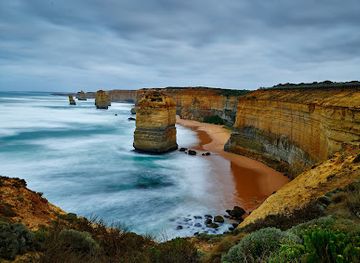
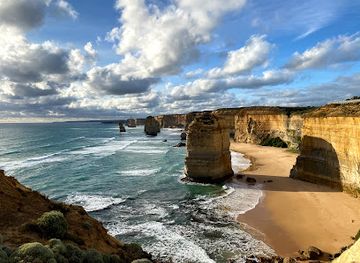
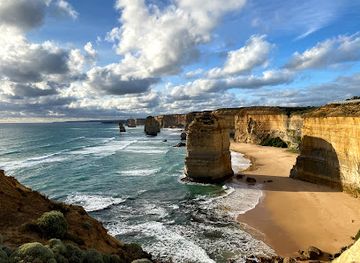
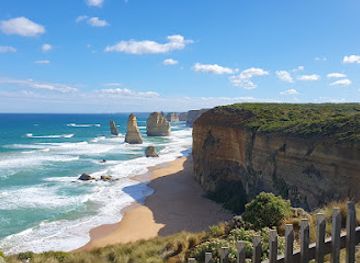
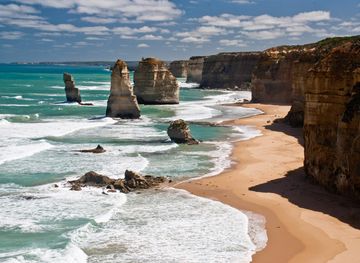
The Twelve Apostles are a group of limestone pillars rising from the Southern Ocean beside Victoria’s Great Ocean Road, within Port Campbell National Park. Despite their collective name, the formations have never numbered exactly twelve in living memory, and continued coastal erosion has reduced the visible group over time. Their appeal lies in the contrast between pale, weathered rock, dark offshore water and the high, exposed cliffs of the Shipwreck Coast. Viewing platforms near the Twelve Apostles Visitor Experience provide the principal land-based perspective, while the surrounding coast reveals further stacks, arches, beaches and rugged headlands.Read more about The Twelve Apostles
A Landscape Shaped by Time and Sea
The Shipwreck Coast
When is the best time to visit The Twelve Apostles?
Best: January–March · 21–22°C| Month | High (°C) | Rainfall (mm) |
|---|---|---|
| January (best) | 21 | 37 |
| February (best) | 22 | 36 |
| March (best) | 21 | 34 |
| April | 19 | 30 |
| May | 17 | 26 |
| June | 14 | 23 |
| July | 13 | 22 |
| August | 13 | 23 |
| September | 15 | 26 |
| October | 17 | 30 |
| November | 19 | 34 |
| December | 21 | 37 |
Getting to and around The Twelve Apostles
How to get there
Transportation
Best attractions in The Twelve Apostles
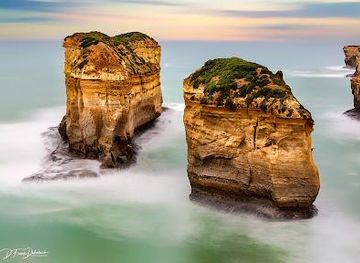
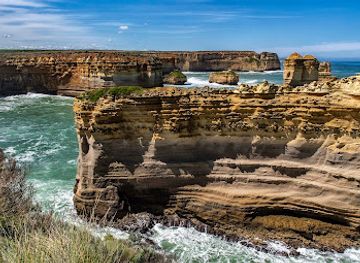
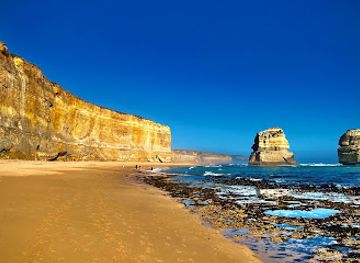
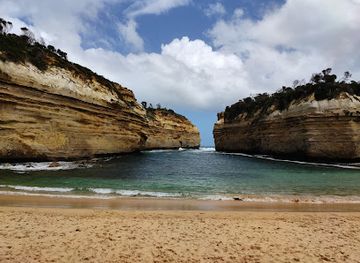
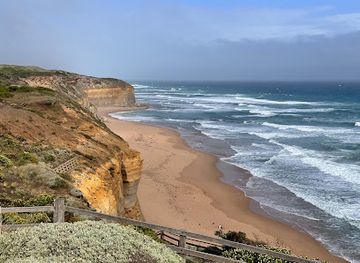
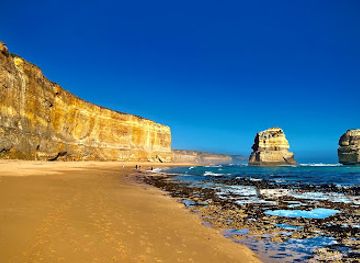
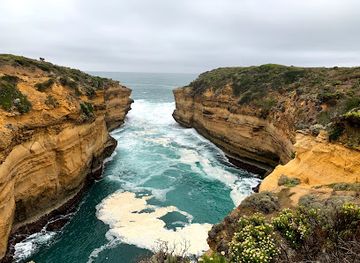
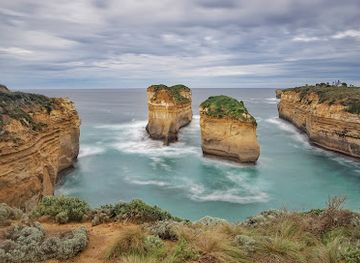
The Twelve Apostles are the central attraction of this section of Victoria’s Shipwreck Coast, viewed from elevated platforms above the Southern Ocean and best understood as part of a broader chain of eroded limestone scenery. Within Port Campbell National Park, Loch Ard Gorge combines sheer cliffs, a sheltered inlet and the story of the 1878 Loch Ard wreck, while London Bridge is a collapsed coastal arch with a remaining offshore span and The Grotto is a sea-carved sinkhole, arch and viewing feature reached by a short walk. The nearby beaches and headlands show how caves and arches develop before sections of cliff become isolated stacks. Inland, short walks through coastal vegetation provide a calmer contrast to the exposed viewpoints, while the Great Ocean Road connects these sites with Port Campbell and Princetown. Access, walking conditions and viewing areas vary, so visitors should follow current park signs rather than treating every shoreline as accessible.
-
Tourist attraction
Thunder Cave
Discover the breathtaking beauty of Thunder Cave, a must-visit natural attraction along the stunning Great Ocean Road in Victoria, Australia.
-
Scenic spot
Tom and Eva Lookout
Experience the stunning vistas at Tom and Eva Lookout, a must-see destination along the Great Ocean Road in Port Campbell, Victoria.
-
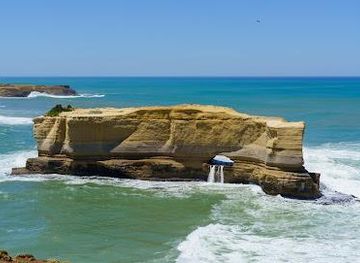
The Bakers Oven
Experience the breathtaking beauty of Bakers Oven, a natural wonder along the Great Ocean Road, showcasing stunning cliffs and ocean views.
-
Tourist attraction
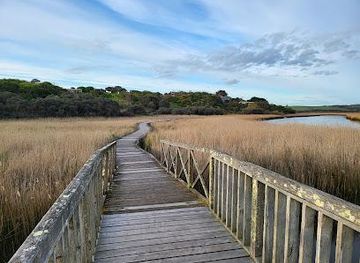
Princetown Wetlands Boardwalk
Discover the tranquil Princetown Wetlands Boardwalk, a natural haven for wildlife enthusiasts and nature lovers in Victoria, Australia.
Best landmarks in The Twelve Apostles
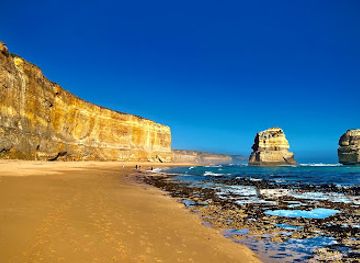
The Twelve Apostles are the defining natural landmarks of Port Campbell National Park: isolated columns of pale marine limestone separated from the mainland by erosion and exposed to the Southern Ocean. Their changing silhouettes represent successive stages of coastal retreat, from cliff face to cave, arch, stack and eventual collapse. Loch Ard Gorge is both a geological landmark and a maritime memorial landscape, named after the 1878 wreck of the Loch Ard, while London Bridge and The Grotto demonstrate other forms of wave-carved coastal architecture. The surrounding cliffs, headlands and offshore rocks belong to the wider Shipwreck Coast, whose place names preserve associations with navigation and disaster. The Great Ocean Road adds a major cultural landmark, built by returned servicemen between 1919 and 1932 as a First World War memorial route through south-western Victoria.
-
National park
Port Campbell National Park
Explore the breathtaking beauty of Port Campbell National Park, home to iconic rock formations and stunning coastal scenery along Victoria's Great Ocean Road.
-
Tourist attraction
Loch Ard Gorge
Experience the breathtaking cliffs and rich maritime history of Loch Ard Gorge, a must-see attraction on the Great Ocean Road.
-
Tourist attraction
Gibson Steps
Discover the breathtaking beauty of Gibson Steps, a stunning coastal attraction along the Great Ocean Road showcasing towering cliffs and the iconic Twelve Apostles.
-
Helicopter tour agency
12 Apostles Helicopters
Discover the breathtaking beauty of the 12 Apostles from above with thrilling helicopter tours along the iconic Great Ocean Road.
Explore The Twelve Apostles on the map
Plan your trip on one map. See where the top attractions, landmarks, restaurants and hotels are, and book hotels and experiences in a few clicks.
Best hotels in The Twelve Apostles
Best restaurants in The Twelve Apostles
Dining around the Twelve Apostles is concentrated in Port Campbell rather than at the lookout itself. The village provides the most dependable choice of cafés, takeaway food, pubs and casual restaurants for visitors touring the Shipwreck Coast, while smaller settlements and rural businesses along the Great Ocean Road offer more limited options that may vary by season. Menus commonly draw on Australian café and pub traditions, with regional produce, baked goods and seafood appearing where local supply and the individual kitchen allow. Princetown is a useful western gateway but has fewer services, so a picnic or packed provisions can be sensible for a full day among the coastal viewpoints. Visitors staying in self-catering cottages or holiday accommodation can buy supplies in larger nearby towns, but should not expect shops or restaurants at each national-park attraction.
-
Scenic spot
Twelve Apostles
Experience breathtaking views at Australia's iconic Twelve Apostles, stunning limestone stacks along the Great Ocean Road.
-
Tourist attraction
Loch Ard Gorge
Explore Loch Ard Gorge: A stunning coastal wonder along Australia's Great Ocean Road with breathtaking views and rich maritime history.
-
Tourist attraction
Gibson Steps
Discover Gibson Steps: A breathtaking coastal journey to witness two of Australia's iconic Twelve Apostles amidst stunning ocean views.
-
Scenic spot
The Razorback
Discover The Razorback: A breathtaking scenic spot in Port Campbell offering stunning coastal views and unique geological formations.
Best bars in The Twelve Apostles
The Twelve Apostles have no nightlife district and the lookout is a natural attraction rather than an evening entertainment venue. After sunset, the atmosphere is primarily quiet and coastal, with visitors returning to accommodation in Port Campbell, Princetown or other Great Ocean Road settlements. Port Campbell has the area’s most established pub and bar-style hospitality, where evenings are generally centred on food, conversation and drinks rather than late-night clubbing. Seasonal community events and live entertainment may occur in regional venues, but schedules are not guaranteed and should be checked locally. Driving after dark requires care on winding rural roads, and coastal viewpoints may have limited lighting, so visitors should plan their return before setting out for an evening excursion.
-
National park
Port Campbell National Park
Discover the stunning landscapes and unique rock formations of Port Campbell National Park along the iconic Great Ocean Road.
-
Tourist attraction
Gibson Steps
Discover the breathtaking views and natural wonders of Gibson Steps, a hidden gem along Victoria's Great Ocean Road.
-
Ocean rock exposed
Twelve Apostles
Discover the breathtaking Twelve Apostles, a stunning coastal masterpiece of limestone stacks along Victoria's Great Ocean Road, perfect for adventure and photography.
-
Hotel
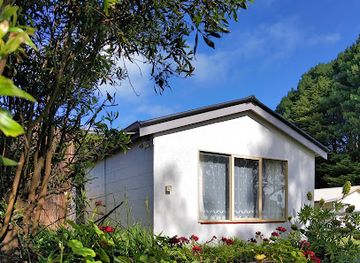
Twelve Apostles Motel & Country Retreat
Discover the serene charm of Twelve Apostles Motel & Country Retreat, your perfect base for coastal adventures and stunning natural landscapes.
Best nightclubs in The Twelve Apostles
The Twelve Apostles have no nightlife district and the lookout is a natural attraction rather than an evening entertainment venue. After sunset, the atmosphere is primarily quiet and coastal, with visitors returning to accommodation in Port Campbell, Princetown or other Great Ocean Road settlements. Port Campbell has the area’s most established pub and bar-style hospitality, where evenings are generally centred on food, conversation and drinks rather than late-night clubbing. Seasonal community events and live entertainment may occur in regional venues, but schedules are not guaranteed and should be checked locally. Driving after dark requires care on winding rural roads, and coastal viewpoints may have limited lighting, so visitors should plan their return before setting out for an evening excursion.
-
Ocean rock exposed
Twelve Apostles
Discover the breathtaking Twelve Apostles, a stunning natural wonder along Victoria's Great Ocean Road, where limestone stacks meet the Southern Ocean.
Best shops in The Twelve Apostles
Shopping at the Twelve Apostles themselves is limited, with the main visitor facilities focused on viewing the coast rather than retail. Port Campbell is the nearest practical place for groceries, takeaway supplies, gifts and small independent businesses, while other Great Ocean Road settlements provide additional shops and services according to their size and season. Regional products may include locally made food, wine from broader western Victorian districts, artwork, photographs and small craft items inspired by the coast, although stock varies between businesses. Visitors following the full route can look for farm shops and produce sellers in the surrounding rural region, but should not assume that every stop operates year-round. Essential food, water, fuel and outdoor supplies are best obtained in a larger gateway town before visiting the more isolated viewpoints.
-
Tourist attraction
Gibson Steps
Discover the stunning coastal beauty of Gibson Steps, a must-visit along the Great Ocean Road showcasing magnificent views and natural wonders.
-
Tourist attraction
Thunder Cave
Experience the breathtaking coastal beauty of Thunder Cave, a stunning natural attraction on the Great Ocean Road, Victoria, Australia.
-
Scenic spot
Tom and Eva Lookout
Experience the stunning vistas at Tom and Eva Lookout, where the beauty of Victoria's coastline unfolds before your eyes.
-
Tourist information center
Twelve Apostles - Visitor Facility
Experience the breathtaking beauty of the Twelve Apostles, a natural wonder along Victoria's Great Ocean Road, with stunning views and walking trails.
Get your free copy of our complete guide to The Twelve Apostles, delivered straight to you.
Everything on this page, from attractions and restaurants to essentials and local phrases, in one PDF you can read offline, print or share.
Already have an account? Sign in
Your The Twelve Apostles guide is ready.
We'll send it to · Not you? Sign out

Getting your guide ready…
We are putting together a fresh copy of the The Twelve Apostles guide. This can take up to a minute.
This can take a few moments. If your browser asks, choose Allow so the download can start. You'll find the guide in your Downloads folder.
Nothing happened? Download it again
Sorry, the guide is taking longer than usual. Please try again in a minute, or get it by email instead.
The Twelve Apostles essentials
Currency and Payment
Safety
Emergency Situations
Do's and Don'ts
Local Tips
From Eve
Local phrases worth knowing
You don't need to get them perfect. A few words go a long way, and locals appreciate the effort.
Basics
| English | Local | Say it |
|---|---|---|
| Hello | G'day | [G'day] |
| Goodbye | See ya | [See ya] |
| Yes | Yeah | [Yeah] |
| No | Nah | [Nah] |
| Please/You're welcome | Please/Ta | [Please/Ta] |
| Thank you | Cheers | [Cheers] |
| Excuse me/Sorry | Sorry | [Sorry] |
| How are you? | How ya going? | [How ya going?] |
| Fine. And you? | Good. You? | [Good. You?] |
| Do you speak English? | Speak English? | [Speak English?] |
| I don't understand | I'm lost | [I'm lost] |
Eating & Drinking
| English | Local | Say it |
|---|---|---|
| I'd like to see the menu, please | Menu, please | [Menu, please] |
| I don't eat meat | No meat | [No meat] |
| Cheers! | Cheers! | [Cheers!] |
| I would like to pay, please | Pay, please | [Pay, please] |
Emergencies
| English | Local | Say it |
|---|---|---|
| Help! | Help! | [Help!] |
| Go away! | Bugger off! | [Bugger off!] |
| Call the Police! | Call the cops! | [Call the cops!] |
| Call a doctor! | Get a doctor! | [Get a doctor!] |
| I'm lost | Lost | [Lost] |
| I'm ill | Sick | [Sick] |
Shopping
| English | Local | Say it |
|---|---|---|
| I'd like to buy... | Buy... | [Buy...] |
| I'm just looking | Just looking | [Just looking] |
| How much is it? | How much? | [How much?] |
| That's too expensive | Too much | [Too much] |
| Can you lower the price? | Lower price? | [Lower price?] |
Time & Numbers
| English | Local | Say it |
|---|---|---|
| What time is it? | What's the time? | [What's the time?] |
| It's one o'clock | It's one | [It's one] |
| Half past (10) | Half ten | [Half ten] |
| Morning | Mornin' | [Mornin'] |
| Afternoon | Arvo | [Arvo] |
| Evening | Evenin' | [Evenin'] |
| Yesterday | Yest'day | [Yest'day] |
| Today | Today | [Today] |
| Tomorrow | Tomorra | [Tomorra] |
| 1 | One | [One] |
| 2 | Two | [Two] |
| 3 | Three | [Three] |
| 4 | Four | [Four] |
| 5 | Five | [Five] |
| 6 | Six | [Six] |
| 7 | Seven | [Seven] |
| 8 | Eight | [Eight] |
| 9 | Nine | [Nine] |
| 10 | Ten | [Ten] |
Transport & Directions
| English | Local | Say it |
|---|---|---|
| Where's a/the...? | Where's the...? | [Where's the...?] |
| What's the address? | What's the address? | [What's the address?] |
| Can you show me (on the map)? | Show me (on the map)? | [Show me (on the map)?] |
| When's the next (bus)? | Next bus? | [Next bus?] |
| A ticket (to ....) | Ticket (to ....) | [Ticket (to ....)] |
History of The Twelve Apostles
Limestone Coast and Coastal Erosion
The Twelve Apostles are part of a long coastal belt of marine limestone formed from accumulated shells and other calcareous material in the sea. Over geological time, uplift exposed the limestone, after which waves exploited weaknesses in the cliffs. Caves and narrow inlets developed first, followed by arches, stacks and isolated pillars as sections of cliff collapsed. The present formations therefore represent one stage in an ongoing process: the sea continues to wear away the headlands, while storms and rockfall can alter the outline of the coast. The visible stacks, arches and gorges of Port Campbell National Park are geological evidence of this continuing relationship between land and Southern Ocean.
Eastern Maar Country
The Twelve Apostles lie within Eastern Maar Country, the traditional lands of the Eastern Maar people, whose cultural connection to south-west Victoria extends across coast, wetlands, forests and inland country. The coastline was not an empty wilderness before European settlement: Aboriginal communities travelled through and cared for varied environments, with knowledge and cultural responsibilities carried across generations. Visitors encounter a landscape with living cultural significance, not simply a scenic geological attraction. Interpretation and management of the broader Shipwreck Coast increasingly recognise Aboriginal history and continuing connection alongside the area’s geological and maritime narratives.
European Maritime History
European charting and settlement brought a new maritime history to the coast, whose reefs, cliffs, currents and narrow entrances made the waters around Port Campbell hazardous to sailing ships. The wider Shipwreck Coast witnessed numerous wrecks, including the Loch Ard, which was lost near Mutton Bird Island in 1878. The disaster gave its name to Loch Ard Gorge and became one of the best-known stories associated with the local coastline. Reminders of this history are woven into the names of bays, gorges and headlands, although the coast’s significance is broader than any single wreck or memorial.
Naming the Apostles
The limestone stacks were historically known as the Sow and Piglets, a practical description of a larger formation and its smaller offshore rocks. The name Twelve Apostles was adopted for tourism in the twentieth century, when the Great Ocean Road was bringing increasing numbers of travellers to the coast. The new name gave the formation a more memorable identity, even though the number of visible pillars did not correspond precisely to it. One of the most prominent stacks collapsed in 2005, a reminder that the attraction remains subject to natural change rather than being a permanent set of monuments.
The Great Ocean Road Era
The Great Ocean Road was built progressively between 1919 and 1932 by returned servicemen, creating a route through difficult coastal and forest terrain and serving as a memorial to those who had died in the First World War. Improved road access transformed the Twelve Apostles and neighbouring Shipwreck Coast sites from remote coastal features into established touring destinations. Port Campbell National Park was later protected as part of the conservation of the region’s cliffs, coastal vegetation, beaches and geological formations. Modern visitation is therefore shaped by two linked histories: a memorial road-building project and the continuing management of a heavily visited, erosion-prone natural landscape.
The Twelve Apostles in Photos
Browse through our photo collection highlighting the charm and character of the destination.
Neighbouring destination travel guides
The closest destinations to The Twelve Apostles, if you have time for more than one.
-

-

-

-

-


Swipe for more destinations
Explore more
Explore more of Great Ocean Road
Explore the Great Ocean Road: A scenic drive along Australia's southeast coast featuring stunning views, historic landmarks, and natural wonders like the Twelve Apostles.
Explore Great Ocean Road
Explore more of Australia
Discover the diverse landscapes, vibrant cities, and unique wildlife of Australia, a captivating destination offering endless adventures and unforgettable experiences.
Explore Australia