

Free Salzkammergut Travel Guide & Mobile App
Explore Salzkammergut with free travel guides. Discover regional history, expert tips, proposed trips, and audio guides on web or mobile app.


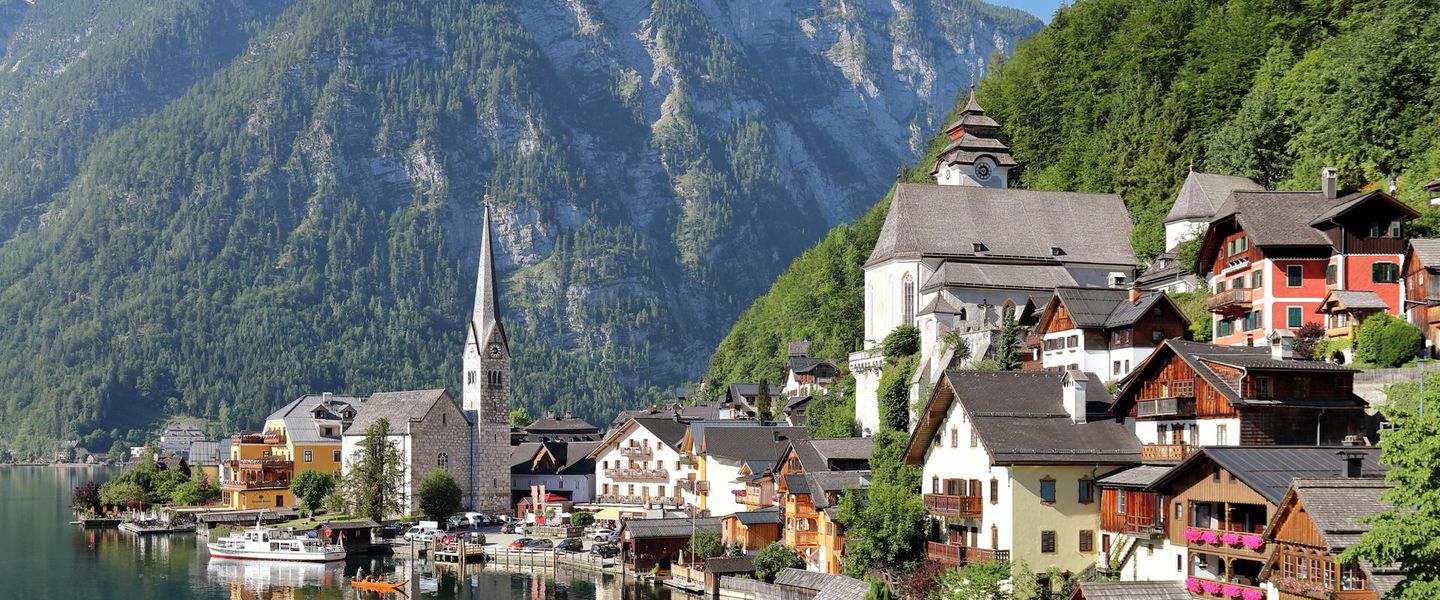


Explore Salzkammergut’s clear lakes, salt-mining heritage, historic resorts and alpine landscapes across Austria’s Upper Austria, Salzburg and Styria.
Read more about Salzkammergut
When is the best time to visit Salzkammergut?
Best: July–September · 20–24°C| Month | High (°C) | Rainfall (mm) |
|---|---|---|
| January | 3 | 55 |
| February | 5 | 50 |
| March | 10 | 59 |
| April | 14 | 69 |
| May | 19 | 99 |
| June | 22 | 122 |
| July (best) | 24 | 121 |
| August (best) | 24 | 115 |
| September (best) | 20 | 94 |
| October | 14 | 73 |
| November | 8 | 71 |
| December | 3 | 71 |
Getting to and around Salzkammergut
How to get there
Transportation
Top city travel guides in Salzkammergut
The cities of Salzkammergut, and the easiest places to base yourself.
-

-


Swipe for more cities
Destinations in Salzkammergut
Resorts, valleys and scenic spots worth a trip of their own.
-

-
-
-

-
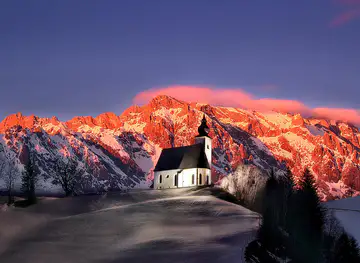


Swipe for more destinations
Best attractions in Salzkammergut
Salzkammergut’s attractions range from prehistoric salt heritage to active mountain landscapes. Hallstatt’s historic lakeside settlement and archaeological context are central to the region, while the salt mines and mining museums at Hallstatt and Altaussee explain the industry that shaped its society. Around Obertraun and Gosau, the Dachstein area offers alpine walking, karst scenery, caves and high viewpoints, with conditions varying considerably by altitude and season. The lakes provide a gentler form of recreation: swimming, sailing, paddle sports, fishing and boat excursions are especially established on Wolfgangsee, Attersee, Traunsee and the Ausseerland lakes. Bad Ischl contributes spa history, imperial-era interiors and cultural venues; Gmunden adds lakeside urban heritage and access to the Traunsee landscape. Historic churches, gardens, villas and market squares appear throughout the larger settlements, while local museums illuminate salt, forestry, farming and regional crafts. Families can combine bathing areas and boat rides with accessible walks, whereas experienced walkers have routes into the surrounding ranges. The attraction landscape is therefore defined less by one monument than by the close relationship between lakes, working communities, archaeological evidence and mountain terrain.
-
Tourist attraction
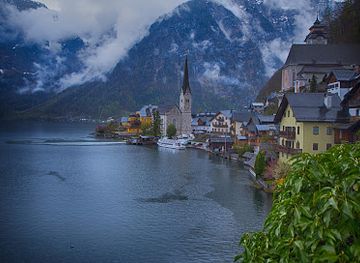
Panoramic Viewpoint - Hallstatt
Discover the stunning beauty of Hallstatt's Panoramic Viewpoint, where alpine landscapes and serene waters create an unforgettable experience for visitors.
-
Railway services
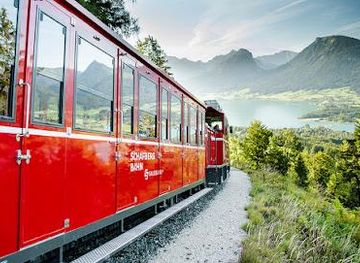
SchafbergBahn
Discover breathtaking views and rich history aboard the historic SchafbergBahn in St. Wolfgang im Salzkammergut, Austria.
-
Tourist attraction
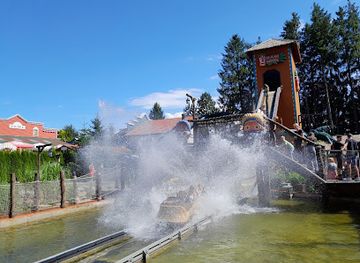
Fantasiana Strasswalchen Amusement Park
Experience the enchantment of Fantasiana Strasswalchen Amusement Park, where fairy tales come to life and adventure awaits for all ages.
-
Tourist attraction
Cumberland Wildlife Park Grünau
Explore Cumberland Wildlife Park in Grünau im Almtal, where nature meets adventure and wildlife thrives in stunning Austrian landscapes.
Best landmarks in Salzkammergut
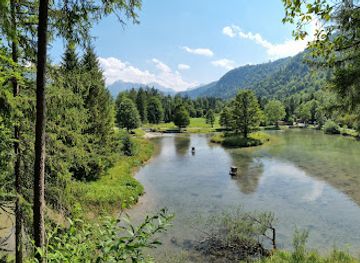
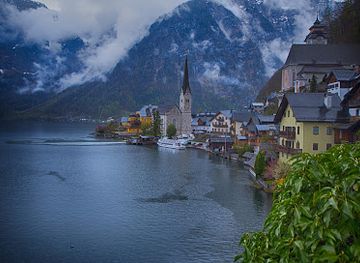
Hallstatt’s compact historic waterfront, framed by the lake and steep mountain slopes, is the region’s most recognisable built landmark, but its importance derives from more than appearance: the settlement is linked to one of Europe’s defining prehistoric salt landscapes. The Dachstein massif forms a natural landmark above Hallstatt, Obertraun and Gosau, with glaciated and karst terrain creating the region’s most dramatic alpine skyline. In Bad Ischl, the Kaiservilla and surrounding imperial-era townscape recall the period when the town served as a Habsburg summer residence. Gmunden’s lakeside Schloss Ort, set on a small island in the Traunsee, is a particularly distinctive architectural image, while the town’s position beneath the Traunstein gives it geographical as well as historic significance. The pilgrimage church at St Wolfgang, with its lakeside setting and important late Gothic altarpiece, anchors one of the region’s best-known historic villages. In the Ausseerland, the broad waters of Altausseer See and Grundlsee are natural landmarks whose wooded shores and mountain backdrops express the quieter eastern character of Salzkammergut.
-
Castle
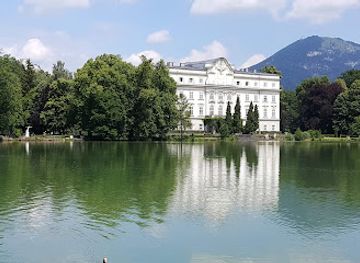
Mirabell Palace
Explore Mirabell Palace and its Baroque gardens in Salzburg, a UNESCO World Heritage site with stunning architecture and historical significance.
-
Tourist attraction
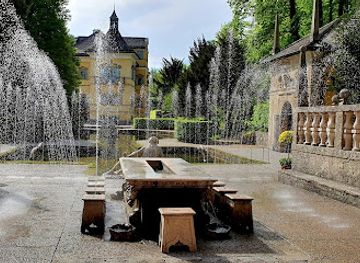
Schloss Hellbrunn
Discover the whimsical world of Schloss Hellbrunn near Salzburg: a Baroque palace with enchanting trick fountains, stunning gardens, and a touch of 'Sound of Music' magic.
-
Scenic spot
Panoramic Viewpoint - Hallstatt
Capture the iconic panorama of Hallstatt from this must-see viewpoint, offering stunning views of the village, lake, and Alps.
-
Catholic cathedral
Salzburg Cathedral
Discover Salzburg Cathedral: a stunning Baroque masterpiece, rich in history, art, and musical heritage, in the heart of Salzburg's Old Town.
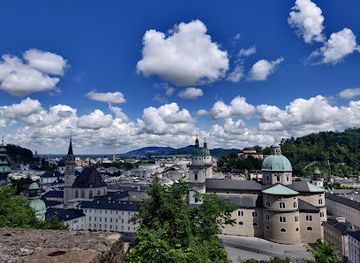
Explore Salzkammergut on the map
Plan your trip on one map. See where the top cities, national parks and sights are, and book hotels and experiences in a few clicks.
Best hotels in Salzkammergut
Best restaurants in Salzkammergut
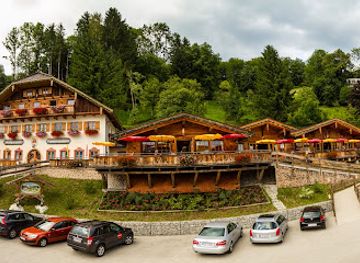
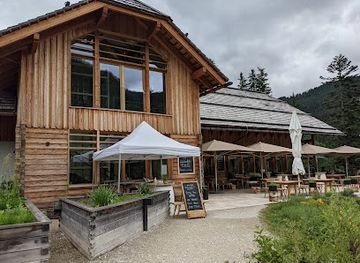
Dining in Salzkammergut reflects both freshwater landscapes and alpine farming. Menus commonly feature fish from the lakes, including trout and whitefish where available, alongside pork, beef, game, seasonal vegetables, dumplings and soups suited to mountain country. Regional food shops and markets are good places to look for farm cheeses, smoked products, honey, preserves and salt from the local mining tradition. Traditional inns and lakeside restaurants provide hearty Austrian cooking, while Bad Ischl, Gmunden and the larger resorts offer cafés, bakeries and more contemporary kitchens. Desserts and coffee-house traditions are particularly prominent in Bad Ischl, whose spa-era culture helped establish its reputation for cakes and confectionery. In rural districts, opening days and evening service can be limited outside the main season, so advance planning is sensible. Local produce varies from valley to valley, and menus may use the wider Austrian culinary vocabulary rather than claiming a single Salzkammergut cuisine; the strongest regional identity lies in the combination of lake fish, alpine provisions, bakery traditions and salt-associated products.
-
 Austrian
Welterbe-Wirtshaus Steegwirt
Discover authentic Austrian cuisine and warm hospitality at Welterbe-Wirtshaus Steegwirt in beautiful Bad Goisern am Hallstättersee.
-
Restaurant
Dorf-Alm zu St. Wolfgang
Discover authentic Austrian cuisine at Dorf-Alm zu St. Wolfgang, where tradition meets breathtaking alpine views in every dish.
-
Restaurant
Genuss Gasthaus Kohlröserlhütte
Experience authentic Austrian cuisine amidst stunning landscapes at Genuss Gasthaus Kohlröserlhütte in Bad Aussee.
-
Restaurant
Seehotel Grüner Baum
Discover Seehotel Grüner Baum: A picturesque restaurant and hotel offering exquisite dining with breathtaking views in the heart of Hallstatt.
Best bars in Salzkammergut
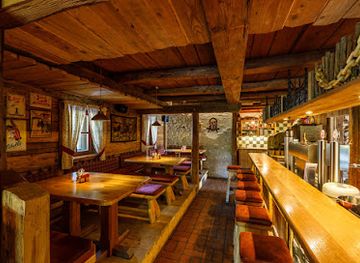
Evenings in Salzkammergut are generally oriented towards traditional inns, hotel bars, cafés and relaxed lakeside restaurants rather than a large club scene. Bad Ischl has the broadest year-round cultural and evening offering, with historic cafés, bars and venues connected to its spa and festival traditions, while Gmunden and the larger lake resorts have seasonal waterfront dining and drinks. In smaller villages such as Hallstatt, St Wolfgang, Altaussee and Gosau, nightlife tends to quieten early and centres on local inns, guesthouse bars or occasional live music rather than dedicated nightclubs. Summer brings more activity around promenades, boating communities and holiday resorts, but schedules vary and should be checked locally. Beer, Austrian wine, fruit brandies and non-alcoholic drinks are widely available, and evening culture does not depend on drinking: concerts, cultural programmes, sunset walks and hotel events often provide more characteristic ways to spend the night.
-
Tapas Bar
Tapaletta
Experience the vibrant flavors of Spain at Tapaletta, Altmünster's top tapas bar, where culinary creativity meets warm hospitality.
-
Wine bar
Mostschenke Hussenbauer
Experience a unique blend of fine wines and elegant event spaces at Mostschenke Hussenbauer, the perfect destination in Mondsee for wine lovers.
-
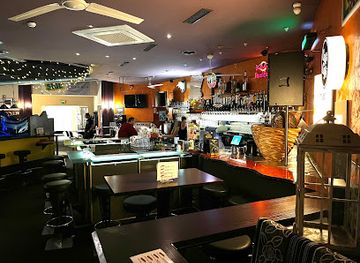
Bar
Cest la Vie
Discover Cest la Vie, Vöcklabruck's top dart bar and pool hall, offering an unforgettable atmosphere for fun and games.
-
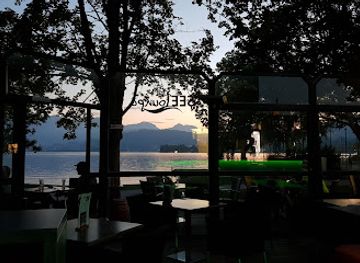
Lounge
Seelounge Gmunden
Discover relaxation at Seelounge Gmunden, a lakeside lounge offering stunning views, delicious drinks, and a serene atmosphere for all visitors.

Best nightclubs in Salzkammergut
Evenings in Salzkammergut are generally oriented towards traditional inns, hotel bars, cafés and relaxed lakeside restaurants rather than a large club scene. Bad Ischl has the broadest year-round cultural and evening offering, with historic cafés, bars and venues connected to its spa and festival traditions, while Gmunden and the larger lake resorts have seasonal waterfront dining and drinks. In smaller villages such as Hallstatt, St Wolfgang, Altaussee and Gosau, nightlife tends to quieten early and centres on local inns, guesthouse bars or occasional live music rather than dedicated nightclubs. Summer brings more activity around promenades, boating communities and holiday resorts, but schedules vary and should be checked locally. Beer, Austrian wine, fruit brandies and non-alcoholic drinks are widely available, and evening culture does not depend on drinking: concerts, cultural programmes, sunset walks and hotel events often provide more characteristic ways to spend the night.
-
Disco club
City Beats
Experience the vibrant nightlife at City Beats, Salzburg's top disco club with electrifying music and a diverse crowd.
-
Night club
Pascha Salzburg
Dive into the vibrant nightlife of Salzburg at Pascha, where electrifying beats and a lively crowd create unforgettable moments.
-
Disco club
Lux Club Salzburg
Discover the electrifying nightlife at Lux Club Salzburg – where music, dancing, and unforgettable memories come alive in the heart of the city!
-
Night club
Nightclub Pegasus
Discover Wels' nightlife at Nightclub Pegasus, where vibrant energy meets unforgettable adult entertainment for an extraordinary night out.


Best shops in Salzkammergut
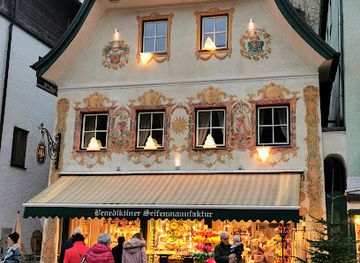
Shopping in Salzkammergut is centred on market towns, independent high streets, food shops and craft outlets rather than large-scale retail. Bad Ischl has the most established town-centre selection, including cafés, confectionery, books, clothing and shops reflecting its spa heritage, while Gmunden is associated with regional ceramics and lakeside town shopping. Hallstatt and St Wolfgang offer souvenirs, locally themed crafts, textiles, jewellery and small galleries, although prices and stock vary with the tourist season. Farm shops and weekly markets are useful for salt, honey, preserves, smoked foods, cheese and other regional provisions, particularly in the smaller communities and the Ausseerland. Look for locally made pottery, woodwork and traditional clothing, but distinguish genuinely regional products from generic Alpine souvenirs. Opening patterns can be seasonal, especially in villages and mountain valleys, so market days and shop hours should be checked locally. The best purchases are often edible or practical reminders of the landscape: salt, lake-region foods, handmade ceramics and crafts connected with rural and alpine life.
-
Outlet mall
Designer Outlet Salzburg
Discover unbeatable deals on top brands at Designer Outlet Salzburg, the ultimate shopping destination in Austria, where style meets affordability.
-
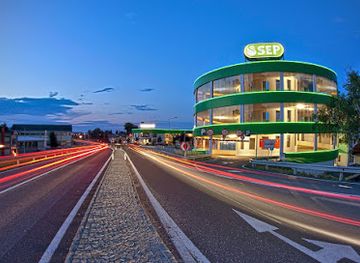
Shopping mall
SEP - Salzkammergut Familieneinkaufspark
Explore SEP - Salzkammergut Familieneinkaufspark: A family-friendly shopping destination in Gmunden, Austria, blending shopping, dining, and entertainment.
-
Gift shop
Kaffeewerkstatt
Discover Kaffeewerkstatt in St. Wolfgang - a delightful café, gift shop, and breakfast spot offering a unique taste of Austrian charm.
-
Shopping mall
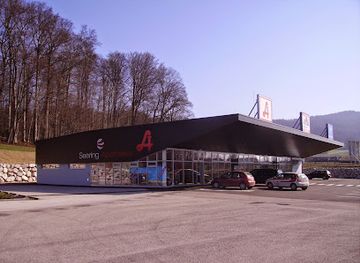
Einkaufspark Seering
Explore Einkaufspark Seering, the ultimate shopping mall in St. Georgen im Attergau, with diverse stores and dining options for a perfect day out.
Get your free copy of our complete guide to Salzkammergut, delivered straight to you.
Everything on this page, from attractions and restaurants to essentials and local phrases, in one PDF you can read offline, print or share.
Already have an account? Sign in
Your Salzkammergut guide is ready.
We'll send it to · Not you? Sign out

Getting your guide ready…
We are putting together a fresh copy of the Salzkammergut guide. This can take up to a minute.
This can take a few moments. If your browser asks, choose Allow so the download can start. You'll find the guide in your Downloads folder.
Nothing happened? Download it again
Sorry, the guide is taking longer than usual. Please try again in a minute, or get it by email instead.
Salzkammergut essentials
Currency and Payment
Safety
Emergency Situations
Do's and Don'ts
Local Tips
From Eve
Local phrases worth knowing
You don't need to get them perfect. A few words go a long way, and locals appreciate the effort.
Basics
| English | Local | Say it |
|---|---|---|
| Hello | Grüß Gott | [Grewss Got] |
| Goodbye | Auf Wiedersehen | [Owff Veederzehn] |
| Yes | Ja | [Yah] |
| No | Nein | [Nine] |
| Please/You're welcome | Bitte | [Bitt-eh] |
| Thank you | Danke | [Dahn-keh] |
| Excuse me/Sorry | Entschuldigung | [Ent-shool-dee-goong] |
| How are you? | Wie geht's? | [Vee gates?] |
| Fine. And you? | Gut. Und dir? | [Goot. Oond deer?] |
| Do you speak English? | Sprechen Sie Englisch? | [Shprecken Zee Englisch?] |
| I don't understand | Ich verstehe nicht | [Ish fersh-teh-eh nikht] |
Eating & Drinking
| English | Local | Say it |
|---|---|---|
| I'd like to see the menu, please | Ich hätte gerne die Speisekarte, bitte | [Ick het-teh gair-neh dee Shpieze-kart-eh, bitt-eh] |
| I don't eat meat | Ich esse kein Fleisch | [Ick ess-eh kiene Flysh] |
| Cheers! | Prost! | [Prohst!] |
| I would like to pay, please | Ich möchte bezahlen, bitte | [Ick merkh-teh beh-tsah-len, bitt-eh] |
Emergencies
| English | Local | Say it |
|---|---|---|
| Help! | Hilfe! | [Hil-feh!] |
| Go away! | Geh weg! | [Geh veg!] |
| Call the Police! | Rufen Sie die Polizei! | [Roo-fen Zee dee Po-li-tsai!] |
| Call a doctor! | Rufen Sie einen Arzt! | [Roo-fen Zee eye-nen Artst!] |
| I'm lost | Ich bin verloren | [Ick bin fer-lo-ren] |
| I'm ill | Ich bin krank | [Ick bin krank] |
Shopping
| English | Local | Say it |
|---|---|---|
| I'd like to buy... | Ich möchte ... kaufen | [Ick merkh-teh ... kau-fen] |
| I'm just looking | Ich schaue nur | [Ick shau-eh noor] |
| How much is it? | Wie viel kostet es? | [Vee feel kost-et es?] |
| That's too expensive | Das ist zu teuer | [Das ist tsu toy-er] |
| Can you lower the price? | Könnten Sie den Preis senken? | [Kurn-ten Zee den Preis zenk-en] |
Time & Numbers
| English | Local | Say it |
|---|---|---|
| What time is it? | Wie spät ist es? | [Vee shpate ist es?] |
| It's one o'clock | Es ist ein Uhr | [Es ist ine Oor] |
| Half past (10) | Halb (10) | [Halb (10)] |
| Morning | Morgen | [Morgen] |
| Afternoon | Nachmittag | [Nahch-mittag] |
| Evening | Abend | [Ah-bend] |
| Yesterday | Gestern | [Ges-tairn] |
| Today | Heute | [Hoy-teh] |
| Tomorrow | Morgen | [Morgen] |
| 1 | Eins | [Eins] |
| 2 | Zwei | [Tsvi] |
| 3 | Drei | [Dry] |
| 4 | Vier | [Feer] |
| 5 | Fünf | [Foonf] |
| 6 | Sechs | [Zex] |
| 7 | Sieben | [Zee-ben] |
| 8 | Acht | [Acht] |
| 9 | Neun | [Noyn] |
| 10 | Zehn | [Tsen] |
Transport & Directions
| English | Local | Say it |
|---|---|---|
| Where's a/the...? | Wo ist ein/das...? | [Vo ist ine/das...?] |
| What's the address? | Was ist die Adresse? | [Vas ist dee Ah-dress-eh?] |
| Can you show me (on the map)? | Könnten Sie mir (auf der Karte) zeigen? | [Kurn-ten Zee meer (owf der Kart-eh) tsai-gen?] |
| When's the next (bus)? | Wann kommt der nächste (Bus)? | [Vahn kommt der nay-shte (Boos)?] |
| A ticket (to ....) | Ein Ticket (nach ...) | [Ine Tick-et (nahch ...)] |
History of Salzkammergut
Prehistoric salt production at Hallstatt
The Hallstatt area contains some of Europe’s most important evidence for prehistoric salt mining. Archaeological finds from the cemetery and settlement above the present village show that communities were extracting and trading salt during the Iron Age, with earlier mining activity also represented in the region’s mountain workings. Salt preserved organic materials that would normally decay, allowing researchers to study clothing, tools and burial practices in unusual detail. The name Hallstatt later became attached to the Hallstatt culture, an archaeological term for an early Iron Age cultural horizon extending well beyond the modern village.
Celtic and Roman frontier landscapes
Before and during Roman rule, the Salzkammergut formed part of a wider Alpine world connected by exchange routes across valleys and mountain passes. Roman influence reached the area through the province of Noricum, whose economy depended partly on mineral resources, agriculture and communication routes. The region was not transformed into a dense Roman urban landscape, but roads, trading links and administrative systems connected its settlements to centres elsewhere in the eastern Alps. Traces of this period are less visually dominant than the medieval and imperial heritage, yet they help explain the long continuity of exchange across the mountain corridors.
Medieval salt administration and Hallstatt
During the Middle Ages, salt became the foundation of organised authority in the inner Salzkammergut. Salt works around Hallstatt, Aussee and the Traunsee area were progressively tied to the interests of the bishops, monasteries and, increasingly, the Habsburg rulers. Hallstatt’s position on the lake and the Traun water system made transport possible from the high workings towards markets beyond the mountains. Mining required specialised labour, timber and engineering, while forests supplied fuel and construction material. This combination created a distinctive economy in which remote alpine settlements were closely connected with state finance and long-distance commerce.
The Habsburg Salzkammergut
From the late medieval period into the modern era, much of the salt-producing heartland was administered as the Habsburg Salzkammergut, a term associated with the sovereign’s salt chamber and revenues. Salt was strategically valuable, and regulations governed mining, forestry, transport and the lives of workers. Bad Ischl, Hallstatt and the Ausseerland developed within this system, while the Traun route linked inland production with regional markets. The legacy remains visible in salt mines, mining traditions, historic works and settlements whose prosperity depended less on agriculture alone than on a tightly managed mineral economy.
Spa culture and the imperial summer residence
In the nineteenth century, Bad Ischl became one of the most prominent spa and summer destinations in the Habsburg lands. Its saline waters, mountain air and social connections attracted aristocratic visitors, artists and officials. Emperor Franz Joseph I regularly spent the summer there, and the town became associated with the imperial court without losing its role as a spa and market centre. Villas, hotels, parks and cultural venues date from this period of expansion. The arrival of improved roads and rail connections made the lakes and mountains more accessible to visitors from Vienna, Salzburg and other cities.
Railways, tourism and the lake districts
Railway construction in the late nineteenth and early twentieth centuries changed the practical geography of the Salzkammergut. Lines towards Gmunden, Bad Ischl and Stainach-Irdning, together with lake steamers and expanding roads, enabled visitors to combine spa stays with excursions into the surrounding countryside. Tourism developed alongside traditional work in forestry, farming, fishing and salt production rather than replacing it immediately. The region’s characteristic combination of grand hotels, excursion boats, landscaped promenades and mountain paths emerged during this period and still shapes travel between the larger lakes.
War, post-war change and cultural preservation
The Salzkammergut experienced the political upheavals of the twentieth century, including the Second World War and the disruption of established tourism and local economies. After 1945, improved roads, private motor travel and international holidays broadened access to the lakes and mountains. At the same time, the value of archaeological sites, historic townscapes and traditional buildings became increasingly recognised. Hallstatt and the Dachstein region were inscribed as part of the Hallstatt-Dachstein/Salzkammergut UNESCO World Heritage property in 1997, reflecting the combined importance of the landscape, prehistoric salt heritage and cultural history.
Salzkammergut in Photos
Browse through our photo collection highlighting the charm and character of the destination.
Neighbouring regions of Salzkammergut
The closest regions to Salzkammergut, if you have time for more than one.
-

-

-

-

-


Swipe for more regions
Explore more
Explore more of Austria
Discover Austria's blend of alpine landscapes, rich cultural heritage, and culinary delights, from Vienna's historic charm to Tyrol's dramatic beauty.
Explore Austria