

Eisriesenwelt Travel Guide - Free Web & App
Your ultimate guide to Eisriesenwelt. Discover top landmarks, proposed trips, and local tips. Free on the web or via the Evendo companion app.


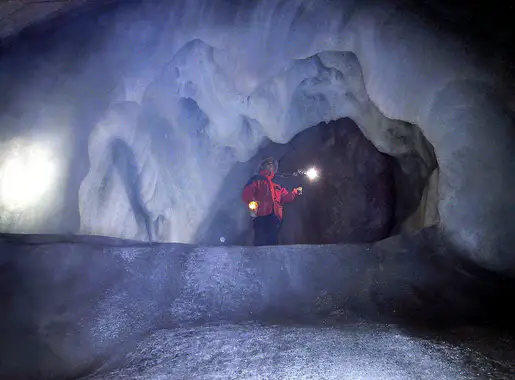
Discover the world's largest ice cave at Eisriesenwelt in Austria, a mesmerizing adventure through stunning ice formations and panoramic mountain views.
Read more about Eisriesenwelt
When is the best time to visit Eisriesenwelt?
Best: June–August · 18–20°C| Month | High (°C) | Rainfall (mm) |
|---|---|---|
| January | -2 | 50 |
| February | 0 | 50 |
| March | 4 | 50 |
| April | 8 | 60 |
| May | 13 | 70 |
| June (best) | 18 | 80 |
| July (best) | 20 | 80 |
| August (best) | 20 | 70 |
| September | 16 | 60 |
| October | 11 | 60 |
| November | 5 | 50 |
| December | 2 | 50 |
Getting to and around Eisriesenwelt
How to get there
Transportation
Best attractions in Eisriesenwelt

Explore Eisriesenwelt on the map
Plan your trip on one map. See where the top attractions, landmarks, restaurants and hotels are, and book hotels and experiences in a few clicks.
Best hotels in Eisriesenwelt
Get your free copy of our complete guide to Eisriesenwelt, delivered straight to you.
Everything on this page, from attractions and restaurants to essentials and local phrases, in one PDF you can read offline, print or share.
Already have an account? Sign in
Your Eisriesenwelt guide is ready.
We'll send it to · Not you? Sign out

Getting your guide ready…
We are putting together a fresh copy of the Eisriesenwelt guide. This can take up to a minute.
This can take a few moments. If your browser asks, choose Allow so the download can start. You'll find the guide in your Downloads folder.
Nothing happened? Download it again
Sorry, the guide is taking longer than usual. Please try again in a minute, or get it by email instead.
Eisriesenwelt essentials
Currency and Payment
Safety
Emergency Situations
Do's and Don'ts
Local Tips
From Eve
Local phrases worth knowing
You don't need to get them perfect. A few words go a long way, and locals appreciate the effort.
Basics
| English | Local | Say it |
|---|---|---|
| Hello | Servus | [Ser-voos] |
| Goodbye | Auf Wiedersehen | [Owf Vee-der-sehn] |
| Yes | Ja | [Yah] |
| No | Nein | [Nine] |
| Please/You're welcome | Bitte | [Bit-teh] |
| Thank you | Danke | [Dahn-keh] |
| Excuse me/Sorry | Entschuldigung | [Ent-shool-dig-oong] |
| How are you? | Wie geht es dir? | [Vee gayt es deer?] |
| Fine. And you? | Gut. Und dir? | [Goot. Oond deer?] |
| Do you speak English? | Sprechen Sie Englisch? | [Shpre-khen Zee Eng-lish?] |
| I don't understand | Ich verstehe nicht | [Eekh fair-shtay-eh nikht] |
Eating & Drinking
| English | Local | Say it |
|---|---|---|
| I'd like to see the menu, please | Ich hätte gerne die Speisekarte | [Eekh hate-eh gair-neh dee Shay-suh-kar-teh] |
| I don't eat meat | Ich esse kein Fleisch | [Eekh ess-eh kine Fly-sh] |
| Cheers! | Prost! | [Prohst] |
| I would like to pay, please | Ich möchte bitte bezahlen | [Eekh merk-teh bit-teh beh-tsal-en] |
Emergencies
| English | Local | Say it |
|---|---|---|
| Help! | Hilfe! | [Hil-fuh] |
| Go away! | Geh weg! | [Gay vehg] |
| Call the Police! | Rufen Sie die Polizei! | [Roo-fen Zee dee Po-lee-tsey] |
| Call a doctor! | Rufen Sie einen Arzt! | [Roo-fen Zee ayn-en Ahrts] |
| I'm lost | Ich habe mich verirrt | [Eekh hah-beh meekh fair-eert] |
| I'm ill | Ich bin krank | [Eekh been krahnk] |
Shopping
| English | Local | Say it |
|---|---|---|
| I'd like to buy... | Ich möchte ... kaufen | [Eekh merk-teh ... kow-fen] |
| I'm just looking | Ich schaue nur | [Eekh shou-eh noor] |
| How much is it? | Wie viel kostet das? | [Vee feel kaws-tet dahs] |
| That's too expensive | Das ist zu teuer | [Dahs ist tsoo toy-er] |
| Can you lower the price? | Können Sie den Preis senken? | [Ker-nen Zee dane prays zehn-ken] |
Time & Numbers
| English | Local | Say it |
|---|---|---|
| What time is it? | Wie spät ist es? | [Vee shpet ist es] |
| It's one o'clock | Es ist ein Uhr | [Es ist ine oor] |
| Half past (10) | Halb (zehn) | [Halb (tsane)] |
| Morning | Morgen | [Mor-gen] |
| Afternoon | Nachmittag | [Nahk-mit-tahg] |
| Evening | Abend | [Ah-bent] |
| Yesterday | Gestern | [Ges-tern] |
| Today | Heute | [Hoy-teh] |
| Tomorrow | Morgen | [Mor-gen] |
| 1 | Eins | [Ines] |
| 2 | Zwei | [Tsvay] |
| 3 | Drei | [Dry] |
| 4 | Vier | [Feer] |
| 5 | Fünf | [Fuhnf] |
| 6 | Sechs | [Zehks] |
| 7 | Sieben | [Zee-ben] |
| 8 | Acht | [Akh-t] |
| 9 | Neun | [Noy-n] |
| 10 | Zehn | [Tsane] |
Transport & Directions
| English | Local | Say it |
|---|---|---|
| Where's a/the...? | Wo ist ein/der...? | [Vo ist ine/der] |
| What's the address? | Wie ist die Adresse? | [Vee ist dee A-dre-seh] |
| Can you show me (on the map)? | Können Sie mir zeigen (auf der Karte)? | [Ker-nen Zee meer tsai-gen (ouf der kar-teh)] |
| When's the next (bus)? | Wann kommt der nächste (Bus)? | [Vahn kommt der nakh-steh (Boos)] |
| A ticket (to ....) | Eine Fahrkarte (nach ...) | [Ine-eh Fah-kar-teh (nakh)] |
History of Eisriesenwelt
Discovery of the Eisriesenwelt
The Eisriesenwelt, translating to 'World of the Ice Giants,' was officially discovered in 1879 by natural scientist Anton von Posselt-Czorich. Located about 40 kilometers south of Salzburg in the Tennengebirge section of the Alps, this ice cave is the largest of its kind in the world. Despite the local folklore that had long hinted at its existence, Posselt's exploration brought the cave into scientific and public awareness.
Early Exploration and Mapping
The initial exploration of Eisriesenwelt was met with significant challenges due to its remote location and harsh conditions. Alexander von Mörk, an Austrian speleologist and soldier, led a series of expeditions in the early 20th century. He is credited with mapping much of the cave system, although he tragically died during World War I. His ashes were later interred in the cave as a tribute to his pioneering spirit.
Development for Tourism
In 1920, the first steps were taken to make Eisriesenwelt accessible to the public. Wooden walkways and simple ladders were installed to facilitate safer passage through the cave's icy chambers. By 1924, the first official tour was conducted, attracting adventurers and nature enthusiasts from all over the world. Over the decades, improvements have continued, including the installation of modern staircases and safety railings.
Cultural Significance and Folklore
Eisriesenwelt has always held a place in local folklore, often described as a mystical entrance to the underworld. Legends speak of ice giants and spirits dwelling within its frozen halls. This cultural heritage has been preserved and shared through guided tours, which often include stories passed down through generations, enriching the visitor’s experience with a sense of historical mystique.
Scientific Research and Preservation
Apart from being a major tourist attraction, Eisriesenwelt is also a site of significant scientific interest. Researchers study the cave's unique ice formations and climate to understand past environmental conditions. Preservation efforts are ongoing to ensure that the delicate ice structures remain intact for future generations. This includes regulating the number of visitors and maintaining the cave's natural environment as much as possible.
Modern Access and Amenities
Today, Eisriesenwelt is equipped with modern amenities to accommodate the thousands of visitors it receives annually. A cable car system, operational since 1955, significantly reduces the time and effort required to reach the entrance of the cave. The visitor center, located near the cable car station, offers educational exhibits, a restaurant, and spectacular views of the surrounding Alpine landscape.
Eisriesenwelt in Photos
Browse through our photo collection highlighting the charm and character of the destination.
Neighbouring destination travel guides
The closest destinations to Eisriesenwelt, if you have time for more than one.
-
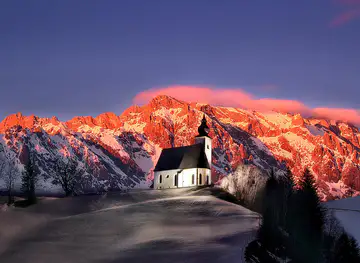 Hochkönig
Discover Hochkönig, Austria's Alpine Gem: A Year-Round Paradise for Hikers, Skiers, and Nature Enthusiasts.
Hochkönig
Discover Hochkönig, Austria's Alpine Gem: A Year-Round Paradise for Hikers, Skiers, and Nature Enthusiasts.
-
 Eagle's Nest
Discover Eagle's Nest in Germany: A historic site with breathtaking views of the Bavarian Alps, perfect for nature lovers and history buffs.
Eagle's Nest
Discover Eagle's Nest in Germany: A historic site with breathtaking views of the Bavarian Alps, perfect for nature lovers and history buffs.
-
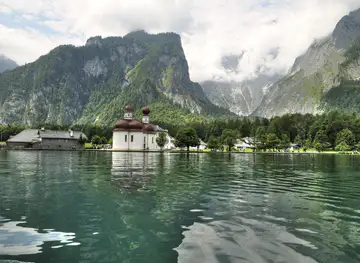 Berchtesgaden National Park
Discover Berchtesgaden National Park: A Bavarian paradise with majestic mountains, serene lakes, and a rich blend of natural beauty and cultural heritage.
Berchtesgaden National Park
Discover Berchtesgaden National Park: A Bavarian paradise with majestic mountains, serene lakes, and a rich blend of natural beauty and cultural heritage.
-
 Fuschlsee
Discover the serene beauty of Fuschlsee in Austria, a perfect escape for nature lovers with its crystal-clear waters, lush forests, and charming alpine village.
Fuschlsee
Discover the serene beauty of Fuschlsee in Austria, a perfect escape for nature lovers with its crystal-clear waters, lush forests, and charming alpine village.
-
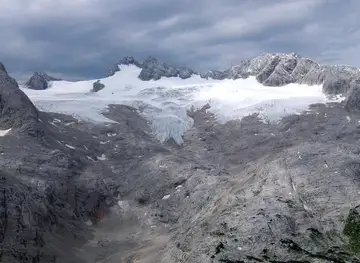 Dachstein Mountains
Discover the Dachstein Mountains in Austria, where towering peaks, serene lakes, and ancient glaciers create the perfect alpine adventure year-round.
Dachstein Mountains
Discover the Dachstein Mountains in Austria, where towering peaks, serene lakes, and ancient glaciers create the perfect alpine adventure year-round.
Swipe for more destinations
Explore more

Explore more of Tennengau
Discover Tennengau: A blend of stunning alpine landscapes, rich cultural heritage, and culinary delights in the heart of Austria.
Explore Tennengau
Explore more of Austria
Discover Austria's blend of alpine landscapes, rich cultural heritage, and culinary delights, from Vienna's historic charm to Tyrol's dramatic beauty.
Explore Austria