

Fuschlsee Travel Guide - Free Web & App
Your ultimate guide to Fuschlsee. Discover top landmarks, proposed trips, and local tips. Free on the web or via the Evendo companion app.


Fuschlsee, Austria, pairs clear lake waters with forested hills, village walks, swimming, cycling and Salzkammergut scenery near Salzburg.
Lake and Landscape
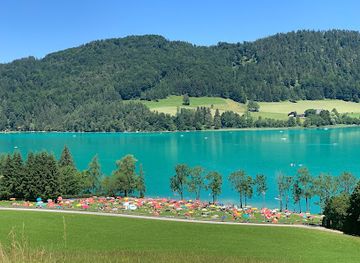
Fuschlsee lies in Salzburg state on the western edge of the Salzkammergut, approximately 20 kilometres east of Salzburg. Encircled by wooded hills and backed by the lower slopes of the Salzburg Alpine Foreland, the lake is known for its clear water, compact scale and carefully preserved shoreline. The principal settlement, Fuschl am See, occupies the western end, while quieter rural landscapes and access points extend around the lake and into the surrounding Fuschlseeregion.Read more about Fuschlsee
Outdoor Character
Villages and Regional Heritage
When is the best time to visit Fuschlsee?
Best: June–August · 24–26°C| Month | High (°C) | Rainfall (mm) |
|---|---|---|
| January | 2 | 35 |
| February | 4 | 30 |
| March | 8 | 30 |
| April | 13 | 35 |
| May | 19 | 45 |
| June (best) | 24 | 70 |
| July (best) | 26 | 80 |
| August (best) | 26 | 70 |
| September | 21 | 55 |
| October | 15 | 45 |
| November | 8 | 35 |
| December | 3 | 35 |
Getting to and around Fuschlsee
How to get there
Transportation
Best attractions in Fuschlsee
Fuschlsee itself is the central attraction, with clear water, wooded shores and a compact lakeside setting that can be explored through walking routes and seasonal bathing areas. Fuschl am See provides the most accessible starting point, with village streets, waterside views and paths leading into the surrounding countryside. The rise of Ellmaustein above the village is a notable local viewpoint, rewarding walkers with a broad perspective over the lake and its enclosing hills. Around the wider Fuschlseeregion, routes lead towards rural landscapes near Faistenau and Hof bei Salzburg, although these are separate settlements rather than parts of the immediate shoreline. Schloss Fuschl, on the western side of the lake in Hof bei Salzburg, contributes an important historic and architectural dimension. The destination is best appreciated through contrasts: calm water at shore level, forest tracks and farm roads in the hills, and the changing light of the Salzkammergut landscape rather than a concentration of large formal attractions.
-
Tourist attraction
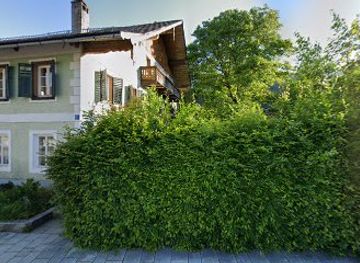
Mühlenweg
Experience the serene beauty of Mühlenweg in Fuschl am See, where nature and tranquility blend seamlessly for the perfect getaway.
Best landmarks in Fuschlsee
The defining natural landmark is Fuschlsee, a glacially shaped lake whose clear water and wooded basin express the character of the western Salzkammergut. Its surrounding hills create a series of changing viewpoints, with Ellmaustein above Fuschl am See standing out as a recognised local lookout. The village of Fuschl am See is the principal human landmark of the shore, linking lakeside recreation with the historic pattern of roads, farms and settlement. Schloss Fuschl, situated on the western side of the lake in Hof bei Salzburg, is the area's most prominent historic building and an important architectural presence in the landscape. Together, lake, forested slopes, rural fields and the Schloss Fuschl estate demonstrate how natural geography and regional history have shaped the identity of this compact destination.
-
 Hotel
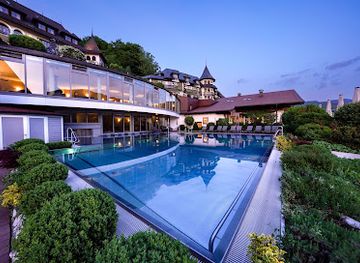
HotelRosewood Schloss Fuschl
Discover the luxurious escape of Rosewood Schloss Fuschl, where history meets modern elegance in the heart of Austria's stunning landscape.
-
Public swimming pool
Fuschlseebad - BADESPASS - WELLNESS - FITNESS
Experience ultimate relaxation and wellness at Fuschlseebad, where serene waters meet fitness and rejuvenation in stunning natural surroundings.
-
Wellness hotel
Ebner's Waldhof am See
Discover tranquility and rejuvenation at Ebner's Waldhof am See, a premier wellness hotel nestled by the serene shores of Lake Fuschl, Austria.
-
Restaurant
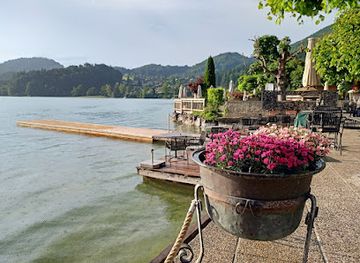
Edenbergers
Experience authentic Italian cuisine with a breathtaking view at Edenbergers, the lakeside paradise in Fuschl am See.
Explore Fuschlsee on the map
Plan your trip on one map. See where the top attractions, landmarks, restaurants and hotels are, and book hotels and experiences in a few clicks.
Best hotels in Fuschlsee
Best restaurants in Fuschlsee
Dining around Fuschlsee is concentrated in Fuschl am See and nearby villages rather than distributed through the countryside. Traditional Austrian cooking features in inns and hotel restaurants, with dishes based on regional produce such as freshwater fish, dairy products, bread, seasonal vegetables and locally familiar meat specialities. Salzburg influences are evident in pastries and other sweet dishes, while the broader Salzkammergut contributes a strong lake-and-mountain food culture. Cafés and informal establishments in the village are useful for daytime meals, drinks and cake between walks, whereas evening dining is more likely to be found in accommodation businesses or established restaurants. Hof bei Salzburg and Faistenau provide additional options outside the immediate lakeshore. In rural areas, opening patterns can be seasonal, so independent diners should check current arrangements locally and avoid assuming that facilities are available beside every walking route.
-
Restaurant
Rosewood Schloss Fuschl
Discover unparalleled luxury at Rosewood Schloss Fuschl, where history meets breathtaking natural beauty in Austria's stunning lakeside retreat.
-
Bistro
Schloss Fuschl Fischerei
Discover exquisite Austrian cuisine at Schloss Fuschl Fischerei with stunning lake views that enhance your dining experience.
-
Restaurant
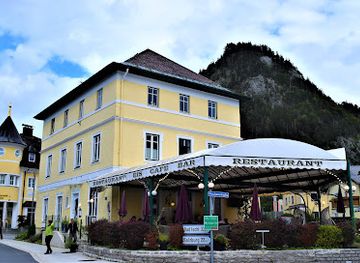
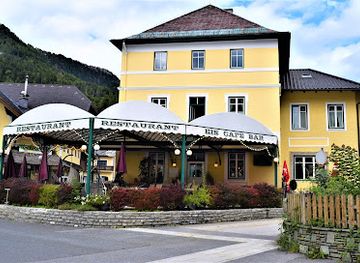
Jakob Café - Bar - Restaurant
Experience authentic Austrian cuisine in Fuschl am See at Jakob Café - Bar - Restaurant with stunning views and warm hospitality.
-
Restaurant
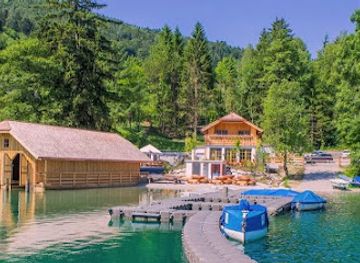
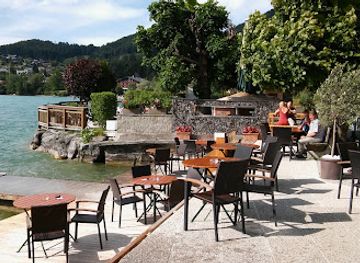
Edenbergers
Experience authentic Italian cuisine at Edenbergers by Fuschl Lake - where delicious pizzas meet breathtaking views.
Best bars in Fuschlsee
Fuschlsee has a quiet evening character rather than a developed nightlife scene. Fuschl am See's hotels, guesthouses and traditional hospitality businesses provide places for a drink, conversation and regional food, while village inns offer a more local atmosphere than a dedicated entertainment district. Evenings are generally centred on relaxed dining, walks beside the water and the views across the lake after the day visitors have departed. Seasonal village events and local cultural programmes may add occasional entertainment, but dates and availability vary. Visitors seeking a broader choice of bars, music venues or late-night establishments will usually need to travel to Salzburg, which lies outside the destination. There are no grounds to expect a concentration of nightclubs, beach bars or late-night venues around the rural shoreline.
-
Restaurant
Rosewood Schloss Fuschl
Experience unparalleled luxury and breathtaking beauty at Rosewood Schloss Fuschl, a historic castle retreat by the picturesque Lake Fuschl.
-
Bistro
Schloss Fuschl Fischerei
Experience the best of Austrian cuisine at Schloss Fuschl Fischerei, where stunning lake views meet delightful dishes in a charming bistro setting.
-
Restaurant
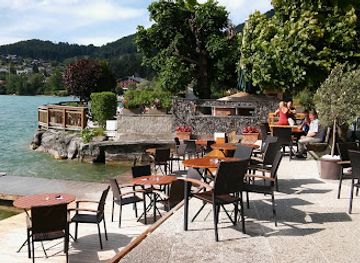
Jakob Café - Bar - Restaurant
Savor the essence of Austrian cuisine in a charming café by the lake at Jakob Café - Bar - Restaurant, Fuschl am See.
-
Restaurant
Edenbergers
Experience authentic Italian cuisine at Edenbergers, a lakeside gem in Fuschl am See, known for its delicious pizzas and warm ambiance.
Best nightclubs in Fuschlsee
Fuschlsee has a quiet evening character rather than a developed nightlife scene. Fuschl am See's hotels, guesthouses and traditional hospitality businesses provide places for a drink, conversation and regional food, while village inns offer a more local atmosphere than a dedicated entertainment district. Evenings are generally centred on relaxed dining, walks beside the water and the views across the lake after the day visitors have departed. Seasonal village events and local cultural programmes may add occasional entertainment, but dates and availability vary. Visitors seeking a broader choice of bars, music venues or late-night establishments will usually need to travel to Salzburg, which lies outside the destination. There are no grounds to expect a concentration of nightclubs, beach bars or late-night venues around the rural shoreline.
-
Cafe
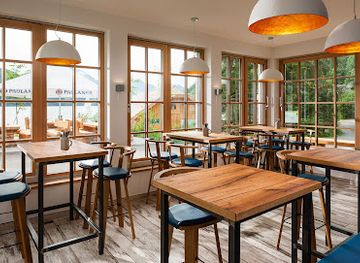
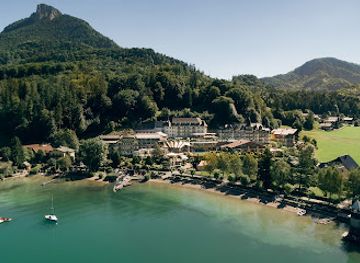
SeeBar am Fuschlsee
Discover the charm of SeeBar am Fuschlsee, where scenic lakeside views meet delicious local cuisine in a vibrant atmosphere.
Best shops in Fuschlsee
Shopping at Fuschlsee is modest and practical, with the main concentration of everyday shops and visitor supplies in Fuschl am See and neighbouring villages. Visitors may find regional food products, confectionery, bakery goods, locally made drinks and small gifts reflecting Salzburg and Salzkammergut traditions, while farm shops and direct-from-producer sales appear according to local business arrangements. Outdoor equipment and cycling essentials are more likely to be found in larger nearby settlements than beside the lake itself. Hof bei Salzburg and Salzburg offer a wider retail choice, but they are outside the immediate lakeside destination. The area is not a major shopping centre, and permanent craft markets or extensive specialist retail should not be assumed; the most distinctive purchases are generally edible regional products, practical walking supplies and small locally produced items.
-
Sports school
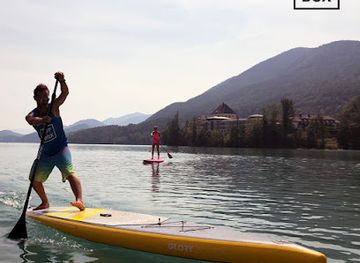
SUP BOX
Explore the pristine waters of Fuschl am See with SUP BOX, your premier destination for paddleboarding, sailing, and unforgettable water adventures.
-
Bakery
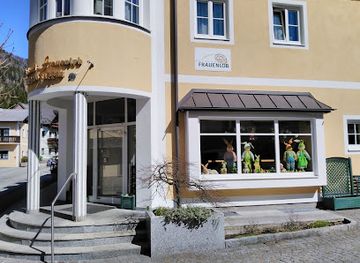
Mr. Bartholomäus Frauenlob
Experience the authentic flavors of Austria at Mr. Bartholomäus Frauenlob bakery, where every bite is a taste of tradition and quality.
-
Store
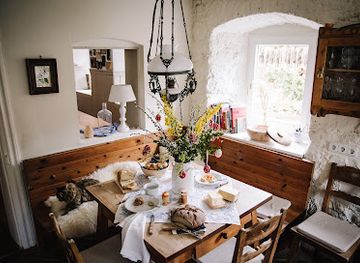
Servus on the marketplace
Explore the vibrant offerings at Servus on the Marketplace, where local culture and unique craftsmanship converge in Fuschl am See.
-
Supermarket
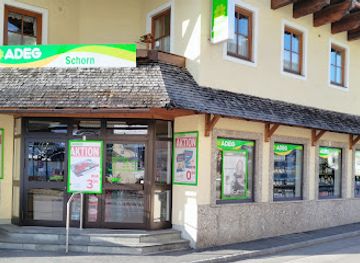
ADEG Schorn
Discover local flavors and essential goods at ADEG Schorn, your go-to supermarket in Fuschl am See, Austria.
Get your free copy of our complete guide to Fuschlsee, delivered straight to you.
Everything on this page, from attractions and restaurants to essentials and local phrases, in one PDF you can read offline, print or share.
Already have an account? Sign in
Your Fuschlsee guide is ready.
We'll send it to · Not you? Sign out

Getting your guide ready…
We are putting together a fresh copy of the Fuschlsee guide. This can take up to a minute.
This can take a few moments. If your browser asks, choose Allow so the download can start. You'll find the guide in your Downloads folder.
Nothing happened? Download it again
Sorry, the guide is taking longer than usual. Please try again in a minute, or get it by email instead.
Fuschlsee essentials
Currency and Payment
Safety
Emergency Situations
Do's and Don'ts
Local Tips
From Eve
Local phrases worth knowing
You don't need to get them perfect. A few words go a long way, and locals appreciate the effort.
Basics
| English | Local | Say it |
|---|---|---|
| Hello | Servus | [Zer-voos] |
| Goodbye | Auf Wiedersehen | [Owf Vee-der-zay-en] |
| Yes | Ja | [Yah] |
| No | Nein | [Nine] |
| Please/You're welcome | Bitte | [Bit-te] |
| Thank you | Danke | [Dahn-kuh] |
| Excuse me/Sorry | Entschuldigung | [Ent-shool-di-gung] |
| How are you? | Wie geht es dir? | [Vee gayt es deer] |
| Fine. And you? | Gut. Und dir? | [Goot. Oont deer] |
| Do you speak English? | Sprechen Sie Englisch? | [Shpre-khen zee Eng-lish] |
| I don't understand | Ich verstehe nicht | [Eekh fair-shtay-eh neekt] |
Eating & Drinking
| English | Local | Say it |
|---|---|---|
| I'd like to see the menu, please | Ich hätte gerne die Speisekarte, bitte | [Eekh hett-eh gair-nuh dee Shay-zuh-kahr-teh, bit-teh] |
| I don't eat meat | Ich esse kein Fleisch | [Eekh ess-eh kine Fly-sh] |
| Cheers! | Prost! | [Prohst] |
| I would like to pay, please | Ich möchte bitte zahlen | [Eekh mehrk-teh bit-teh tsah-len] |
Emergencies
| English | Local | Say it |
|---|---|---|
| Help! | Hilfe! | [Hil-fuh] |
| Go away! | Geh weg! | [Geh vehg] |
| Call the Police! | Rufen Sie die Polizei! | [Roof-en zee dee Po-lee-tsey] |
| Call a doctor! | Rufen Sie einen Arzt! | [Roof-en zee eye-nen Ahrts] |
| I'm lost | Ich habe mich verirrt | [Eekh hah-beh meesh fair-eert] |
| I'm ill | Ich bin krank | [Eekh been krunk] |
Shopping
| English | Local | Say it |
|---|---|---|
| I'd like to buy... | Ich möchte kaufen... | [Eekh mehrk-teh kow-fen] |
| I'm just looking | Ich schaue nur | [Eekh show-eh noor] |
| How much is it? | Wie viel kostet es? | [Vee feel kohst-et es] |
| That's too expensive | Das ist zu teuer | [Dahs ist tsoo toy-er] |
| Can you lower the price? | Können Sie den Preis senken? | [Kern-en zee den prees zehn-ken] |
Time & Numbers
| English | Local | Say it |
|---|---|---|
| What time is it? | Wie spät ist es? | [Vee shpet ist es] |
| It's one o'clock | Es ist ein Uhr | [Es ist ine oor] |
| Half past (10) | Halb elf | [Halb elf] |
| Morning | Morgen | [Mawr-gen] |
| Afternoon | Nachmittag | [Nah-mit-tahk] |
| Evening | Abend | [Ah-bent] |
| Yesterday | Gestern | [Ges-tern] |
| Today | Heute | [Hoy-teh] |
| Tomorrow | Morgen | [Mawr-gen] |
| 1 | Eins | [Ines] |
| 2 | Zwei | [Tsvy] |
| 3 | Drei | [Dry] |
| 4 | Vier | [Feer] |
| 5 | Fünf | [Foonf] |
| 6 | Sechs | [Zeks] |
| 7 | Sieben | [Zee-ben] |
| 8 | Acht | [Akh-t] |
| 9 | Neun | [Noy-n] |
| 10 | Zehn | [Tsen] |
Transport & Directions
| English | Local | Say it |
|---|---|---|
| Where's a/the...? | Wo ist ein/der...? | [Vo ist ine/dehr] |
| What's the address? | Was ist die Adresse? | [Vahs ist dee Ah-dres-seh] |
| Can you show me (on the map)? | Kannst du mir das zeigen (auf der Karte)? | [Kah-nst do meehr dahs tsee-gen (owf dehr Kahr-teh)] |
| When's the next (bus)? | Wann kommt der nächste (Bus)? | [Vahn kommt dehr nekhs-teh (Boos)] |
| A ticket (to ....) | Eine Fahrkarte (nach ....) | [Eye-neh Fahr-kahr-teh (nahkh)] |
History of Fuschlsee
A Glacially Shaped Lake
Fuschlsee forms part of the glacial lake landscape of the Salzkammergut. Ice-age movements shaped the basins and rounded hills of the region, leaving a compact freshwater lake surrounded by wooded uplands rather than the high limestone peaks found farther east and south. Its clear water and attractive setting later became central to the area's identity, while the surrounding hills continued to support forestry, farming and dispersed rural settlement.
Settlement Around the Shore
The village of Fuschl am See developed at the western end of the lake, where the shoreline meets routes leading towards Salzburg and the Salzkammergut. For centuries, local life was based principally on agriculture, forestry and small-scale regional trade. The lake was an important geographical feature rather than an isolated wilderness, and the pattern of farms, woodland and village roads around it still reflects the relationship between settlement and the surrounding landscape.
Schloss Fuschl and Regional Estates
Schloss Fuschl, on the western side of the lake in the municipality of Hof bei Salzburg, is the area's best-known historic estate. Its history is connected with the ecclesiastical and aristocratic landholding traditions that shaped many parts of the Salzburg region. The building and its setting demonstrate how the lake moved from being principally a rural resource to becoming a landscape valued for residence, leisure and visual character as well as local livelihood.
Tourism and Landscape Protection
Improved roads and the growth of tourism in the twentieth century brought Fuschlsee within easy reach of Salzburg and the wider Salzkammergut. Accommodation, bathing facilities and walking routes developed around the established villages, while the lake's shoreline remained more restrained than that of a large resort. Contemporary tourism continues to depend on the quality of the water, forests and open countryside, making considerate access, controlled development and protection of the lakeside environment important parts of the region's future.
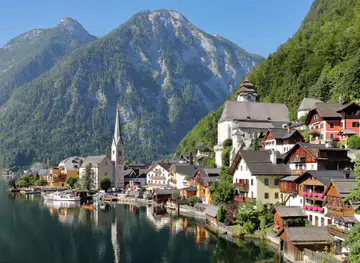
Fuschlsee in Photos
Browse through our photo collection highlighting the charm and character of the destination.
Neighbouring destination travel guides
The closest destinations to Fuschlsee, if you have time for more than one.
-
-

-

-
-


Swipe for more destinations
Explore more

Explore more of Flachgau
Explore Flachgau: A Scenic Austrian Region Brimming with Lakes, Historical Sites, and Culinary Delights
Explore Flachgau
Explore more of Austria
Discover Austria's blend of alpine landscapes, rich cultural heritage, and culinary delights, from Vienna's historic charm to Tyrol's dramatic beauty.
Explore Austria