

Free Chittagong Division Travel Guide & Mobile App
Explore Chittagong Division with free travel guides. Discover regional history, expert tips, proposed trips, and audio guides on web or mobile app.


Explore Chittagong Division for Bangladesh's historic port, Buddhist ruins, long beaches, island coastlines and forested hill landscapes.
Read more about Chittagong Division
When is the best time to visit Chittagong Division?
Best: December–February · 24–27°C| Month | High (°C) | Rainfall (mm) |
|---|---|---|
| January (best) | 24 | 6 |
| February (best) | 27 | 14 |
| March | 31 | 32 |
| April | 33 | 139 |
| May | 34 | 331 |
| June | 32 | 610 |
| July | 31 | 661 |
| August | 31 | 581 |
| September | 31 | 373 |
| October | 30 | 181 |
| November | 29 | 52 |
| December (best) | 26 | 9 |
Getting to and around Chittagong Division
How to get there
Transportation
Top city travel guides in Chittagong Division
The cities of Chittagong Division, and the easiest places to base yourself.
-

-

-

-

-


Swipe for more cities
Destinations in Chittagong Division
Resorts, valleys and scenic spots worth a trip of their own.
-

-

-

-

-

-


Swipe for more destinations
Best attractions in Chittagong Division
Chittagong Division's attractions range from archaeological remains and urban heritage to beaches, islands, lakes and forested hills. Around Cumilla, the Mainamati-Lalmai ridge offers Buddhist sites such as Shalban Vihara, Kotila Mura and the Mainamati Museum, while Chattogram combines the Ethnological Museum, historic religious buildings, markets and the seafront at Patenga. Sitakunda provides access to Chandranath Temple and hill scenery north of the city. Cox's Bazar is the main coastal base, with the long beach, Himchari, Inani, Maheshkhali and other coastal excursions offering different combinations of sand, forest, fishing and island life. In the Chittagong Hill Tracts, Rangamati centres on Kaptai Lake and boat travel, Khagrachhari on ridges, caves and waterfalls, and Bandarban on hill viewpoints and trekking landscapes. Conditions and permissions vary in remote areas, so the region's outdoor attractions require more preparation than a conventional beach visit.
-
Tourist attraction
Himchari Fountain and Hill
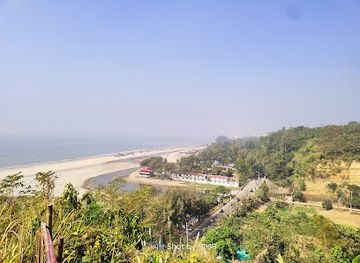
Discover the serene beauty of Himchari Fountain and Hill in Cox's Bazar: lush landscapes, cascading waterfalls, and panoramic ocean views await!
-
Park
Biplob Udyan
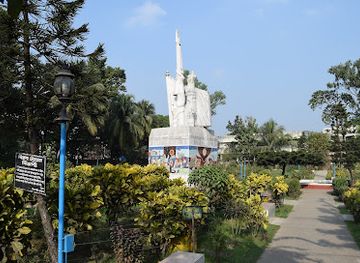
Explore Biplob Udyan in Chattogram: A peaceful park commemorating Bangladesh's independence struggle and honoring revolutionary heroes.
-
Park
Jamboree Park
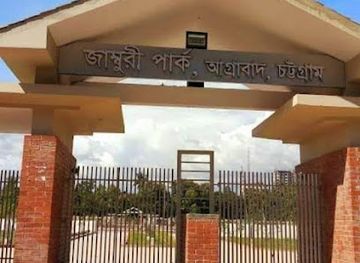
Escape to serenity in the heart of Chattogram at Jamboree Park, a revitalized urban oasis with dancing fountains and lush greenery.
-
Tourist attraction
Himchari National Park
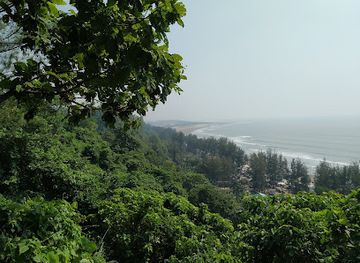
Explore lush hills, spot diverse wildlife, and witness stunning views of the Bay of Bengal at Himchari National Park near Cox's Bazar.
Best landmarks in Chittagong Division
The division's most recognisable landmarks express its maritime, archaeological and upland identities. Chattogram's port and waterfront remain defining features of the country's principal seaport, while the hilltop Chandranath Temple at Sitakunda is both a pilgrimage site and a visible marker in the coastal landscape. The Mainamati-Lalmai ridge near Cumilla contains the brick remains of Shalban Vihara and other early medieval Buddhist foundations, whose geometric layouts make the archaeological importance immediately legible. In Cox's Bazar, the long open shoreline is the region's best-known natural landmark, with Himchari's wooded slopes and the coast around Inani providing a more varied setting. Kaptai Lake gives Rangamati its characteristic geography of drowned valleys and wooded peninsulas. Bandarban is distinguished by ridges and viewpoints around Nilachal and Nilgiri, although access to some highland and border areas is controlled or changeable. Together these places show how the region's identity is shaped by water, pilgrimage, ancient monastic networks and mountain terrain.
-
Amphitheater
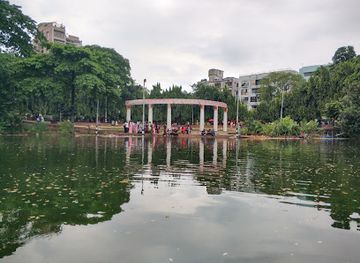
Rabindra Sarobar
A cultural hub and tranquil escape in Dhaka's Dhanmondi, offering an amphitheater, serene lake, and lush green surroundings.
-
Historical landmark
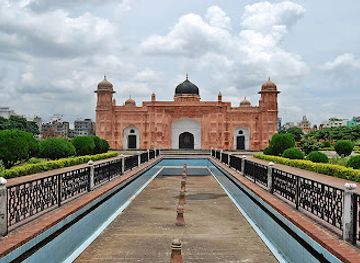
Lalbagh Fort
Explore the unfinished Mughal masterpiece of Lalbagh Fort in Dhaka, a 17th-century testament to history, architecture, and unfulfilled dreams.
-
Historical landmark
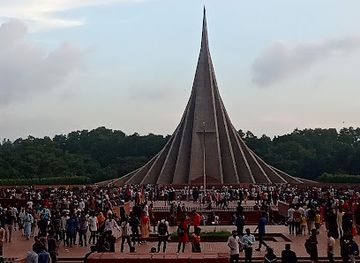
National Martyrs' Monument
A poignant landmark in Savar commemorating Bangladesh's Liberation War heroes with its striking architecture and serene surroundings.
-
Historical landmark
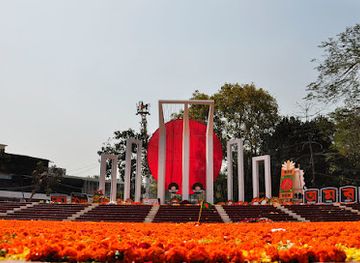
Central Shaheed Minar
A national monument in Dhaka, Bangladesh, honoring the martyrs of the 1952 Bengali Language Movement and a symbol of Bengali identity.
Explore Chittagong Division on the map
Plan your trip on one map. See where the top cities, national parks and sights are, and book hotels and experiences in a few clicks.
Best hotels in Chittagong Division
Best restaurants in Chittagong Division
Dining in Chittagong Division reflects the meeting of port, delta, coast and hills. Chattogram is associated with mezban, a communal beef feast traditionally served with rice and strongly seasoned accompaniments, as well as kala bhuna and other robust meat dishes. Fish, prawns, crab and dried seafood are prominent in coastal towns, although quality and preparation vary by season and locality. Cox's Bazar offers plentiful seafood alongside Bengali rice-and-curry restaurants, while urban Chattogram has the broadest choice of regional, South Asian and international food. In Cumilla, khadi is better known as a textile tradition than a dish, while local sweets and snacks form part of the district's food culture. Hill-district menus may include bamboo shoots, herbs, vegetables and indigenous preparations, but visitors should ask about ingredients and availability rather than assume that one cuisine represents every community. Markets, tea stalls, modest restaurants and hotel dining rooms provide the most consistent range.
-
Indian
Handi Restaurant
Experience authentic Indian cuisine at Handi Restaurant in Chattogram – where every dish tells a story through rich flavors and aromas.
-
Restaurant
Barcode Cafe
Experience the best of local flavors at Barcode Cafe in Chattogram - where every meal is a delightful journey through taste.
-
Bangladeshi
Bir Chattala
Experience authentic Bangladeshi cuisine at Bir Chattala in Chattogram – where tradition meets taste in every dish.
-
Continental restaurant
Cafe Milano
Discover Cafe Milano in Chattogram: A delightful blend of Italian cuisine and local flavors awaits you at this family-friendly continental restaurant.
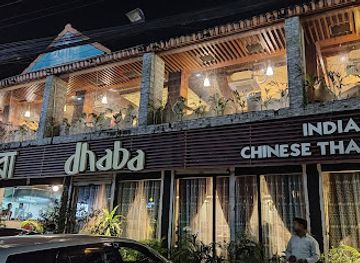


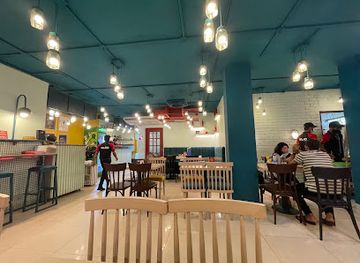
Best bars in Chittagong Division
Evening life in Chittagong Division is generally centred on food, tea, family gatherings and conversation rather than a large club circuit. Chattogram has the widest selection of cafés, restaurants, hotel lounges and occasional live entertainment, while Cox's Bazar adds hotel-based dining and a busier seafront atmosphere during holiday periods. Alcohol is regulated in Bangladesh and is not routinely available in ordinary restaurants; licensed hotel venues are the more likely places to find it, subject to current rules. Rangamati, Khagrachhari and Bandarban are quieter after dark, with evenings focused on guesthouses, local eateries and the landscape rather than nightlife districts. Visitors should avoid isolated beaches, lakeshores and hill roads at night, follow local guidance, and remember that seasonal demand can change the atmosphere considerably.
-
Hotel
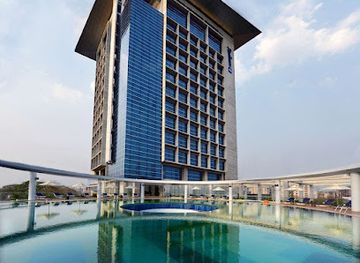
Radisson Blu Hotel, Chattogram Bay View
Discover luxury and comfort at Radisson Blu Hotel, Chattogram Bay View, with breathtaking views and top-notch amenities for an unforgettable stay.
-
Hotel
The Peninsula Chittagong
Experience luxury and comfort at The Peninsula Chittagong, where elegant accommodations meet exceptional service in the heart of a vibrant city.
-
Hotel
Well Park Residence
Experience the perfect blend of luxury and comfort at Well Park Residence in Chattogram, with top-notch amenities and a serene atmosphere for travelers.
-
Family-friendly
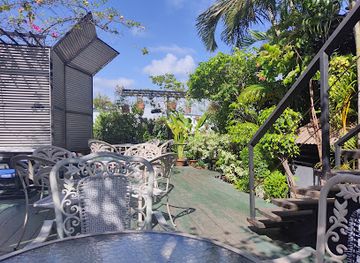
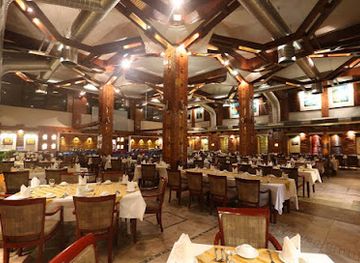
Ambrosia Restaurant Ltd
Discover the perfect family-friendly dining experience at Ambrosia Restaurant Ltd in Chattogram, where local flavors meet global cuisine for a delightful meal.
Best nightclubs in Chittagong Division
Evening life in Chittagong Division is generally centred on food, tea, family gatherings and conversation rather than a large club circuit. Chattogram has the widest selection of cafés, restaurants, hotel lounges and occasional live entertainment, while Cox's Bazar adds hotel-based dining and a busier seafront atmosphere during holiday periods. Alcohol is regulated in Bangladesh and is not routinely available in ordinary restaurants; licensed hotel venues are the more likely places to find it, subject to current rules. Rangamati, Khagrachhari and Bandarban are quieter after dark, with evenings focused on guesthouses, local eateries and the landscape rather than nightlife districts. Visitors should avoid isolated beaches, lakeshores and hill roads at night, follow local guidance, and remember that seasonal demand can change the atmosphere considerably.
-
Social club
Chittagong Club Ltd
Experience the elegance and camaraderie at Chittagong Club Ltd, a premier social hub in the heart of Chattogram, Bangladesh.
-
Convention center
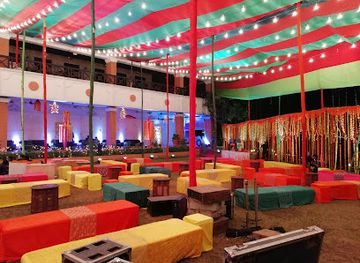
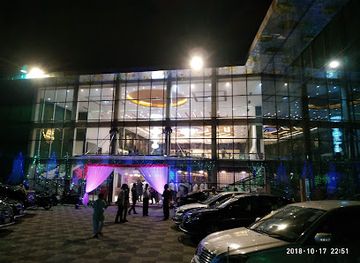
Ladies Club Chittagong
Experience the charm of Chattogram at Ladies Club, a stunning convention center with exquisite design and a vibrant atmosphere.
-
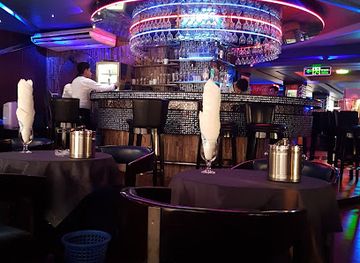
Bar
Bluemoon Recreation Club
Experience the vibrant social scene at Bluemoon Recreation Club in Dhaka, where leisure meets entertainment in a welcoming environment.
-
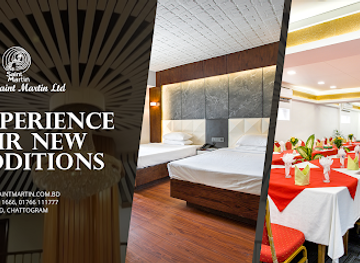
Hotel
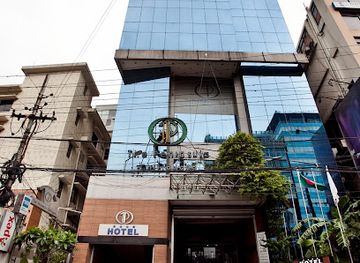
Hotel Saint Martin Ltd
Discover a perfect blend of comfort and local charm at Hotel Saint Martin Ltd in Chattogram, ideal for an unforgettable stay.
Best shops in Chittagong Division
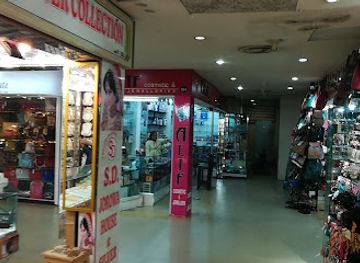
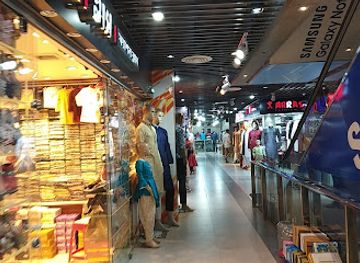
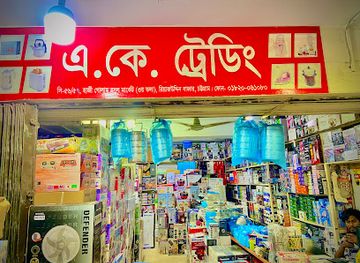
Shopping is most rewarding when it reflects the region's material cultures and food-producing landscapes. Chattogram's markets offer textiles, household goods, spices, dried seafood and everyday Bangladeshi products, while Cox's Bazar is known for beach-oriented retail, shell and craft items, woven goods and dried fish; quality and provenance should be checked carefully. Rangamati, Khagrachhari and Bandarban have outlets and markets selling handwoven fabrics, bamboo and cane work, baskets, jewellery and other crafts associated with local communities. Buy directly where possible, ask about the maker and avoid items made from protected wildlife or culturally sensitive objects. Cumilla is associated with khadi, a handwoven cotton textile sold in clothing and fabric shops. In larger towns, modern retail and branded goods are available, but the division's most distinctive purchases are generally textiles, practical handicrafts, tea and regional food products rather than luxury merchandise.
-
Shopping mall
Biponi Bitan (New Market)
Explore Biponi Bitan in Chattogram: A shopping paradise with a blend of local charm and modern retail experiences.
-
Shopping mall
Sanmar Ocean City
Discover the vibrant shopping scene at Sanmar Ocean City in Chattogram, offering a diverse range of stores, dining, and entertainment options.
-
Shopping mall
Finlay Square
Explore Finlay Square in Chattogram: A bustling shopping mall with diverse shops, dining options, and local culture.
-
Market
Reazuddin Bazar
Discover the vibrant essence of Chattogram at Reazuddin Bazar, where culture, cuisine, and commerce converge in a lively market experience.
Get your free copy of our complete guide to Chittagong Division, delivered straight to you.
Everything on this page, from attractions and restaurants to essentials and local phrases, in one PDF you can read offline, print or share.
Already have an account? Sign in
Your Chittagong Division guide is ready.
We'll send it to · Not you? Sign out

Getting your guide ready…
We are putting together a fresh copy of the Chittagong Division guide. This can take up to a minute.
This can take a few moments. If your browser asks, choose Allow so the download can start. You'll find the guide in your Downloads folder.
Nothing happened? Download it again
Sorry, the guide is taking longer than usual. Please try again in a minute, or get it by email instead.
Chittagong Division essentials
Currency and Payment
Safety
Emergency Situations
Do's and Don'ts
Local Tips
From Eve
Local phrases worth knowing
You don't need to get them perfect. A few words go a long way, and locals appreciate the effort.
Basics
| English | Local | Say it |
|---|---|---|
| Hello | নমস্কার | [Nomoskar] |
| Goodbye | বিদায় | [Biday] |
| Yes | হ্যাঁ | [Hyaan] |
| No | না | [Na] |
| Please/You're welcome | দয়া করে | [Doya kore] |
| Thank you | ধন্যবাদ | [Dhonnobad] |
| Excuse me/Sorry | মাফ করবেন | [Maf korben] |
| How are you? | আপনি কেমন আছেন? | [Apni kemon achen?] |
| Fine. And you? | ভালো। আর আপনি? | [Bhalo. Ar apni?] |
| Do you speak English? | আপনি কি ইংরেজি বলছেন? | [Apni ki Ingreji bolchen?] |
| I don't understand | আমি বুঝি না | [Ami bujhi na] |
Eating & Drinking
| English | Local | Say it |
|---|---|---|
| I'd like to see the menu, please | মেনু দেখাবেন, দয়া করে | [Menu dekhaben, doya kore] |
| I don't eat meat | আমি মাংস খাই না | [Ami mangsho khai na] |
| Cheers! | সৌভাগ্য! | [Shoubhaggo!] |
| I would like to pay, please | আমি পেমেন্ট করতে চাই, দয়া করে | [Ami payment korte chai, doya kore] |
Emergencies
| English | Local | Say it |
|---|---|---|
| Help! | সাহায্য করুন! | [Sahajjo korun!] |
| Go away! | চলে যান! | [Chole jan!] |
| Call the Police! | পুলিশ ডাকুন! | [Polish dakun!] |
| Call a doctor! | ডাক্তার ডাকুন! | [Daktar dakun!] |
| I'm lost | আমি হারিয়ে গেছি | [Ami hariye gechi] |
| I'm ill | আমি অসুস্থ | [Ami oshustho] |
Shopping
| English | Local | Say it |
|---|---|---|
| I'd like to buy... | আমি কিনতে চাই... | [Ami kinte chai...] |
| I'm just looking | আমি শুধু দেখছি | [Ami shudhu dekhchi] |
| How much is it? | এটার দাম কত? | [Etar dam koto?] |
| That's too expensive | এটা খুব দামি | [Eta khub dami] |
| Can you lower the price? | আপনি কি দাম কমাতে পারেন? | [Apni ki dam komate paren?] |
Time & Numbers
| English | Local | Say it |
|---|---|---|
| What time is it? | এখন সময় কত? | [Ekhon shomoy koto?] |
| It's one o'clock | এখন একটা বাজে | [Ekhon ekta baje] |
| Half past (10) | সাড়ে (১০) | [Sare (10)] |
| Morning | সকাল | [Shokal] |
| Afternoon | দুপুর | [Dupur] |
| Evening | সন্ধ্যা | [Shondhya] |
| Yesterday | গতকাল | [Gotokal] |
| Today | আজ | [Aj] |
| Tomorrow | কাল | [Kal] |
| 1 | ১ | [1] |
| 2 | ২ | [2] |
| 3 | ৩ | [3] |
| 4 | ৪ | [4] |
| 5 | ৫ | [5] |
| 6 | ৬ | [6] |
| 7 | ৭ | [7] |
| 8 | ৮ | [8] |
| 9 | ৯ | [9] |
| 10 | ১০ | [10] |
Transport & Directions
| English | Local | Say it |
|---|---|---|
| Where's a/the...? | একটা/দেয়াল কোথায়? | [Ekta/deyal kothay?] |
| What's the address? | ঠিকানা কি? | [Thikana ki?] |
| Can you show me (on the map)? | আপনি কি আমাকে দেখাতে পারেন (নকশায়)? | [Apni ki amake dekhate paren (nokshay)?] |
| When's the next (bus)? | পরবর্তী (বাস) কখন? | [Poroborti (bas) kokhon?] |
| A ticket (to ....) | একটি টিকিট (যাতে ....) | [Ekta ticket (jagate ....)] |
History of Chittagong Division
Early Bengal, Samatata and Harikela
The eastern delta and coastal hills were shaped by ancient polities and trading networks rather than by one continuous kingdom. The wider Cumilla-Noakhali coast formed part of the historical Samatata region, while the Chattogram area was associated with Harikela in early records. River channels, shifting coastlines and access to the Bay of Bengal connected these territories with Arakan, eastern India and wider maritime Asia. Archaeological evidence, inscriptions and coin finds show the importance of both Buddhist and Hindu traditions before the consolidation of Muslim rule. The survival of early Buddhist remains in the Mainamati-Lalmai area is one of the region's clearest links with this period.
The Buddhist Monasteries of Mainamati
From roughly the seventh to the twelfth centuries, the Lalmai-Mainamati ridge near present-day Cumilla supported a major Buddhist monastic and educational landscape. Shalban Vihara, Kotila Mura and other mounds reveal planned monasteries, shrines, sculptures, inscriptions and terracotta decoration connected with the wider Buddhist world of eastern Bengal. These institutions were supported by regional rulers and benefited from the area's position between inland settlements and routes towards the coast. Their decline followed changing political and religious conditions, but the excavated remains provide an unusually tangible account of early medieval urban, monastic and artistic life in the region.
A Maritime Port between Bengal and Arakan
Chattogram developed as a strategically placed port on the Bay of Bengal, drawing merchants, sailors and political powers from Bengal, Arakan and the Indian Ocean. Its hinterland included river routes leading into the interior, while coastal connections reached towards present-day Myanmar and the wider Bay. The port's history was marked by shifting control and competition, including periods of Arakanese influence and activity by Portuguese and other seafarers. This maritime past helps explain the region's mixed cultural vocabulary, commercial importance and long-standing connections beyond the boundaries of present-day Bangladesh.
Mughal Consolidation in 1666
The Mughal conquest of Chattogram in 1666, led by Shaista Khan's forces, ended the Arakanese hold over the port and brought the area more firmly into the Mughal Bengal system. The Mughal victory improved imperial control over the south-eastern frontier and reduced the threat posed by raiding fleets and privateers operating from the coast. Mughal administration and settlement left an enduring mark on the city's political and religious landscape, although local maritime networks and relations with Arakan continued to influence life along the coast and in the hill margins.
Colonial Port and Railway Development
Under British rule, Chattogram became increasingly important as a commercial port and as an outlet for the products of eastern Bengal and Assam. Railways and improved river and road links connected the port with inland markets, while warehouses, offices and new civic infrastructure altered the urban landscape. The port later gained strategic importance during the Second World War. Colonial expansion also brought new administrative pressures to the hill frontier and reshaped land, labour and trade relationships. Several of the region's modern transport corridors and industrial functions have roots in this period.
Partition, War and the Birth of Bangladesh
The 1947 Partition placed Chattogram and the surrounding districts within East Pakistan, separating the region from many earlier commercial and administrative links. The port remained economically important, but political and economic tensions between East and West Pakistan deepened. During the Bangladesh Liberation War in 1971, Chattogram was a significant centre of resistance and communication, and the region's waterways, ports and towns were affected by the conflict. Bangladesh's independence brought new national priorities, including expanded infrastructure, industrial development and tourism along the south-eastern coast.
The Chittagong Hill Tracts and the 1997 Accord
The Chittagong Hill Tracts are home to several Indigenous peoples, including the Chakma, Marma, Tripura, Mro and others, with distinct languages, religious practices and social histories. Post-independence disputes over land, representation, migration and state policy led to a prolonged insurgency and militarisation. The 1997 Chittagong Hill Tracts Peace Accord established a framework for regional councils, land issues and the return of combatants, although implementation remains contested and many underlying disputes continue. Visitors encounter this history through local institutions and landscapes, but should avoid treating communities or sensitive areas as tourist spectacles.
Chittagong Division in Photos
Browse through our photo collection highlighting the charm and character of the destination.
Neighbouring regions of Chittagong Division
The closest regions to Chittagong Division, if you have time for more than one.
-

-

-

-

-


Swipe for more regions
Explore more

Explore more of Bangladesh
Discover Bangladesh: A land of rivers, rich culture, and breathtaking landscapes. Explore ancient sites, vibrant cities, and the unique flavors of this South Asian gem.
Explore Bangladesh