

Free Saint Andrew Travel Guide & Mobile App
Explore Saint Andrew with free travel guides. Discover regional history, expert tips, proposed trips, and audio guides on web or mobile app.


Explore Saint Andrew, Barbados, for Atlantic cliffs, Scotland District landscapes, sugar heritage, country roads and quiet eastern-coast scenery.
Read more about Saint Andrew
When is the best time to visit Saint Andrew?
Best: January–March · 29–30°C| Month | High (°C) | Rainfall (mm) |
|---|---|---|
| January (best) | 29 | 66 |
| February (best) | 30 | 56 |
| March (best) | 30 | 45 |
| April | 30 | 65 |
| May | 30 | 80 |
| June | 31 | 110 |
| July | 31 | 120 |
| August | 31 | 130 |
| September | 31 | 140 |
| October | 30 | 120 |
| November | 30 | 110 |
| December | 30 | 90 |
Getting to and around Saint Andrew
How to get there
Transportation
Top city travel guides in Saint Andrew
The cities of Saint Andrew, and the easiest places to base yourself.
-

-

-


Swipe for more cities
Destinations in Saint Andrew
Resorts, valleys and scenic spots worth a trip of their own.
-

-


Swipe for more destinations
Best attractions in Saint Andrew
Saint Andrew’s attractions are defined by landscape, rural heritage and the Atlantic edge rather than by a concentration of large visitor complexes. Morgan Lewis Sugar Mill is the parish’s principal historic attraction, offering an insight into the wind-powered technology of Barbados’s former sugar industry and the plantation countryside that supported it. Saint Andrew Parish Church provides a further connection with the island’s historic parish system. Across the Scotland District, winding roads, gullies, exposed hills and elevated viewpoints create opportunities for scenic drives, photography and low-key countryside exploration. Hackleton’s Cliff is valued for its broad outlook, while the area around Barclays Park combines open coastal scenery with a more accessible eastern-shore setting. Visitors should approach Atlantic beaches with care: surf and currents can be much stronger than on the west coast, and their importance lies as much in scenery and geology as in bathing. The parish is also suitable for birdwatching, informal nature observation and walking where routes and access are clear. Its appeal comes from the relationship between geology, farming, settlement and sea, offering a slower, more geographically distinctive experience of Barbados.
-
Bar
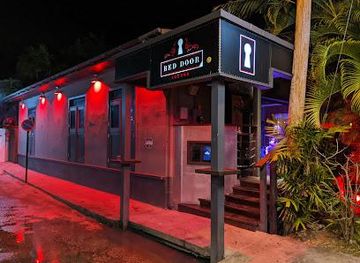
Red Door Lounge
Experience the vibrant nightlife of Holetown at the now-closed Red Door Lounge, a premier bar and restaurant known for its local flavors.
-
Barclays Park
Discover breathtaking Atlantic views, picnic spots, and a tranquil escape at Barclays Park, a historic Barbadian park in Saint Andrew.
-
Hiking area
Haggatts Old Factory Yard
Discover Haggatts Old Factory Yard: A hidden hiking paradise in Saint Andrew, Barbados, blending history with stunning natural beauty.
-

Cane Garden
Discover the authentic soul of Barbados in Cane Garden, a tranquil inland village steeped in history, culture, and natural beauty, offering a serene escape from the bustling coast.


Best landmarks in Saint Andrew
Morgan Lewis Sugar Mill is Saint Andrew’s most recognisable built landmark, its tall stone tower and surviving windmill machinery symbolising the technology and labour of Barbados’s sugar era. It stands within an open upland landscape that helps explain why wind power was valuable to the island’s estates. Hackleton’s Cliff is the parish’s defining natural landmark, an elevated escarpment associated with the Scotland District and noted for its expansive views across the rugged east. The hills, gullies and eroded slopes of the Scotland District form a wider geological landmark rather than a single monument, distinguishing Saint Andrew from Barbados’s flatter coral terraces. Saint Andrew Parish Church represents the parish structure through which English colonial administration and Anglican worship became embedded in island life. Along the coast, exposed headlands, rough Atlantic water and open horizons create a visual identity markedly different from the sheltered beaches of the west. Barclays Park provides a more accessible point from which to appreciate the eastern shoreline, while scattered chattel houses, estate traces and rural roads add architectural and social detail to the landscape.
-
Tourist attraction
Harrison's Cave Eco-Adventure Park
Discover Barbados' geological wonders at Harrison's Cave Eco-Adventure Park: Explore stunning caverns, enjoy thrilling ziplines, and immerse yourself in Bajan culture for an unforgettable experience.
-
Island
Barbados
Discover Barbados: An island paradise where stunning beaches meet rich history and vibrant culture, offering an unforgettable Caribbean escape for every traveler.
-
Garden
Hunte's Gardens
Discover a lush botanical paradise in Barbados's Hunte's Gardens, a tranquil oasis of exotic plants and vibrant colors in a unique gully setting.
-
Tourist attraction
The Richard Haynes Boardwalk
Experience the beauty of Barbados on this scenic boardwalk, offering stunning ocean views, vibrant restaurants, and lively Bajan hospitality.


Explore Saint Andrew on the map
Plan your trip on one map. See where the top cities, national parks and sights are, and book hotels and experiences in a few clicks.
Best hotels in Saint Andrew
Best restaurants in Saint Andrew
Dining in Saint Andrew is generally local, informal and dispersed rather than organised around a large restaurant district. Village shops, rum shops, cafés and small eateries may serve Barbadian staples such as fish cakes, flying fish, macaroni pie, rice and peas, stewed meats and freshly prepared fish. Along the eastern side, seafood is an obvious choice, although availability depends on the day and the establishment rather than on a fixed coastal dining circuit. Roadside vendors and small takeaways can provide useful opportunities to try everyday Bajan food, while more formal dining is easier to find in Bridgetown, the south coast and other parts of Barbados outside the parish. Visitors should distinguish between food that is broadly Barbadian and products genuinely sourced in Saint Andrew; the parish is better known for its rural setting and sugar heritage than for one nationally famous dish of its own. Local produce, rum and seasonal fruit may appear in drinks, desserts and home-style cooking, and asking about the day’s offerings is often more reliable than expecting a permanent menu.
-
Seafood
Fish Pot
Discover fresh seafood delicacies at Fish Pot, where stunning ocean views meet exquisite dining in Barbados.
-
Restaurant
Fisherman's Pub
Discover Fisherman's Pub in Speightstown: where fresh seafood meets vibrant Caribbean culture amidst stunning ocean views.
-
Fine Dining
The Cliff
Experience exquisite fine dining at The Cliff in Barbados, where breathtaking ocean views meet exceptional culinary artistry.
-
Restaurant
Sea Shed Restaurant
Experience exquisite seafood dining at Sea Shed Restaurant in Barbados with breathtaking ocean views and authentic local flavors.


Best bars in Saint Andrew
Saint Andrew’s evening life is quiet and community-based, with traditional rum shops, village bars and occasional small eateries providing the main social settings. There is no major nightclub district in the parish, and visitors seeking late-night clubs, a broad choice of cocktail bars or regular live entertainment will generally find more options in Bridgetown and along the developed south and west coasts, outside Saint Andrew. In the parish, an evening is more likely to involve conversation, sporting broadcasts, music and a relaxed drink than a formal nightlife itinerary. Rural roads become darker and quieter after sunset, so arrange transport in advance rather than assuming that taxis or buses will be immediately available. Drink responsibly, respect local residents and avoid treating small community bars as tourist attractions to be photographed without permission.
-
Bar
Fisherman's Pub
Discover the vibrant flavors of Barbados at Fisherman's Pub, where fresh seafood meets local hospitality in Speightstown's charming coastal setting.
-
Caribbean
Sand Dunes
Discover the breathtaking beauty and adventure of the Sand Dunes in Saint Andrew, Barbados - a perfect blend of relaxation and excitement in the Caribbean.
-
Restaurant
The Bay Lounge
Discover the flavors of the Caribbean at The Bay Lounge, a must-visit restaurant in Cambridge Bay, Saint Andrew, Barbados.
-
Bar
Little Bristol Beach Bar
Experience the vibrant atmosphere and stunning views at Little Bristol Beach Bar in Speightstown, the perfect spot for relaxation and local flavors.


Best nightclubs in Saint Andrew
Saint Andrew’s evening life is quiet and community-based, with traditional rum shops, village bars and occasional small eateries providing the main social settings. There is no major nightclub district in the parish, and visitors seeking late-night clubs, a broad choice of cocktail bars or regular live entertainment will generally find more options in Bridgetown and along the developed south and west coasts, outside Saint Andrew. In the parish, an evening is more likely to involve conversation, sporting broadcasts, music and a relaxed drink than a formal nightlife itinerary. Rural roads become darker and quieter after sunset, so arrange transport in advance rather than assuming that taxis or buses will be immediately available. Drink responsibly, respect local residents and avoid treating small community bars as tourist attractions to be photographed without permission.
-
Night club
Harbour Lights Barbados
Discover the ultimate nightlife experience at Harbour Lights Barbados, where vibrant entertainment meets exquisite dining by the beach.
-
Cocktail bar
Drift Ocean Terrace Lounge
Experience the best of Barbados at Drift Ocean Terrace Lounge, where cocktails and ocean views create unforgettable moments.
-
Disco club
Club Rehab
Discover the heart of Bridgetown's nightlife at Club Rehab, a premier disco club offering vibrant music and an unforgettable party atmosphere.
-
Bar
Incognito Night Club
Discover the heart of Oistins' nightlife at Incognito Night Club, where music, drinks, and unforgettable memories await every visitor.



Best shops in Saint Andrew
Shopping in Saint Andrew is modest and locally oriented, with village shops, small groceries, rum shops and roadside sellers serving everyday needs rather than offering a concentrated retail district. The parish’s rural character makes it a useful place to look for locally made food, seasonal fruit, baked goods and small-scale craft items when available, though stock and trading days vary. Visitors should not expect the designer shopping, large malls or extensive souvenir selection found in Bridgetown and the south-coast centres outside the parish. For regional gifts, consider Barbadian rum, pepper sauces, preserved foods, confectionery, locally produced textiles or handmade crafts, checking labelling and provenance where authenticity matters. Small markets and informal stalls may accept cash only, and opening arrangements can be flexible. Shopping in Saint Andrew works best as part of a countryside excursion, combined with a visit to a village or heritage site, rather than as a separate retail-focused activity.
-
Department store
Bridgetown Duty Free Broad Street
Explore a shopping haven at Bridgetown Duty Free, featuring luxury brands and local crafts at unbeatable prices in the heart of Barbados.
-
Shopping mall
N.S.R.Limited Sky Mall
Experience a shopper's paradise at N.S.R.Limited Sky Mall in Haggatt Hall, Saint Michael, offering diverse shopping, dining, and entertainment.
-
Shopping mall
Limegrove Lifestyle Centre
Discover the ultimate shopping and leisure experience at Limegrove Lifestyle Centre in Holetown, Barbados, where luxury meets relaxation.
-
Craft store
Laurie Dash & Sons Inc
Discover the artistic paradise of Laurie Dash & Sons Inc in Bridgetown, where creativity flourishes and local crafts come to life.


Get your free copy of our complete guide to Saint Andrew, delivered straight to you.
Everything on this page, from attractions and restaurants to essentials and local phrases, in one PDF you can read offline, print or share.
Already have an account? Sign in
Your Saint Andrew guide is ready.
We'll send it to · Not you? Sign out

Getting your guide ready…
We are putting together a fresh copy of the Saint Andrew guide. This can take up to a minute.
This can take a few moments. If your browser asks, choose Allow so the download can start. You'll find the guide in your Downloads folder.
Nothing happened? Download it again
Sorry, the guide is taking longer than usual. Please try again in a minute, or get it by email instead.
Saint Andrew essentials
Currency and Payment
Safety
Emergency Situations
Do's and Don'ts
Local Tips
From Eve
Local phrases worth knowing
You don't need to get them perfect. A few words go a long way, and locals appreciate the effort.
Basics
| English | Local | Say it |
|---|---|---|
| Hello | Wah gwan | [Wah gwan] |
| Goodbye | Later | [Ley-tah] |
| Yes | Yea | [Yea] |
| No | No | [No] |
| Please/You're welcome | Pleez/No problem | [Pleez/No prob-lem] |
| Thank you | Tank yuh | [Tank yuh] |
| Excuse me/Sorry | Scuse me/Sorry | [Skewz me/Sorry] |
| How are you? | How yuh doin'? | [How yuh doin'?] |
| Fine. And you? | I good. An yuh? | [I good. An yuh?] |
| Do you speak English? | Yuh speak English? | [Yuh speak English?] |
| I don't understand | I nah understand | [I nah understand] |
Eating & Drinking
| English | Local | Say it |
|---|---|---|
| I'd like to see the menu, please | Can I see the menu, please? | [Can I see the menu, pleez?] |
| I don't eat meat | I don' eat meat | [I don' eat meat] |
| Cheers! | Cheers! | [Cheers!] |
| I would like to pay, please | Can I pay, please? | [Can I pay, pleez?] |
Emergencies
| English | Local | Say it |
|---|---|---|
| Help! | Help! | [Help!] |
| Go away! | Go way! | [Go way!] |
| Call the Police! | Call di Police! | [Call di Police!] |
| Call a doctor! | Call a doctor! | [Call a doctor!] |
| I'm lost | I lost | [I lost] |
| I'm ill | I feel sick | [I feel sick] |
Shopping
| English | Local | Say it |
|---|---|---|
| I'd like to buy... | I want to buy... | [I want to buy...] |
| I'm just looking | I just browsing | [I just browsing] |
| How much is it? | How much dat? | [How much dat?] |
| That's too expensive | Dat too pricey | [Dat too pricey] |
| Can you lower the price? | Can yuh drop de price? | [Can yuh drop de price?] |
Time & Numbers
| English | Local | Say it |
|---|---|---|
| What time is it? | Wah time it? | [Wah time it?] |
| It's one o'clock | It one o'clock | [It one o'clock] |
| Half past (10) | Half past ten | [Half past ten] |
| Morning | Mornin' | [Mornin'] |
| Afternoon | Afternoon | [Afternoon] |
| Evening | Evenin' | [Evenin'] |
| Yesterday | Yesterday | [Yesterday] |
| Today | Today | [Today] |
| Tomorrow | Tomorrow | [Tomorrow] |
| 1 | One | [One] |
| 2 | Two | [Two] |
| 3 | Three | [Three] |
| 4 | Four | [Four] |
| 5 | Five | [Five] |
| 6 | Six | [Six] |
| 7 | Seven | [Seven] |
| 8 | Eight | [Eight] |
| 9 | Nine | [Nine] |
| 10 | Ten | [Ten] |
Transport & Directions
| English | Local | Say it |
|---|---|---|
| Where's a/the...? | Whey a/the...? | [Whey a/the...?] |
| What's the address? | Wah de address? | [Wah de address?] |
| Can you show me (on the map)? | Can yuh show me (on de map)? | [Can yuh show me (on de map)?] |
| When's the next (bus)? | When de next (bus)? | [When de next (bus)?] |
| A ticket (to ....) | A ticket (to....) | [A ticket (to....)] |
History of Saint Andrew
Prehistoric Settlement and Amerindian Heritage
Long before European colonisation, Barbados was visited and settled by Indigenous peoples from the wider Caribbean region. Archaeological evidence across the island demonstrates communities that used coastal and inland environments for fishing, farming and movement. Saint Andrew’s valleys, uplands and eastern shore formed part of this broader island landscape, although visible archaeological remains are less prominent than the parish’s later plantation heritage. Understanding this earlier history is important because it places Barbados within established Caribbean networks rather than treating European settlement as the beginning of its human story.
English Colonisation in the Seventeenth Century
English settlement of Barbados began in the early seventeenth century, and the island was soon divided into parishes for administration and parish worship. Saint Andrew was named for Saint Andrew, the patron saint of Scotland, a connection later echoed by the district’s geological name rather than indicating Scottish political control. As English landholding expanded, natural woodland was cleared, estates were established and the parish became part of the plantation economy that transformed Barbados’s countryside.
Sugar, Enslavement and Estate Society
From the seventeenth century onwards, sugar became the foundation of Barbados’s wealth and political order. Saint Andrew’s estates relied on the labour of enslaved Africans, whose agricultural knowledge, labour and resistance shaped the island even under brutal conditions. Windmills such as Morgan Lewis Sugar Mill belonged to this system, using the trade winds to process sugar cane. Estate houses, roads, churches and altered landscapes remain material traces of a society in which prosperity for landowners depended on the enslavement of the majority population.
The Scotland District and Geological Change
Saint Andrew’s distinctive eastern landscape reflects a geological history different from the coral-limestone terraces that dominate much of Barbados. The Scotland District consists largely of uplifted and eroded sedimentary rocks, producing steep slopes, gullies and unstable ground. This terrain limited large-scale development in parts of the parish but also preserved a more rugged rural character. Its cliffs and hills have long influenced settlement, agriculture, road building and the way visitors experience eastern Barbados.
Emancipation and the Transformation of Rural Barbados
Emancipation in 1834, followed by the end of the apprenticeship system in 1838, changed the legal foundations of plantation society. Formerly enslaved Barbadians continued to live and work within an economy still dominated by sugar, but gradually developed independent communities, churches, smallholdings and new patterns of labour. In Saint Andrew, villages and scattered settlements grew alongside estates, and the parish’s rural character came to include both plantation remnants and the enduring social and cultural presence of Afro-Barbadian communities.
Morgan Lewis and the Survival of Sugar Heritage
Morgan Lewis Sugar Mill is one of the clearest surviving reminders of Barbados’s industrial sugar past. Wind-powered mills were once widespread across the island, where they crushed cane before juice was boiled and refined. As modern machinery and changing agricultural economics displaced them, most disappeared or fell into ruin. The preservation of Morgan Lewis gives Saint Andrew an important physical link to the technology, landscape and labour systems that shaped Barbados for centuries, while the surrounding countryside illustrates how closely industry was tied to the island’s natural environment.
Modern Barbados and the Eastern Parish
After independence in 1966, Barbados developed a diversified economy based increasingly on tourism, services, manufacturing and international connections. Saint Andrew did not become a major resort centre, and its economy and settlement pattern remained comparatively rural. The parish now contributes to Barbados’s heritage and landscape tourism, while residents continue to balance farming, local services, commuting and community life. Its Atlantic coast and Scotland District have become especially important to visitors seeking a different perspective on an island often represented chiefly through its western beaches.
Saint Andrew in Photos
Browse through our photo collection highlighting the charm and character of the destination.
Neighbouring regions of Saint Andrew
The closest regions to Saint Andrew, if you have time for more than one.
-

-

-

-

-


Swipe for more regions
Explore more

Explore more of Barbados
Discover Barbados: Pristine beaches, rich history, and vibrant culture await in this Caribbean paradise. Perfect for adventure, relaxation, and culinary delights.
Explore Barbados