

Free East Coast Travel Guide & Mobile App
Explore East Coast with free travel guides. Discover regional history, expert tips, proposed trips, and audio guides on web or mobile app.


Explore East Coast Barbados for Bathsheba’s surf, Atlantic cliffs, Scotland District scenery, village food and historic parish landscapes.
Read more about East Coast
When is the best time to visit East Coast?
Best: January–March · 28–29°C| Month | High (°C) | Rainfall (mm) |
|---|---|---|
| January (best) | 28 | 60 |
| February (best) | 29 | 50 |
| March (best) | 29 | 50 |
| April | 30 | 60 |
| May | 30 | 70 |
| June | 31 | 80 |
| July | 32 | 90 |
| August | 32 | 90 |
| September | 31 | 80 |
| October | 31 | 70 |
| November | 30 | 60 |
| December | 29 | 60 |
Getting to and around East Coast
How to get there
Transportation
Top city travel guides in East Coast
The cities of East Coast, and the easiest places to base yourself.
-

-

-

-

-

-


Swipe for more cities
Destinations in East Coast
Resorts, valleys and scenic spots worth a trip of their own.
-

-

-


Swipe for more destinations
Best attractions in East Coast
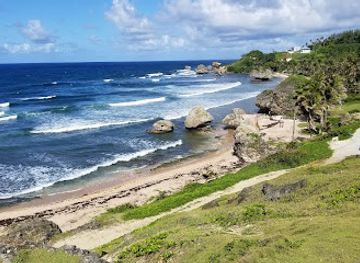
The East Coast’s attractions are shaped by landscape rather than concentrated in a single resort centre. Bathsheba is the principal coastal focus, with its boulder-strewn shoreline, Atlantic surf and access to the Soup Bowl, a celebrated break for experienced surfers. Cattlewash provides a broad, open coastal setting for views and walks, while the roads through the Scotland District lead into gullies, hills and rural communities that reveal a different side of Barbados. Inland attractions include Hunte’s Gardens in St Joseph, where tropical planting occupies a dramatic former sinkhole, and Farley Hill National Park near the northern interior edge of the East Coast. Historic visits can include St John’s Parish Church and Codrington College, both set among the elevated eastern landscapes. The region also suits scenic driving, photography, birdwatching and short walks, although paths and viewpoints vary in formality. There are fewer purpose-built family attractions and large museums than around Bridgetown, but that is part of the area’s appeal: the main experience comes from combining natural scenery, parish architecture, small settlements and locally run places to eat.
-
Tourist attraction
Animal Flower Cave & Restaurant
Discover Barbados' northernmost point at the Animal Flower Cave: Explore stunning sea caves, swim in natural pools, dine with panoramic ocean views, and experience the island's rugged beauty.
-
Tourist attraction
Harrison's Cave Eco-Adventure Park
Discover the geological wonders of Barbados at Harrison's Cave Eco-Adventure Park, where stunning stalactites, crystal-clear streams, and thrilling adventures await in the heart of the island.
-
National park
Queen's Park
Discover Queen's Park in Bridgetown: a historic park with lush gardens, cultural venues, and the island's oldest baobab tree.
-
Shopping mall
Quayside Centre Shopping Plaza
Explore the vibrant Quayside Centre Shopping Plaza in Bridgetown, Barbados - a blend of shopping, dining, and local culture awaits!


Best landmarks in East Coast
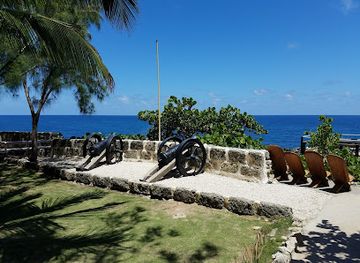
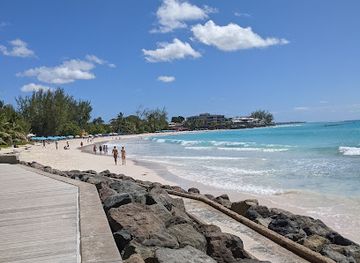
Bathsheba’s coastal boulders are the East Coast’s most recognisable natural landmark, set against an Atlantic shoreline whose force has shaped both the scenery and the region’s reputation for surfing. The Soup Bowl, beside Bathsheba, is a geographically distinctive section of coast as well as a notable surfing site, although it is not a casual bathing beach. St John’s Parish Church occupies a dramatic elevated position overlooking the eastern landscape and is one of Barbados’s most memorable parish church settings. Codrington College, with its historic buildings and landscaped grounds in St John, represents the religious and educational structures of plantation-era Barbados. Farley Hill, on the northern interior edge of the region, combines elevated views with the remains of a historic great house and a national park setting. Across the Scotland District, steep gullies and rolling terrain form a less monumental but equally important landmark system, distinguishing the East Coast from Barbados’s flatter coral terraces and giving the countryside its strongly weathered character.
-
Tourist attraction
Animal Flower Cave & Restaurant
Discover Barbados' only accessible sea cave at the northernmost point, offering stunning ocean views, natural rock pools, and a taste of authentic Caribbean cuisine.
-
Tourist attraction
Harrison's Cave Eco-Adventure Park
Discover the breathtaking beauty of Harrison's Cave Eco-Adventure Park in Barbados: an underground world of stunning formations, flowing streams, and captivating geological wonders.
-
Park
Bathsheba Park
Experience the untamed beauty of Barbados at Bathsheba Park: dramatic rock formations, world-class surfing, and tranquil coastal scenery await your discovery.
-
Tourist attraction
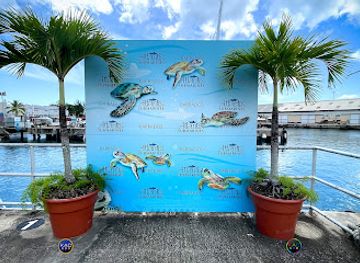
Atlantis Submarines Barbados
Explore Barbados' underwater world in a real submarine. Discover vibrant reefs, marine life, and shipwrecks on a unique and unforgettable adventure.
Explore East Coast on the map
Plan your trip on one map. See where the top cities, national parks and sights are, and book hotels and experiences in a few clicks.
Best hotels in East Coast
Best restaurants in East Coast
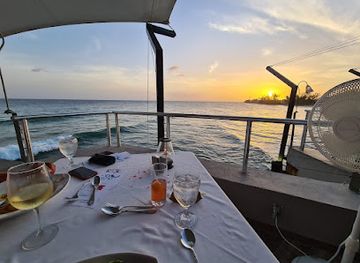
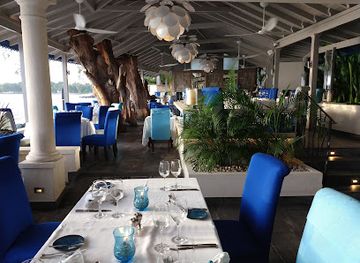
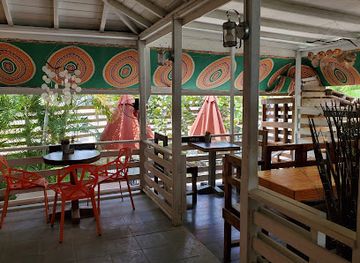
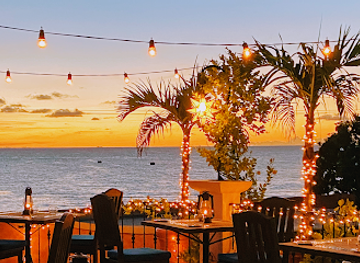
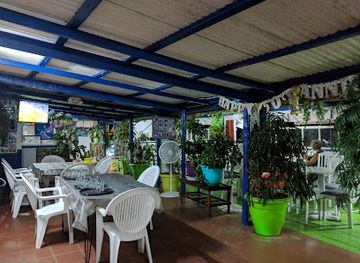
Dining on the East Coast is generally relaxed and locally focused, with the strongest choice around Bathsheba and larger villages rather than in a continuous restaurant strip. Traditional Barbadian cooking may include flying fish, fish cakes, rice and peas, macaroni pie, cou-cou, plantain, stewed meats and fresh salads, while seafood appears frequently in coastal cafés and informal restaurants. Roadside vendors and rum shops can provide snacks, cold drinks and straightforward local meals, though opening patterns may be limited outside busy periods. Visitors should also look for seasonal fruit, fresh juices and baked goods in village shops and markets. A small number of more polished restaurants and guesthouse dining rooms make use of the setting, but the region’s culinary identity remains tied to home-style food, fish, agricultural produce and unhurried meals. Restaurant choices can be dispersed, so booking or checking availability is sensible when staying outside Bathsheba.
-
Restaurant
Champers Restaurant Barbados
Experience exquisite dining with stunning ocean views at Champers Restaurant Barbados - a culinary gem on the Caribbean coast.
-
Fine Dining
The Tides Barbados
Experience exquisite fine dining at The Tides Barbados with breathtaking ocean views and delectable seafood creations.
-
Restaurant
Bliss Cafe
Experience delightful Caribbean flavors at Bliss Cafe in Oistins, Barbados—where every meal is a celebration of island life.
-
Bistro
Cafe Luna Barbados
Discover Cafe Luna Barbados: A bistro offering exquisite local cuisine with stunning beach views for an unforgettable dining experience.
Best bars in East Coast
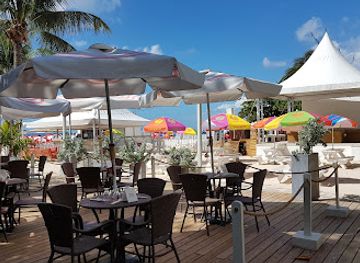
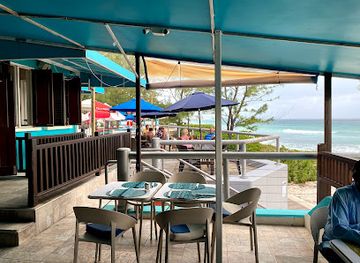
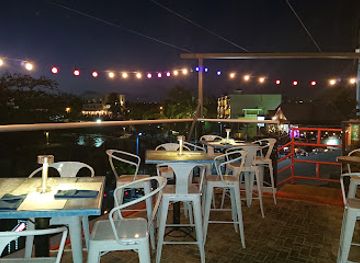
Nightlife on Barbados’s East Coast is quiet and social rather than club-led. Bathsheba and nearby villages have rum shops, informal bars and restaurants where evenings may involve conversation, local music and the sound of the surf, while guesthouses sometimes provide a relaxed setting for drinks. There are no major continuous nightclub districts comparable with those associated with Bridgetown, St Lawrence Gap or parts of the west and south coasts. Some venues may host live music or seasonal events, but schedules change and should be checked locally. The area is better suited to an early dinner, a sunset drink where conditions allow, or a low-key evening in a village bar than to late-night entertainment. Visitors should arrange transport in advance because rural roads are dark, taxis are not always immediately available and walking between scattered establishments is rarely practical.
-
Cocktail bar
Copacabana Beach Club
Discover the beauty of Copacabana Beach Club in Barbados, where vibrant cocktails meet stunning ocean views for an unforgettable experience.
-
Grill
Blakey's Bar & Restaurant
Experience the vibrant flavors and lively atmosphere of Blakey's Bar & Restaurant, a must-visit grill destination in Barbados.
-
Cocktail bar
Cocktail Kitchen
Experience the best of Barbados at Cocktail Kitchen, a vibrant cocktail bar in St. Lawrence Gap, where innovative drinks and delicious food meet stunning beach views.
-
Bar
Fisherman's Pub
Experience the best of Barbadian cuisine and culture at Fisherman's Pub, where delicious food meets stunning seaside views.
Best nightclubs in East Coast
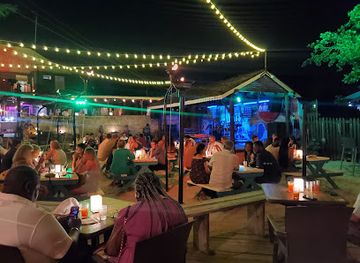
Nightlife on Barbados’s East Coast is quiet and social rather than club-led. Bathsheba and nearby villages have rum shops, informal bars and restaurants where evenings may involve conversation, local music and the sound of the surf, while guesthouses sometimes provide a relaxed setting for drinks. There are no major continuous nightclub districts comparable with those associated with Bridgetown, St Lawrence Gap or parts of the west and south coasts. Some venues may host live music or seasonal events, but schedules change and should be checked locally. The area is better suited to an early dinner, a sunset drink where conditions allow, or a low-key evening in a village bar than to late-night entertainment. Visitors should arrange transport in advance because rural roads are dark, taxis are not always immediately available and walking between scattered establishments is rarely practical.
-
Night club
The Boatyard Beach Club
Discover the vibrant energy of The Boatyard Beach Club in Bridgetown, Barbados, where beach relaxation meets exciting nightlife and delicious cuisine.
-
Cocktail bar
Copacabana Beach Club
Copacabana Beach Club in Barbados: Enjoy exquisite cocktails, lively events, and the stunning beach atmosphere for an unforgettable experience.
-
Night club
Harbour Lights Barbados
Experience the vibrant nightlife of Barbados at Harbour Lights, where dining and entertainment come together by the beautiful sea.
-
Cocktail bar
Drift Ocean Terrace Lounge
Drift Ocean Terrace Lounge - A cocktail haven in Holetown, Barbados, offering stunning ocean views and an unforgettable nightlife experience.


Best shops in East Coast
Shopping on the East Coast is modest and locally oriented, with village shops, small supermarkets, roadside stalls and craft sellers more prominent than large retail centres. Bathsheba is the main place to browse for locally made artwork, photographs, clothing, jewellery and small souvenirs, while rural communities provide opportunities to buy snacks, drinks and seasonal produce. Farmers’ markets and informal produce stands vary by day and season, so visitors should ask locally rather than rely on a fixed schedule. Useful regional purchases include Barbadian food products, rum, pepper sauces, preserves, pottery, woven goods and artwork inspired by the coastline. For a wider choice of books, fashion, galleries, duty-free goods and established shopping centres, visitors generally travel to Bridgetown or the south and west coast, outside the East Coast region. Cash remains useful for small vendors and roadside purchases, and bargaining is not normally expected in ordinary shops.
-
Department store
Bridgetown Duty Free Broad Street
Experience luxury shopping and local treasures at Bridgetown Duty Free on Broad Street, the ultimate shopping destination in Barbados.
-
Shopping mall
Limegrove Lifestyle Centre
Experience the pinnacle of shopping, dining, and entertainment at Limegrove Lifestyle Centre in beautiful Holetown, Barbados.
-
Shopping mall
Quayside Centre Shopping Plaza
Experience the vibrant shopping and dining scene at Quayside Centre Shopping Plaza, a must-visit destination in Barbados.
-
Shopping mall
Lanterns Mall
Experience the lively shopping and dining scene at Lanterns Mall, a vibrant hub in Bridgetown, Barbados, perfect for tourists seeking local flair.

Get your free copy of our complete guide to East Coast, delivered straight to you.
Everything on this page, from attractions and restaurants to essentials and local phrases, in one PDF you can read offline, print or share.
Already have an account? Sign in
Your East Coast guide is ready.
We'll send it to · Not you? Sign out

Getting your guide ready…
We are putting together a fresh copy of the East Coast guide. This can take up to a minute.
This can take a few moments. If your browser asks, choose Allow so the download can start. You'll find the guide in your Downloads folder.
Nothing happened? Download it again
Sorry, the guide is taking longer than usual. Please try again in a minute, or get it by email instead.
East Coast essentials
Currency and Payment
Safety
Emergency Situations
Do's and Don'ts
Local Tips
From Eve
Local phrases worth knowing
You don't need to get them perfect. A few words go a long way, and locals appreciate the effort.
Basics
| English | Local | Say it |
|---|---|---|
| Hello | Hey | [hey] |
| Goodbye | See ya | [see yah] |
| Yes | Yup | [yup] |
| No | Nah | [nah] |
| Please/You're welcome | No problem | [noh prob-lum] |
| Thank you | Thanks | [thanks] |
| Excuse me/Sorry | Sorry 'bout that | [saw-ree bout that] |
| How are you? | How you doin'? | [how yuh doin'] |
| Fine. And you? | Good. And you? | [good. an yuh?] |
| Do you speak English? | You speakin' English? | [yuh speekin' English?] |
| I don't understand | I ain't gettin' it | [I ain't gettin' it] |
Eating & Drinking
| English | Local | Say it |
|---|---|---|
| I'd like to see the menu, please | Can I see the menu? | [can I see the menu?] |
| I don't eat meat | I don' eat meat | [I don' eat meat] |
| Cheers! | Cheers! | [cheers] |
| I would like to pay, please | Can I get the check? | [can I get the check?] |
Emergencies
| English | Local | Say it |
|---|---|---|
| Help! | Help! | [help] |
| Go away! | Get away! | [get away] |
| Call the Police! | Call the cops! | [call the cops] |
| Call a doctor! | Get a doctor! | [get a doctor] |
| I'm lost | I lost my way | [I lost my way] |
| I'm ill | I ain't feelin' good | [I ain't feelin' good] |
Shopping
| English | Local | Say it |
|---|---|---|
| I'd like to buy... | I wanna buy... | [I wanna buy...] |
| I'm just looking | Just lookin' | [just lookin'] |
| How much is it? | How much? | [how much?] |
| That's too expensive | That's too pricey | [that's too pricey] |
| Can you lower the price? | Can you drop the price? | [can you drop the price?] |
Time & Numbers
| English | Local | Say it |
|---|---|---|
| What time is it? | What time? | [what time?] |
| It's one o'clock | It's one | [it's one] |
| Half past (10) | Half past ten | [half past ten] |
| Morning | Mornin' | [mornin'] |
| Afternoon | Afternoon | [afternoon] |
| Evening | Evenin' | [evenin'] |
| Yesterday | Yesterday | [yesterday] |
| Today | Today | [today] |
| Tomorrow | Tomorrow | [tomorrow] |
| 1 | One | [one] |
| 2 | Two | [two] |
| 3 | Three | [three] |
| 4 | Four | [four] |
| 5 | Five | [five] |
| 6 | Six | [six] |
| 7 | Seven | [seven] |
| 8 | Eight | [eight] |
| 9 | Nine | [nine] |
| 10 | Ten | [ten] |
Transport & Directions
| English | Local | Say it |
|---|---|---|
| Where's a/the...? | Where's the...? | [where's the...?] |
| What's the address? | What's the address? | [what's the address?] |
| Can you show me (on the map)? | Can you point it out? | [can you point it out?] |
| When's the next (bus)? | When's the next bus? | [when's the next bus?] |
| A ticket (to ....) | One ticket to ... | [one ticket to ...] |
History of East Coast
Early Indigenous Settlement
Long before European colonisation, Barbados was visited and settled by Indigenous peoples, including communities associated with the Saladoid-Barrancoid and later Arawakan cultural traditions. Archaeological evidence across Barbados shows that these societies farmed, fished and travelled around the island, although many traces were later disturbed by plantation development. The East Coast’s rivers, sheltered gullies and accessible shoreline would have formed part of this wider pattern of movement. Visitors should understand the region’s history as beginning well before the arrival of English colonists, even though surviving visible monuments largely date from the colonial period onwards.
English Colonisation and Plantation Barbados
English settlement began in the seventeenth century and transformed Barbados into a plantation colony based first on tobacco and cotton and increasingly on sugar. The eastern parishes were less densely urbanised than the lowland areas around Bridgetown, but estates, provision grounds, churches and roads connected them to the island-wide sugar economy. Codrington, in St John, became one of the most influential estates in the eastern part of Barbados. Enslaved Africans carried out much of the agricultural labour, and their knowledge, labour and cultural practices fundamentally shaped the society that developed on the island.
Codrington Estate and the Anglican Church
Codrington’s influence extended beyond sugar production. The estate was associated with the Codrington family and later with the Society for the Propagation of the Gospel, which ran a school for the sons of clergy at Codrington College. The college, in the elevated parish of St John, remains one of Barbados’s important historic institutions. The area’s parish churches likewise reflect the organisation of colonial society, while also embodying the religious life of communities whose labour sustained the plantation system. Their architecture and setting remain among the clearest historical markers of the eastern uplands.
Emancipation and the Post-Plantation Countryside
The abolition of slavery in the British colonies took effect in 1834, followed by a period of apprenticeship before full freedom in 1838. Emancipation did not end the economic dominance of sugar, but it changed labour relations and community life throughout rural Barbados. On the East Coast, formerly enslaved families and their descendants continued to work in agriculture while developing village networks, churches, smallholdings and skilled trades. The landscape of fields, settlements and parish roads therefore reflects both plantation inheritance and the long process by which Black Barbadian communities built greater independence.
The 1831 Uprising and Eastern Barbados
The major enslaved uprising of 1831, associated with the leadership of Sam Lord in parts of Barbados and the broader influence of the Baptist preacher Samuel Jackman Prescod’s era of resistance and reform, exposed the instability of the island’s slave society. Barbados’s eastern districts were part of the plantation world affected by the unrest, even where individual events varied from parish to parish. The uprising strengthened pressure for change within the British Empire and is an important reminder that the island’s transition to emancipation was shaped by resistance as well as legislation.
Geology, Roads and the Modern East Coast
The East Coast’s modern identity has been shaped by its geology as much as by its history. The Scotland District’s softer rocks, steep valleys and erosion-prone slopes distinguish it from Barbados’s more level coral terraces. Improved roads and growing private transport made Bathsheba and other eastern communities more accessible during the twentieth century, while the coastline gained recognition for scenery, surfing and recreation. Tourism has developed more lightly here than along the south and west coasts, leaving a landscape where agriculture, village life, coastal weather and outdoor activity remain central to the visitor experience.
East Coast in Photos
Browse through our photo collection highlighting the charm and character of the destination.
Neighbouring regions of East Coast
The closest regions to East Coast, if you have time for more than one.
-

-

-

-

-


Swipe for more regions
Explore more

Explore more of Barbados
Discover Barbados: Pristine beaches, rich history, and vibrant culture await in this Caribbean paradise. Perfect for adventure, relaxation, and culinary delights.
Explore Barbados