

Central Coast, California Travel Guide
Explore California's Central Coast: From charming small towns to breathtaking coastal views, this scenic region offers natural beauty, world-class wineries, and rich history.
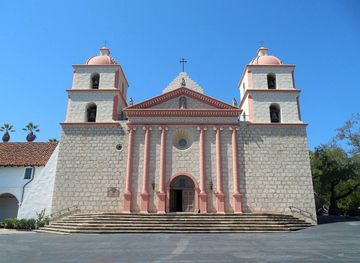
The Central Coast of California is a hidden gem nestled between the bustling cities of Los Angeles and San Francisco. This region boasts a stunning coastline, picturesque vineyards, and charming small towns that offer a relaxing escape for travelers. With its mild climate and natural beauty, the Central Coast is a year-round destination perfect for outdoor activities and leisurely exploration. Begin your journey in Santa Barbara, known as the 'American Riviera.' This city is famous for its Spanish-style architecture, beautiful beaches, and vibrant arts scene. Don't miss the historic Mission Santa Barbara and the scenic Stearns Wharf. Further up the coast, you'll find the quaint town of Solvang, a slice of Denmark in California, with its windmills, Danish bakeries, and boutique wineries. Continue your adventure with a drive along the iconic Pacific Coast Highway, which offers breathtaking views of the Pacific Ocean. Stop by the charming town of Cambria, where you can explore the Moonstone Beach and visit the enchanting Hearst Castle in San Simeon. For nature enthusiasts, the rugged beauty of Big Sur is a must-see, with its dramatic cliffs, redwood forests, and scenic hiking trails. The Central Coast is also a haven for wine lovers. The Paso Robles wine region is renowned for its award-winning wineries and picturesque vineyards. Spend a day wine tasting and enjoying the laid-back atmosphere of this charming area. The nearby town of San Luis Obispo, with its historic downtown and weekly farmers' markets, is another delightful stop on your journey. Whether you're seeking adventure, relaxation, or a bit of both, the Central Coast of California offers a diverse range of experiences that will leave you enchanted and eager to return.

Know before you go
Hi, I'm Eve. Here are a few practical things to know before exploring Central Coast.
- Visit in the spring or fall for pleasant weather and fewer crowds.
- Book Hearst Castle tours in advance, as they can fill up quickly.
- Pack layers, as coastal weather can be unpredictable.
- Try local seafood, especially in coastal towns like Morro Bay.
- Take a detour to explore the quaint Danish town of Solvang.
- Don't miss the sunset at Moonstone Beach in Cambria.
- Check out the local events calendar for festivals and farmers' markets.
Top City Travel Guides in Central Coast
The cities of Central Coast, and the easiest places to base yourself.



Explore Central Coast: Things to Do, Places to Eat, Hotels & More
Handpicked recommendations for top attractions, local dining, accommodations, and more

Top Attractions & Sightseeing in Central Coast
Top-rated picks
Best Attractions

Monterey Bay Aquarium
Explore the captivating marine life and conservation efforts at Monterey Bay Aquarium, a premier tourist attraction on California's stunning coast.

Oceano Dunes State Vehicular Recreation Area
Experience the thrill of driving on the beach and exploring the dunes at California's Oceano Dunes State Vehicular Recreation Area.

Morro Rock Beach
Experience the stunning beauty of Morro Rock Beach in California, where stunning views, golden sands, and vibrant marine life await.

Sutter's Fort State Historic Park
Discover the rich history of California at Sutter's Fort State Historic Park, where the past comes alive through engaging exhibits and beautiful park grounds.

Best landmarks in Central Coast
Top-rated picks
Best Landmarks

Alcatraz Island
Discover the intriguing history and stunning views of Alcatraz Island, a must-visit tourist attraction in San Francisco Bay.

Monterey Bay Aquarium
Experience the magic of marine life at Monterey Bay Aquarium, where conservation meets captivating exhibits in a stunning coastal setting.

Old Town San Diego State Historic Park
Explore the essence of early California at Old Town San Diego State Historic Park, where history comes alive through culture, cuisine, and charming architecture.

Old Fisherman's Wharf
Explore Old Fisherman's Wharf: A Historical Landmark in Monterey, California, Offering Seafood Delights and Scenic Ocean Views.

Best restaurants in Central Coast
Top-rated picks
Best Restaurants

The Big Red Barn, Murray Family Farms
Experience farm-fresh delights at The Big Red Barn – where culinary excellence meets family fun in Bakersfield's beautiful countryside.

Crow's Nest Restaurant
Discover the perfect blend of breathtaking views and delicious cuisine at Crow's Nest Restaurant in Santa Cruz.

Alice's Restaurant
Experience delightful breakfasts at Alice's Restaurant on Skyline Boulevard, where local flavors meet stunning views in California.

Bouchon Bistro
Experience authentic French cuisine at Bouchon Bistro in Yountville, where culinary excellence meets charming ambiance.

Best bars in Central Coast
Top-rated picks
Best Bars

Smuggler's Cove
Experience the vibrant ambiance and exquisite rum cocktails at Smuggler's Cove, a hidden gem in San Francisco's nightlife.

Golden Gate Tap Room
Discover the Golden Gate Tap Room, a vibrant sports bar in San Francisco's Union Square, offering craft beers, delicious food, and arcade fun.

Pappy McGregor's
Discover the vibrant atmosphere and delicious American cuisine at Pappy McGregor's in Paso Robles, where every meal is a celebration.

The Saloon
Discover The Saloon, San Francisco's historic blues bar in North Beach, where live music and great drinks create an unforgettable atmosphere.

Best nightclubs in Central Coast
Top-rated picks
Best Nightclubs

Harry's Night Club & Beach Bar
Discover the lively nightlife of Pismo Beach at Harry's Night Club & Beach Bar, featuring live music, dance, and a vibrant atmosphere.

Wildcat Lounge
Experience the lively atmosphere and exceptional cocktails at Wildcat Lounge, Santa Barbara’s premier cocktail destination perfect for a night out.

Lido Restaurant & Lounge
Discover the ultimate fine dining experience at Lido Restaurant & Lounge, where fresh seafood meets breathtaking ocean views in Shell Beach, California.

The Circle OC
Discover the vibrant nightlife of Huntington Beach at The Circle OC, a premier night club and live music venue offering unforgettable experiences.

Best shops in Central Coast
Top-rated picks
Best Shops

Westfield Galleria at Roseville
Explore the Westfield Galleria at Roseville, where shopping meets dining in a lively atmosphere, perfect for all visitors to California.

Nut Tree Plaza
Experience shopping, dining, and community events at Nut Tree Plaza, Vacaville's premier destination for fun and entertainment.

Broadway Plaza
Discover Broadway Plaza, Walnut Creek's premier shopping destination, featuring a diverse lineup of stores and delightful dining experiences.

Weberstown Mall
Discover Weberstown Mall: the ultimate shopping, dining, and entertainment destination in Stockton, California!

Explore Central Coast on the Map
A handpicked selection of must-see spots in Central Coast, mapped for you.
Central Coast Essentials
-
Central Coast, California, is accessible via multiple major airports, including San Francisco International Airport (SFO), Los Angeles International Airport (LAX), and San Jose International Airport (SJC). From these airports, you can rent a car or take a shuttle bus to reach the Central Coast. Amtrak's Coast Starlight train also runs through the region, providing a scenic route from major cities like Seattle, Portland, San Francisco, and Los Angeles.
-
Getting around the Central Coast is best done by car, as public transportation options are limited. Car rentals are available at major airports and within the region. For shorter trips, local buses and taxis can be used. Some towns, like Santa Barbara and San Luis Obispo, offer bike rentals and have bike-friendly routes. Ride-sharing services such as Uber and Lyft are also available in larger towns.
-
The official currency is the US Dollar (USD). Credit and debit cards are widely accepted in most establishments, including hotels, restaurants, and shops. ATMs are readily available throughout the region. It is advisable to carry some cash for smaller purchases, especially in more remote areas or small businesses that may not accept cards.
-
The Central Coast is generally a safe region for tourists. However, as with any destination, standard safety precautions should be taken. Avoid walking alone at night in unfamiliar areas and keep an eye on your belongings in crowded places. Some neighborhoods in larger cities like Santa Maria and Salinas have higher crime rates; it is best to stay in well-populated and well-lit areas.
-
In case of emergency, dial 911 for immediate assistance. The Central Coast has well-equipped hospitals and medical facilities in major towns such as Santa Barbara, San Luis Obispo, and Salinas. It is recommended to have travel insurance that covers medical emergencies. Pharmacies are available for minor health issues, and many operate 24/7.
-
Fashion: Do dress in layers, as the weather can be unpredictable. Casual attire is generally acceptable, but upscale restaurants may require more formal wear. Religion: Do respect all religious sites and traditions. Some missions and churches may have specific dress codes. Public Transport: Do be courteous to drivers and other passengers. Don't eat or drink on public buses. Greetings: Do greet people with a smile and a handshake. Californians are generally friendly and laid-back. Eating & Drinking: Do try local wines and seafood. Don't forget to tip your servers, typically 15-20% of the bill.
-
To experience the Central Coast like a local, visit the farmers' markets in towns like Santa Barbara, San Luis Obispo, and Monterey. Take part in local festivals and events, such as the Santa Barbara International Film Festival or the Monterey Jazz Festival. Explore the less touristy beaches and hike the numerous coastal trails. Engage with locals at coffee shops and wineries, as they are often eager to share their favorite spots and stories about the region.
When is the best time to visit Central Coast?
Useful Local Phrases for Central Coast
You don't need to speak the language perfectly. Even learning a few simple words can make conversations warmer—and locals usually appreciate the effort.
— Eve

Here are the phrases I use most often in Central Coast. Try a few—you'll be surprised how far they go! 😊
❤️
-
- HelloHey
[hey] - GoodbyeLater
[lay-ter] - YesYeah
[yeah] - NoNah
[nah] - Please/You're welcomeNo problem
[noh prob-lum] - Thank youThanks
[thanks] - Excuse me/SorryExcuse me
[ex-kyoos mee] - How are you?How’s it going?
[howz it go-ing] - Fine. And you?Good, you?
[good, yoo?] - Do you speak English?Do you speak English?
[doo yoo speek ing-glish?] - I don't understandI don’t get it
[eye dont get it]
- HelloHey
-
- I'd like to see the menu, pleaseCan I see the menu?
[kan I see the men-yoo?] - I don't eat meatI’m vegetarian
[I’m ve-ji-tair-ian] - Cheers!Cheers!
[cheers] - I would like to pay, pleaseCan I get the check?
[kan I get the chek?]
- I'd like to see the menu, pleaseCan I see the menu?
-
- Help!Help!
[help] - Go away!Leave me alone!
[leave me uh-lone] - Call the Police!Call the cops!
[call the cops] - Call a doctor!Get a doctor!
[get a doc-tor] - I'm lostI’m lost
[I’m lost] - I'm illI’m not feeling well
[I’m not feel-ing well]
- Help!Help!
-
- I'd like to buy...I want to buy...
[I want to buy...] - I'm just lookingJust browsing
[just brows-ing] - How much is it?What’s the price?
[what's the price?] - That's too expensiveThat’s way too pricey
[that’s way too pry-see] - Can you lower the price?Can you give me a discount?
[kan you give me a dis-kount?]
- I'd like to buy...I want to buy...
-
- What time is it?What time is it?
[what time is it?] - It's one o'clockIt's one o'clock
[it's one o'clock] - Half past (10)Half past ten
[half past ten] - MorningMorning
[morn-ing] - AfternoonAfternoon
[af-ter-noon] - EveningEvening
[ee-ven-ing] - YesterdayYesterday
[yes-ter-day] - TodayToday
[to-day] - TomorrowTomorrow
[to-mor-row] - 1One
[wun] - 2Two
[too] - 3Three
[three] - 4Four
[for] - 5Five
[five] - 6Six
[six] - 7Seven
[sev-en] - 8Eight
[ate] - 9Nine
[nine] - 10Ten
[ten]
- What time is it?What time is it?
-
- Where's a/the...?Where's the...?
[where's the...?] - What's the address?What’s the address?
[what's the ad-dress?] - Can you show me (on the map)?Can you show me on the map?
[kan you show me on the map?] - When's the next (bus)?When's the next bus?
[when's the next bus?] - A ticket (to ....)A ticket to...
[a tick-et to...]
- Where's a/the...?Where's the...?
History of Central Coast
-
Long before European explorers arrived, the Central Coast of California was home to the Chumash people. These indigenous inhabitants lived in the region for thousands of years and developed a rich culture that included advanced basket weaving, maritime skills, and a deep spiritual connection to the land. The Chumash utilized the abundant resources of the coast, including fishing and hunting, to sustain their communities. Their legacy remains visible today in the form of archaeological sites, cave paintings, and cultural artifacts.
-
In the late 18th century, Spanish explorers began to chart the Central Coast. The establishment of missions was a significant event during this period. Mission San Luis Obispo de Tolosa, founded in 1772, and Mission La Purísima Concepción, founded in 1787, were among the missions that sprawled across the region. These missions aimed to convert the native population to Christianity and integrate them into Spanish colonial society. The architecture, agriculture, and cultural practices of the missions deeply influenced the area and continue to be historical landmarks.
-
After Mexico gained independence from Spain in 1821, California came under Mexican rule. This period saw the distribution of large land grants to individuals, many of whom were former soldiers or influential figures. These grants led to the establishment of vast ranchos that shaped the agricultural landscape of the Central Coast. The Rancho Era was marked by cattle ranching, fiestas, and a mix of Mexican and indigenous cultural practices. Many of the boundaries and names from this time persist in modern-day place names and property lines.
-
The California Gold Rush of 1848-1855 brought an influx of settlers to the state, although the Central Coast was less directly impacted compared to northern regions like the Sierra Nevada. However, the increased population and economic activity facilitated California’s admission to the Union as the 31st state in 1850. The Central Coast saw growth in towns and infrastructure, including the development of ports and railroads to support the expanding economy.
-
The late 19th and early 20th centuries marked a significant transformation of the Central Coast into a hub of agricultural productivity. The fertile soil and favorable climate made it ideal for growing a variety of crops, particularly fruits and vegetables. In the mid-20th century, the region also became renowned for its wine production. Areas like Paso Robles and Santa Ynez Valley emerged as prominent wine-producing regions, contributing to both the local economy and the cultural tapestry of the Central Coast.
-
In recent decades, the Central Coast has become a popular destination for tourists seeking natural beauty, historical sites, and cultural experiences. The scenic Highway 1 offers breathtaking views of the Pacific Ocean, while the Hearst Castle in San Simeon stands as a testament to the opulence of early 20th-century America. Efforts to conserve the region’s natural landscapes and wildlife have also gained prominence, with numerous state parks and reserves protecting the unique ecosystems of the area. The balance between tourism and conservation continues to shape the identity of the Central Coast.
Neighbouring Regions of Central Coast
The closest regions to Central Coast, if you have time for more than one.



Your all‑in‑one travel companion app
Explore expert travel guides, compare and book tours, experiences, hotels, and more—all from the palm of your hand. Download now for seamless trip planning wherever your wanderlust takes you.


Explore More of California
Looking beyond Central Coast? Discover California for broader travel guides, local hot-spots, and regional highlights.
Explore CaliforniaCentral Coast in Photos
Browse through our photo collection highlighting the charm and character of the destination.


Discover the Charm of California's Central Coast
The Central Coast of California is a hidden gem nestled between the bustling cities of Los Angeles and San Francisco. This region boasts a stunning coastline, picturesque vineyards, and charming small towns that offer a relaxing escape for travelers. With its mild climate and natural beauty, the Central Coast is a year-round destination perfect for outdoor activities and leisurely exploration. Begin your journey in Santa Barbara, known as the 'American Riviera.' This city is famous for its Spanish-style architecture, beautiful beaches, and vibrant arts scene. Don't miss the historic Mission Santa Barbara and the scenic Stearns Wharf. Further up the coast, you'll find the quaint town of Solvang, a slice of Denmark in California, with its windmills, Danish bakeries, and boutique wineries. Continue your adventure with a drive along the iconic Pacific Coast Highway, which offers breathtaking views of the Pacific Ocean. Stop by the charming town of Cambria, where you can explore the Moonstone Beach and visit the enchanting Hearst Castle in San Simeon. For nature enthusiasts, the rugged beauty of Big Sur is a must-see, with its dramatic cliffs, redwood forests, and scenic hiking trails. The Central Coast is also a haven for wine lovers. The Paso Robles wine region is renowned for its award-winning wineries and picturesque vineyards. Spend a day wine tasting and enjoying the laid-back atmosphere of this charming area. The nearby town of San Luis Obispo, with its historic downtown and weekly farmers' markets, is another delightful stop on your journey. Whether you're seeking adventure, relaxation, or a bit of both, the Central Coast of California offers a diverse range of experiences that will leave you enchanted and eager to return.