

Downtown Long Beach (Long Beach) Travel Guide - Free
Explore Downtown Long Beach in Long Beach with Evendo's free guide. Find the best shops, historic streets, restaurants, and gems on web or mobile.


Downtown Long Beach blends Pine Avenue dining, East Village art, Pacific waterfront walks, harbour attractions and easy access to Southern California culture.
Urban Core by the Pacific
Downtown Long Beach occupies the city’s compact central waterfront, where the grid of Pine Avenue and Broadway meets marinas, convention halls and the broad public spaces of the shoreline. It is the commercial and civic heart of Long Beach rather than a single uniform district: the polished waterfront around Rainbow Harbor and Shoreline Village gives way to the historic blocks of Pine Avenue, the creative venues of the East Village Arts District and the residential streets of Alamitos Beach nearby. The area is unusually walkable for Southern California, with the Metro A Line connecting it to Los Angeles and the harbour within easy reach of the central business streets.Read more about Downtown Long Beach
Waterfront Culture and City Life
Streets, Marinas and Public Spaces
Best attractions in Downtown Long Beach
Downtown Long Beach’s attractions cluster around the meeting point of city and harbour. The Aquarium of the Pacific presents marine life from the Pacific Ocean through galleries, habitats and outdoor exhibits, making it the district’s principal family and conservation-focused institution. Rainbow Harbor offers promenades, marina views and boat excursions, while Shoreline Village adds a waterfront boardwalk atmosphere with restaurants and small retail businesses. Inland, the East Village Arts District rewards wandering through streets marked by murals, galleries, independent cafés and performance spaces. The Long Beach Convention & Entertainment Center and Long Beach Performing Arts Center host exhibitions, concerts and other public programmes, although schedules vary. Pine Avenue provides the main urban promenade of shops, restaurants and historic commercial façades. Across the water, the Queen Mary is a nearby harbour landmark rather than a downtown attraction, visible from several waterfront viewpoints.
-
Park
Cesar E. Chavez Park
Experience the tranquility and beauty of Cesar E. Chavez Park in Long Beach, California - a perfect urban retreat for relaxation and recreation.
14 min walk · 1.1 km from neighbourhood centre
-
Tourist attraction
Long Beach
Experience the best of California in Long Beach: beautiful beaches, rich culture, and endless activities await you.
11 min walk · 0.9 km from neighbourhood centre
-
Park
Victory Park
Discover the tranquility of Victory Park in Long Beach, California – a scenic urban park perfect for relaxation, family fun, and community events.
4 min walk · 0.3 km from neighbourhood centre


Best landmarks in Downtown Long Beach
Downtown Long Beach’s landmark identity is anchored by the waterfront civic complex and the surviving traces of a city shaped by tourism, trade and reinvention. The Long Beach Performing Arts Center and Convention & Entertainment Center form a major modern cultural group near Ocean Boulevard, while the Aquarium of the Pacific gives Rainbow Harbor a distinctive marine focus. Pine Avenue’s older commercial buildings and vertical city blocks provide the clearest sense of the historic downtown street grid. The East Village Arts District contributes murals, galleries and adapted older structures whose significance lies in their continuing cultural use. The Queen Mary, moored across the harbour in the Port of Long Beach, is an important visual and maritime landmark but is not located within the downtown mainland neighbourhood. Waterfront promenades, marina basins and views towards the port complete the area’s symbolic connection with the Pacific.
-
Tourist attraction
Shoreline Village
Explore the vibrant waterfront of Shoreline Village in Long Beach, California, where shopping, dining, and entertainment come together for an unforgettable experience.
11 min walk · 0.9 km from neighbourhood centre
-
Historical landmark
Willmore Building
Explore the Willmore Building, a stunning historical landmark in Long Beach, California, reflecting the city's rich architectural heritage and vibrant culture.
6 min walk · 0.5 km from neighbourhood centre
-
Tourist attraction
Long Beach Sign
Discover the vibrant Long Beach Sign, a colorful landmark in Downtown Long Beach that captures the spirit of California's coastal culture.
15 min walk · 1.2 km from neighbourhood centre
-
Historical landmark
Toms Place: CALIFORNIAN (1923)
Explore Toms Place, a historic landmark in Downtown Long Beach, showcasing early 20th-century California architecture and rich cultural heritage.
6 min walk · 0.5 km from neighbourhood centre


Explore Downtown Long Beach on the map
A handpicked selection of must-see spots in Downtown Long Beach, mapped for you.
Best hotels in Downtown Long Beach
Best restaurants in Downtown Long Beach
Dining in Downtown Long Beach ranges from busy Pine Avenue restaurants and cocktail-led dining rooms to cafés, bakeries and informal places around the East Village and waterfront. The area reflects the city’s Southern Californian setting, with Mexican and Latin American cooking, seafood, burgers, pizza, Asian cuisines and contemporary menus appearing across the central grid rather than in one specialised enclave. Rainbow Harbor and Shoreline Village provide views and visitor-oriented dining close to the marinas, while inland streets generally offer a more urban, local rhythm. The East Village’s independent businesses suit coffee, light meals and casual evenings, and the Convention Center area gains additional choices during events. Visitors should distinguish the restaurant concentration of downtown from the separate commercial strips of Belmont Shore and Retro Row, which are elsewhere in Long Beach.
-
New American
Yard House
Experience vibrant New American cuisine at Yard House in Long Beach's Shoreline Village – where great food meets lively ambiance.
10 min walk · 0.8 km from neighbourhood centre
-
Seafood
Parkers' Lighthouse
Discover exquisite seafood dining at Parkers' Lighthouse in Long Beach—where fresh flavors meet stunning waterfront views.
12 min walk · 0.9 km from neighbourhood centre
-
Seafood
Gladstone's Long Beach
Experience exceptional seafood dining with breathtaking ocean views at Gladstone's Long Beach - where every meal feels like a celebration.
9 min walk · 0.7 km from neighbourhood centre
-
Restaurant
BO-beau kitchen + roof tap
Experience exquisite California cuisine with breathtaking rooftop views at BO-beau Kitchen + Roof Tap in Long Beach.
1 min walk · 0.1 km from neighbourhood centre


Best bars in Downtown Long Beach
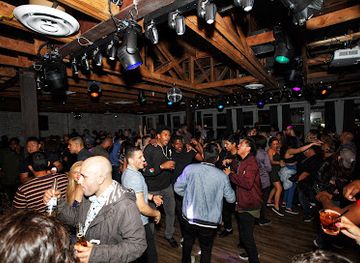
After dark, Downtown Long Beach concentrates its nightlife around Pine Avenue, the East Village and the waterfront rather than operating as one continuous club district. Pine Avenue has long been the main evening corridor, with pubs, cocktail bars, restaurants and venues that become busier around concerts, conventions and weekend events. The East Village offers a more mixed atmosphere of bars, cafés, galleries and small performance spaces, while Rainbow Harbor and Shoreline Village are oriented more towards waterfront dining and early-evening socialising. Places such as The Auld Dubliner, Blind Donkey and Sevilla are established names associated with the downtown entertainment scene, but opening arrangements and programming can change. The district also benefits from the Performing Arts Center and arena, where a ticketed show can shape the evening without requiring a nightclub-focused itinerary.
-
Bar
Yard House
Experience the vibrant atmosphere of Yard House in Long Beach, where American cuisine meets an extensive selection of draft beers by the marina.
10 min walk · 0.8 km from neighbourhood centre
-
Bar
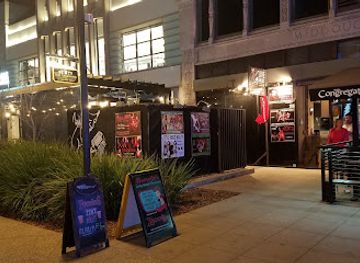
Congregation Brewery & Cocina - Long Beach
Experience the perfect blend of craft beer and delicious cuisine at Congregation Brewery & Cocina in Long Beach, where every meal is a celebration.
2 min walk · 0.1 km from neighbourhood centre
-
Cocktail bar
Blind Donkey
Experience the vibrant cocktail and beer culture at The Blind Donkey in Long Beach, a lively bar perfect for socializing and relaxation.
5 min walk · 0.4 km from neighbourhood centre
-
Bar
House of Hayden
Experience the vibrant nightlife at House of Hayden, a cocktail bar and pool hall in Long Beach, perfect for an unforgettable evening out.
5 min walk · 0.4 km from neighbourhood centre


Best nightclubs in Downtown Long Beach
After dark, Downtown Long Beach concentrates its nightlife around Pine Avenue, the East Village and the waterfront rather than operating as one continuous club district. Pine Avenue has long been the main evening corridor, with pubs, cocktail bars, restaurants and venues that become busier around concerts, conventions and weekend events. The East Village offers a more mixed atmosphere of bars, cafés, galleries and small performance spaces, while Rainbow Harbor and Shoreline Village are oriented more towards waterfront dining and early-evening socialising. Places such as The Auld Dubliner, Blind Donkey and Sevilla are established names associated with the downtown entertainment scene, but opening arrangements and programming can change. The district also benefits from the Performing Arts Center and arena, where a ticketed show can shape the evening without requiring a nightclub-focused itinerary.
-
Night club
Harvelle's Long Beach
Experience the vibrant nightlife at Harvelle's Long Beach, where live music and burlesque shows meet a unique bar atmosphere.
2 min walk · 0.1 km from neighbourhood centre
-
Bar
Agaves Ultra Lounge
Discover the energetic nightlife at Agaves Ultra Lounge, an iconic bar in Long Beach, California, known for its cocktails and vibrant atmosphere.
2 min walk · 0.2 km from neighbourhood centre
-
Night club
At The Top
Discover Long Beach's premier nightlife venue, At The Top, where live music and stylish ambiance create an unforgettable experience.
2 min walk · 0.2 km from neighbourhood centre
-
Night club
Sevilla Nightclub of Long Beach
Sevilla Nightclub in Long Beach offers an electrifying mix of live music and dancing, making it a must-visit for nightlife enthusiasts.
1 min walk · 0.1 km from neighbourhood centre


Best shops in Downtown Long Beach
Shopping in Downtown Long Beach is strongest in the independent and visitor-oriented businesses scattered along Pine Avenue, the East Village and the waterfront rather than in a single enclosed retail centre. Shoreline Village offers small shops and seaside browsing around Rainbow Harbor, while the East Village Arts District is associated with galleries, design-led businesses, vintage and independent retail, cafés and creative studios. Pine Avenue combines everyday services with restaurants and nightlife, and its commercial façades make the walk between the Metro station and the water part of the shopping experience. The area is useful for locally made art, gifts and casual clothing, though visitors seeking a large concentration of mainstream fashion should look beyond downtown. Belmont Shore and Retro Row have different retail identities and are separate Long Beach districts, not extensions of the central waterfront.
-
Promenade
The Promenade
Experience the lively atmosphere of The Promenade in Long Beach, where scenic waterfront views meet vibrant dining and shopping options.
1 min walk · 0.1 km from neighbourhood centre
-
Gift shop
Burke Mercantile
Explore Burke Mercantile in Long Beach for unique gifts, fashion accessories, and home goods that celebrate local artisans and creativity.
5 min walk · 0.4 km from neighbourhood centre
-
Gift shop
Village Treasures
Explore Village Treasures, the charming gift shop in Downtown Long Beach, where unique local crafts and souvenirs await every visitor.
2 min walk · 0.2 km from neighbourhood centre
-
Clothing store
MAKE Collectives
Explore unique fashion and home goods at MAKE Collectives in Downtown Long Beach, where creativity meets style in a welcoming boutique environment.
5 min walk · 0.4 km from neighbourhood centre


Downtown Long Beach essentials
Getting There
Getting Around
Safety
Emergency Situations
Do's and Don'ts
Local Tips

From Eve
Local phrases worth knowing
You don't need to get them perfect. A few words go a long way, and locals appreciate the effort.
Basics
| English | Local | Say it |
|---|---|---|
| Hello | Hey | [hey] |
| Goodbye | Later | [lay-ter] |
| Yes | Yeah | [yeh] |
| No | Nah | [nah] |
| Please/You're welcome | Please/No worries | [pleez/no wuhr-eez] |
| Thank you | Thanks | [thanks] |
| Excuse me/Sorry | Excuse me/Sorry | [ex-kyooz mee/sor-ee] |
| How are you? | What's up? | [wuts up] |
| Fine. And you? | Chillin'. You? | [chil-in. yoo] |
| Do you speak English? | You speak English? | [yoo speek ing-glish?] |
| I don't understand | I don't get it | [I don't get it] |
Eating & Drinking
| English | Local | Say it |
|---|---|---|
| I'd like to see the menu, please | Can I see the menu? | [kan eye see the men-yoo?] |
| I don't eat meat | I don't do meat | [I don't do meat] |
| Cheers! | Cheers! | [cheers] |
| I would like to pay, please | Check please | [chek pleez] |
Emergencies
| English | Local | Say it |
|---|---|---|
| Help! | Help! | [help!] |
| Go away! | Get lost! | [get lost!] |
| Call the Police! | Call the cops! | [call the cops!] |
| Call a doctor! | Get a doc! | [get a doc!] |
| I'm lost | I'm lost | [im lost] |
| I'm ill | I'm sick | [im sik] |
Shopping
| English | Local | Say it |
|---|---|---|
| I'd like to buy... | I wanna buy... | [eye wan-na buy] |
| I'm just looking | Just browsing | [just brows-ing] |
| How much is it? | How much? | [how much?] |
| That's too expensive | That's pricey | [thats prye-see] |
| Can you lower the price? | Can you do a deal? | [kan yoo do a deal?] |
Time & Numbers
| English | Local | Say it |
|---|---|---|
| What time is it? | What's the time? | [wuts the time?] |
| It's one o'clock | It's one | [its one] |
| Half past (10) | Ten-thirty | [ten-thur-tee] |
| Morning | Morning | [mor-ning] |
| Afternoon | Afternoon | [af-ter-noon] |
| Evening | Evening | [ee-ven-ing] |
| Yesterday | Yesterday | [yes-ter-day] |
| Today | Today | [to-day] |
| Tomorrow | Tomorrow | [to-mor-row] |
| 1 | One | [wun] |
| 2 | Two | [too] |
| 3 | Three | [three] |
| 4 | Four | [for] |
| 5 | Five | [fiv] |
| 6 | Six | [siks] |
| 7 | Seven | [sev-en] |
| 8 | Eight | [ayt] |
| 9 | Nine | [nine] |
| 10 | Ten | [ten] |
Transport & Directions
| English | Local | Say it |
|---|---|---|
| Where's a/the...? | Where's the... | [wheres the] |
| What's the address? | What's the addy? | [whats the addy] |
| Can you show me (on the map)? | Can you show me (on the map)? | [kan yoo show mee on the map] |
| When's the next (bus)? | When's the next (bus)? | [whens the next bus] |
| A ticket (to ....) | A ticket (to ....) | [a ticket to] |
History of Downtown Long Beach
From Ranchos to a Port City
The land that became downtown Long Beach formed part of the rancho-era landscape of southern Los Angeles County before the city developed as a settlement in the late nineteenth century. Long Beach was incorporated in 1888, and its early town centre grew around the Pacific shoreline, commercial streets and the arrival of rail connections. The oceanfront encouraged tourism, while the developing grid supported shops, hotels and civic buildings. Downtown’s identity was therefore shaped from the beginning by two linked economies: a local business district serving residents and a coastal resort attracting visitors from the wider region.
The Shoreline as Civic Centre
During the early twentieth century, Long Beach expanded rapidly as a seaside city, and the downtown waterfront became a stage for recreation, public events and transport. The Municipal Auditorium, opened in 1905 and later enlarged, helped establish the shoreline as a civic and entertainment centre; its replacement, the Long Beach Convention & Entertainment Center, continues that role. Oil discoveries in the wider Long Beach area also transformed the local economy and municipal fortunes during the twentieth century, while the port strengthened the city’s connection to international trade. Downtown consequently developed as both a public-facing oceanfront and the administrative centre of a major working city.
Earthquake, Renewal and Modern Towers
The 1933 Long Beach earthquake caused extensive damage, particularly to unreinforced masonry buildings and schools, and prompted major changes in construction practice across California. Downtown was rebuilt and remodelled over subsequent decades, with modern civic, commercial and residential structures joining surviving historic buildings. The waterfront was reshaped repeatedly as roads, parking areas, marinas and public amenities were reorganised. By the late twentieth century, redevelopment around Rainbow Harbor, the convention complex and Pine Avenue sought to reconnect the commercial centre with the Pacific after years in which traffic infrastructure and surface parking had weakened that relationship.
Arts Districts and Waterfront Reconnection
Late twentieth- and early twenty-first-century investment brought new cultural institutions, housing and public spaces to downtown. The Aquarium of the Pacific opened in 1998 at Rainbow Harbor, while the East Village Arts District acquired a stronger profile through galleries, performance spaces, murals, cafés and adaptive reuse. Residential development increased along the central grid, changing the rhythm of streets that had once emptied after business hours. Contemporary downtown Long Beach remains a layered environment: a convention and civic centre, a maritime gateway, an arts district and a residential neighbourhood whose development continues to balance waterfront access, commercial growth and local urban life.
Downtown Long Beach in Photos
Browse through our photo collection highlighting the charm and character of the destination.
Neighbourhoods near Downtown Long Beach
The closest neighbourhoods to Downtown Long Beach, if you have time for more than one stop.
-

-
-


Swipe for more neighbourhoods
Explore more

Explore more of Long Beach
Long Beach, California blends Pacific beaches, a working harbour, art museums, historic districts and lively waterfront culture for memorable city breaks.
Explore Long Beach