

Mile End (Montreal) Travel Guide - Free
Explore Mile End in Montreal with Evendo's free guide. Find the best shops, historic streets, restaurants, and gems on web or mobile.


Mile End, Montreal blends Jewish and Greek heritage, legendary bagels, independent cafés, live music, galleries and walkable streets with local character.
Layered Local Identity
Mile End occupies a compact, walkable part of Montreal between the Plateau, Outremont and Rosemont–La Petite-Patrie. Its boundaries are understood informally, but streets such as Saint-Viateur, Fairmount, Bernard and Park form its recognisable framework. The neighbourhood’s identity grew from successive waves of immigration, particularly Jewish and Greek communities, whose bakeries, cafés, synagogues, shops and workshops still shape its streetscape. Today, those older layers sit alongside Portuguese, francophone and other influences, giving Mile End a character that is culturally varied without losing its local scale.Read more about Mile End
Streets, Shops and Everyday Life
Music, Food and Creative Culture
Best landmarks in Mile End
Mile End’s landmarks are modest in scale but closely tied to the neighbourhood’s social history. St-Viateur Bagel and Fairmount Bagel are working food institutions whose enduring presence reflects the area’s Jewish Montreal heritage and distinctive bagel tradition. Wilensky’s Light Lunch, with its long association with Fairmount Street, represents another layer of twentieth-century commercial history. The Rialto Theatre on Park Avenue, close to the neighbourhood’s western boundary, is a prominent early twentieth-century entertainment building whose ornate exterior makes it a useful architectural reference point, although boundary lines are informal. Parc du Portugal marks the eastern side with a small plaza and a tiled, Portuguese-influenced setting. Low-rise apartment blocks, exterior staircases, former workshops and older shopfronts across Saint-Viateur and Fairmount complete the neighbourhood’s characteristic built landscape.
-
Scenic spot
Camilien-Houde belvedere
Enjoy panoramic Montreal views from this iconic Mount Royal Park lookout, perfect for sunsets and cityscapes.
5 min drive · 1.6 km from neighbourhood centre
-
Historical landmark
Mount Royal Cross
Discover the Mount Royal Cross, a historical monument offering breathtaking views, scenic trails, and a glimpse into Montreal's rich heritage.
6 min drive · 1.9 km from neighbourhood centre
-
Tour operator
Local Montreal Food Tours - Mile-End & Old Montreal Food Tours
Explore the culinary treasures of Montreal with guided food tours through Mile-End and Old Montreal, tasting local delicacies and cultural delights.
5 min walk · 0.4 km from neighbourhood centre
-
Park
Marché des Possibles
Experience the vibrant culture and creativity at Marché des Possibles, a lively park and festival space in Montreal's Plateau-Mont-Royal.
7 min walk · 0.6 km from neighbourhood centre

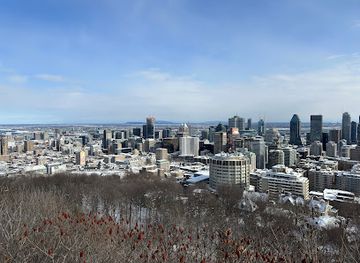


Explore Mile End on the map
A handpicked selection of must-see spots in Mile End, mapped for you.
Best hotels in Mile End
Best restaurants in Mile End
Mile End’s dining culture reflects its history as a meeting place for immigrant communities, small businesses and creative workers. The most recognisable food tradition is the Montreal bagel, represented by the long-established bakeries on Saint-Viateur and Fairmount, where wood-fired production remains central to the experience. Wilensky’s Light Lunch offers another historic, counter-service expression of the neighbourhood, while restaurants such as Lawrence, Larrys and Boucherie Lawrence represent its more contemporary dining profile. Cafés are essential to the local rhythm, from the enduring Café Olimpico to smaller coffee shops spread across Saint-Viateur, Bernard and nearby streets. The area also supports bakeries, casual international restaurants and wine-focused or seasonal dining rooms, but its appeal lies less in a single cuisine than in the overlap between Jewish, Greek, Portuguese, francophone and newer Montreal influences.
-
Italian
Drogheria Fine
Experience authentic Italian cuisine at Drogheria Fine in Montreal's vibrant Le Plateau-Mont-Royal district.
4 min walk · 0.3 km from neighbourhood centre
-
Restaurant
larrys
Discover Larry's: A charming breakfast restaurant and wine bar in Montreal's Plateau-Mont-Royal offering delicious cuisine and cozy ambiance.
2 min walk · 0.2 km from neighbourhood centre
-
Restaurant
L'Gros Luxe Mile-End
Experience Montreal's culinary diversity at L'Gros Luxe Mile-End - where local flavors meet innovative dining.
10 min walk · 0.8 km from neighbourhood centre
-
Eclectic
Île Flottante
Experience eclectic flavors at Île Flottante in Montreal's Le Plateau-Mont-Royal - where creativity meets taste in every dish.
7 min walk · 0.6 km from neighbourhood centre


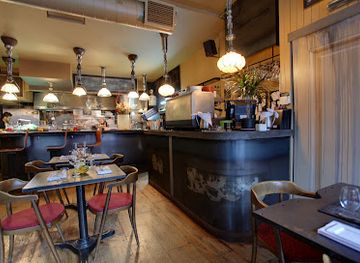
Best bars in Mile End
Mile End’s nightlife is centred on conversation, food, small venues and live music rather than large-scale clubbing. Saint-Viateur and Fairmount remain active after dark, with bars and restaurants drawing a mixed local and visiting crowd, while venues such as Casa del Popolo have helped sustain the neighbourhood’s association with independent music and performance. Dieu du Ciel!, on Laurier Avenue West near the neighbourhood’s southern edge, is a significant destination for local craft beer culture, although the surrounding street also belongs to the wider Plateau context. Smaller bars, cafés that stay open late and intimate performance spaces create a varied evening circuit, but residential streets can become quiet only a few blocks away. Check current programmes and entry arrangements directly, since music nights and venue schedules change.
-
Brewpub
Brasserie Dieu du Ciel! - Brouepub Montréal
Experience the vibrant craft beer scene at Brasserie Dieu du Ciel! in Montreal, where unique brews and a friendly atmosphere await.
4 min walk · 0.3 km from neighbourhood centre
-
Pub
Pub Bishop & Bagg
Discover the charm of Bishop & Bagg, a lively pub in Montreal's Plateau offering delicious brunches, craft cocktails, and a vibrant atmosphere.
6 min walk · 0.4 km from neighbourhood centre
-
Bar
Bar Henrietta
Experience the vibrant atmosphere and exquisite culinary offerings of Bar Henrietta, a top bar and restaurant in Montreal's Plateau-Mont-Royal.
5 min walk · 0.4 km from neighbourhood centre
-
Bar
Bar Waverly
Experience the vibrant nightlife at Bar Waverly, where innovative cocktails and a lively atmosphere create the perfect evening in Montreal.
5 min walk · 0.4 km from neighbourhood centre


Best nightclubs in Mile End
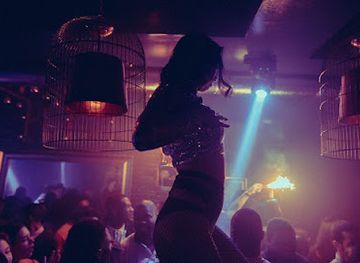
Mile End’s nightlife is centred on conversation, food, small venues and live music rather than large-scale clubbing. Saint-Viateur and Fairmount remain active after dark, with bars and restaurants drawing a mixed local and visiting crowd, while venues such as Casa del Popolo have helped sustain the neighbourhood’s association with independent music and performance. Dieu du Ciel!, on Laurier Avenue West near the neighbourhood’s southern edge, is a significant destination for local craft beer culture, although the surrounding street also belongs to the wider Plateau context. Smaller bars, cafés that stay open late and intimate performance spaces create a varied evening circuit, but residential streets can become quiet only a few blocks away. Check current programmes and entry arrangements directly, since music nights and venue schedules change.
-
Night club
Bar Datcha
Experience the vibrant nightlife of Montreal at Bar Datcha, where cocktails, music, and dancing come together in a lively atmosphere.
5 min walk · 0.4 km from neighbourhood centre
-
Night club
Club Peopl
Unleash your night at Club Peopl, Montreal's dynamic night club offering electrifying music and an unforgettable atmosphere.
6 min drive · 2.1 km from neighbourhood centre
-
Night club
Cave Montreal - Venue
Discover the heart of Montreal's nightlife at Cave Montreal, a vibrant night club offering diverse music and unforgettable experiences.
16 min walk · 1.3 km from neighbourhood centre
-
Bar
Kiss Lounge
Experience the vibrant nightlife of Montreal at Kiss Lounge, where music and dance come alive in an unforgettable atmosphere.
13 min walk · 1.0 km from neighbourhood centre


Best shops in Mile End
Shopping in Mile End is strongest in independent, specialist and culturally focused businesses rather than large retail chains. Drawn & Quarterly on Bernard Street is a leading destination for graphic novels, comics and independent publishing, while record shops, bookshops, vintage clothing stores and small design retailers appear along Saint-Viateur, Fairmount, Bernard and nearby Saint-Laurent. Food shopping remains part of the neighbourhood’s commercial identity, with bagel bakeries, cafés, fruit and grocery shops and specialist restaurants serving both residents and visitors. The area’s retail character changes from block to block: established family businesses stand beside newer creative enterprises, and some former industrial or workshop premises have become studios and shops. Visitors should expect a browsable, neighbourhood-scale experience rather than a concentrated shopping centre, with many businesses operating independently and stock changing regularly.
-
Gift shop
Annex Vintage
Explore Annex Vintage in Montreal for unique vintage clothing, eclectic gifts, and timeless treasures that celebrate the charm of the past.
3 min walk · 0.3 km from neighbourhood centre
-
Women's clothing store
Le Trunkshop
Explore Le Trunkshop in Montreal's Plateau-Mont-Royal for stylish women's clothing and a unique boutique shopping experience.
10 min walk · 0.8 km from neighbourhood centre
-
Women's clothing store
Boutique Unicorn
Explore unique women's fashion at Boutique Unicorn, a stylish clothing store in the heart of Montreal's Plateau-Mont-Royal district.
3 min walk · 0.2 km from neighbourhood centre
-
Vintage clothing store
Studio Citizen
Explore Studio Citizen, a vintage clothing store in Montreal's Le Plateau-Mont-Royal, where unique fashion meets local artistry.
3 min walk · 0.2 km from neighbourhood centre


Mile End essentials
Getting There
Getting Around
Safety
Emergency Situations
Do's and Don'ts
Local Tips

From Eve
Local phrases worth knowing
You don't need to get them perfect. A few words go a long way, and locals appreciate the effort.
Basics
| English | Local | Say it |
|---|---|---|
| Hello | Bonjour | [bon-zhoor] |
| Goodbye | Au revoir | [oh reh-vwah] |
| Yes | Oui | [wee] |
| No | Non | [nohn] |
| Please/You're welcome | S'il vous plaît | [seel voo pleh] |
| Thank you | Merci | [mehr-see] |
| Excuse me/Sorry | Excusez-moi | [ehk-skyoo-zay mwah] |
| How are you? | Comment ça va? | [koh-mohn sah vah] |
| Fine. And you? | Bien. Et toi? | [byehn. ay twah] |
| Do you speak English? | Parlez-vous anglais? | [pahr-lay voo ahn-glay] |
| I don't understand | Je ne comprends pas | [zhuh nuh kohm-prahn pah] |
Eating & Drinking
| English | Local | Say it |
|---|---|---|
| I'd like to see the menu, please | Je voudrais voir le menu, s'il vous plaît | [zhuh voo-dray vwahr luh men-yoo, seel voo pleh] |
| I don't eat meat | Je ne mange pas de viande | [zhuh nuh mahnzh pah duh vyand] |
| Cheers! | Santé! | [sahn-tay] |
| I would like to pay, please | Je voudrais payer, s'il vous plaît | [zhuh voo-dray pay-yay, seel voo pleh] |
Emergencies
| English | Local | Say it |
|---|---|---|
| Help! | Aidez-moi! | [ay-day mwah] |
| Go away! | Allez-vous en! | [ah-lay voo zahn] |
| Call the Police! | Appelez la police! | [ah-pay-lay lah poh-leece] |
| Call a doctor! | Appelez un médecin! | [ah-pay-lay uh may-deh-sahn] |
| I'm lost | Je suis perdu | [zhuh swee pair-doo] |
| I'm ill | Je suis malade | [zhuh swee mah-lahd] |
Shopping
| English | Local | Say it |
|---|---|---|
| I'd like to buy... | Je voudrais acheter... | [zhuh voo-dray zah-shey...] |
| I'm just looking | Je regarde simplement | [zhuh ruh-gahrd sahm-pluh-mahn] |
| How much is it? | Combien ça coûte? | [kohm-byen sah koot] |
| That's too expensive | C'est trop cher | [say troh shair] |
| Can you lower the price? | Pouvez-vous baisser le prix? | [poo-veh voo beh-say luh pree] |
Time & Numbers
| English | Local | Say it |
|---|---|---|
| What time is it? | Quelle heure est-il? | [kell uhr eh-teel] |
| It's one o'clock | Il est une heure | [eel eh zewn uhhr] |
| Half past (10) | Dix et demie | [dee eh duh-mee] |
| Morning | Matin | [mah-tahn] |
| Afternoon | Après-midi | [ah-pray-mee-dee] |
| Evening | Soir | [swahr] |
| Yesterday | Hier | [ee-yehr] |
| Today | Aujourd'hui | [oh-zhoor-dwee] |
| Tomorrow | Demain | [duh-mahn] |
| 1 | Un | [uhn] |
| 2 | Deux | [duh] |
| 3 | Trois | [trwah] |
| 4 | Quatre | [kah-truh] |
| 5 | Cinq | [sank] |
| 6 | Six | [sees] |
| 7 | Sept | [sept] |
| 8 | Huit | [wheat] |
| 9 | Neuf | [nuhf] |
| 10 | Dix | [dee] |
Transport & Directions
| English | Local | Say it |
|---|---|---|
| Where's a/the...? | Où est le/la...? | [oo eh luh/lah] |
| What's the address? | Quelle est l'adresse? | [kell eh lah-dress] |
| Can you show me (on the map)? | Pouvez-vous me montrer (sur la carte)? | [poo-veh voo muh mohn-tray (soor lah kart)] |
| When's the next (bus)? | Quand est le prochain (bus)? | [kahnd eh luh proh-shahn (boos)] |
| A ticket (to ....) | Un billet (pour ....) | [uhn bee-yay (poor)] |
History of Mile End
From Farmland to Street Grid
Before urban development, the area now associated with Mile End lay beyond Montreal’s dense central core and was used largely for rural landholdings. Urban expansion accelerated in the late nineteenth century as Montreal’s population grew northwards and streets were laid out between the Plateau and Outremont. The neighbourhood’s name has been linked to the former Mile End district and farm, although the exact origins of the local naming tradition are less certain than its later use. By the turn of the twentieth century, modest houses, apartment buildings, workshops and commercial premises were filling the emerging street grid.
Immigrant Communities Take Root
During the early twentieth century, Mile End became home to immigrant communities whose institutions and businesses gave the district much of its enduring character. Jewish residents established synagogues, schools, shops, bakeries and food businesses, while Greek immigrants and later Portuguese residents added further cultural and commercial layers. Saint-Laurent Boulevard and the cross streets leading towards Saint-Viateur and Fairmount became important settings for small-scale commerce. The area’s surviving bagel bakeries and delicatessens are reminders of this period, when food production, retail and close-knit community networks were central to everyday life.
Factories, Workshops and Urban Change
Mile End developed alongside Montreal’s industrial and commercial growth, with workshops, garment-related businesses and small factories occupying parts of the neighbourhood. Railway infrastructure and the city’s expanding streetcar network improved access and encouraged denser residential development, particularly in the surrounding apartment districts. The area was never defined solely by industry: cafés, markets, religious institutions and family businesses operated beside workspaces and homes. As manufacturing declined and economic patterns shifted in the later twentieth century, older commercial premises became available for studios, publishers, rehearsal rooms and independent enterprises.
Creative Renewal and Rising Costs
From the late twentieth century, Mile End attracted artists, musicians, writers, publishers and designers, drawn by its adaptable buildings, central location and established cultural life. Independent music venues, small presses, galleries and cafés helped make the neighbourhood a recognised centre of Montreal’s creative culture. Casa del Popolo and Drawn & Quarterly became particularly visible within that ecosystem, while established food businesses continued to serve long-standing communities. Rising property values and rents have since altered the balance between affordable workspaces, family businesses and newer commercial ventures, making questions of continuity, access and neighbourhood identity part of Mile End’s contemporary story.
Mile End in Photos
Browse through our photo collection highlighting the charm and character of the destination.
Neighbourhoods near Mile End
The closest neighbourhoods to Mile End, if you have time for more than one stop.
-

-

-

-

-


Swipe for more neighbourhoods
Explore more

Explore more of Montreal
Montreal combines Old World architecture, Quebec culture, renowned museums, lively markets, Mount Royal views and memorable food across a welcoming island city.
Explore Montreal