

Parliament Hill (Ottawa) Travel Guide - Free
Explore Parliament Hill in Ottawa with Evendo's free guide. Find the best shops, historic streets, restaurants, and gems on web or mobile.


Parliament Hill in Ottawa pairs Canada’s Gothic Revival seat of government with the Rideau Canal, national history, public art and civic ceremony.
Canada’s Political Stage
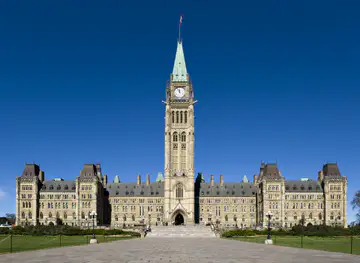
Parliament Hill occupies the limestone bluff at the centre of Ottawa, overlooking the Ottawa River and forming the symbolic heart of Canada’s capital. The precinct is dominated by the Parliament Buildings, whose Gothic Revival towers, pointed arches and carved stonework give the area a distinctive nineteenth-century character. The Centre Block is undergoing a long-term rehabilitation, while the West Block accommodates the House of Commons and the Senate operates from the Senate of Canada Building nearby; visitor access and tour arrangements therefore change as restoration progresses.Read more about Parliament Hill
Grounds, Views and Ceremony
Downtown Connections
Best attractions in Parliament Hill
The principal attraction is the Parliament Buildings themselves, set across landscaped grounds above the Ottawa River. Visitors can admire the West Block, East Block and the Peace Tower from the exterior, while parliamentary tours and public programmes provide access to selected interiors when security, construction and institutional schedules permit. The Library of Parliament, visible behind Centre Block, is among the precinct’s most recognisable architectural features, although access is controlled. The grounds contain statues, memorials and viewpoints that reward a slow circuit rather than a single photograph from Wellington Street. Nearby but outside the Hill, the National War Memorial and Confederation Square extend the civic landscape, while the Rideau Canal provides a contrasting recreational setting. During suitable seasons, the precinct also hosts major public ceremonies and national celebrations, though these can involve crowd controls and altered access.
-
Tourist attraction
Centennial Flame
Explore the Centennial Flame in Ottawa, a monumental tribute to Canada's unity and heritage, capturing the heart of the nation in a stunning display.
1 min walk · 0.1 km from neighbourhood centre
-
Tourist attraction
Guided Tours of Parliament
Explore the grandeur of Canada's Parliament Hill, where history, architecture, and democracy come alive in the heart of Ottawa.
1 min walk · 0.1 km from neighbourhood centre


Best landmarks in Parliament Hill
The Parliament Buildings define the precinct’s architectural identity, with the Gothic Revival West and East blocks framing the Centre Block and its Peace Tower. Centre Block’s carved stonework, pointed arches and parliamentary chambers form the historic core, although the building is currently undergoing extensive rehabilitation and interior access is restricted. The Library of Parliament survives as a particularly distinctive circular structure behind Centre Block, while the grounds contain statues and memorials connected with Canadian political and military history. The escarpment itself is also significant: the Hill’s elevated position gives the buildings a commanding relationship with the Ottawa River and Gatineau beyond. The nearby National War Memorial and Confederation Square are important related landmarks, but they stand outside Parliament Hill’s boundaries and belong to the wider ceremonial landscape of central Ottawa.
-
 Historical place
Parliament Hill
Explore the iconic Parliament Hill, a historical landmark in Ottawa showcasing Canada's political heritage and stunning architecture, perfect for tourists and history enthusiasts.
1 min walk · 0.1 km from neighbourhood centre
-
Tourist attraction
Guided Tours of Parliament
Experience the grandeur of Canadian democracy at Parliament Hill, where history and architecture come alive through guided tours.
1 min walk · 0.1 km from neighbourhood centre
-
Historical landmark
Terry Fox Statue
Discover the inspiring Terry Fox Statue in Ottawa, a symbol of courage and hope dedicated to one of Canada's greatest heroes.
2 min walk · 0.2 km from neighbourhood centre
-
Historical landmark
Peace Tower
Visit the Peace Tower on Parliament Hill for breathtaking views, historical significance, and a moving tribute to Canadian heroes.
2 min walk · 0.1 km from neighbourhood centre


Explore Parliament Hill on the map
A handpicked selection of must-see spots in Parliament Hill, mapped for you.
Best hotels in Parliament Hill
Best restaurants in Parliament Hill
Parliament Hill itself has limited public dining because it is primarily a governmental and ceremonial precinct rather than a restaurant district. Visitors usually eat in the surrounding downtown streets, where cafés, hotel dining rooms, quick-service counters and independent restaurants serve office workers, residents and tourists. Sparks Street, immediately south of Wellington Street, provides the closest concentrated pedestrian commercial area, while Elgin Street and the blocks towards ByWard Market offer a broader range of cuisines. The nearby market district is outside Parliament Hill and should not be treated as part of the parliamentary grounds. Dining choices around the Hill tend to be practical during the day, with a stronger restaurant selection available after a short walk towards the Rideau Canal, Elgin Street or the market. Parliamentary buildings may have internal food facilities, but access and operating arrangements are intended primarily for occupants and can change.
-
Cocktail bar
Rabbit Hole
Experience Ottawa's vibrant cocktail culture at Rabbit Hole, where exquisite drinks meet fresh oysters in a stylish setting.
4 min walk · 0.3 km from neighbourhood centre
-
Restaurant
The Office Resto Pub
Discover Ottawa's culinary delights at The Office Resto Pub—a perfect blend of pub charm and modern dining experiences.
3 min walk · 0.3 km from neighbourhood centre


Best bars in Parliament Hill
Parliament Hill is quiet after government offices and visitor facilities close, and it does not function as one of Ottawa’s main nightlife districts. Evening activity is concentrated in the neighbouring downtown streets, particularly around Sparks Street, Elgin Street and the ByWard Market area, where pubs, cocktail bars, hotel lounges and live-entertainment venues operate outside the parliamentary precinct. The Hill itself may remain active during Canada Day, commemorations, demonstrations and other public events, but these are civic gatherings rather than a regular club scene. Visitors should distinguish the formal atmosphere of Wellington Street from the later evening venues south and east of it. Construction, security measures and event closures can affect pedestrian routes, while nearby bars may be busiest on evenings when government, cultural or sporting events draw people into central Ottawa.
-
Restaurant
D'Arcy McGee's
Discover D'Arcy McGee's in Ottawa, where Canadian flavors meet Irish hospitality in a vibrant pub atmosphere.
4 min walk · 0.3 km from neighbourhood centre
-
Cocktail bar
Rabbit Hole
Discover Rabbit Hole, Ottawa's premier cocktail and oyster bar, where creativity meets flavor in a vibrant atmosphere.
4 min walk · 0.3 km from neighbourhood centre
-
Cocktail bar
Stolen Goods Cocktail Bar
Experience the finest craft cocktails in Ottawa at Stolen Goods Cocktail Bar, where mixology meets ambiance in a chic setting.
3 min walk · 0.2 km from neighbourhood centre


Best shops in Parliament Hill
Shopping on Parliament Hill is limited because the area is organised around government, heritage and public ceremony rather than retail. The most immediate commercial extension is Sparks Street, a pedestrianised street south of Wellington Street with cafés, restaurants, souvenir outlets and small businesses, though it is a neighbouring area rather than part of the parliamentary precinct. Wellington Street and the surrounding downtown blocks provide practical shops and services, while a wider selection of independent retailers, galleries and market stalls can be found farther east in the ByWard Market district. Parliamentary gift and visitor facilities may offer institution-related merchandise when open, but stock and access can change with security and rehabilitation work. The area is therefore better suited to browsing civic architecture and public art than to dedicated shopping, with most locally distinctive retail experiences located beyond the Hill itself.
-
Gift shop
Parliament Souvenier And News
Discover unique Canadian treasures at Parliament Souvenir And News in Ottawa's Byward Market, your go-to spot for authentic souvenirs.
3 min walk · 0.2 km from neighbourhood centre

Parliament Hill essentials
Getting There
Getting Around
Safety
Emergency Situations
Do's and Don'ts
Local Tips

From Eve
Local phrases worth knowing
You don't need to get them perfect. A few words go a long way, and locals appreciate the effort.
Basics
| English | Local | Say it |
|---|---|---|
| Hello | Bonjour | [bon-zhoor] |
| Goodbye | Au revoir | [oh-re-vwar] |
| Yes | Oui | [wee] |
| No | Non | [non] |
| Please/You're welcome | S'il vous plaît/De rien | [see voo pleh/duh ree-en] |
| Thank you | Merci | [mehr-see] |
| Excuse me/Sorry | Excusez-moi/Désolé | [ex-kew-zay mwa/day-soh-lay] |
| How are you? | Comment ça va? | [koh-mon sah vah] |
| Fine. And you? | Ça va bien. Et toi? | [sah vah byan. ay twah] |
| Do you speak English? | Parlez-vous anglais? | [par-lay voo ahn-glay] |
| I don't understand | Je ne comprends pas | [zhuh nuh kohm-prahn pah] |
Eating & Drinking
| English | Local | Say it |
|---|---|---|
| I'd like to see the menu, please | Je voudrais voir le menu, s'il vous plaît | [zhuh voo-dray vwahr luh meh-nyoo, see voo pleh] |
| I don't eat meat | Je ne mange pas de viande | [zhuh nuh mahnj pah duh vee-and] |
| Cheers! | Santé! | [sahn-tay] |
| I would like to pay, please | Je voudrais payer, s'il vous plaît | [zhuh voo-dray pay-yay, see voo pleh] |
Emergencies
| English | Local | Say it |
|---|---|---|
| Help! | Au secours! | [oh suh-koor] |
| Go away! | Allez-vous en! | [ah-lay voo zan] |
| Call the Police! | Appelez la police! | [ah-puh-lay lah poh-lees] |
| Call a doctor! | Appelez un médecin! | [ah-puh-lay uh may-duh-sahn] |
| I'm lost | Je suis perdu | [zhuh swee pair-doo] |
| I'm ill | Je suis malade | [zhuh swee mah-lahd] |
Shopping
| English | Local | Say it |
|---|---|---|
| I'd like to buy... | Je voudrais acheter... | [zhuh voo-dray ah-shuh-tay] |
| I'm just looking | Je regarde juste | [zhuh ruh-gard zhust] |
| How much is it? | Combien ça coûte? | [kohm-byen sah koot] |
| That's too expensive | C'est trop cher | [say troh shair] |
| Can you lower the price? | Pouvez-vous baisser le prix? | [poo-vez voo bay-say luh pree] |
Time & Numbers
| English | Local | Say it |
|---|---|---|
| What time is it? | Quelle heure est-il? | [kell uhr ay-teel] |
| It's one o'clock | Il est une heure | [eel ay oon uhr] |
| Half past (10) | Dix heures et demie | [dees uhr ay duh-mee] |
| Morning | Matin | [mah-tahn] |
| Afternoon | Après-midi | [ah-pray mee-dee] |
| Evening | Soir | [swahr] |
| Yesterday | Hier | [yehr] |
| Today | Aujourd'hui | [oh-zhoor-dwee] |
| Tomorrow | Demain | [duh-man] |
| 1 | Un | [uhn] |
| 2 | Deux | [duh] |
| 3 | Trois | [twah] |
| 4 | Quatre | [kat] |
| 5 | Cinq | [sank] |
| 6 | Six | [sees] |
| 7 | Sept | [sett] |
| 8 | Huit | [wheat] |
| 9 | Neuf | [nuff] |
| 10 | Dix | [dees] |
Transport & Directions
| English | Local | Say it |
|---|---|---|
| Where's a/the...? | Où est...? | [oo ay] |
| What's the address? | Quelle est l'adresse? | [kell ay lah-dress] |
| Can you show me (on the map)? | Pouvez-vous me montrer (sur la carte)? | [poo-vez voo muh mohn-tray (soor lah kart)] |
| When's the next (bus)? | Quand est le prochain (bus)? | [kahn ay luh proh-shahn (boos)] |
| A ticket (to ....) | Un billet (pour ....) | [uhn bee-yay (poor)] |
History of Parliament Hill
Algonquin Anishinaabe Land
Parliament Hill stands on the traditional and unceded territory of the Algonquin Anishinaabe people, whose longstanding relationship with the Ottawa River and surrounding waterways predates the establishment of Ottawa. The river corridor was an important route through the region, linking communities and supporting travel, trade and communication. The modern parliamentary precinct was created through colonial land acquisition and urban planning, so its national symbolism sits within a much older Indigenous cultural landscape. Visitors encounter this history through contemporary acknowledgements and interpretation, although the physical buildings themselves largely represent Canada’s later colonial and political development.
From Barrack Hill to Ottawa
The rocky height was known as Barrack Hill during the construction of the Rideau Canal in the 1820s. Lieutenant-Colonel John By’s canal works established the settlement that became Bytown, and military buildings occupied the hill as Ottawa developed around the canal’s northern terminus. Barrack Hill’s elevated position made it useful for defence and surveying, while the surrounding settlement grew through construction, government administration and river commerce. The hill’s identity changed decisively after Queen Victoria selected Ottawa as the capital of the Province of Canada in 1857.
Building the Parliamentary Precinct
Construction of the Parliament Buildings began in 1859 to designs associated with architects including Thomas Fuller and Chilion Jones. The Gothic Revival complex was intended to express the young country’s political ambitions while responding to the dramatic landscape above the Ottawa River. The East, West and Centre blocks were arranged around a formal precinct, with the central tower emerging as the group’s defining feature. Parliament first met on the Hill in 1866, shortly before Canadian Confederation in 1867, making the site the operational and symbolic centre of the new dominion.
Fire and Reconstruction
A devastating fire destroyed most of Centre Block on 3 February 1916, leaving the Library of Parliament largely intact because its fire doors were closed. Reconstruction began soon afterwards, and the rebuilt Centre Block reopened in 1920. The new interior incorporated a more restrained interpretation of Gothic Revival design, while the Peace Tower replaced the earlier Victoria Tower as a national memorial to the First World War. The fire and rebuilding shaped the appearance visitors recognise today and reinforced Parliament Hill’s role as a place of commemoration as well as government.
A Living National Precinct
During the twentieth century, Parliament Hill became a stage for national ceremonies, commemorations, demonstrations and public celebrations, particularly around Canada Day. Government offices and parliamentary functions expanded beyond the original buildings into the surrounding downtown, while the Confederation Building, Justice Building and other nearby structures helped form a wider parliamentary precinct. Since the early twenty-first century, extensive rehabilitation has addressed the ageing Centre Block and related infrastructure. Temporary chamber arrangements and construction have altered the visitor experience, but the Hill remains Ottawa’s principal setting for national political symbolism and public civic life.
Parliament Hill in Photos
Browse through our photo collection highlighting the charm and character of the destination.
Neighbourhoods near Parliament Hill
The closest neighbourhoods to Parliament Hill, if you have time for more than one stop.
-

-

-

-
-


Swipe for more neighbourhoods
Explore more

Explore more of Ottawa
Ottawa blends Canada's parliamentary heritage, national museums, riverside paths and bilingual culture with memorable architecture and seasonal outdoor life.
Explore Ottawa