

Western Slope, Colorado Travel Guide
Discover the Western Slope in Colorado: A unique blend of natural wonders, outdoor adventures, and charming small towns, from Grand Mesa to the vineyards of Palisade.
The Western Slope of Colorado is a breathtaking region known for its diverse landscapes and outdoor activities. Nestled between the Rocky Mountains and the Utah border, this area offers a unique blend of natural beauty, rich history, and vibrant local culture. From lush vineyards and orchards to rugged canyons and towering peaks, the Western Slope is a paradise for nature lovers and adventure seekers alike. One of the highlights of the Western Slope is the Grand Mesa, the largest flat-top mountain in the world. This natural wonder provides a stunning backdrop for hiking, fishing, and camping. In winter, it transforms into a snowy playground for skiing and snowboarding. Nearby, the Colorado National Monument offers dramatic red rock formations and panoramic views, perfect for scenic drives and photography. The Western Slope is also home to charming towns like Grand Junction, Montrose, and Palisade. Grand Junction is known for its vibrant downtown, art galleries, and the thriving wine industry in the nearby Grand Valley. Palisade, often referred to as Colorado's wine country, boasts numerous wineries and fruit orchards, making it an ideal spot for wine tasting and farm tours. Montrose, with its proximity to Black Canyon of the Gunnison National Park, offers awe-inspiring vistas and outdoor adventures. Whether you're exploring the vast landscapes of the Western Slope or indulging in the local flavors, this region promises an unforgettable experience. The blend of natural wonders and small-town charm makes it a must-visit destination in Colorado.

Know before you go
Hi, I'm Eve. Here are a few practical things to know before exploring Western Slope.
- Visit in late summer or early fall to experience the harvest season and enjoy fresh local produce and wine.
- Pack layers, as the weather can change quickly, especially in higher elevations.
- Rent a bike in Grand Junction and explore the scenic Riverfront Trail along the Colorado River.
- Don't miss the opportunity to drive the Rim Rock Drive in Colorado National Monument for stunning vistas.
- Book winery tours in advance, especially during peak seasons, to ensure availability.
Top City Travel Guides in Western Slope
The cities of Western Slope, and the easiest places to base yourself.


Destinations in Western Slope
Resorts, valleys and scenic spots worth a trip of their own.


Explore Western Slope: Things to Do, Places to Eat, Hotels & More
Handpicked recommendations for top attractions, local dining, accommodations, and more

Top Attractions & Sightseeing in Western Slope
Top-rated picks
Best Attractions

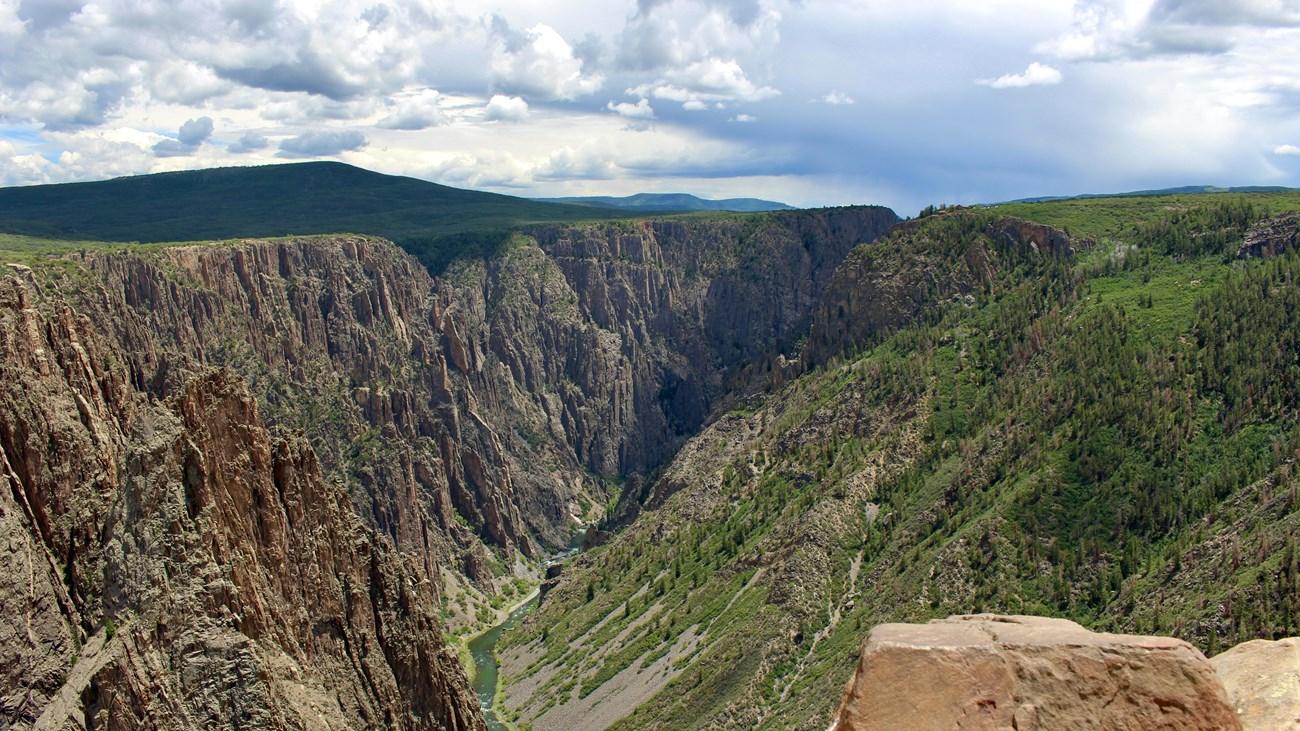
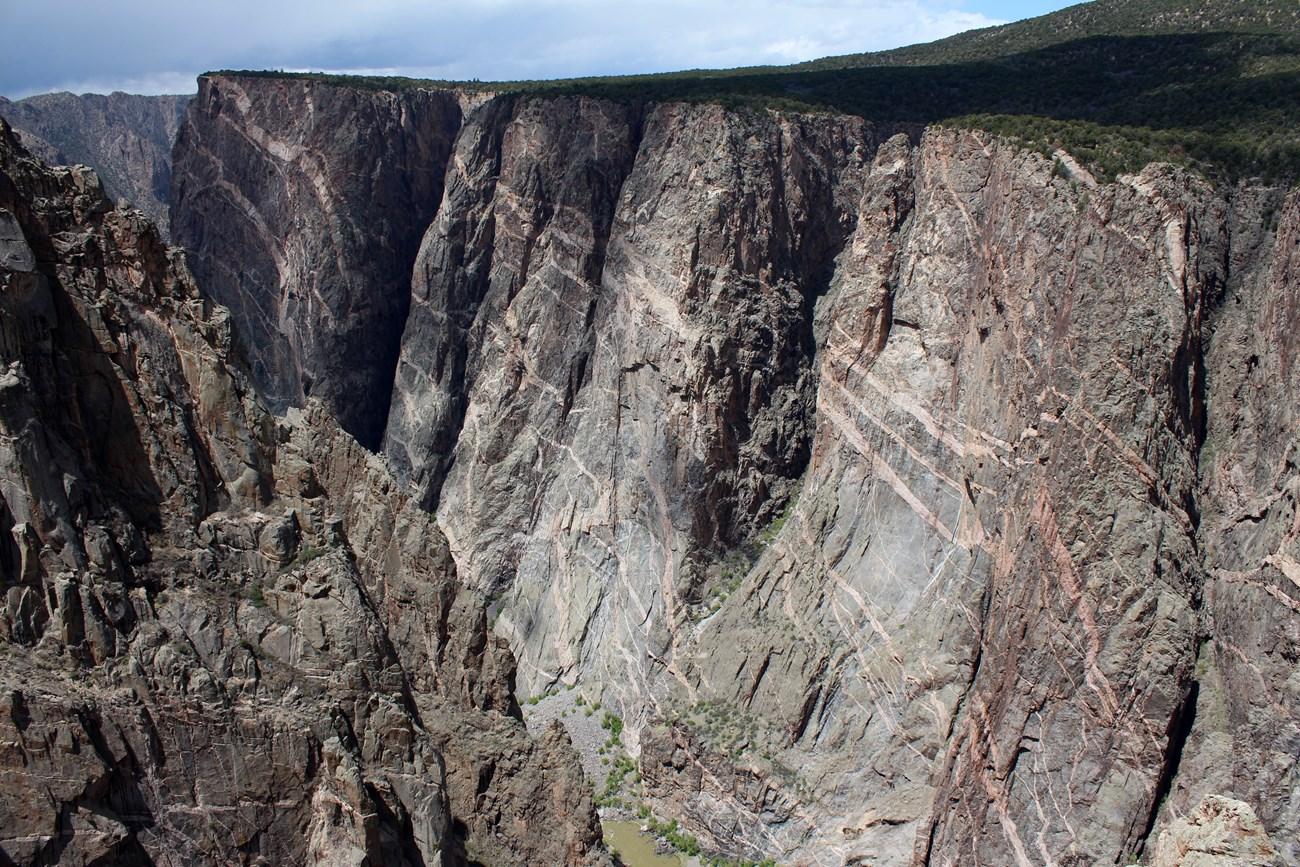
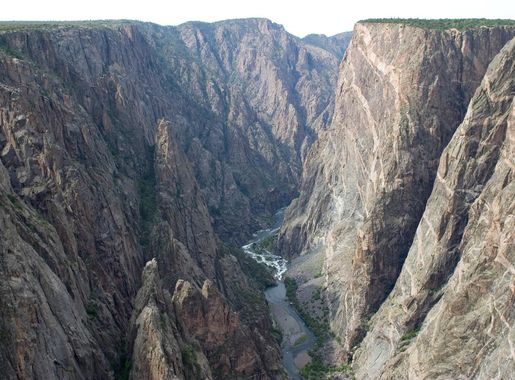
Black Canyon of the Gunnison National Park
Explore the depths of Black Canyon of the Gunnison National Park, a vertical wilderness carved by the Gunnison River over two million years.

John Denver Sanctuary
A serene sanctuary in Aspen honoring John Denver's legacy, with lyric-engraved boulders, gardens, and a peaceful riverfront setting for reflection.

Ute Indian Museum
Explore the rich history and culture of the Ute people at their museum on Chief Ouray's homestead in Montrose, Colorado.

Museum of the West, Museums of Western Colorado
Discover Western Colorado's heritage through immersive exhibits, artifacts, and panoramic views at the Museum of the West in Grand Junction.

Best landmarks in Western Slope
Top-rated picks
Best Landmarks

Cliff Palace
Discover the breathtaking beauty and rich history of Cliff Palace in Mesa Verde National Park, a must-visit archaeological gem in Colorado.

Balcony House
Discover Balcony House in Mesa Verde National Park, a remarkable cliff dwelling showcasing the ingenuity of the Ancestral Puebloans amidst stunning natural beauty.

Lowry Pueblo
Explore Lowry Pueblo, an ancient historical landmark in Colorado, revealing the rich heritage of the Ancestral Puebloans amidst breathtaking landscapes.

Bear Creek Falls
Discover the breathtaking beauty of Bear Creek Falls in Ouray, Colorado, a stunning destination for outdoor enthusiasts and nature lovers alike.

Best restaurants in Western Slope
Top-rated picks
Best Restaurants

Pufferbelly Station Restaurant
Experience the taste of American cuisine at Pufferbelly Station Restaurant in Grand Junction - where every meal is crafted with love.

Bin 707 Foodbar
Experience exquisite New American cuisine at Bin 707 Foodbar in Grand Junction - where local flavors meet fine dining elegance.

Chili's Grill & Bar
Experience flavorful Tex-Mex dishes and American classics at Chili's Grill & Bar in Grand Junction - perfect for family dining!

True Grit Cafe
Experience classic American dining surrounded by John Wayne memorabilia at True Grit Cafe in Ridgway, Colorado.

Best bars in Western Slope
Top-rated picks
Best Bars

The Rockslide Brew Pub
Discover the best craft brews and mouthwatering dishes at The Rockslide Brew Pub in Grand Junction, CO, perfect for any foodie adventure.

The Goat and Clover Tavern
Experience the warmth of Irish hospitality and taste the best of American grill at The Goat and Clover Tavern in Grand Junction.

Ale House
Discover the lively Ale House in Grand Junction, where delicious grill dishes and a vibrant beer garden await your visit.

Bin 707 Foodbar
Experience delightful New American cuisine and a vibrant bar atmosphere at Bin 707 Foodbar in Grand Junction, CO, perfect for foodies and social gatherings.


Best shops in Western Slope
Top-rated picks
Best Shops

Mesa Mall
Discover the ultimate shopping experience at Mesa Mall, Grand Junction's premier destination for retail, dining, and entertainment.

Walmart Supercenter
Explore Walmart Supercenter in Grand Junction for an all-in-one shopping experience, from groceries to electronics, tailored for every traveler’s needs.

Kohl's
Kohl's in Grand Junction: Your destination for affordable fashion and home essentials in a friendly shopping environment.

Ross Dress for Less
Discover unbeatable deals on stylish clothing, shoes, and accessories at Ross Dress for Less in Grand Junction.

Explore Western Slope on the Map
A handpicked selection of must-see spots in Western Slope, mapped for you.
Western Slope Essentials
-
The Western Slope in Colorado is accessible by several routes. The nearest major airport is Grand Junction Regional Airport (GJT), which is well-connected with direct flights from several major cities. Alternatively, Montrose Regional Airport (MTJ) is another option, especially for those heading towards the Telluride area. For those traveling by car, Interstate 70 runs through the northern part of the Western Slope, connecting it to Denver and other parts of the state. Amtrak’s California Zephyr also stops in Grand Junction, offering a scenic rail option.
-
The Western Slope is best explored by car due to its vast and diverse geography. Car rentals are available at both Grand Junction and Montrose airports. Public transportation options are limited, but local bus services like Grand Valley Transit operate within Grand Junction and surrounding areas. For those visiting the Telluride region, the Galloping Goose Transit offers regional bus services. Biking is a popular mode of transport in towns like Grand Junction and Fruita, known for their bike-friendly paths and mountain biking trails.
-
The currency used is the US Dollar (USD). Credit and debit cards are widely accepted in most establishments, including restaurants, hotels, and stores. ATMs are plentiful in larger towns like Grand Junction, Montrose, and Durango. However, it is advisable to carry some cash when visiting smaller, more remote areas as not all places may accept cards.
-
The Western Slope is generally safe for tourists. However, like any destination, it is advisable to take standard precautions. Grand Junction has some areas with higher crime rates, particularly in the downtown area at night. Always lock your car and secure your belongings. When hiking or engaging in outdoor activities, always inform someone of your plans and carry a map, water, and emergency supplies. Wildlife encounters can occur, so be aware and follow local guidelines for such situations.
-
In case of an emergency, dial 911 for immediate assistance. Hospitals and urgent care facilities are available in larger towns such as Grand Junction and Montrose. For non-emergency health issues, pharmacies are widely available. It is recommended to have travel insurance that covers medical emergencies, especially if you plan on engaging in outdoor activities like hiking or skiing.
-
Fashion: Do dress in layers as the weather can change rapidly, especially in mountainous areas. Don't wear flip-flops or open-toed shoes if you plan on hiking. Religion: Do respect local religious customs if visiting churches or spiritual sites. Don't make loud noises or take photos without permission. Public Transport: Do be respectful of other passengers and the driver. Don't expect extensive public transport options; plan on renting a car. Greetings: Do greet people with a friendly 'hello' or 'hi'. Don't be surprised if locals are more reserved at first. Eating & Drinking: Do try local specialties such as Palisade peaches and Colorado wine. Don't forget to tip your servers, generally 15-20% of the bill.
-
To experience the Western Slope like a local, explore the extensive hiking and biking trails in areas like Fruita and the Grand Mesa. Visit local farmers' markets for fresh produce and artisanal goods. Engage with locals at community events and festivals such as the Palisade Peach Festival. For a unique local experience, consider visiting the hot springs in Ouray or Glenwood Springs.
When is the best time to visit Western Slope?
Useful Local Phrases for Western Slope
You don't need to speak the language perfectly. Even learning a few simple words can make conversations warmer—and locals usually appreciate the effort.
— Eve

Here are the phrases I use most often in Western Slope. Try a few—you'll be surprised how far they go! 😊
❤️
-
- HelloHowdy
[how-dee] - GoodbyeSee ya
[see yah] - YesYep
[yehp] - NoNope
[nohp] - Please/You're welcomeSure thing
[shur thing] - Thank youThanks
[thangs] - Excuse me/SorryPardon me
[par-dun mee] - How are you?How ya doin'?
[how yah doin'?] - Fine. And you?Good. You?
[gud. yoo?] - Do you speak English?Do ya speak English?
[doo yah speek ing-glish?] - I don't understandI ain't gettin' it
[I aynt gettin' it]
- HelloHowdy
-
- I'd like to see the menu, pleaseCould I see the menu?
[could I see the men-yoo?] - I don't eat meatI ain't eatin' meat
[I aynt eatin' meet] - Cheers!Cheers!
[cheers!] - I would like to pay, pleaseCan I get the check?
[can I get the chek?]
- I'd like to see the menu, pleaseCould I see the menu?
-
- Help!Help!
[help!] - Go away!Get lost!
[get lost!] - Call the Police!Call the cops!
[call the cops!] - Call a doctor!Get a doc!
[get a doc!] - I'm lostI’m lost
[I'm lost] - I'm illI’m not feelin' good
[I'm not feelin' gud]
- Help!Help!
-
- I'd like to buy...I wanna buy...
[I wanna buy...] - I'm just lookingJust browsing
[just brows-ing] - How much is it?What’s the price?
[what's the prys?] - That's too expensiveThat's pricey
[that's pry-see] - Can you lower the price?Can ya give me a deal?
[can yah give me a deel?]
- I'd like to buy...I wanna buy...
-
- What time is it?What time ya got?
[what time yah got?] - It's one o'clockIt's one
[it's wun] - Half past (10)Half past ten
[half past ten] - MorningMornin'
[mornin'] - AfternoonAfternoon
[afternoon] - EveningEvenin'
[evenin'] - YesterdayYesterday
[yesterday] - TodayToday
[today] - TomorrowTomorrow
[tomorrow] - 1One
[wun] - 2Two
[too] - 3Three
[three] - 4Four
[for] - 5Five
[fiv] - 6Six
[siks] - 7Seven
[sev-en] - 8Eight
[ate] - 9Nine
[nyn] - 10Ten
[ten]
- What time is it?What time ya got?
-
- Where's a/the...?Where's the...?
[where's the...?] - What's the address?What’s the address?
[what's the ad-dress?] - Can you show me (on the map)?Can ya show me on the map?
[can yah show me on the map?] - When's the next (bus)?When's the next bus?
[when's the next bus?] - A ticket (to ....)A ticket to...
[a tiket to...]
- Where's a/the...?Where's the...?
History of Western Slope
-
Long before European explorers set foot in the Western Slope, the land was home to the Ute tribes. The Utes were skilled hunters and gatherers who thrived in the region's diverse landscapes, from the high mountains to the fertile valleys. They left behind a rich legacy of rock art, including petroglyphs and pictographs, which can still be seen in places like the Dominguez-Escalante National Conservation Area.
-
In 1776, the Dominguez-Escalante Expedition, led by Spanish priests Silvestre Vélez de Escalante and Francisco Atanasio Domínguez, traversed the Western Slope in their quest to find a route from Santa Fe, New Mexico, to Monterey, California. Their journey mapped previously uncharted territories and established the first recorded European presence in the region. Their detailed journals provide a glimpse into the land and its native inhabitants during the late 18th century.
-
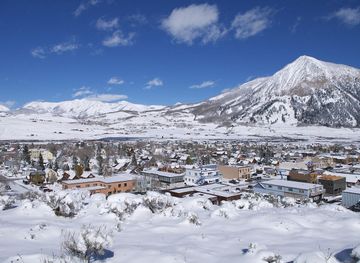
The discovery of precious minerals in the late 1800s brought a wave of prospectors and settlers to the Western Slope. Towns like Ouray, Telluride, and Crested Butte sprang up almost overnight as miners sought fortunes in silver, gold, and other valuable minerals. These boomtowns experienced rapid growth and decline, leaving behind ghost towns and historic landmarks that tell the story of the mining era's impact on the region.
-
The arrival of the Denver & Rio Grande Western Railroad in the late 19th century was a transformative event for the Western Slope. The railroad facilitated the transport of minerals, agricultural products, and people, fostering economic growth and connecting isolated communities to the rest of the state and nation. The iconic Durango & Silverton Narrow Gauge Railroad, which still operates today as a heritage railway, offers a glimpse into this pivotal era.
-
In the early 20th century, the Grand Valley became renowned for its fruit orchards, particularly peaches, apples, and cherries. Irrigation projects transformed the arid landscape into fertile farmland, attracting farmers and agricultural workers. The region's fruit-growing heritage is celebrated annually at events like the Palisade Peach Festival, which draws visitors from near and far.
-
The Western Slope is home to several national parks and monuments that preserve its natural beauty and historical significance. In 1911, the Colorado National Monument was established, showcasing stunning red rock formations and deep canyons. Black Canyon of the Gunnison National Park, designated in 1999, protects one of North America's most dramatic and rugged gorges. These protected areas highlight the region's unique geological features and provide recreational opportunities for visitors.
-
In recent decades, the Western Slope has become a popular destination for outdoor enthusiasts and tourists. The region's diverse landscapes offer activities such as hiking, skiing, mountain biking, and river rafting. Towns like Aspen, Vail, and Grand Junction have developed robust tourism industries that capitalize on the area's natural attractions. This shift towards tourism and recreation has brought economic growth and cultural vibrancy to the region, drawing visitors from around the world.
Neighbouring Regions of Western Slope
The closest regions to Western Slope, if you have time for more than one.



Your all‑in‑one travel companion app
Explore expert travel guides, compare and book tours, experiences, hotels, and more—all from the palm of your hand. Download now for seamless trip planning wherever your wanderlust takes you.


Explore More of Colorado

Looking beyond Western Slope? Discover Colorado for broader travel guides, local hot-spots, and regional highlights.
Explore ColoradoWestern Slope in Photos
Browse through our photo collection highlighting the charm and character of the destination.




Exploring the Western Slope: Colorado's Hidden Gem
The Western Slope of Colorado is a breathtaking region known for its diverse landscapes and outdoor activities. Nestled between the Rocky Mountains and the Utah border, this area offers a unique blend of natural beauty, rich history, and vibrant local culture. From lush vineyards and orchards to rugged canyons and towering peaks, the Western Slope is a paradise for nature lovers and adventure seekers alike. One of the highlights of the Western Slope is the Grand Mesa, the largest flat-top mountain in the world. This natural wonder provides a stunning backdrop for hiking, fishing, and camping. In winter, it transforms into a snowy playground for skiing and snowboarding. Nearby, the Colorado National Monument offers dramatic red rock formations and panoramic views, perfect for scenic drives and photography. The Western Slope is also home to charming towns like Grand Junction, Montrose, and Palisade. Grand Junction is known for its vibrant downtown, art galleries, and the thriving wine industry in the nearby Grand Valley. Palisade, often referred to as Colorado's wine country, boasts numerous wineries and fruit orchards, making it an ideal spot for wine tasting and farm tours. Montrose, with its proximity to Black Canyon of the Gunnison National Park, offers awe-inspiring vistas and outdoor adventures. Whether you're exploring the vast landscapes of the Western Slope or indulging in the local flavors, this region promises an unforgettable experience. The blend of natural wonders and small-town charm makes it a must-visit destination in Colorado.