Kastellet, Copenhagen Region Travel Guide
A beautifully preserved 17th‑century star fortress where red barracks, a windmill and harbour views meet Copenhagen’s green, military‑tinged calm.
Kastellet is Copenhagen’s beautifully preserved 17th‑century star-shaped fortress, set on a grassy peninsula between the harbour and the city. Commissioned in the 1600s to protect the Danish capital, it still functions as an active military site while welcoming visitors to stroll its ramparts, admire red‑painted barracks, a baroque church and a historic windmill, and enjoy one of the city’s most atmospheric green spaces, all free of charge.
A brief summary to Kastellet
- Gl. Hovedvagt, Kastellet 1, Copenhagen, København Ø, 2100, DK
- Click to display
- Duration: 1 to 3 hours
- Free
-
 Outdoor
- Mobile reception: 5 out of 5
- Monday 6 am-8 pm
- Tuesday 6 am-8 pm
- Wednesday 6 am-8 pm
- Thursday 6 am-8 pm
- Friday 6 am-8 pm
- Saturday 6 am-8 pm
- Sunday 6 am-8 pm

Know before you go
Hi, I'm Eve. Here are a few practical things to know before exploring Kastellet.
- Walk the full loop of the ramparts to appreciate Kastellet’s star shape and enjoy changing views over the harbour and city skyline.
- Plan extra time to explore the Citadel Church, windmill and scattered monuments instead of only passing through the central courtyard.
- Wear comfortable shoes; paths are mostly gravel and grass, and exploring the bastions involves gentle but sustained inclines.
- Remember Kastellet is an active military area: respect restricted zones, follow signage and keep noise low around offices and ceremonies.
- Combine a visit with a relaxed walk along the nearby waterfront to link Kastellet with other royal and harbour landmarks in one outing.
Do you manage this location?
Take control to get all the benefits, like improved information, better appearance, and stronger visibility across AI-powered discovery. Learn more about listing your business on Evendo
Activate your presenceOther nearby places you may find interesting
The closest places of the same kind, if this one is not quite what you had in mind.
Explore Kastellet on the Map
A handpicked selection of must-see spots near Kastellet, mapped for you.
Unlock the Best of Kastellet
Buy tickets
-
No tickets available
Book tours with entry


Getting There
-
Metro and short walk from central Copenhagen
From Nørreport or Kongens Nytorv, take the M3 Cityringen metro to Østerport Station; trains run every few minutes and the ride takes about 3–5 minutes. A standard single ticket within the central zones typically costs around 20–30 DKK, depending on your starting point. From Østerport it is an easy, mostly level 10–15 minute walk on pavements to Kastellet, suitable for most visitors and pushchairs, though some paths inside the fortress are gravel.
-
City bus to the Kastellet area
Several city bus lines, such as frequent trunk routes running along Østerport and the harbourfront, stop within a 5–10 minute walk of Kastellet. Travel time from the historic centre is usually 10–20 minutes, depending on traffic and starting point. A bus ticket within the central zones generally costs about 20–30 DKK and can be bought via ticket machines or mobile apps. Buses have low-floor access, but expect cobbles and gentle slopes once you reach the fortress.
-
Bicycle from inner-city districts
From most central neighbourhoods, Kastellet is an easy 10–20 minute ride along Copenhagen’s dedicated cycle lanes. Expect largely flat terrain and clear signage, but be prepared for busy commuter traffic at peak hours. You can use city bikes or standard rentals; prices for short-term bike hire usually start around 100–150 DKK per day. Inside Kastellet, cycling is generally slow and courteous, and some areas may request that you walk your bike.
-
Taxi or rideshare within Copenhagen
Taxis from central locations such as the main station or City Hall Square typically reach Kastellet in 10–20 minutes, depending on traffic. Fares within the inner city often fall in the 120–200 DKK range, with higher costs late at night or on weekends. Drop-off points are outside the fortress entrances; from there, expect a brief walk on level surfaces before you reach the main courtyard and ramparts.
For the on-the-go comforts that matter to you
-
 Restrooms
-
 Seating Areas
-
 Picnic Areas
-
 Trash Bins
-
 Information Boards
Discover more about Kastellet
A star fortress guarding Copenhagen’s harbour
Kastellet, also known as The Citadel, is one of Northern Europe’s best-preserved star fortresses, its five-bastion outline clearly visible from above and easy to trace on foot along the ramparts. Conceived in the 17th century as part of Copenhagen’s defensive ring, the complex occupies a strategic tongue of land overlooking the harbour, with grassy banks and a broad moat forming a protective collar around the inner buildings.The approach across bridges and through heavy gates still feels faintly ceremonial. Earthworks slope sharply down to the water, while views open towards the harbour and nearby churches. Although artillery has long fallen silent, the geometry of bastions, ravelins and ditches gives a vivid sense of early modern military engineering and how seriously the city once took its security.Kings, wars and an evolving stronghold
Kastellet’s story begins under King Christian IV and his successor Frederick III, who developed the fortress in the mid‑1600s as foreign powers jostled for control of Baltic trade routes. Over time, it became a core component in Copenhagen’s defences, housing soldiers, stores and command staff behind its angled walls. Later, it served as a garrison through the 18th and 19th centuries, and during the Second World War it was occupied by German forces, adding another layer of history to its grounds.Today, the fortress remains an active military installation, home to various branches of the Danish defence establishment. Uniformed personnel, service vehicles and flag ceremonies are part of daily life here, yet the site also functions as an open park. This dual role – both working base and public landmark – makes a visit subtly different from a conventional museum and underscores Kastellet’s continuing strategic relevance.Red barracks, a windmill and the Citadel Church
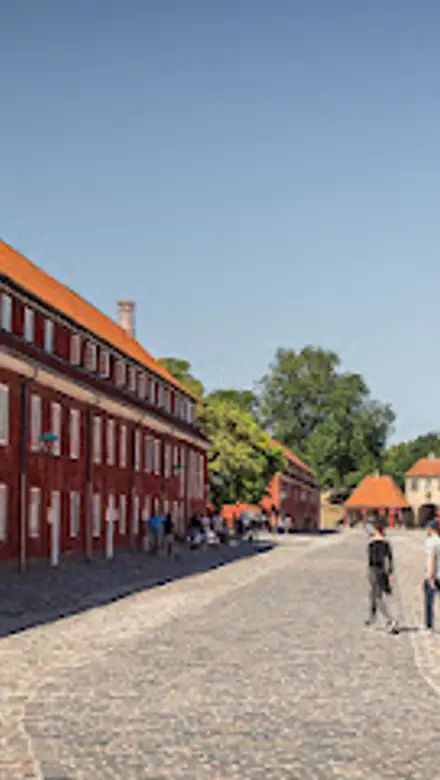
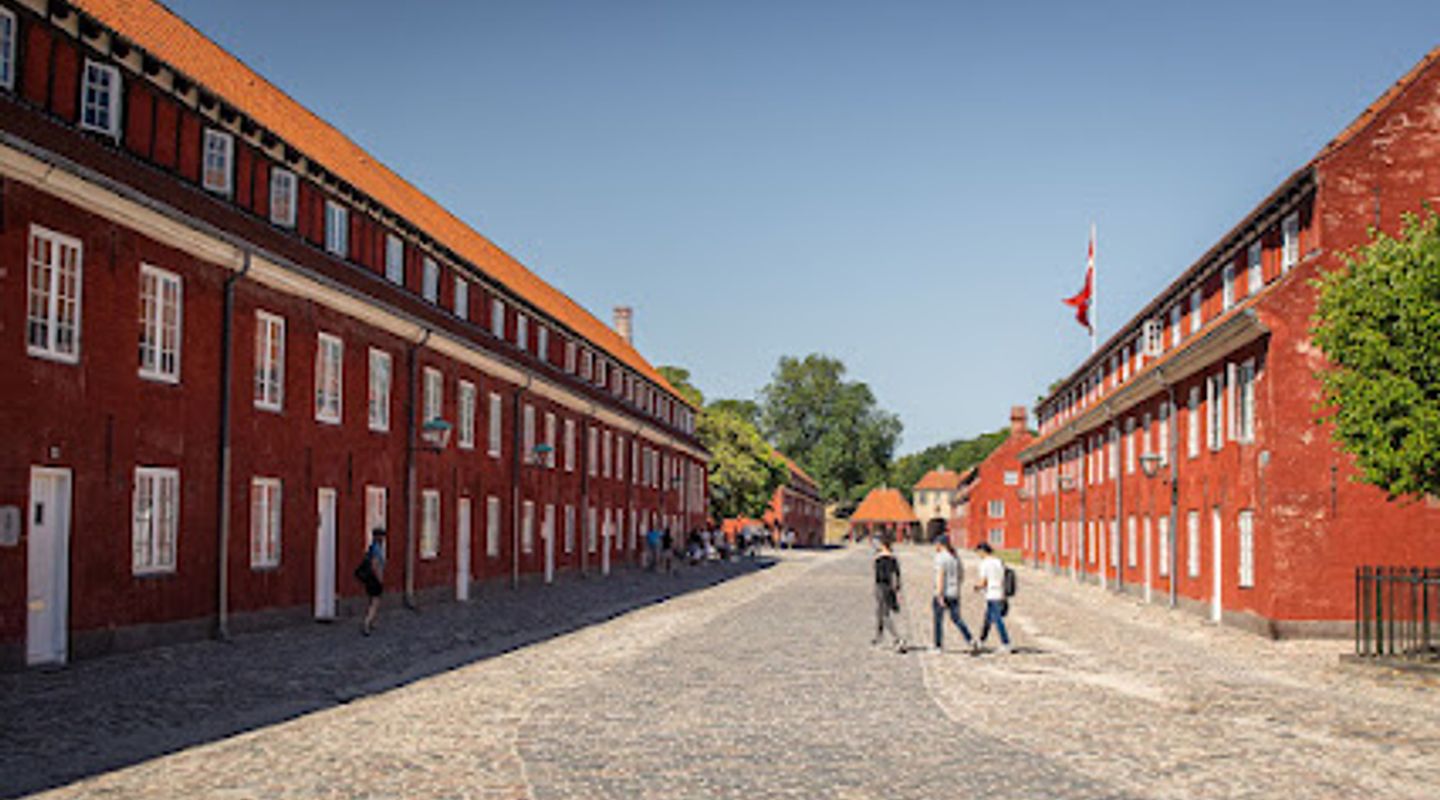
Inside the walls, rows of long, terracotta-red barracks flank cobbled streets, their white-framed windows and neat roofs creating a striking contrast with the surrounding lawns. These buildings once housed troops and supplies; some still serve administrative roles. Interspersed among them are officers’ houses and the former Commander’s House, whose dignified façade recalls the fortress’s importance within Denmark’s military hierarchy.One of Kastellet’s most distinctive sights is its 19th‑century windmill perched on the ramparts. Originally used to grind grain for the garrison, it now stands as a picturesque reminder of self-sufficiency in an era when a besieged fortress needed to provide for itself. Nearby, the Citadel Church, a modest yet elegant baroque sanctuary, anchors the complex spiritually and architecturally. Its pale walls and simple interior reflect Lutheran restraint while marking the heart of the old garrison community.Green lungs, harbour panoramas and quiet corners
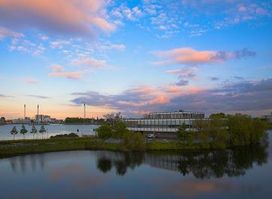
Beyond the architecture, Kastellet functions as a tranquil green lung on the edge of central Copenhagen. The embankments are carpeted with grass and criss-crossed by gravel paths popular with joggers, dog walkers and ambling sightseers. From the top of the ramparts you can peer across the moat to the harbour, pick out the dome of nearby churches and watch ships glide along the water.Down at ground level, sheltered lawns and tree-lined avenues invite picnics and unhurried walks. Scattered monuments and memorials commemorate Denmark’s military engagements and international missions, adding reflective pauses to the landscape. The atmosphere is contemplative rather than sombre: the site balances remembrance with everyday leisure, making it easy to slow down while still feeling connected to the city around you.Exploring on foot and connecting the waterfront
Kastellet is best experienced at walking pace, allowing time to circle the star-shaped ramparts, cross its bridges and wander between the barracks and chapel. Because entry to the grounds is free, it naturally slots into a wider exploration of Copenhagen’s waterfront, linking conveniently with nearby sights such as the harbourfront promenades and royal districts.The fortress rewards repeat visits at different times of day and in different seasons: crisp winter air over the moat, fresh spring foliage on the embankments, long summer evenings on the paths and warm autumn light on the red brickwork. Whether you come for photographs, a quiet jog or a deep dive into Danish history, Kastellet offers a distinctive combination of open-air calm and enduring strategic purpose.












Your all‑in‑one travel companion app
Explore expert travel guides, compare and book tours, experiences, hotels, and more—all from the palm of your hand. Download now for seamless trip planning wherever your wanderlust takes you.


Explore More of Copenhagen Region
Looking beyond Kastellet? Discover Copenhagen Region for broader travel guides, local hot-spots, and regional highlights.
Explore Copenhagen Region
Intimate contemporary art gallery on Copenhagen’s Bredgade, blending Nordic creativity, refined townhouse spaces and free, unhurried access to original works.
Experience the vibrant heart of Helsingborg at Sundstorget, a lively square blending history, culture, and modern charm.