Horn mine, Copenhagen Travel Guide
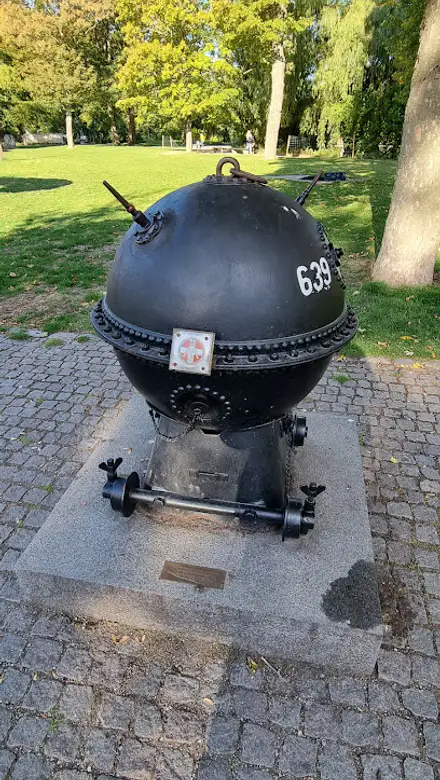
A disarmed World War II naval mine displayed in Churchill Park, turning a former weapon of the sea into a quiet reminder of conflict amid central Copenhagen’s greenery.
Tucked into Copenhagen’s leafy Churchill Park near Kastellet, the Horn Mine is a preserved World War II naval mine displayed on land. This steel sphere bristling with detonator horns recalls the underwater minefields once guarding Danish waters. Today it stands as a stark, sculptural reminder of maritime warfare, set against lawns, trees, and views of nearby historic fortifications, inviting a quiet moment of reflection during a stroll through central Copenhagen.
A brief summary to Horn mine
- Copenhagen, Indre By, 1263, DK
- Click to display
- Duration: 0.5 to 1 hours
- Free
-
 Outdoor
- Mobile reception: 5 out of 5

Know before you go
Hi, I'm Eve. Here are a few practical things to know before exploring Horn mine.
- Combine a stop at the Horn Mine with a wider walk through Churchill Park and nearby Kastellet to appreciate how the mine fits into Copenhagen’s defensive history.
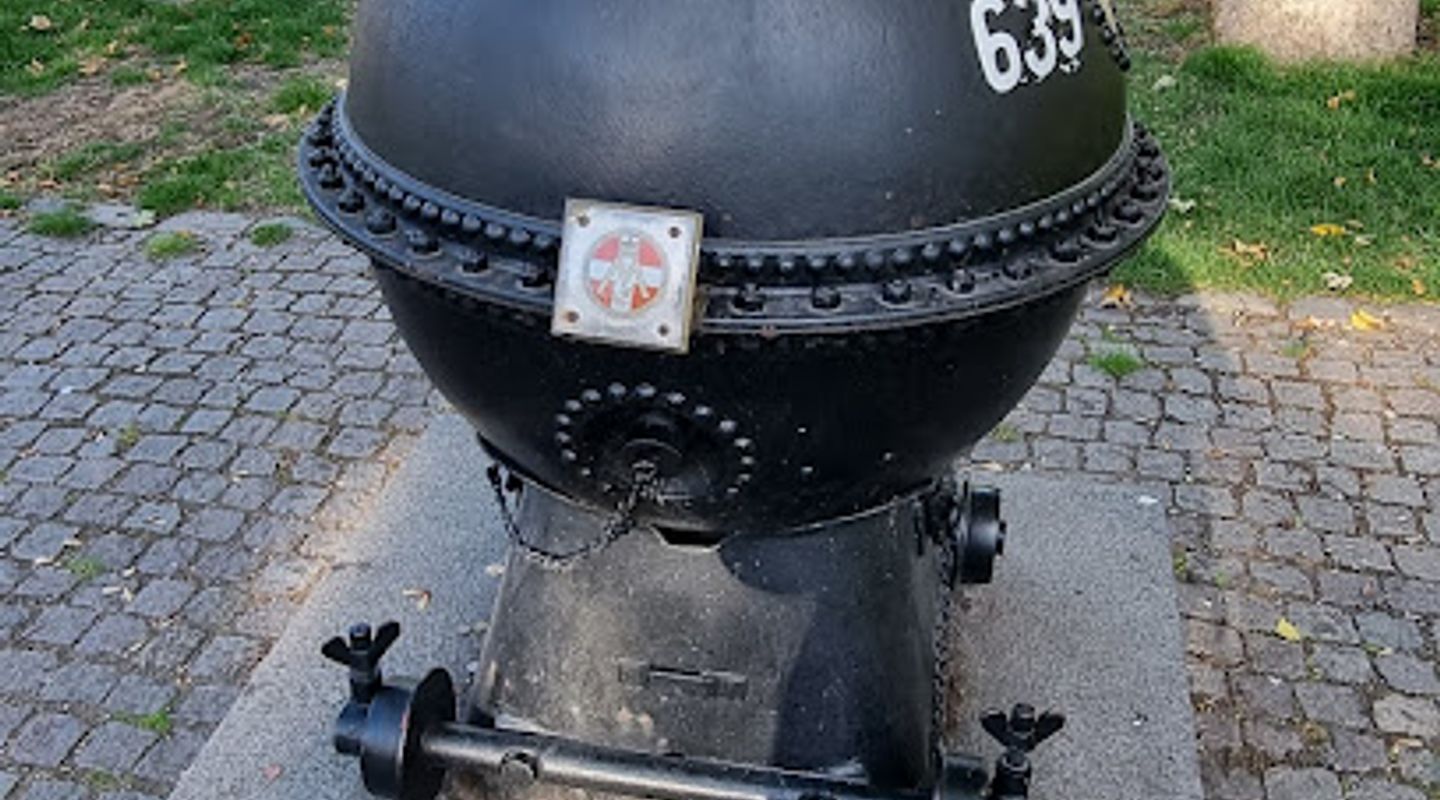
- Visit during daylight for clear views of the mine’s construction details, such as the individual horns, welds and inspection hatches on the metal shell.
- If you are with children, use the mine as a starting point to explain basic maritime history and why weapons like this are now safely decommissioned.
- Bring a light jacket: the park is open and can feel breezy, especially when winds blow in from the harbour and nearby waterfront.
- Photography works well from a low angle, framing the mine against the sky or nearby trees to highlight its silhouette and distinctive horns.
Do you manage this location?
Take control to get all the benefits, like improved information, better appearance, and stronger visibility across AI-powered discovery. Learn more about listing your business on Evendo
Activate your presenceOther nearby places you may find interesting
The closest places of the same kind, if this one is not quite what you had in mind.


Explore Horn mine on the Map
A handpicked selection of must-see spots near Horn mine, mapped for you.
Getting There
-
Metro and short walk
From central Copenhagen, take the M3 Cityringen or M4 metro to Marmorkirken Station, a ride of about 3–5 minutes from key hubs like Nørreport. Trains run every few minutes and a single zone ticket typically costs around 20–25 DKK. From the station it is an easy 10–15 minute walk on level pavements through the historic centre to Churchill Park, suitable for most visitors and pushchairs, though crossings can be busy at peak hours.
-
Bus from inner city
Several city bus lines run from the inner city towards Østerport and the harbour area, taking roughly 10–20 minutes depending on traffic. Expect to pay around 20–25 DKK for a standard bus ticket within the central zones. Services are frequent during the day but reduced late at night and on some holidays. From the nearest stop by the park, you will have a short walk on paved paths to reach the Horn Mine.
-
S‑train and walk from Østerport
If you are elsewhere in the Greater Copenhagen area, take an S‑train to Østerport Station, with journey times typically between 5 and 20 minutes depending on your starting point. A two‑zone ticket usually costs around 24–30 DKK. From Østerport, plan for a 10–15 minute walk on relatively flat, well‑maintained sidewalks and park paths. The route is straightforward, but can feel busy on weekday mornings and late afternoons.
-
Bicycle within the city
Copenhagen’s cycling network makes it simple to reach Churchill Park by bike from most central districts in about 10–20 minutes. You can use a personal bicycle or a rented city bike, with rental costs typically starting around 50–100 DKK for a few hours. Dedicated bike lanes lead close to the park, but be prepared for heavy commuter traffic at rush hour and remember that cycling is generally not allowed on narrow pedestrian paths inside the green areas.
For the on-the-go comforts that matter to you
-
 Restrooms
-
 Drink Options
-
 Drinking Water
-
 Food Options
-
 Seating Areas
-
 Sheltered Areas
-
 Trash Bins
-
 Information Boards
-
 Visitor Center
Discover more about Horn mine
A war relic in a quiet city park
The Horn Mine sits in the green expanse of Churchill Park, a peaceful corner of central Copenhagen where joggers, picnickers and history‑minded wanderers share the paths. At first glance it looks almost abstract: a dark metal sphere raised on a sturdy stand, its surface dotted with stubby protrusions. Step closer and you realise this is a real naval mine of the type laid in coastal waters during the Second World War, now safely disarmed but still visually menacing.The contrast is part of its impact. Around you are trees, flowerbeds and the grassy ramparts of nearby Kastellet, while in front of you is a machine designed to sink ships. Without signage overload or spectacle, the object quietly anchors the park to a far more dangerous era.From underwater weapon to open‑air exhibit
Naval mines like this one were once anchored to the seabed with chains, bobbing invisibly below the surface. When the hull of a passing vessel brushed the pressure horns, a detonator triggered the explosive core. In Danish waters, minefields were used to control strategic straits and harbours, creating invisible barriers across shipping lanes and posing a constant threat to both military and merchant vessels.The Horn Mine here has long since been rendered inert, but its utilitarian form has been preserved. Riveted plates, inspection hatches and the ring points where it would have been attached to its mooring gear all hint at the engineering that went into mass‑producing such weapons. Its relocation onto dry land allows you to examine details that would normally have been hidden in murky water.Churchill Park’s layered landscape
The wider setting adds context. Churchill Park occupies ground once integral to Copenhagen’s ring of fortifications. The star‑shaped earthworks of Kastellet rise just a short walk away, and the area around the mine is framed by lawns, mature trees and glimpses of church spires and harbour cranes. This mixture of defensive heritage and contemporary urban calm makes the mine feel like one chapter in a much longer story of how the city has protected itself.Benches and open grass around the display make it easy to pause and linger. Children often circle the mine, counting the horns and peering at the welds, while others use it as a visual landmark when meeting friends or orienting themselves between nearby monuments and museums.Reflecting on unseen dangers at sea
Standing beside the Horn Mine, it is natural to think about what you cannot see: currents, shipping routes and the crews who once lived with the constant risk of underwater explosions. Mines were indiscriminate, threatening fishing boats and neutral shipping as well as enemy warships. Their legacy continued long after 1945, as unexploded devices had to be located and cleared from seabeds and beaches.Here, framed by trees instead of waves, the mine becomes an object of contemplation rather than fear. It offers a tangible way to discuss maritime warfare, engineering and international law with younger visitors, or simply a moment to consider how easily peacetime landscapes can conceal a history of conflict.A small stop on a larger historic walk
The Horn Mine rarely demands more than a short stop, yet it punctuates a walk through Churchill Park with a sharp reminder of twentieth‑century history. Combined with visits to nearby fortifications, memorials and museums, it helps build a fuller picture of Copenhagen’s strategic position on the Baltic sea routes.Whether you treat it as a quick curiosity on the way through the park or take the time to slowly circle it, studying every horn and bolt, this compact relic rewards attention. It turns an everyday city stroll into an encounter with the mechanics of war and the enduring work of turning weapons into warning signs for future generations.












Your all‑in‑one travel companion app
Explore expert travel guides, compare and book tours, experiences, hotels, and more—all from the palm of your hand. Download now for seamless trip planning wherever your wanderlust takes you.


Explore More of Copenhagen
Looking beyond Horn mine? Discover Copenhagen for broader travel guides, local hot-spots, and regional highlights.
Explore Copenhagen