

From Eve
Know before you go
Hi, I'm Eve. Here are a few practical things to know before exploring ZinkGlobal by Kim Michael.
Local know-how to help you travel smarter and make the most of every moment.

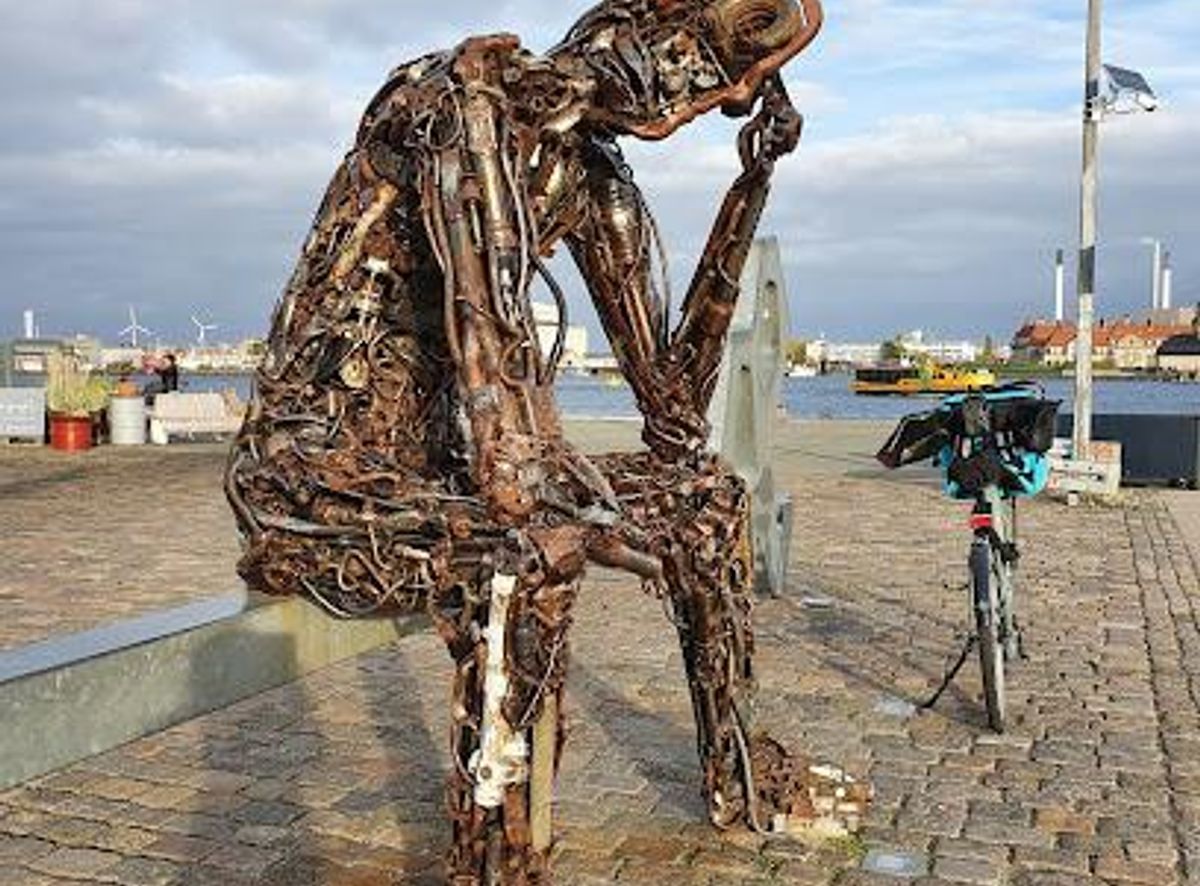
A contemplative scrap-metal thinker on Copenhagen’s harborfront, ZinkGlobal fuses recycled machinery with big ideas about the future and our industrial past.
ZinkGlobal is a striking 3 m waterfront sculpture in Copenhagen, crafted by Danish artist Kim “TheZinker” Michael from scrap metal and old machine parts. The contemplative figure, reminiscent of Rodin’s Thinker, sits on an oversized key symbolising the “key to the future.” Installed in 2012 on the harborfront at Nordre Toldbod, it stands amid historic pavilions and royal architecture, offering a bold contrast between industrial upcycling and the city’s classical surroundings.
Opening times, essentials, and a few local tips gathered into one calmer, easier-to-scan planning section.
Hi, I'm Eve. Here are a few practical things to know before exploring ZinkGlobal by Kim Michael.
Local know-how to help you travel smarter and make the most of every moment.
Metro and walking
From central Copenhagen, take the M3 Cityringen or M4 metro line to Marmorkirken Station; trains run every few minutes and a single-zone ticket typically costs around 20–25 DKK. From Marmorkirken, expect a 10–15 minute walk along mostly flat pavements toward the harbor, suitable for most visitors with moderate mobility, though surfaces near the quay can be uneven in places.
Bus connection
Several city buses run toward the harbor area north of central Copenhagen, with journeys from the inner city usually taking 10–20 minutes depending on traffic. Standard bus tickets are in the same price range as metro fares, around 20–25 DKK for the necessary zones. Services are frequent during the day but less regular late at night and on weekends, so check departure times in advance.
Bicycle access
Cycling from the city centre to the Nordre Toldbod waterfront typically takes 10–20 minutes along Copenhagen’s extensive network of bike lanes. The route is generally flat and well-marked, but be prepared for strong winds near the water and heavier bike traffic during rush hours. Dockless bike-share and rental shops are widely available, usually costing from about 75–150 DKK per day depending on the provider.
Harbor boat transport
Harbor buses running along Copenhagen’s inner harbor provide a scenic way to reach stops within walking distance of Nordre Toldbod in roughly 15–30 minutes from central quays. These boats operate as part of the public transport system, with fares comparable to standard bus and metro tickets, typically around 20–25 DKK. Services can be less frequent in the late evening and during bad weather, when sailings may be reduced.
 Seating Areas
 Trash Bins
 Information Boards
Catch the right light and the right mood, whether you want a bright city moment or a more cinematic evening visit.


Use Tower Bridge as your starting point for nearby food, family ideas, nightlife, and more local discoveries.
A quick look at seasonal patterns and peak visiting hours.

Explore expert travel guides, compare and book tours, experiences, hotels, and more—all from the palm of your hand. Download now for seamless trip planning wherever your wanderlust takes you.
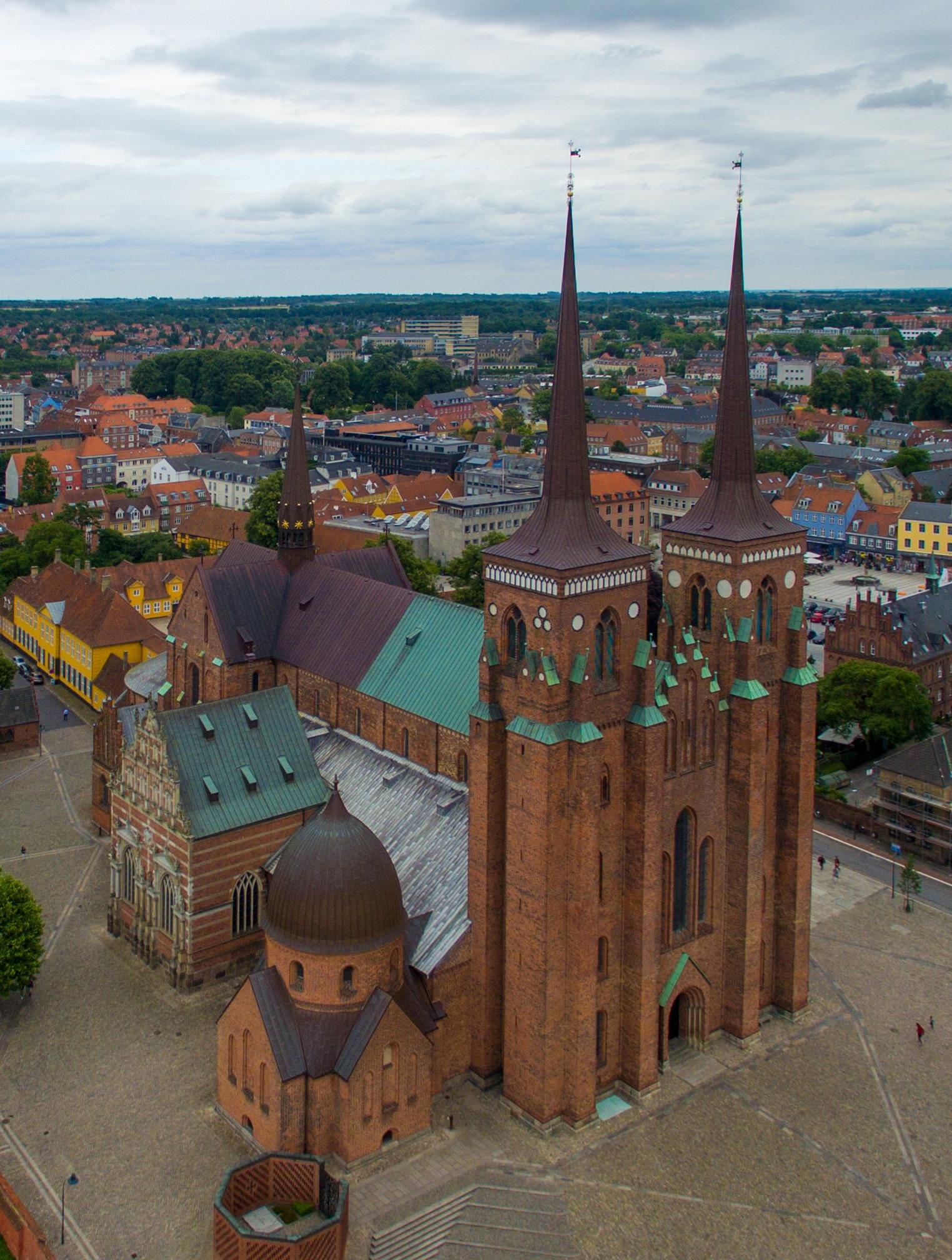
Discover Roskilde: A blend of rich history, Viking heritage, and vibrant music culture in the heart of Denmark, just a short journey from Copenhagen.
Tell me more about Roskilde


