Dunkers Kulturhus
Scandinavia’s waterfront culture house where Helsingborg’s history, bold contemporary art and live performance meet in a striking Kim Utzon–designed landmark.
Dunkers Kulturhus is Helsingborg’s bold waterfront cultural hub, a striking Kim Utzon–designed complex where contemporary art, local history, music, theatre and dance share the same bright, sea-facing spaces. Inside, you can move from large temporary exhibitions to the permanent story of Helsingborg, then pause at the café or terrace to watch ferries glide across the Öresund. Part museum, part creative school and part performance venue, it is the city’s defining modern landmark for culture.
A brief summary to Dunkers
- Kungsgatan 11, Helsingborg, 252 21, SE
- Click to display
- Click to display
- Duration: 1.5 to 4 hours
- Mid ranged
-
 Indoor
- Mobile reception: 5 out of 5
- Tuesday 11 am-5 pm
- Wednesday 11 am-5 pm
- Thursday 11 am-8 pm
- Friday 11 am-5 pm
- Saturday 11 am-5 pm
- Sunday 11 am-5 pm

Know before you go
Hi, I'm Eve. Here are a few practical things to know before exploring Dunkers.
- Plan at least two hours so you can see both the Helsingborg history exhibition and at least one major contemporary art show without rushing.
- Check the current programme in advance; guided tours, concerts and festivals can add extra depth but may require separate tickets or set start times.
- If the weather is clear, leave time to enjoy the harbour views from the waterfront promenade or café terrace after your visit.
Do you manage this location?
Take control to get all the benefits, like improved information, better appearance, and stronger visibility across AI-powered discovery. Learn more
Activate your presenceOther nearby places you may find interesting
Getting There
-
Train and short walk from Malmö or Lund
From Malmö or Lund, take an Öresundståg regional train to Helsingborg C; the journey typically takes 40–55 minutes and standard adult fares are around 120–170 SEK one way, with discounts using regional travel cards. From the station it is roughly a 10–15 minute level walk through the central harbour district to Dunkers Kulturhus, using wide pavements suitable for wheelchairs and strollers in most conditions.
-
Train and bus from Helsingborg C
If you prefer to minimise walking, local Skånetrafiken buses run regularly from the area around Helsingborg C towards stops near the north harbour; total travel time is about 10–20 minutes including transfer and waiting. Single tickets within Helsingborg usually cost about 30–40 SEK when bought via machines or mobile app, and low-floor buses make boarding easier for travellers with limited mobility, though services can be busy at rush hour.
-
Car from the Skåne region
Arriving by car from elsewhere in Skåne, travel times to central Helsingborg are roughly 30–60 minutes from cities such as Malmö, Lund or Ängelholm, depending on traffic on the main motorways. Several public car parks and garages operate within walking distance of the north harbour and cultural quarter, with typical parking fees in the range of 15–30 SEK per hour; spaces can be limited at peak weekend times and during major events.
-
Ferry from Helsingør and walk
From Helsingør in Denmark, the frequent car and passenger ferries to Helsingborg usually take about 20 minutes crossing time, with additional time for boarding and disembarking; foot-passenger ticket prices vary by operator but are commonly in the range of 60–120 SEK one way. Once you arrive, Dunkers Kulturhus lies within a 10–15 minute walk along the waterfront from the ferry terminal, following broad, mostly level quayside paths that can be breezy in bad weather.
For the on-the-go comforts that matter to you
-
 Restrooms
-
 Drink Options
-
 Drinking Water
-
 Food Options
-
 Seating Areas
-
 Sheltered Areas
-
 Trash Bins
-
 Information Boards
-
 Visitor Center
Discover more about Dunkers
A waterfront stage for Helsingborg’s culture
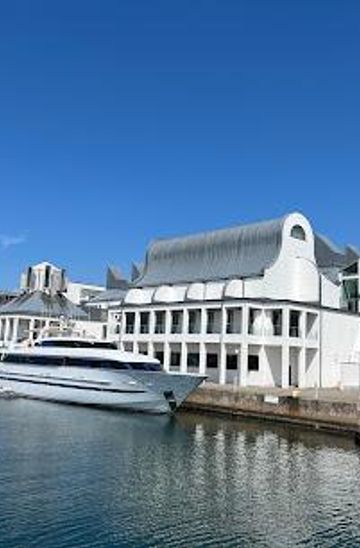
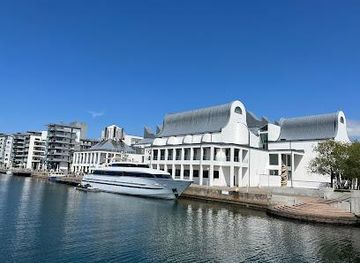
Dunkers Kulturhus rises beside Helsingborg’s north harbour, its white, angular volumes echoing sails and ship hulls against the Öresund. The Danish architect Kim Utzon designed the 16,000-square-metre building as a contemporary counterpoint to the historic city centre, with long sightlines, generous glass and courtyards that pull the waterfront right into the interior. Natural light pours into atriums and galleries, and almost everywhere you glimpse water, sky or the silhouette of ferries heading towards Denmark.From the outside, it feels more like a small cultural district than a single building. Several wings step down towards the promenade, creating sheltered pockets where people linger with coffee, sketchbooks or cameras. In the evening, the complex glows softly over the harbour, and the rhythm of performances, exhibition openings and talks gives this part of Helsingborg a distinct, contemporary pulse.From ice age landscapes to today’s city life
At the heart of Dunkers is Helsingborg’s cultural heritage museum, which traces the region’s story from prehistoric times to the present. One of the core exhibitions explores the city “on the border” – its position facing Denmark and the Öresund, shaped by trade, wars and constant crossing of people and ideas. Displays move from the ice age and early settlements through medieval fortifications and industrial growth into the modern era.The museum uses models, objects, multimedia and soundscapes rather than dense text alone. Everyday items from homes and workshops sit beside shipping artefacts and urban plans, drawing a line from individual lives to wider historical shifts. For many visitors, it becomes an intuitive way to understand how a compact port city became such an important point of contact between Sweden and the wider world.Contemporary art and ever-changing exhibitions
Above the city history galleries, Dunkers opens out into expansive exhibition halls devoted mainly to contemporary art and thematic shows. Over 3,000 square metres are dedicated to changing exhibitions each year, often mixing Nordic and international artists working in photography, installation, painting and new media. The result is that no two visits feel quite the same.Past highlights have ranged from surreal, meticulously staged photography to deeply researched exhibitions on travel, souvenirs and memory. Some shows respond directly to the surrounding sea and harbour, others to global themes like urbanisation or environmental change. The curatorial approach encourages experimentation and playful presentation, while still offering accessible entry points for casual visitors and families.A living house of music, theatre and learning
Dunkers is more than galleries. It also functions as a performance venue, with stages that host concerts, festivals, children’s theatre, dance and spoken-word events. Music programmes often bring together local ensembles with international guests, and festivals dedicated to instruments like the guitar or piano turn the building into a buzzing, multi-day meeting place for musicians and audiences.Within the same complex, a large cultural school introduces thousands of young people to music, dance, theatre, media and visual arts. Practice rooms, studios and classrooms are integrated into the architecture, so you may hear a jazz rehearsal drifting down a corridor or glimpse dance students working behind glass walls. This educational dimension gives the house its particular energy: it is not just displaying culture, but actively making it.Spaces to pause, taste and simply watch the harbour
When you need a break from exhibitions and performances, you can gravitate towards the ground-floor café and restaurant areas, where large windows frame the Öresund and the comings and goings of ferries. In good weather, outdoor seating along the promenade becomes an extension of the cultural experience, blending gallery visits with sea air, gulls’ calls and the soft clatter of bicycles passing.Inside, informal seating nooks and reading corners invite slower exploration. Information desks and well-designed signage help you navigate from history to art to live events without feeling rushed. It is entirely possible to spend a short hour here focusing on a single exhibition, or to let an entire afternoon unfold between galleries, performances, coffee breaks and contemplative gazes out over the water.The legacy of Henry Dunker and a city’s modern identity
The house takes its name from Henry Dunker, the industrialist whose family helped build one of Europe’s largest rubber and plastics groups. Through substantial donations, he directed part of his fortune towards cultural life in Helsingborg, ultimately making Dunkers Kulturhus possible. Opened in 2002, the building stands as a visible expression of that philanthropic legacy.Today, Dunkers plays a central role in how Helsingborg presents itself to residents and visitors: innovative yet rooted in history, outward-looking yet intimately connected to its own shore. Whether you come for a single exhibition, a concert or simply to see how contemporary Scandinavian architecture engages with a working harbour, the house offers a vivid snapshot of a modern Nordic city investing seriously in culture.Explore the best of what Dunkers has to offer













More about Copenhagen Region
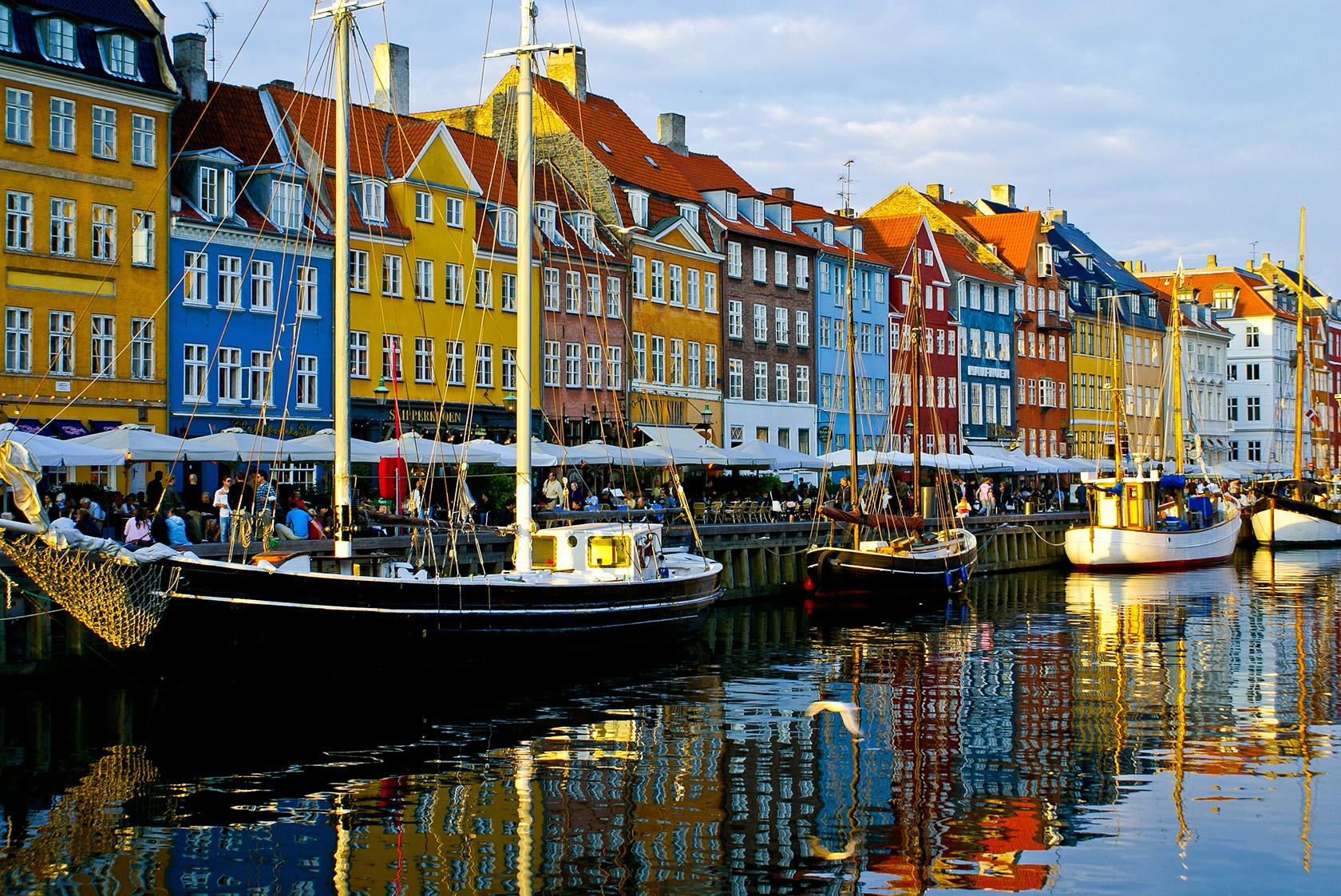
Discover the Copenhagen Region: A perfect mix of historic charm and modern vibrancy, offering scenic beauty, cultural landmarks, and a high quality of life.
Tell me more about Copenhagen Region