M/S Maritime Museum of Denmark
Denmark's maritime heritage rises from the depths in this award-winning underground museum.
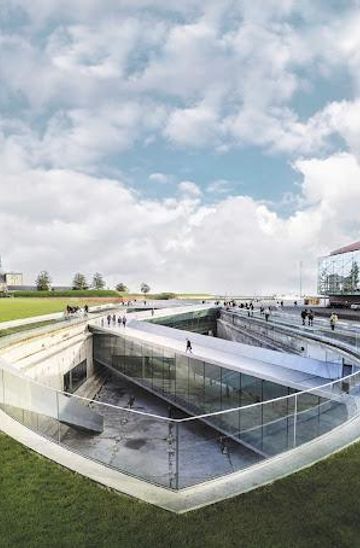
Descend into Denmark's most innovative maritime museum, built dramatically within a historic dry dock adjacent to Kronborg Castle. This underground architectural masterpiece by Bjarke Ingels Group combines award-winning design with immersive exhibitions exploring centuries of Danish seafaring, trade, and naval heritage. Interactive galleries, a children's play area, and a waterfront café create an unforgettable experience below sea level.
A brief summary to M/S Maritime Museum
- Ny Kronborgvej 1, Helsingør, 3000, DK
- Click to display
- Click to display
- Duration: 1.5 to 3 hours
- Mid ranged
-
 Mixed
Mixed
- Mobile reception: 4 out of 5
- Tuesday 11 am-5 pm
- Wednesday 11 am-5 pm
- Thursday 11 am-5 pm
- Friday 11 am-5 pm
- Saturday 11 am-5 pm
- Sunday 11 am-5 pm

Know before you go
Hi, I'm Eve. Here are a few practical things to know before exploring M/S Maritime Museum.
- Allow at least 90 minutes to experience the museum meaningfully, though 2-3 hours is ideal for exploring all eight thematic galleries and interactive exhibits without rushing.
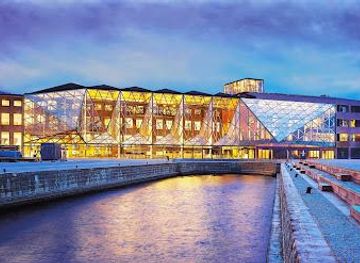
- Visit the M/S Café during your tour for refreshments and unique views into the dry dock from the waterfront seating area.
- Combine your visit with Kronborg Castle (adjacent location) and explore the charming streets of Helsingør's old town for a full cultural day.
- Look for the Morse code bollards around the museum exterior—they spell hidden maritime messages and represent a clever integration of art and symbolism.
- The Dream Ship play area is excellent for families with children, but visit during off-peak hours (late morning or early afternoon) to avoid crowds.
Do you manage this location?
Take control to get all the benefits, like improved information, better appearance, and stronger visibility across AI-powered discovery. Learn more
Activate your presenceOther nearby places you may find interesting
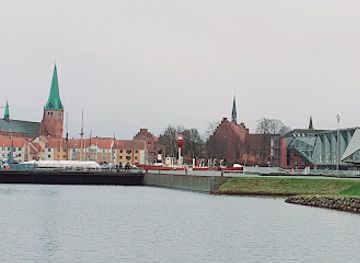
Getting There
-
Train from Copenhagen
Regional trains depart from Copenhagen Central Station to Helsingør approximately every 20-30 minutes, with a journey time of 40-50 minutes. The museum is a 10-minute walk from Helsingør Station following signs toward Kronborg Castle and the harbour. Train tickets cost approximately 100-150 DKK (13-20 EUR) for a single journey. This is the most convenient and popular option for visitors from Copenhagen.
-
Car from Copenhagen
Drive north from Copenhagen via the E4 motorway toward Helsingør, approximately 30 kilometers, taking 35-45 minutes depending on traffic. Follow signs to Kronborg Castle and the Kulturhavn Kronborg area. Parking is available at the museum's dedicated car park and surrounding harbour facilities, typically costing 40-60 DKK (5-8 EUR) per hour. The museum address is Ny Kronborgvej 1, 3000 Helsingør.
-
Bus from Copenhagen
Several regional bus services operate between Copenhagen and Helsingør, with journey times of 60-90 minutes depending on the route and number of stops. Buses arrive at Helsingør Bus Station, from which the museum is a 15-minute walk. Bus fares range from 80-120 DKK (11-16 EUR). This option is economical but slower than train travel.
-
Bicycle from Helsingør town centre
If already in Helsingør, the museum is accessible by bicycle via dedicated cycle paths along the harbour, approximately 2-3 kilometers from the town centre, taking 10-15 minutes. The route is flat and scenic, following the waterfront toward Kronborg Castle. Bicycle parking is available at the museum entrance.
For the on-the-go comforts that matter to you
-
 Restrooms
-
 Drink Options
-
 Food Options
-
 Seating Areas
-
 Sheltered Areas
-
 Information Boards
-
 Visitor Center
Discover more about M/S Maritime Museum
A Museum Built Into History
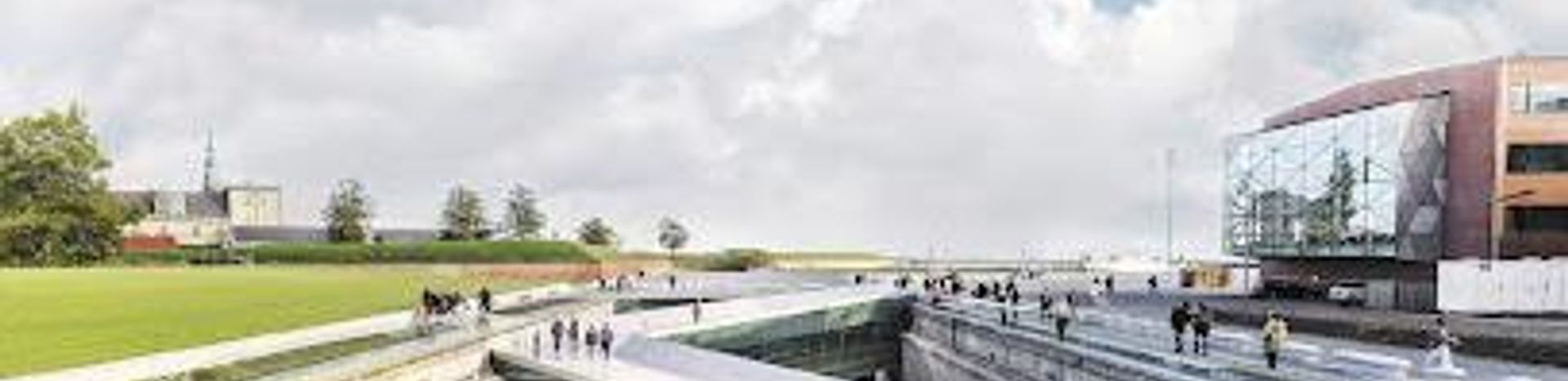
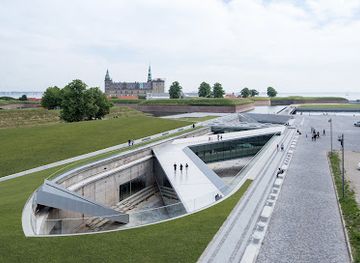
The M/S Maritime Museum of Denmark occupies one of the most unusual and compelling spaces in Scandinavia: a former shipyard dry dock measuring 150 meters long, 20 meters wide, and 8 meters high, situated 7 meters below sea level. Originally established in 1915 as the Trade and Maritime Museum at Kronborg Castle, the institution relocated in 2013 to this subterranean setting, designed by renowned Danish architect Bjarke Ingels Group. The museum's location presented a unique constraint: nothing could protrude above ground to obstruct views of the UNESCO-listed Renaissance castle. Rather than viewing this as a limitation, BIG transformed the challenge into an architectural triumph, making the dry dock itself the museum's greatest exhibition object.Architectural Innovation and Design Excellence
The museum's design represents a collision between old and new, where heavy textured concrete walls of the historic dock contrast with light transparent steel and glass structures. Descending via sloping ramps and crossing sculptural bridges, visitors experience a journey that mimics entering a ship's world. The dock's rough surfaces have been preserved and accentuated with walkways that bore through it, connecting exhibition galleries while maintaining the industrial character of the original shipyard. The interior design by Dutch architects Kossmann.dejong creates a welcoming Scandinavian aesthetic with excellent lighting and spatial flow. Since opening in October 2013, the museum has received numerous international awards, including the 2014 RIBA EU Award, the World Architecture Festival Award for Culture, and recognition from Frame magazine as one of the ten best new exhibition designs globally.Maritime Collections and Thematic Exhibitions
The museum's collections span Danish maritime history from the 15th century to the present day, encompassing model ships, paintings, photographs, and artifacts that illustrate everything from the Napoleonic Wars to Danish trade with China and India. Eight distinct thematic galleries explore different aspects of seafaring: mythology and symbolism, navigation and technology, the sailor's life across centuries, Danish warships and naval history, modern shipping and global trade, lighthouse operations, the lifeboat service, and contemporary maritime culture. The museum houses over 33,000 photographs documenting virtually every Danish ship since 1880, thousands of paintings, and a library of 20,000 volumes. Major film projections and immersive soundscapes enhance the exhibitions, allowing visitors to experience maritime history through multiple sensory dimensions.Interactive Experiences for All Ages
Beyond traditional exhibitions, the museum offers hands-on engagement through interactive displays where visitors can attempt historical merchant trading, navigate using traditional maritime tools, and even receive washable sailor tattoos. The Dream Ship, a 400-square-meter maritime play universe, encourages children and families to explore through adventure and storytelling, featuring a torpedo encounter and the world's largest model container ship. The museum's design accommodates flexible visitor experiences: some spend hours immersed in films, objects, and texts, while others complete a meaningful overview in approximately 20 minutes. The M/S Café offers refreshments and meals with views into the dock, while the M/S Cargo shop sells maritime-themed books, clothing, applied arts, and toys.Cultural Hub and Broader Context
The Maritime Museum functions as part of Kulturhavn Kronborg (Culture Harbour Kronborg), a collaborative cultural initiative that includes Kronborg Castle, Kulturværftet, and the Helsingør harbour. The dock's open design and hard-sound reflecting surfaces make it ideal for dance performances, concerts, exhibitions, and cultural events throughout the year, transforming the museum into a dynamic public space. The museum's significance extends beyond exhibitions: it was featured in the Netflix series The Rain, introducing its striking architecture to international audiences. The location reflects Denmark's profound maritime identity—a nation surrounded by three seas with a 5,440-mile coastline where no point lies more than 52 kilometers from water, making seafaring integral to Danish culture and history.Symbolic Details and Engineering Marvels
The museum incorporates remarkable symbolic and structural elements that reward careful observation. Ninety-four bollards made from Chinese granite are positioned around the exterior in Morse code, spelling "MS Museet for Søfart" and the maritime motto "Det er nødvendigt at sejle" (To sail is necessary)—a phrase originating from Pompey's 56 BCE order and later adopted by the Hanseatic League. The dry dock itself functions as a ship, held in place by 466 anchors driven deeper into the earth than the height of Copenhagen's Round Tower. The anchor chain serves dual purposes as both exhibit and structural element, while hanging floors suspended from ceilings minimize visual bulk and maximize spatial flow.Explore the best of what M/S Maritime Museum has to offer













More about Copenhagen Region
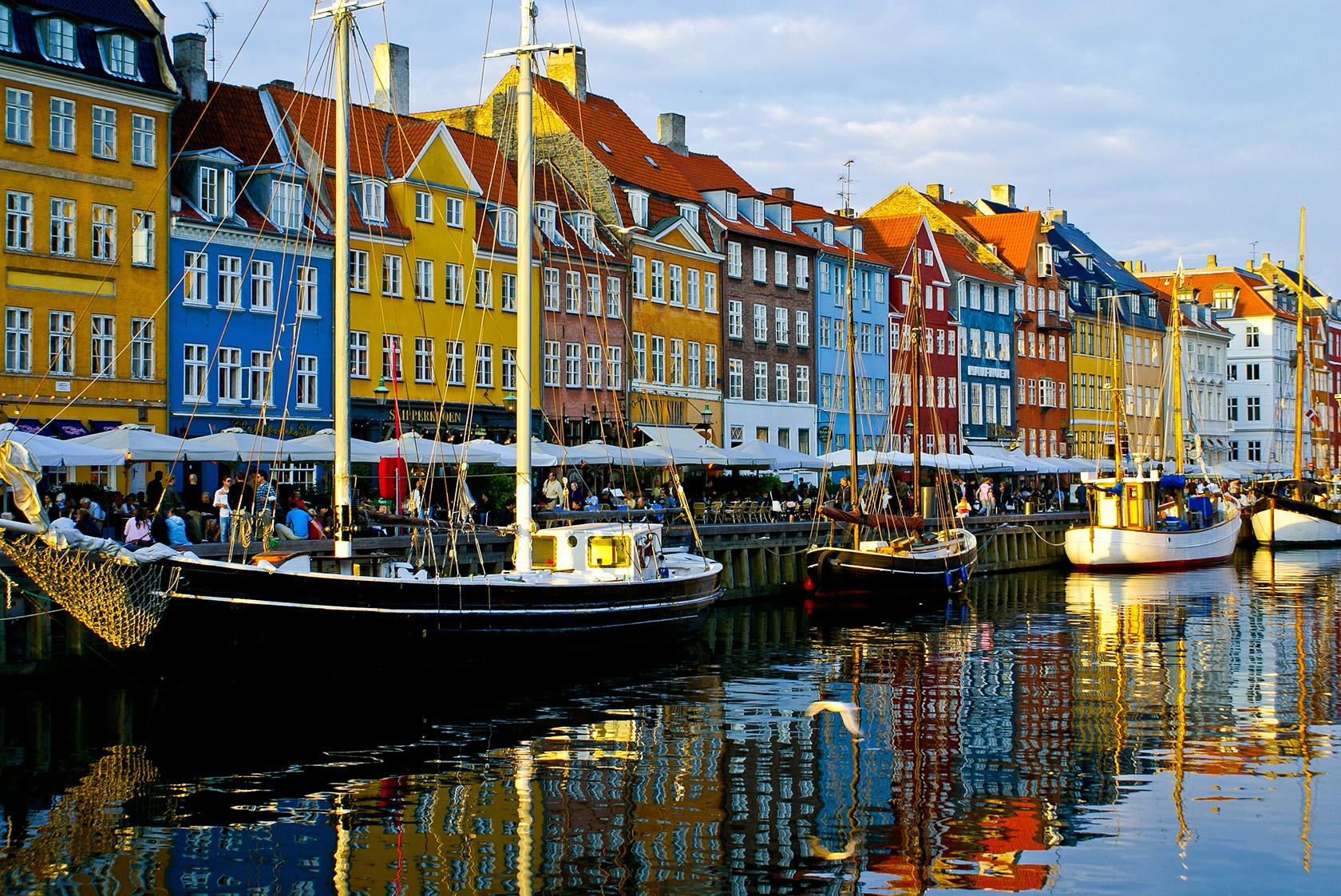
Discover the Copenhagen Region: A perfect mix of historic charm and modern vibrancy, offering scenic beauty, cultural landmarks, and a high quality of life.
Tell me more about Copenhagen Region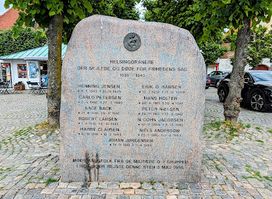
A modest harbor-side monument in Helsingør honoring local lives lost in World War II, quietly linking the busy waterfront to the town’s stories of resistance and sacrifice.
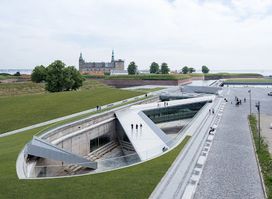
Award‑winning underground museum in a historic dry dock, where cutting‑edge design and interactive exhibits bring Denmark’s maritime heritage vividly to life.