

Danmarks Traktormuseum Travel Guide
Free Guide: A towering brick warehouse on Falster packed with vintage tractors and engines, charting how mechanisation transformed Danish farming across the 20th century.


A brief summary of Danmarks Traktormuseum
A towering brick warehouse on Falster packed with vintage tractors and engines, charting how mechanisation transformed Danish farming across the 20th century.
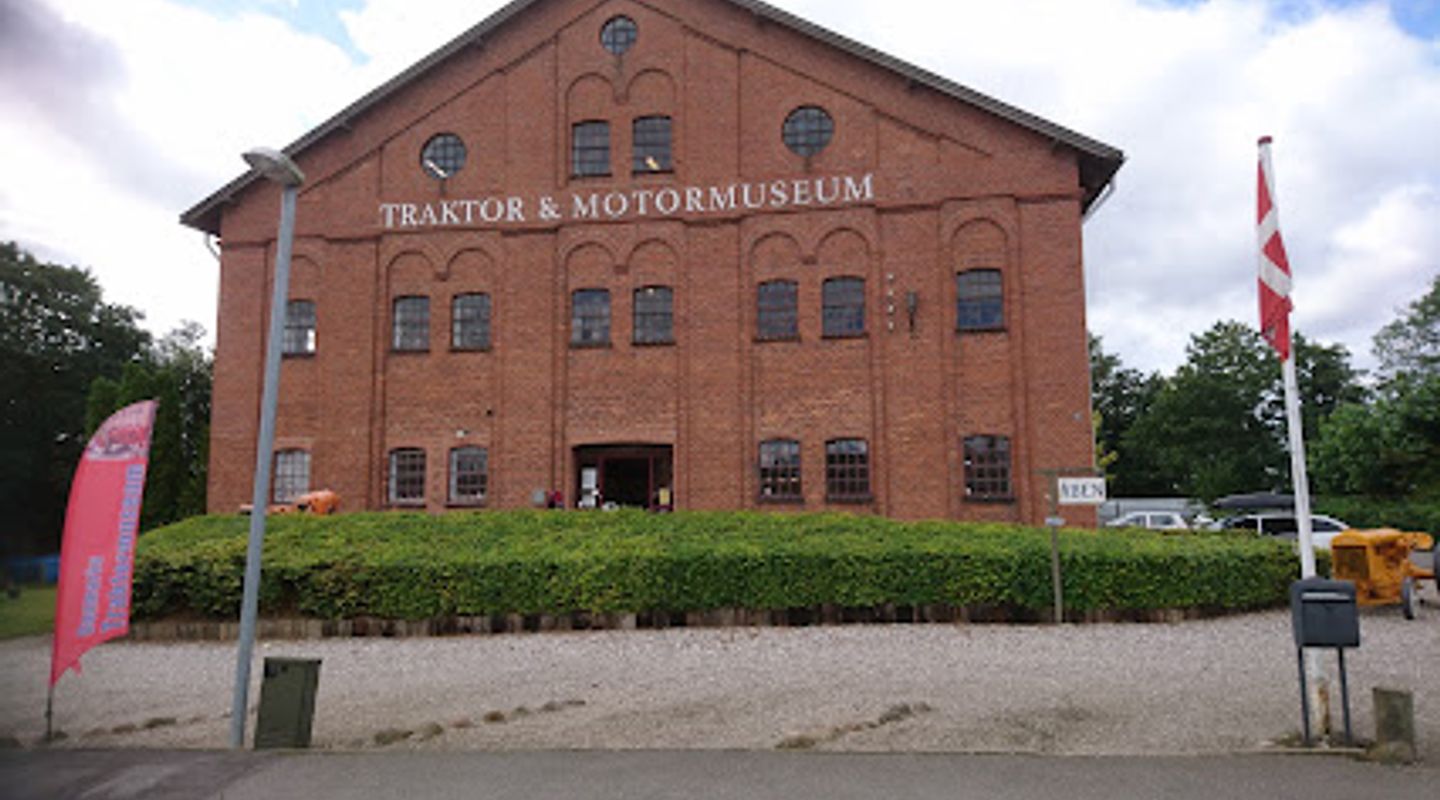
Housed in a solid brick warehouse from 1918 in the village of Eskilstrup on northern Falster, Danmarks Traktormuseum is Denmark’s dedicated shrine to agricultural machinery. Inside the three-storey building, you wander through tightly packed rows of tractors, engines and equipment dating mainly from the early 1900s to around 1970, including a remarkably complete collection of Danish-made Bukh tractors and rare prototypes. It is a niche yet atmospheric museum that charts how mechanisation reshaped rural life and farming across Denmark.
On-site amenities
 Restrooms
 Seating areas
 Trash bins
 Information boards
Opening hours
- Every day10 am–4 pm
Opening hours as listed on the venue’s Google Business Profile. Hours can change for services and special events, so check with the venue before you go.
- Address
- Nørregade 17B, 4863 Eskilstrup
- Phone
- Website
Getting there
Train and short walk from Nykøbing Falster
Car from Nykøbing Falster and wider Lolland-Falster
Cycling from nearby towns
Discover more about Danmarks Traktormuseum
A brick giant filled with horsepower history
Danmarks Traktormuseum occupies a tall brick warehouse in Eskilstrup, built in 1918–1919 as a seed cleaning centre for local agriculture. Its thick concrete floors and spacious storeys were originally designed to carry the weight of grain and machinery, and today the same robust structure supports ranks of heavy tractors and engines. Sunlight filters in through high windows, catching dust motes above bonnet lines and steel wheels, giving the hall a workshop-like, almost industrial cathedral feel.As you move between the floors, the building itself tells a quiet story about early 20th‑century innovation. This was the first structure on Falster to use reinforced concrete in its basement, a technical leap that now conveniently allows it to serve as a safe home for dozens of multi-ton machines. Pipes, beams and original fittings still peek out between the exhibition pieces, reminding you that this was once a working hub in the island’s farming economy.
From steel horses to field workhorses
The museum’s core collection spans tractors and engines from roughly the 1910s to the late 1960s, capturing the decades when Danish agriculture shifted from horse-drawn work to fully mechanised farming. In the early galleries you pass early petrol and kerosene tractors with spoked steel wheels and exposed engines, machines that demanded as much courage as skill to operate on muddy fields. Nearby, stationary engines once used to power threshers and pumps line the walls like patient metal guardians, each with its own rhythm and sound once essential to farm life.Further along, sleeker post‑war models appear, their rounded bonnets and bright paintwork reflecting advances in design and comfort. You see how cabs become more enclosed, controls more ergonomic and engines more powerful, mirroring rising expectations for efficiency and safety. Taken together, the exhibits create a timeline of rural transformation, showing how technology steadily reduced back‑breaking labour while enabling larger fields, higher yields and new ways of organising work.
The pride of Danish-made Bukh tractors
One of the museum’s most distinctive features is its unusually complete collection of Bukh tractors, Denmark’s own agricultural workhorses. Here you find production models alongside prototypes and special editions that rarely appear outside specialist circles. Differences in bonnet shape, wheel configuration and engine layout highlight how Bukh responded to farmers’ needs over time, from compact orchard machines to sturdier field tractors.Nearby displays include several stationary Bukh engines from the 1920s and 1930s, chunky cast‑iron units that once powered everything from mills to workshop tools. Placards and diagrams explain how these engines worked, and how local manufacturers competed with foreign brands as mechanisation spread. For visitors with a technical interest, this corner of the museum offers a satisfying deep dive into Danish engineering and industrial ambition.
International marques and Marshall Aid stories
Beyond the Danish pieces, the halls feature a broad mix of international tractors, including examples from Bolinder‑Munktell, Volvo, International Harvester and Ferguson. Seeing them side by side with local brands gives a sense of the variety on the Danish market and the global networks that shaped farming equipment. Some models were common sights across Europe, while others never really took root in Denmark, appearing here as curiosities that hint at alternative paths machinery development might have taken.Interpretive panels also touch on the era of Marshall Aid after the Second World War, when American-built tractors arrived as part of economic support to rebuild European agriculture. Conditions tied to this aid encouraged imports, accelerating the shift from horses to machines in Danish fields. Standing among rows of post‑war tractors, you get a tangible sense of how geopolitics and technology intertwined to alter everyday life for farmers on Falster and beyond.
Engaging details for all kinds of visitors
Although the subject matter is specialised, the museum is laid out in a way that can engage a broad audience. Families can trace the sheer physical scale of change by comparing early open-framed machines with later, more compact models, while enthusiasts can study gear levers, engine plates and manufacturer badges at close range. Labels typically note production years, countries of origin and key technical details, helping non‑experts make sense of what they are seeing.Small details add character: faded manufacturer logos still visible under fresh coats of paint, worn steering wheels polished by long‑gone hands, and toolboxes that look ready to be opened. The atmosphere is calm and unhurried; you are free to linger by a favourite tractor, follow a self‑guided route through the decades, or simply absorb the sight of so many restored machines in one place. Group visits can be arranged in advance, and seasonal activities sometimes bring additional life to the old warehouse, but the essence of the experience remains the same: a deep, quietly impressive encounter with the machinery that reshaped Danish farming.
Planning your time inside the collection
Most visitors find that a couple of hours is enough to explore the main displays, but those with a special interest in agricultural history or engineering can easily spend longer comparing models and reading every panel. The multi‑storey layout means some stair climbing, though interior circulation is straightforward once you are inside. Opening hours are generally concentrated in the warmer months, with off‑season visits focused on pre‑booked groups, so it is worth checking current schedules before you set out.Because the museum sits in a small town environment, the surrounding area remains relatively quiet even on busy days. That makes Danmarks Traktormuseum a pleasant stop on a broader exploration of Lolland‑Falster, combining well with coastal drives, village churches and rural landscapes. Whether you arrive as a dedicated tractor aficionado or simply curious about how machines transformed the countryside, the museum offers a richly textured window into a century of Danish agricultural change.
Evendo Review Centre
 Google
Guest reviews
Best time to go
Quietest: Jan, Feb & Mar · before 8am or from 6pm
Busy times are Evendo estimates for a typical year, to help you plan. Actual crowds vary with events, school holidays and the weather.
Explore Danmarks Traktormuseum on the map
A handpicked selection of must-see spots near Danmarks Traktormuseum, mapped for you.
Get your free copy of our complete guide to Danmarks Traktormuseum, delivered straight to you.
Everything on this page, from opening hours and how to get there to Eve’s tips and the best time to go, in one PDF you can read offline, print or share.
Already have an account? Sign in
Your Danmarks Traktormuseum guide is ready.
We'll send it to · Not you? Sign out

Getting your guide ready…
We are putting together a fresh copy of the Danmarks Traktormuseum guide. This can take up to a minute.
This can take a few moments. If your browser asks, choose Allow so the download can start. You'll find the guide in your Downloads folder.
Nothing happened? Download it again
Sorry, the guide is taking longer than usual. Please try again in a minute, or get it by email instead.
Other nearby places you may find interesting
The closest places of the same kind, if this one is not quite what you had in mind.
-
The Medieval Center Experience 15th-century Denmark through living history, trebuchets, tournaments, and authentic medieval crafts.
-
Guldborgsund Zoo & Botanisk Have Intimate town-edge zoo and botanical garden where animal encounters, leafy paths and playgrounds have long shaped family days out in Nykøbing Falster.
-
Horreby Lyng Falster’s only raised bog, where quiet boardwalks, restored peatland and traces of ancient life create a subtle, atmospheric escape into Danish nature.
-
Zipline Systofte Seasonal lakeside adventure park near Nykøbing Falster with a 400 m twin zipline, floating aquapark and high-jump airbag for families and thrill-seekers.
-
Crocodile Zoo, Falster Tropisk, fugtig varme, kæmpekrokodiller og bevaringsprojekter samles i et kompakt, intenst reptilunivers midt på Falster.
Swipe for more places
More to explore near Danmarks Traktormuseum

 Best experiences near Danmarks Traktormuseum
 Best hotels near Danmarks Traktormuseum
 Best landmarks near Danmarks Traktormuseum
 Best attractions near Danmarks Traktormuseum
 Best shops near Danmarks Traktormuseum
 Best restaurants near Danmarks Traktormuseum
 Best bars near Danmarks Traktormuseum
Do you manage this location?
Take control to get all the benefits, like improved information, better appearance, and stronger visibility across AI-powered discovery.
Explore more

Explore more of Falster
Discover Falster: A blend of serene beaches, rich history, and lush landscapes in Denmark's southern island treasure.
Explore Falster
Explore more of Denmark
Discover Denmark: A perfect blend of history, modern design, and the cozy concept of hygge. Explore vibrant cities, serene landscapes, and world-class cuisine.
Explore Denmark
