the old house, Køge Travel Guide
Free Guide: One of Denmark’s oldest dated half‑timbered houses, this 1527 gem in Køge’s old town now hosts a cosy children’s library and atmospheric vaulted cellar.


A brief summary of the old house
One of Denmark’s oldest dated half‑timbered houses, this 1527 gem in Køge’s old town now hosts a cosy children’s library and atmospheric vaulted cellar.
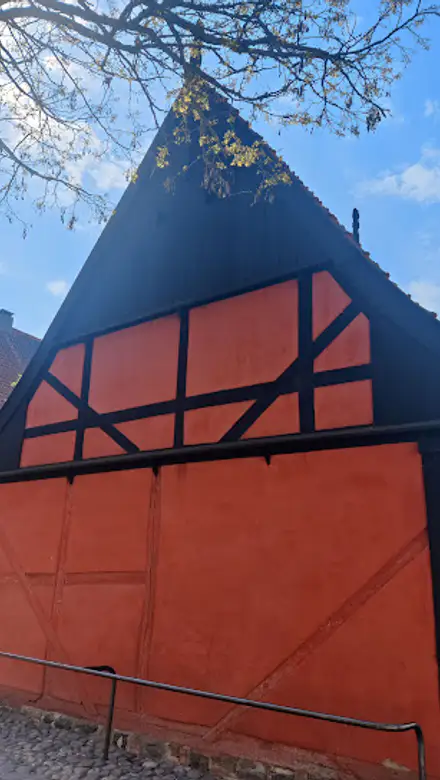
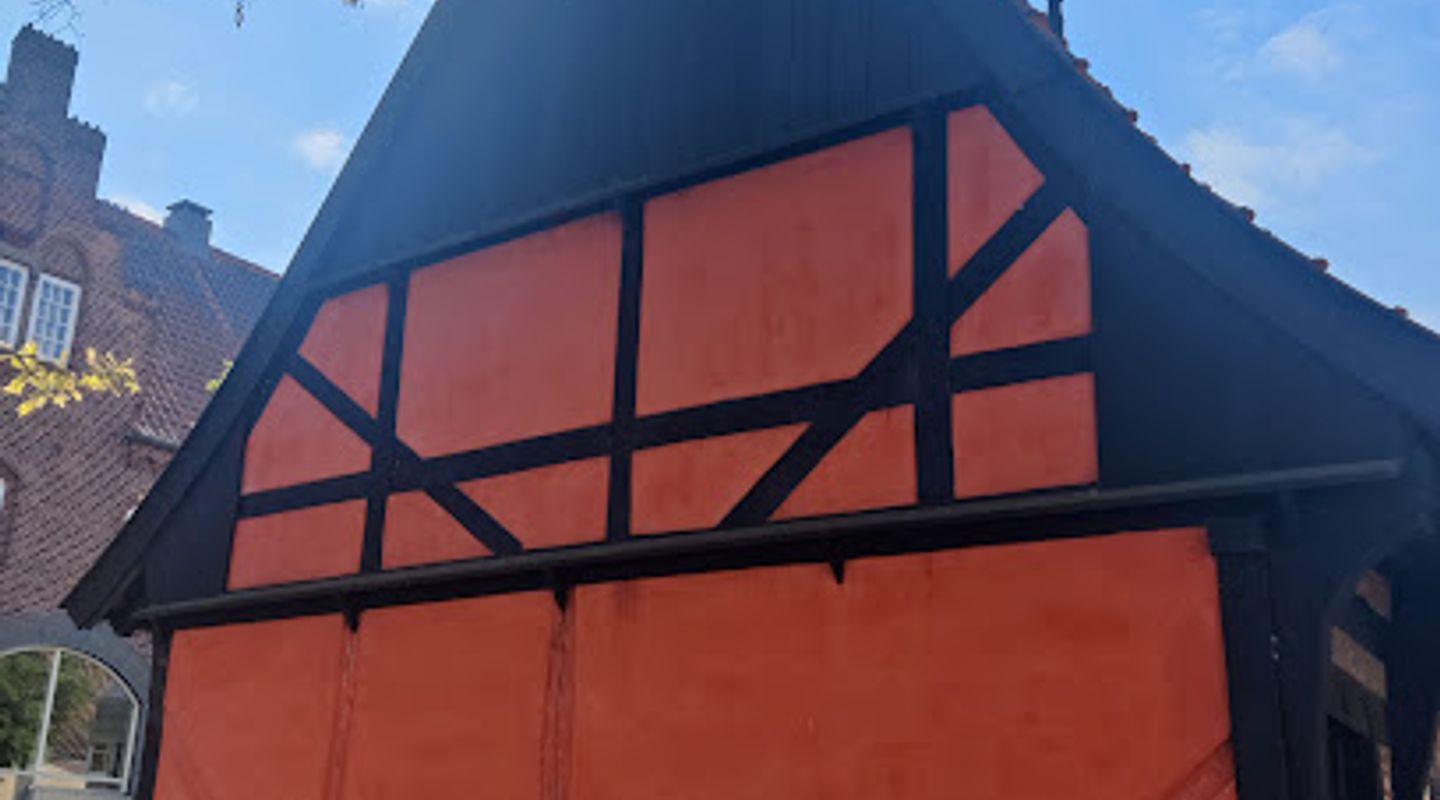
Tucked into the cobbled lane of Kirkestræde in Køge’s old town, **The Old House** at no. 20 is one of Denmark’s oldest dated half‑timbered houses, built in 1527. Once a modest rental dwelling known as a “våning”, it narrowly escaped demolition in the early 1900s and was painstakingly restored. Today the low, crooked timber frame, red monk‑and‑nun roof tiles and deep fieldstone cellar form part of Køge Library, housing a cosy children’s section and a characterful vaulted basement used for events.
On-site amenities
 Restrooms
 Drink options
 Drinking water
 Food options
 Seating areas
 Sheltered areas
 Trash bins
 Information boards
 Visitor centre
- Address
- Kirkestræde 20, 4600 Køge
- Website
Getting there
Train and short walk from Copenhagen
S‑train from Greater Copenhagen
Car from Zealand locations
Discover more about the old house
A tiny 1500s dwelling in a medieval lane
The Old House on Kirkestræde 20 looks almost modest at first glance: a low, crooked half‑timbered building pressed close to the cobbled street. Yet this small structure is one of Denmark’s oldest dated non‑religious houses, its construction fixed to the year 1527 by an inscription uncovered above the door centuries later. In the 1500s, this was a simple rental dwelling in a growing market town, set among workshops, merchants and sailors heading to the harbour.The lane itself still feels intimate and slightly secretive. Timber facades lean towards each other, and the Old House seems to belong to a much smaller scale of daily life, when rooms were low, windows tiny and the street outside was the main stage of the day.
From simple ‘våning’ to protected monument
Originally, the building consisted of a single large room, part of a row of similar rental houses known as “våninger” or “boder”. It once had a twin house attached to its northern gable, creating a continuous line of small dwellings for townsfolk of modest means. Over time, additions on the rear formed a lean‑to with a kitchen and hearth, and the interior was divided into smaller chambers.By the late 1800s, the Old House had passed through a long succession of tenants, from a retired dragoon lieutenant to a 19th‑century skins trader. Layers of whitewash and alterations concealed its age until a renovation in 1888 scraped away 14 coatings of lime and revealed the carved date lintel, confirming its 16th‑century origins and sparking interest in its preservation.
Rescued, restored and re‑roofed
In 1908, plans for a new almshouse complex threatened the survival of the Old House and its neighbour. No. 22 was demolished, but No. 20 was saved at the last moment through the intervention of heritage authorities, who recognised its rarity as an early urban dwelling. A careful restoration followed, removing later rear extensions and replacing ordinary roof tiles with traditional monk‑and‑nun tiles more in keeping with its age.The timber frame was stabilised, the facade straightened just enough to be safe, yet the building deliberately retains its gentle sagging lines and time‑softened beams. In 1918 it was granted protected status, securing its place as a listed monument within Køge’s historic centre.
A children’s library with a 500‑year memory
Since the mid‑20th century the Old House has been closely linked with the neighbouring Køge Library. The last private resident moved out in the 1950s, and the building was adapted as part of the library complex, now hosting a cosy children’s section behind its tiny windows. Low ceilings, exposed beams and uneven floors give story hours and reading nooks a special atmosphere that feels far removed from a modern institutional space.The deep cellar below, built of massive fieldstones and reached via a stone stair, has become an atmospheric venue for small exhibitions and events. Over the centuries, the street level outside has risen more than a metre, so the basement that once sat closer to the surface now feels hidden, like a pocket of the 1500s preserved beneath today’s town.
Reading the layers of Køge’s past
Seen from the outside, the Old House is a compact lesson in urban history. Its dark timber posts and white infill fields recall a time when half‑timber was the standard town building method, and its small scale contrasts with grander merchants’ houses elsewhere in Køge. Standing here, you sense the social layers of the town: humble renters in this lane, traders on the market square, and soldiers quartered nearby.Even as it serves a very contemporary purpose as a library space for children, the building quietly carries five centuries of stories—of tenants, renovations, near‑demolition and rescue. Pausing before its crooked facade, you are looking at a rare survivor: a lived‑in fragment of everyday 16th‑century Denmark still woven into the daily life of a modern town.
Evendo Review Centre
 Google
Guest reviews
Best time to go
Quietest: Jan, Feb & Mar · before 7am or from 7pm
Busy times are Evendo estimates for a typical year, to help you plan. Actual crowds vary with events, school holidays and the weather.
Explore the old house on the map
A handpicked selection of must-see spots near the old house, mapped for you.
Get your free copy of our complete guide to the old house, delivered straight to you.
Everything on this page, from opening hours and how to get there to Eve’s tips and the best time to go, in one PDF you can read offline, print or share.
Already have an account? Sign in
Your the old house guide is ready.
We'll send it to · Not you? Sign out

Getting your guide ready…
We are putting together a fresh copy of the the old house guide. This can take up to a minute.
This can take a few moments. If your browser asks, choose Allow so the download can start. You'll find the guide in your Downloads folder.
Nothing happened? Download it again
Sorry, the guide is taking longer than usual. Please try again in a minute, or get it by email instead.
Other nearby places you may find interesting
The closest places of the same kind, if this one is not quite what you had in mind.
-
-
-
-
-


Swipe for more places
More to explore near the old house

 Best experiences near the old house
 Best hotels near the old house
 Best landmarks near the old house
 Best attractions near the old house
 Best shops near the old house
 Best restaurants near the old house
 Best bars near the old house
Do you manage this location?
Take control to get all the benefits, like improved information, better appearance, and stronger visibility across AI-powered discovery.
Explore more
Explore more of Køge
Explore Køge, Denmark's coastal gem, with its medieval charm, beautiful marina, and close proximity to the stunning Stevns Klint UNESCO World Heritage site.
Explore Køge
Explore more of Denmark
Discover Denmark: A perfect blend of history, modern design, and the cozy concept of hygge. Explore vibrant cities, serene landscapes, and world-class cuisine.
Explore Denmark